Juicing · Juicing
Wheatgrass Powder vs. Fresh & Frozen Juice: What’s the Difference?
Wheatgrass is sold in several formats that are easy to confuse. This guide compares processing, convenience, storage and prep for each one, and explains the single question worth asking before you buy a wheatgrass shot.

For people specifically looking for a real wheatgrass juice or wheatgrass shot, there is another issue worth knowing: a wheatgrass shot sold at a juice bar is not necessarily made from freshly juiced wheatgrass.
Andi’s Way has publicly described asking multiple juice bars what they used in their wheatgrass shots and being told in some cases that they used powder mixed with water. At the same time, other juice bars explicitly advertise fresh-cut or cold-pressed wheatgrass, so this should not be generalized to every juice bar.
For the wider picture, see our pillar guide to wheatgrass benefits, nutrition and side effects, or our guide to wheatgrass juice.
Wheatgrass comes in more than one form
When someone says “wheatgrass,” they may be talking about completely different products. The most common forms include:
Fresh wheatgrass
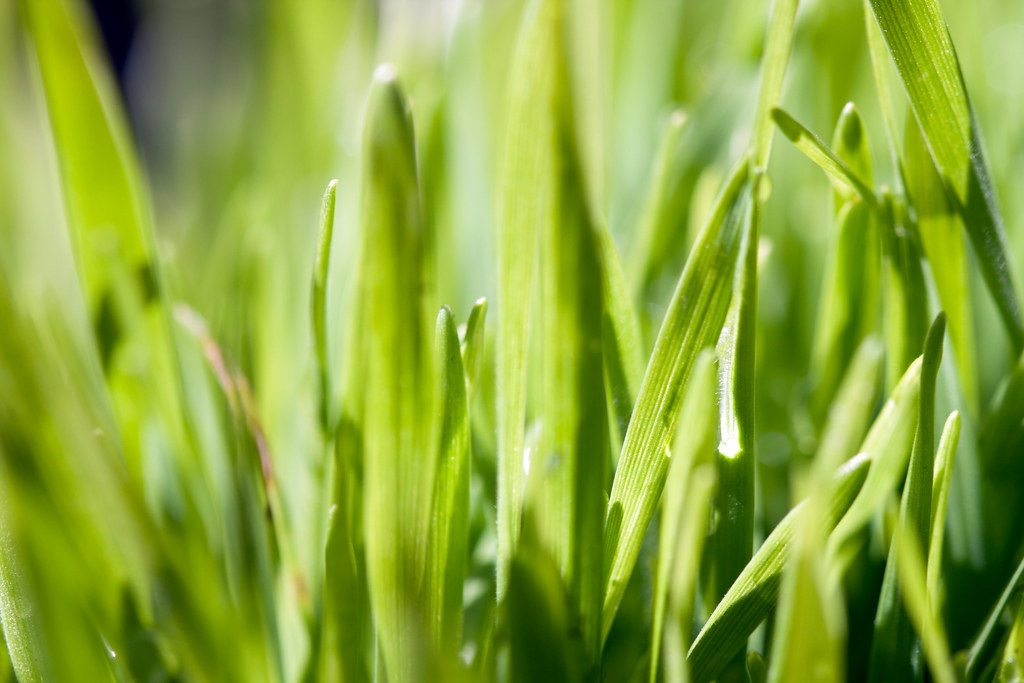
Young wheatgrass harvested and sold as fresh greens. This is the form typically used when someone wants to juice wheatgrass at home.
Fresh wheatgrass juice
Wheatgrass that has actually been pressed or juiced. It is highly perishable and normally needs refrigeration.
Frozen wheatgrass juice
Wheatgrass that was juiced and then frozen for storage and convenience.
Wheatgrass powder
Dried and processed wheatgrass or wheatgrass juice that has been turned into a powder.
Wheatgrass shots
A small serving marketed as a concentrated wheatgrass drink. The important thing is that “wheatgrass shot” describes the serving format, not necessarily how the wheatgrass was produced. A shot can contain fresh juice, frozen juice that has been thawed, powder mixed with water, or a blend of ingredients.
Fresh vs. frozen vs. powder at a glance
What’s actually in your wheatgrass?
| Fresh wheatgrass | Fresh juice | Frozen juice | Powder | |
|---|---|---|---|---|
| What it is | You juice the grass | Someone actually pressed fresh wheatgrass | Real juice that was frozen after juicing | Dried/processed product mixed into liquid |
| Processing | Minimal | Juiced from fresh grass | Juiced, then frozen | Dried/processed |
| Convenience | Lower | Moderate | High | Very high |
| Storage | Refrigerated | Refrigerated | Freezer | Shelf-stable |
| Prep required | Wash and juice | Pour and drink | Thaw per product instructions | Mix into liquid |
| Juicer needed? | Usually | Yes, unless purchased | No | No |
| Shelf life | Short | Very short | Long, while frozen | Longest |
| Best use case | Juicing at home with full control | Drinking freshly pressed juice | Real juice without a juicer | Travel, smoothies, shelf storage |
There is no universal rule that says every person should choose the same format. But if your priority is getting actual wheatgrass juice, fresh or frozen juice is fundamentally different from mixing powder into water.
Is fresh wheatgrass better than powder?
For someone specifically looking for the least processed, most direct form of wheatgrass, fresh wheatgrass has an obvious advantage. It is simply the young plant before it is dried into a powder.
Fresh wheatgrass can be juiced immediately after harvesting, which means there is no drying step between the plant and the juice.
That does not automatically mean fresh wheatgrass is nutritionally superior in every measurable way. Processing can sometimes preserve or concentrate certain compounds, and nutritional composition can change depending on how a product is dried and stored.
Andi’s Way’s current product guidance makes a similar distinction: it describes fresh pressed wheatgrass juice as its preferred option and frozen juice as the next-best option when fresh is not available.
Is frozen wheatgrass juice better than powder?
For someone who specifically wants wheatgrass juice, frozen juice has an important advantage over powder: it started as actual juice. Powder is a dry processed product. Frozen wheatgrass juice is liquid wheatgrass juice that has been frozen for storage.
Andi’s Way says its frozen wheatgrass juice is made from freshly harvested organic wheatgrass, juiced in small batches, and frozen within minutes of being juiced. The current product is sold as 100% raw wheatgrass juice with no additives or preservatives.
Again, this does not prove that frozen juice produces greater health effects than powder. The distinction is about what the product actually is and how it was processed.
So is fresh or frozen better than powder?
For the specific purpose of drinking real wheatgrass juice, the formats can be ranked this way:
- Fresh pressed juice — best fit for someone who wants the closest possible experience to freshly harvested wheatgrass. Downside: requires fresh grass and usually a juicer, unless you buy it ready-made.
- Frozen wheatgrass juice — best fit for someone who wants actual wheatgrass juice without the work of growing or juicing it. Downside: requires freezer storage and thawing.
- Wheatgrass powder — best fit for someone who prioritizes convenience, shelf life, portability, or adding wheatgrass to smoothies. Downside: it is a processed powder rather than freshly pressed juice.
This isn’t a scientific ranking of “healthiness.” It is a ranking based on format, processing, convenience, and how closely each product resembles fresh juice.
How is wheatgrass powder made?
Wheatgrass powder is produced by processing wheatgrass into a dried form. Depending on the product, this may involve:
- Harvesting
- Washing
- Drying
- Grinding
- Milling
- Packaging
Some products are specifically made from wheatgrass juice that has been dried into a powder, while others are made from the whole dried grass. Those products should not automatically be treated as identical.
That is one reason to read the product label carefully. Look for language describing whether the product is whole-leaf wheatgrass powder or wheatgrass juice powder. Those are different preparations.
What happens to wheatgrass during drying?
Drying can change the composition of plant material.
Research examining different wheatgrass drying methods has found differences in nutrients, chlorophyll, flavonoids, and measured antioxidant activity depending on the drying process. For more on that topic, see our guide to wheatgrass antioxidant properties.
That does not mean drying automatically makes wheatgrass “bad.” It means processing matters. Heat, oxygen, moisture, storage time, and drying conditions can all affect different compounds differently.
A responsible comparison therefore avoids saying “all powder is worse.” A more accurate statement is: powder is a different preparation, and its properties depend on how it was produced.
Does wheatgrass powder have the same benefits as fresh juice?
Not necessarily.
Research results apply to the preparation researchers actually studied. For example, if a study uses fresh wheatgrass juice, you cannot automatically assume that a scoop of wheatgrass powder will produce identical results. This gap between laboratory work and products on the shelf is discussed in Bar-Sela et al. (2015), The Medical Use of Wheatgrass.
The powder may have gone through:
- Drying
- Grinding
- Storage
- Different serving-size concentration
- Different extraction methods
This is one of the biggest problems with generic wellness claims. A study says “wheatgrass juice.” A product advertisement says “wheatgrass powder.” Then the product uses the study as if the two were identical. They are not necessarily identical.
The juice-bar problem: is your wheatgrass shot actually fresh?
When you walk into a juice bar and order a “wheatgrass shot,” it is reasonable to assume that the shot is made from wheatgrass. But the word shot does not tell you what process was used to make it.
Andi’s Way published an account describing visits and calls to juice bars where employees said their wheatgrass shots were made from powder mixed with water rather than fresh wheatgrass. One account involved a large chain; another involved a juice bar that described the product as part of its cold-pressed juice collection before acknowledging that the wheatgrass was actually powder and water.
That is a real example. But it is not enough evidence to say that most juice bars use powder.
There are also juice bars that explicitly advertise fresh-cut or cold-pressed-to-order wheatgrass shots. For example, Green Point Juicery describes its wheatgrass shot as fresh-cut and cold-pressed to order, while other juice-bar menus simply list wheatgrass shots without specifying the preparation method.
So the takeaway is not “juice bars use powder.” The takeaway is: don’t assume. Ask.
What should you ask a juice bar?
These questions can tell you much more than the word “wheatgrass” on a menu.
How can you tell if a wheatgrass shot is actually juice?
You cannot reliably determine the contents of a wheatgrass shot simply by looking at it. Color and consistency can vary.
Andi’s Way’s article points out that freshly refrigerated wheatgrass juice can separate, but visual appearance alone should not be treated as a laboratory test of what is in a drink.
The most reliable approach is simply to ask the business how the shot is made. If they say “we juice fresh wheatgrass here,” that’s different from “we mix wheatgrass powder with water.”
Why would a juice bar use powder?
There are practical reasons a business might choose powder.
- Convenience — powder is shelf-stable and does not need fresh wheatgrass delivered regularly.
- Storage — a bag of powder takes up less space than trays of fresh wheatgrass.
- Consistency — powder can provide a standardized serving without needing a juicer.
- Labor — the business does not need to wash and juice fresh grass for each order.
- Waste — fresh produce is perishable. Powder generally has a much longer shelf life.
None of these automatically makes powder a bad product. It simply means the business is prioritizing different operational needs.
Is wheatgrass powder bad?
No. Powder can be a useful form of wheatgrass for certain people. It is:
- Convenient
- Portable
- Easy to store
- Simple to measure
- Easy to add to smoothies
- Easier for businesses to handle
Someone traveling frequently may actually prefer powder because it does not require refrigeration.
The problem starts when a consumer believes they are purchasing fresh wheatgrass juice when they are actually receiving powder mixed with water. Those are different products.
When does powder make more sense?
Powder can be a good choice when your priority is:
- Convenience — no growing, washing, or juicing required.
- Travel — it is much easier to carry than fresh grass or frozen bottles.
- Shelf life — powder generally stores much more easily than fresh juice.
- Smoothies — powder can be mixed into smoothies and other foods.
- No freezer or juicer — you can use it without specialized equipment.
So this is not a “powder is bad” article. It is a know what you’re buying article.
When does fresh make more sense?
Fresh wheatgrass makes more sense when your priority is:
- Minimal processing
- Freshly harvested greens
- Juicing at home
- Controlling the preparation yourself
- Knowing exactly what went into the juice
The main tradeoff is convenience. You need fresh grass, proper storage, and usually a juicer — see our guides to fresh wheatgrass juice and growing the wheatgrass plant at home.
When does frozen juice make more sense?
Frozen juice occupies the middle ground. It gives you actual wheatgrass juice without requiring you to:
- Grow it
- Wash it
- Cut it
- Juice it
- Clean a juicer
You simply store the portions in the freezer and thaw according to the product instructions.
Andi’s Way currently positions frozen wheatgrass juice as the convenient alternative when fresh isn’t available. Its current product is made from fresh organic wheatgrass, frozen within minutes of juicing, and shipped frozen nationwide.
Does fresh or frozen wheatgrass have more nutrients than powder?
There is no single answer that applies to every product. Different nutrients behave differently during processing. Drying can reduce some compounds while concentrating others relative to their original water weight.
Freezing can preserve many characteristics of fresh produce, but it does not mean a frozen product is chemically identical to freshly pressed juice.
This is why broad claims such as “fresh always has more nutrients” or “powder is more concentrated, so it is always better” are too simplistic. The more useful question is: what exactly was done to this particular product?
Fresh wheatgrass, frozen juice, or powder: which should you buy?
Which format fits you?
Choose based on what you actually want the product to be.
There is no reason to choose one format simply because someone online called it a “superfood.”
What about wheatgrass juice powder?
“Wheatgrass juice powder” is an especially important phrase to understand. It may sound identical to fresh wheatgrass juice. It isn’t.
Juice powder has gone through a drying process after the juice is produced. That may make it easier to store and transport, but it is still a processed powder.
If your priority is fresh juice, you should look for a product explicitly described as freshly pressed juice or frozen juice, rather than assuming “juice powder” means liquid juice.
The bottom line
Fresh wheatgrass, frozen wheatgrass juice, and wheatgrass powder all have legitimate uses. The difference is how the product gets from the plant to your glass.
Fresh wheatgrass is the least processed and gives you the most control, but you have to juice it yourself or buy it fresh. Frozen wheatgrass juice gives you actual prepared juice without the work of juicing, while requiring freezer storage. Powder is the most convenient and shelf-stable format, but it has gone through additional processing and is fundamentally different from freshly pressed juice.
And when ordering a wheatgrass shot from a juice bar, do not assume that “wheatgrass shot” means fresh wheatgrass was juiced for you. Some businesses do use fresh wheatgrass. Others have reported using powder mixed with water.
Frequently asked questions
Sources & further reading
- Bar-Sela et al. (2015), PubMed — The Medical Use of Wheatgrass: Review of the Gap Between Basic and Clinical Applicationsreview article · 1 July 2015
- PubMed Central — Effect of Drying Procedures on Nutritional Composition, Bioactive Compounds and Antioxidant Activity of Wheatgrasspeer-reviewed study · 1 January 2019
- Andi’s Way (brand source, not scientific evidence) — Do Juice Bars Still Sell Fresh Wheatgrass?other
- Andi’s Way (product information, not scientific evidence) — 2 oz Frozen 100% Raw Wheatgrass Juiceother
- Andi’s Way (product information, not scientific evidence) — Fresh vs. Frozenother
- Green Point Juicery (menu listing) — Wheatgrass Shot — Fresh-Cut and Cold-Pressedother
- Andi’s Way (product information, not scientific evidence) — Wheatgrass Shots & Wellness Juice Shotsother
Related guides
Wheatgrass: Benefits, Nutrition, Side Effects, Uses & What the Research Says
A complete guide to wheatgrass: what it is, its nutrition, what the research does and does not show, side effects, gluten questions, growing basics, powder vs. juice, and where to buy it.
13 min read

Wheatgrass Juice: Benefits, How to Make It, Side Effects & Where to Buy It
What wheatgrass juice is, what the research actually shows, how to make it, fresh vs. frozen, powder comparisons, raw-juice safety, and where to buy it.
11 min read

Fresh Wheatgrass Juice: Benefits, How to Make It, Side Effects & Where to Buy It
What fresh wheatgrass juice is, what the research actually shows, how to make and store it, its side effects, and how fresh compares with frozen and powdered wheatgrass.
10 min read
Stay in the loop
New guides, when they publish
An occasional email when a new guide goes live. No spam.
Your email is stored privately for future guide updates. No emails are being sent yet. Privacy policy