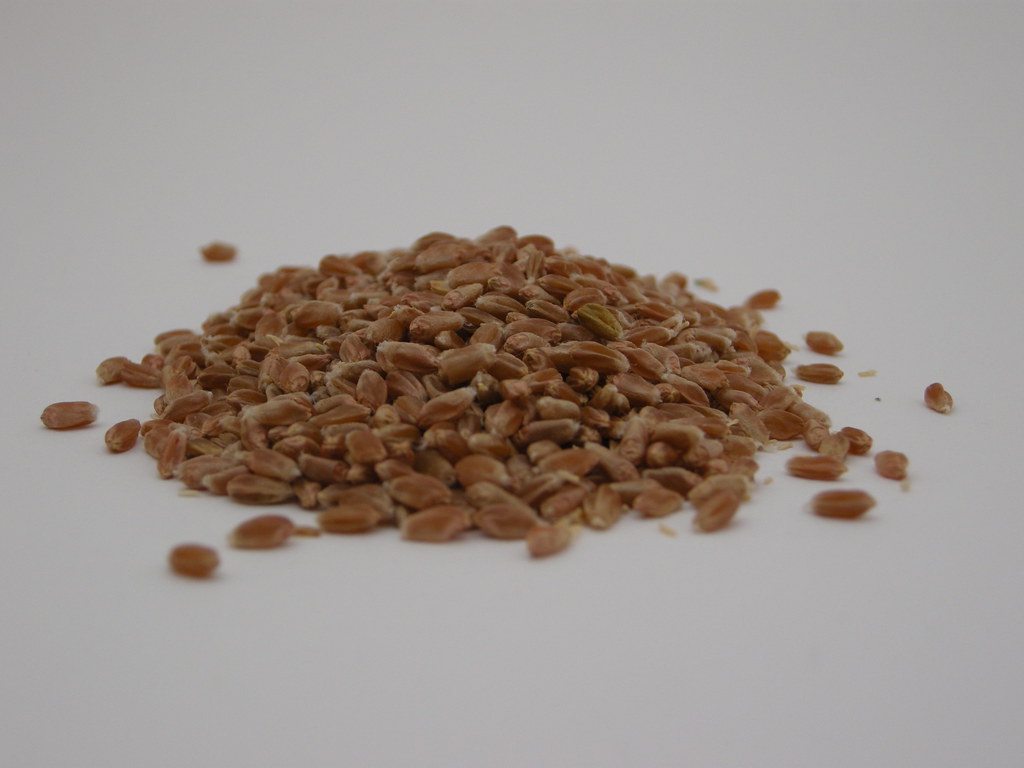
Usually, wheatgrass seed and wheat berries refer to the same basic product: an intact wheat kernel that can sprout. “Wheat berry” is mainly a food and grain term, while “wheatgrass seed” is a common growing or retail term. Growing guidance from Oregon State University Extension also uses wheat berries when discussing kernels for growing wheatgrass.
The important qualification is that the label alone does not guarantee that the kernels will germinate or are suitable for edible wheatgrass. Before buying, check whether the product is intact, viable, appropriately processed, and untreated or otherwise affirmatively confirmed suitable for food or sprouting use.
This guide focuses on common wheat kernels used to grow young wheatgrass in trays. It does not cover every plant species that may be called “wheatgrass.”
What Is a Wheat Berry?
A whole wheat kernel
A wheat berry is the intact kernel of the wheat plant. A whole wheat kernel contains three main parts:
- Bran: the outer protective layers
- Endosperm: the central starchy portion
- Germ: the embryo-containing portion associated with new growth
Wheat berries are commonly sold as a whole-grain food. They can be cooked, milled, or used in other food applications. In the context of growing, the same intact kernel can also provide the structure needed to produce a new wheat plant.
The term wheat berry describes the kernel as a whole grain, but it does not necessarily identify:
- The wheat class or variety
- The kernel’s age
- Its storage history
- Whether it has been treated
- Whether it is still viable
The USDA Food and Nutrition Service description of whole grains and the Wheat Foods Council’s kernel anatomy guide describe the bran, endosperm, and germ. The Wheat Foods Council is an industry educational source, not a scientific authority.
Why the germ matters for sprouting
The germ is the embryo-containing part of the kernel. That is why an intact germ matters when the goal is to sprout wheat.
However, an intact kernel is not automatically a viable kernel. Wheat can lose its ability to germinate because of age, poor storage, moisture damage, processing, or other handling conditions. Whole structure and biological viability are related, but they are not the same thing.
What Does “Wheatgrass Seed” Mean?
“Wheatgrass seed” is generally a practical growing or retail term for wheat kernels sold to produce young wheatgrass.
Depending on the seller, similar products may be called:
- Wheatgrass seed
- Wheat seed
- Wheat berries for wheatgrass
- Sprouting wheat berries
- Wheat kernels for growing wheatgrass
University extension materials commonly refer to the hard red winter wheat seeds used for wheatgrass as wheat berries. This reflects ordinary growing terminology rather than a separate botanical species called “wheatgrass seed.” The Oregon State University wheatgrass guide is one example.
The phrase wheatgrass seed does not, by itself, establish:
- A specific germination percentage
- A particular wheat variety or class
- That the kernels are untreated
- That the product is certified organic
- That the product is suitable for edible wheatgrass
- That the kernels were recently tested for viability
There is one important labeling distinction. Covered agricultural seed may be subject to federal labeling requirements that include information such as germination percentage, while food-sold wheat berries or informal retail products may not provide comparable information. The USDA Agricultural Marketing Service Federal Seed Act page explains the broader seed-labeling framework.
In practical terms:
- Food-sold wheat berries are generally marketed as a food ingredient and may not include germination information.
- Informal wheatgrass-seed products are marketed for growing, but the amount of viability or treatment information can vary.
- Agricultural planting seed may be subject to seed-labeling requirements and may include treatment disclosures or restrictions against food use.
So, the product name is only a starting point. The condition, intended use, processing, treatment status, and available viability information matter more than the wording alone.
Wheatgrass Seed vs Wheat Berries: The Practical Difference
The terms often overlap, but they may communicate different intended uses.
| Label | Usually means | What the buyer should verify |
|---|---|---|
| Wheat berries | Whole wheat kernels generally sold as food | Whether the kernels remain intact and viable |
| Wheatgrass seed | Wheat kernels marketed for growing wheatgrass | Wheat class or type, treatment status, and germination information |
| Wheat seed | A broad seed or agricultural term | Whether it has been chemically treated and whether it is suitable for food-related growing |
| Sprouting wheat berries | Wheat kernels positioned for sprouting | What the seller means by “sprouting” and whether viability information is provided |
| Cracked, rolled, pearled, polished, or milled wheat | A processed wheat product | Whether the germ remains intact and capable of sprouting |
| Treated seed | Seed treated for agricultural purposes | Do not use for food or edible wheatgrass |
The key point is:
Retail terminology is not perfectly standardized. One seller may call a product “wheatgrass seed,” while another may call a similar product “sprouting wheat berries.”
Can You Grow Wheatgrass From Grocery-Store Wheat Berries?
Sometimes. Intact grocery-store wheat berries may grow wheatgrass if they are still viable and have not been processed or treated in a way that prevents sprouting. Extension guidance indicates that wheat berries from grocery or bulk-food sections may sometimes be used for wheatgrass, but the Oregon State University wheatgrass guide does not make every food-sold product a germination guarantee.
A food-sold product is intended primarily as a food ingredient, not necessarily as seed with a stated germination performance. That does not mean grocery-store wheat berries will fail; it means the buyer may have less information about viability.
What to check before trying grocery-store wheat berries
Look for kernels that are:
- Whole and intact
- Not cracked, rolled, pearled, polished, or milled
- Clearly identified as wheat
- Sold for food or sprouting with the intended use clearly stated
- Packaged and stored in a way that protects them from moisture
- Supported by useful information from the seller
- Suitable for a small germination test before planting a full tray
If the product is sold as agricultural planting seed, do not rely on untreated status alone. Use it for edible wheatgrass only when the seller affirmatively confirms that it is suitable for food or sprouting use. Otherwise, choose a product clearly sold for food, sprouting, or wheatgrass growing.
Test a small sample first
If you are unsure about a batch, test a small sample before using the entire package. A simple paper-towel germination test can provide practical evidence about whether the kernels are likely to sprout. The UC Agriculture and Natural Resources guide to assessing seed viability describes this type of test.
A home test can show whether the sample is sprouting. It does not establish the exact commercial germination rate for the entire package.
If a sample fails to sprout, possible explanations include age, poor storage, moisture damage, or processing. Testing can help prevent you from committing an entire tray to kernels that are unlikely to grow.
What Type of Wheat Is Used for Wheatgrass?
Hard red winter wheat
Hard red winter wheat is a common option in wheatgrass-growing guidance, including the Oregon State University wheatgrass guide, and is identified in some commercial wheatgrass listings.
That does not mean it is required or universally superior. The available sources do not establish that hard red winter wheat always produces the best flavor, highest juice yield, strongest growth, or greatest nutritional value compared with every other wheat class.
Other wheat classes
The USDA recognizes several wheat classes, including:
- Hard red winter wheat
- Hard red spring wheat
- Soft red winter wheat
- Hard white wheat
- Soft white wheat
- Durum wheat
The USDA wheat standards show why the phrase wheat berry is not enough to identify a particular wheat class or variety.
For tray-grown wheatgrass, the immediate buying questions are usually whether the kernels are intact, viable, appropriately labeled, and suitable for sprouting. The wheat class may also matter to you, but the available evidence does not support declaring one class universally best.
Food-Sold Wheat Berries vs Agricultural Planting Seed
These products should not automatically be treated as interchangeable.
Why treatment status matters
Agricultural seed may be chemically treated to protect it during field planting. The USDA guidance on labeling chemically treated seed explains treatment disclosures and related labeling requirements.
Treated products may carry warnings such as:
- “Do not use for food”
- “Do not use for feed”
- Similar restrictions against food-related use
Do not use seed with chemical-treatment disclosures or food- or feed-use warnings to grow wheatgrass intended for human consumption or pet use.
Not all agricultural seed is necessarily treated. The important point is that agricultural planting seed should be checked rather than assumed suitable for edible growing. If treatment status is unclear, or if the seller does not affirmatively confirm suitability for food or sprouting use, choose a product clearly sold for food or sprouting.
Food-grade does not automatically mean viable
In this article, food-grade is used as a practical description for wheat sold for human food. It is not meant to suggest that every retailer uses one uniform legal or technical definition.
Food-sold wheat berries may be capable of sprouting, but a food label does not guarantee germination. Likewise:
- Untreated describes chemical treatment status, not overall sanitation.
- Organic describes an agricultural or certification attribute, not guaranteed viability.
- Non-GMO does not prove that kernels will germinate.
- Raw does not establish a germination rate.
These labels answer different questions. For growing wheatgrass, you still need to consider whether the kernels are intact and biologically viable.
What to Look for When Buying Wheatgrass Seed
Use this checklist when comparing products.
1. Intact kernels
Choose whole kernels rather than cracked, rolled, pearled, polished, or milled wheat when sprouting is the goal. Processing can damage or separate the germ and may reduce the likelihood of successful sprouting.
2. Clear intended use
Look for product information indicating that the kernels are intended for:
- Growing wheatgrass
- Sprouting
- Food use, if the seller also confirms that the kernels are suitable for sprouting
The intended use should be clear enough that you do not have to guess whether the product is agricultural planting seed or a food-oriented grain.
3. Affirmative treatment and suitability information
Do not rely only on the absence of a warning. Look for clear information that the kernels are untreated and affirmatively suitable for food or sprouting use.
If a product is sold as agricultural seed and its treatment status or food suitability is not clear, contact the seller before using it for edible wheatgrass.
4. No food- or feed-use prohibition
Do not use a package marked “Do not use for food,” “Do not use for feed,” or a similar warning for edible wheatgrass.
5. Wheat type or class identified where available
A package may identify hard red winter wheat or another class. This information can help you understand what you are buying, although the wheat class alone does not guarantee better performance.
6. Fresh, well-labeled packaging
Look for packaging that provides useful information about the product, seller, intended use, and storage. Avoid unidentified grain or unclear bulk products when you plan to grow edible wheatgrass.
7. Germination information or the ability to test a sample
Some regulated agricultural seed labels may include germination information. Food packages and informal retail products may not.
If a seller uses terms such as “sproutable” or “germination-tested,” look for information about what was tested and when. If no useful viability information is provided, test a small sample yourself.
8. Organic certification only if that attribute matters to you
Organic certification may be important to some buyers. However, organic status does not guarantee that the kernels are viable or that they will produce a particular yield, flavor, or quality of wheatgrass.
What Not to Buy for Edible Wheatgrass
Avoid or carefully investigate:
- Chemically treated agricultural seed
- Packages marked “Do not use for food” or “Do not use for feed”
- Cracked, rolled, pearled, polished, or heavily processed wheat when sprouting is the goal
- Old or poorly stored kernels with no evidence of viability
- Unidentified mixed grains
- Products with unclear treatment status, food suitability, or intended use
- Products making unsupported claims about superior flavor, juice yield, nutrition, or health effects
A product described as “untreated” is not automatically sanitary or free from all microbial risks. Treatment status is only one part of choosing and handling a product.
Frequently Asked Questions
Conclusion
Wheatgrass seed and wheat berries usually refer to the same intact wheat kernel, particularly when discussing tray-grown wheatgrass. The important difference is not always the name on the package. It is whether the kernels are:
- Intact
- Biologically viable
- Untreated and affirmatively confirmed suitable for food or sprouting
- Clearly identified
- Appropriate for edible growing
Hard red winter wheat is a common wheatgrass option, but it is not the only possible choice or proven to be universally superior. Grocery-store wheat berries may sprout, but a food label is not a germination guarantee.
When in doubt, inspect the label, avoid treated agricultural seed, confirm both treatment status and intended food or sprouting suitability when necessary, and test a small sample before planting a full batch.
Research & Further Reading
Authoritative sources
- USDA National Agricultural Library — Seeds terminology
- Oregon State University Extension — Directions for How to Grow a Wheatgrass Pet Pal
- USDA Agricultural Marketing Service — Federal Seed Act
- USDA Agricultural Marketing Service — United States Standards for Wheat
- USDA Agricultural Marketing Service — Labeling Requirements for Chemically Treated Seed
- UC Agriculture and Natural Resources — Assessing Seed Viability
- USDA Food and Nutrition Service — Resource Grains
- University of Illinois Extension — Wheat Berries, A True Whole Grain
- **University of Minnesota Strand Memorial Herbarium — *Triticum aestivum***
- USDA Agricultural Research Service — Kernza and Intermediate Wheatgrass
- USDA Natural Resources Conservation Service — Grass Grows All Around
Industry educational source
- Wheat Foods Council — Kernel of Wheat
This is an industry educational source used for supplementary kernel-anatomy information, not scientific, medical, nutrition, or food-safety evidence.
Company and product information
- Andi’s Way — Organic Wheat Seed for Growing Wheatgrass / Sprouting Wheat Berries
This is company and product information about retail terminology and a wheatgrass-growing product. It is not scientific, medical, nutrition, or food-safety evidence.
Related guides
How to Bottom-Water Microgreens Without Waterlogging the Tray
Learn how to bottom-water microgreens with nested trays, moisture checks, drain-off steps, and practical tips to avoid soggy media and standing water.
12 min read
Best Growing Medium for Microgreens: Soil vs Coco Coir vs Grow Mats
Compare potting mix, coco coir, and grow mats for microgreens. Learn the trade-offs in watering, cleanup, crop support, reuse, tray setup, and food safety.
16 min read
Do Microgreens Regrow After Cutting?
Most microgreens are a one-time harvest. Learn why some shoots may regrow after cutting, how baby greens differ, and when reseeding is the better choice.
8 min read
Stay in the loop
New guides, when they publish
An occasional email when a new guide goes live. No spam.
Your email is stored privately for future guide updates. No emails are being sent yet. Privacy policy