Growing & Seeds · Growing
Best Growing Medium for Microgreens: Soil vs Coco Coir vs Grow Mats
There is no single best growing medium for every microgreen crop or home setup. The practical choice depends on the crop, how you water, your tray setup, how much loose-media handling you want, and the specific product you use.
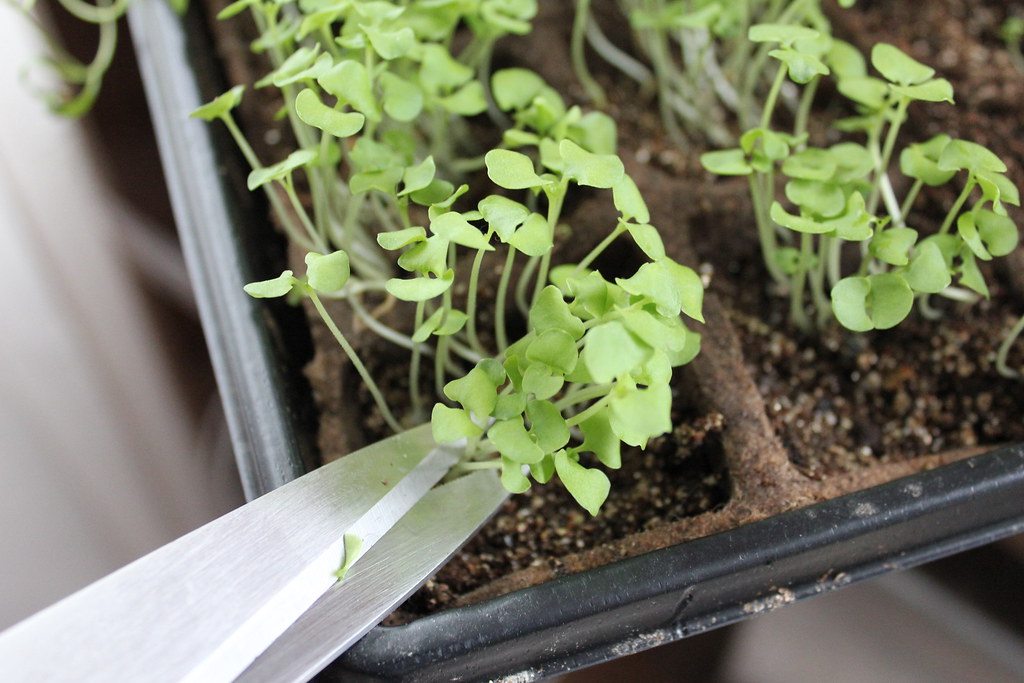
For many first-time growers, a lightweight potting or seed-starting mix or loose coco coir is a versatile starting point. Grow mats can be a good fit when reducing loose-media handling and creating a more standardized tray workflow matter most. None of these options automatically delivers better yield, faster growth, safer greens, or higher nutrient content in every situation.
In this guide, “soil” means a clean, lightweight potting or seed-starting mix suitable for shallow trays. It does not mean dense mineral soil dug from an outdoor garden.
Soil vs Coco Coir vs Grow Mats at a Glance
| Medium | May suit growers who prioritize | Water-management considerations | Tray and crop support | Harvest and cleanup | Reuse and disposal considerations | Main watch-out |
|---|---|---|---|---|---|---|
| Lightweight potting or seed-starting mix | A familiar loose-medium workflow | Keep evenly moist but avoid saturation | A loose substrate for shallow tray growing | Loose material must be handled during setup and cleanup | Reuse requires a sanitation and crop-health decision | Do not substitute dense garden soil |
| Loose coco coir | A lightweight, soilless loose medium | Water needs depend on the crop, product, and setup | Crop response varies by species and management | Still involves loose-media handling | Follow the supplier’s use instructions; consider sanitation before reuse | Do not assume every coir product is prepared identically |
| Grow mats | A tidy, standardized, low-loose-media workflow | Water needs vary substantially among mat materials | Performance depends on the crop and type of mat | Can reduce loose-medium handling | Natural-fiber and reusable mats are different categories | Do not treat all mats as interchangeable |
These are trade-offs, not universal rankings. Virginia Tech recommends selecting microgreen substrates based on water-holding capacity, irrigation compatibility, cost, availability, reusability, and potential plant- and human-pathogen concerns—and testing the material within the intended crop and production system. Virginia Tech
First, What Does “Soil” Mean for Microgreens?
Potting Mix Is Not the Same as Garden Soil
When growers say they raise microgreens “in soil,” they often mean a bagged potting mix or seed-starting mix. These lightweight container media are different from native mineral soil. They are generally better suited to shallow indoor trays because they are designed for container growing.
Common microgreen media include lightweight soilless mixes, coco coir, and pre-cut grow mats. University of Maryland Extension
Why Garden Soil Is a Poor Default for Indoor Trays
Unmodified garden soil is usually not the best choice for an indoor microgreen tray. University of Maryland Extension advises against it because it can be too dense for container-grown microgreens and baby greens. A lightweight tray medium is generally easier to use in a shallow container and better aligned with standard indoor growing methods. University of Maryland Extension
That does not mean soil from outdoors can never be used in any growing context. It means that for a typical indoor tray, a clean, lightweight medium is the more practical default.
Potting or Seed-Starting Mix
Where a Loose Mix Can Work Well
A lightweight potting or seed-starting mix can suit growers who prefer a familiar container-growing format. It is spread in a tray, moistened, seeded, and harvested much like other indoor container crops.
This approach may appeal to gardeners who are comfortable working with loose media and do not mind managing spent material after harvest.
Benefits and Trade-Offs
Potential advantages of a lightweight loose mix include:
- A familiar planting method for container gardeners.
- A loose substrate suitable for shallow trays.
- A straightforward option for growers who want to compare microgreens with other indoor crops.
The trade-offs are largely about workflow:
- The medium must be added and leveled before planting.
- It needs careful moisture management; media should be moist but not saturated.
- Loose material must be managed during harvest and cleanup.
- Reusing material requires a deliberate decision about consistency, mold risk, and sanitation.
A potting or seed-starting mix is not inherently better than coco coir or mats. It is simply one useful format for growers who prefer a loose growing medium.
Coco Coir for Microgreens
Where Loose Coco Coir Can Work Well
Coco coir, also called cocopeat, is a fibrous growing medium made from coconut husk material. It is a lightweight, soilless option that can be used in trays similarly to a loose potting mix. Bantis et al., 2024
It can be a practical choice for growers who want a loose medium but prefer not to use a conventional potting mix. That does not make coir an automatic upgrade over every other medium.
Benefits and Trade-Offs
Potential benefits of loose coco coir include:
- A lightweight, soilless loose-medium format.
- A tray-growing option for growers who prefer coir’s handling characteristics.
- Compatibility with microgreen production when watering is adjusted to the crop and setup.
Potential trade-offs include:
- Coir still requires loose-media handling during planting, harvest, and cleanup.
- Its performance depends on the crop, irrigation method, nutrient strategy, and growing environment.
- Preparation and use instructions may differ by supplier, so follow the directions for the specific product.
Do not assume that every coco coir product is pre-washed, buffered, low in salts, or ready to use in precisely the same way.
What Research Can—and Cannot—Say About Coco Coir
Research shows that substrate can affect microgreen growth and measured crop composition, but it does not support the claim that coco coir is always better than potting mix, peat-based media, or mats.
In one 2024 controlled-environment study, researchers compared peat, coco coir, and a cannabis-fiber mat across mustard, radish, and pea microgreens while also changing nutrient-solution strength. Results differed by crop and treatment. Peat combined with nutrient solution showed strong overall production and quality potential in that experiment, while coco coir and the mat performed efficiently for mustard. Those findings are useful context, but they do not establish a universal ranking for home growers. Bantis et al., 2024
Another 2024 study compared cocopeat with sandy loam soil across seven microgreen crops and found meaningful differences in morphology and quality measures. That study reinforces the point that crop and medium can interact—but it should not be treated as direct evidence that cocopeat will outperform a lightweight commercial potting or seed-starting mix, because sandy loam soil is a different material. Gunjal et al., 2024
Grow Mats for Microgreens
What Counts as a Grow Mat?
“Grow mat” is a broad category, not one uniform medium. Mats may be made from hemp, jute, bamboo, wood fiber, coconut coir, or other materials. Some systems also use reusable silicone mats, which are distinct from natural-fiber mats. University of Maryland Extension
Material matters. A mat’s thickness, texture, water-holding behavior, and reuse options can vary, so a recommendation for one mat should not automatically be applied to another.
Why Growers Choose Mats
Grow mats replace loose potting mix or coir in the tray. This format can appeal to growers who want:
- No loose substrate to spread before seeding.
- Less loose material to handle around harvest.
- A more repeatable tray-preparation routine.
- A tidy-looking setup.
These are workflow considerations, not guarantees of better crop performance. Mats still require appropriate hydration, clean trays, good airflow, and watering practices matched to the crop and material.
Why Mat Material Matters
Watering needs can differ significantly between mat materials. Virginia Tech notes that hemp retains more water than burlap in its systems and therefore requires a lower irrigation rate. Virginia Tech
That example shows why “grow mat” is too broad to support one universal watering schedule. A hemp mat, jute mat, coir mat, wood-fiber mat, and silicone mat may all behave differently in the same growing environment.
Crop performance can vary as well. Before committing to a new mat material, test it with the seed and tray system you plan to use regularly.
Reusable vs. Single-Use Mats
Many natural-fiber mats are intended for a single crop cycle. Reusable silicone mats are a separate category and need to be cleaned according to the manufacturer’s instructions between crops. University of Maryland Extension
Do not assume every natural mat is compostable, biodegradable, or accepted by a local composting program. Check the manufacturer’s disposal guidance and your local rules for the specific material.
Which Medium Is Best for Your Goal?
Best Starting Point for a First Tray
For many beginners, a lightweight potting or seed-starting mix or loose coco coir is a practical place to begin if they want to learn basic tray moisture management with a loose medium.
Choose a grow mat instead if avoiding loose media is your main priority. The best beginner medium is often the one you can water, harvest, and clean consistently.
Best When the Priority Is the Least Loose-Media Mess
Grow mats are often the most practical format for growers who want a tray without loose substrate. They can simplify the setup and reduce the amount of loose material handled after harvest.
However, mat material still matters. A highly absorbent mat may need a different irrigation approach from a thinner or less absorbent mat.
Best for Growers Who Prefer a Loose Medium
Choose between potting mix and coco coir based on your own preferences for setup, handling, watering, and cleanup—not because one is promised to outperform the other in every crop.
If you are undecided, grow the same seed lot in both media under similar conditions. Your results will be more relevant to your home, trays, and watering habits than a generic claim about a universal winner.
Best for a Standardized Tray Workflow
Mats can appeal to growers who value a repeatable routine. A mat can be selected or cut to fit the tray, hydrated as directed, seeded, and managed within a consistent setup.
That standardization does not guarantee identical results across crops. Seed size, rooting habits, crop density, and water needs can still change how well a particular crop performs.
What About Large Seeds and Small Seeds?
There is no reliable universal rule that peas and sunflowers always need one medium while broccoli, radish, or other small-seeded crops always need another.
Controlled studies show that microgreen species can respond differently to substrates. The practical approach is to run a small trial with the crop, medium, tray, and watering method you expect to use long term.
Watering and Tray Setup Matter as Much as the Medium
Match Watering to the Medium
Water-holding capacity and irrigation needs vary among loose mixes, coco coir, and individual mat materials. Rather than relying on a fixed schedule, monitor the tray and adjust based on its condition.
Useful questions include:
- Is the medium drying excessively between waterings?
- Is water pooling in the tray?
- Is the surface staying saturated?
- Are plants growing evenly across the tray?
- Does the material remain wet longer than expected?
University guidance recommends keeping microgreen media moist without over-saturating it and maintaining air circulation to discourage mold and plant disease. University of Maryland Extension
Bottom Watering and Nested Trays
Bottom watering usually involves placing a drainage tray inside a solid tray, then adding water to the lower tray so it can move upward through the drainage holes and into the medium.
This approach can work with loose mixes, coco coir, and many mats, but it will not behave identically across all materials. Adjust the amount and timing of water to the selected medium and crop rather than assuming every tray needs the same routine. University of Maryland Extension
Avoid Over-Saturation and Poor Airflow
Too much moisture and insufficient airflow can create crop-management problems regardless of the growing medium. No potting mix, coir product, or mat should be described as mold-proof.
If a tray stays overly wet, reassess watering volume, drainage, airflow, and the water-holding behavior of the medium.
Food Safety, Cleanup, and Reuse
Medium Choice Does Not Replace Safe Handling
Potting mix, coco coir, and grow mats should not be ranked as universally safer or less safe for raw microgreens. Food safety depends on more than the medium.
Use clean seed, clean water, clean trays, clean tools, and clean harvest surfaces. Wash hands before handling the crop, keep the growing area orderly, and reduce opportunities for contamination from animals, dirty equipment, or unclean water. North Carolina Department of Agriculture & Consumer Services
A laboratory study using deliberately contaminated radish seed found that E. coli O157:H7 could proliferate in both peat-moss-based soil-substitute and hydroponic microgreen production systems. This does not mean either system is inherently unsafe. It shows why seed controls, water quality, sanitation, and careful handling matter regardless of the medium. Xiao et al., 2015
Harvest Above the Media Line
Where practical, cut microgreens above the media line to limit direct contact between harvested greens and the growing medium. Keep harvest tools and food-contact surfaces clean. North Carolina Department of Agriculture & Consumer Services
This is one useful handling control, not a guarantee that raw microgreens are risk-free.
Reusing Media: Practical at Home, More Cautious at Scale
Guidance on reuse differs by context.
University of Maryland Extension notes that home growers may screen spent media, remove roots, and refresh it with new potting mix before reusing it. University of Maryland Extension
Purdue Extension takes a more cautious view for commercial micro-farmers, noting that reusing substrates can increase mold risk and is not the method of choice in that setting. Purdue Extension
The practical takeaway is that reuse is a risk-management decision. A home grower may choose to reuse material for personal growing, while a grower producing food at a commercial scale may decide that consistency and sanitation concerns outweigh potential savings.
Disposal and Composting
Avoid blanket assumptions about disposal. Natural-fiber mats are not automatically accepted for composting, and spent loose media may contain ingredients or contamination concerns that affect disposal options.
Check the manufacturer’s guidance for the exact medium or mat and follow local waste or composting requirements.
What Research Says About Yield and Nutrition
The Medium Can Matter, but It Is Not the Only Variable
Controlled research shows that substrate can influence yield and measured mineral, macronutrient, and phytochemical outcomes in microgreens. But the medium is only one part of the system.
Crop species, nutrient treatment, irrigation, light, harvest timing, and other growing conditions can all influence results. Virginia Tech
A 2020 controlled study of coriander, kohlrabi, and pak choi found that the growing substrate affected yield as well as measured phytochemical, mineral, and macronutrient characteristics. The findings did not establish one substrate as best in all situations. El-Nakhel et al., 2020
Why a Single Study Cannot Pick a Universal Winner
Several studies illustrate why broad medium claims are unreliable:
- A 2020 study found substrate-related differences in coriander, kohlrabi, and pak choi microgreens. El-Nakhel et al., 2020
- A 2024 study of mustard, radish, and pea compared peat, coco coir, and a cannabis-fiber mat under several nutrient-solution strengths and found crop- and treatment-specific results. Bantis et al., 2024
- A 2024 study comparing sandy loam soil and cocopeat across seven microgreen crops also found crop-specific differences in measured growth and quality outcomes. Gunjal et al., 2024
Together, these studies support a practical conclusion: medium selection matters, but the “best” result is conditional. Use research to understand possible trade-offs, then test your preferred medium in your own growing system.
Do Microgreens Need Fertilizer?
Many simple, short-cycle home microgreen grows can be completed without added fertilizer. University of Maryland Extension, for example, does not recommend fertilizer for its basic home-growing method. University of Maryland Extension
Yield-focused controlled-environment systems may use nutrient programs as part of a broader production strategy. The need for nutrients depends on the crop, medium, production goal, and full growing system—not simply on whether you use soil, coir, or a mat.
How to Run Your Own Side-by-Side Medium Trial
A small comparison trial is one of the most useful ways to choose a default medium for your own setup.
- Use the same seed lot for every tray.
- Use identical tray sizes.
- Keep planting date, seed weight, seed density, light, and blackout conditions consistent.
- Use a similar depth for loose media and comparable mat coverage for mats.
- Use a planned watering approach, adjusting only when one medium clearly needs different moisture management.
- Record:
- Days to harvest
- Crop height
- Harvest weight
- Visible crop quality
- Watering frequency
- Cleanup time
- Ease of harvesting
- Repeat the test with a second crop before choosing an overall favorite.
One small trial can show what works best in your own space. It cannot prove that the same medium will be best for every grower, crop, or climate.
Research & Further Reading
- University of Maryland Extension, Growing Microgreens and Baby Greens Indoors
https://extension.umd.edu/resource/growing-microgreens-and-baby-greens-indoors
- Virginia Tech, Introduction to Microgreen Production in Indoor Vertical Farms and Greenhouses
https://www.pubs.ext.vt.edu/SPES/spes-756.html
- Penn State Extension, A Step-by-Step Guide for Growing Microgreens at Home
https://extension.psu.edu/a-step-by-step-guide-for-growing-microgreens-at-home
- Purdue Extension, Grow Microgreens at Home
https://extension.purdue.edu/news/county/allen/2022/02/grow-microgreens-at-home.html
- El-Nakhel et al. (2020), Phenolic Constitution, Phytochemical and Macronutrient Content in Three Species of Microgreens as Modulated by Natural Fiber and Synthetic Substrates
https://pubmed.ncbi.nlm.nih.gov/32244953/ https://doi.org/10.3390/antiox9030252
- Bantis et al. (2024), Microgreen Vegetables’ Production Can Be Optimized by Combining the Substrate and Nutrient Solution in a PFAL
https://doi.org/10.1016/j.scienta.2024.113277
- Gunjal et al. (2024), Comparative Analysis of Morphological, Nutritional, and Bioactive Properties of Selected Microgreens in Alternative Growing Medium
https://doi.org/10.1016/j.sajb.2023.12.038
- North Carolina Department of Agriculture & Consumer Services, Microgreen Produce Safety Fact Sheet
https://www.ncagr.gov/divisions/food-drug-protection/produce-safety-program/NC-Microgreen-Produce-Safety-Fact-Sheet/open
- University of Nevada, Reno Desert Farming Initiative, Microgreens and Produce Safety
https://naes.unr.edu/dfi/publication.aspx?PubID=3468
- Xiao et al. (2015), Proliferation of Escherichia coli O157:H7 in Soil-Substitute and Hydroponic Microgreen Production Systems
https://doi.org/10.4315/0362-028X.JFP-15-063 https://www.ars.usda.gov/ARSUserFiles/333/Proliferation%20of%20E%20coli%20in%20soil-substitute%20microgreens%20Xiao%202015.pdf
- Andi’s Way company product information—not scientific evidence: Growing trays with and without drain holes
https://andisway.com/products/growing-trays-with-drain-holes
- Andi’s Way company collection information—not scientific evidence: Organic Microgreen Seeds and Beans collection, accessed through the supplied Organic Sprouting Seeds URL
https://andisway.com/collections/organic-sprouting-seeds
Frequently asked questions
Related guides
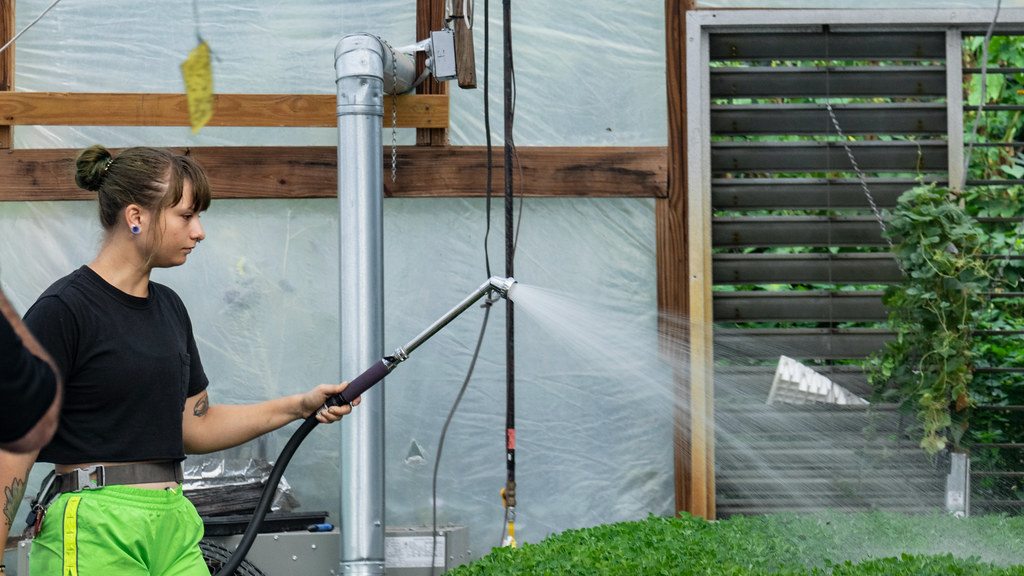
How to Bottom-Water Microgreens Without Waterlogging the Tray
Learn how to bottom-water microgreens with nested trays, moisture checks, drain-off steps, and practical tips to avoid soggy media and standing water.
12 min read
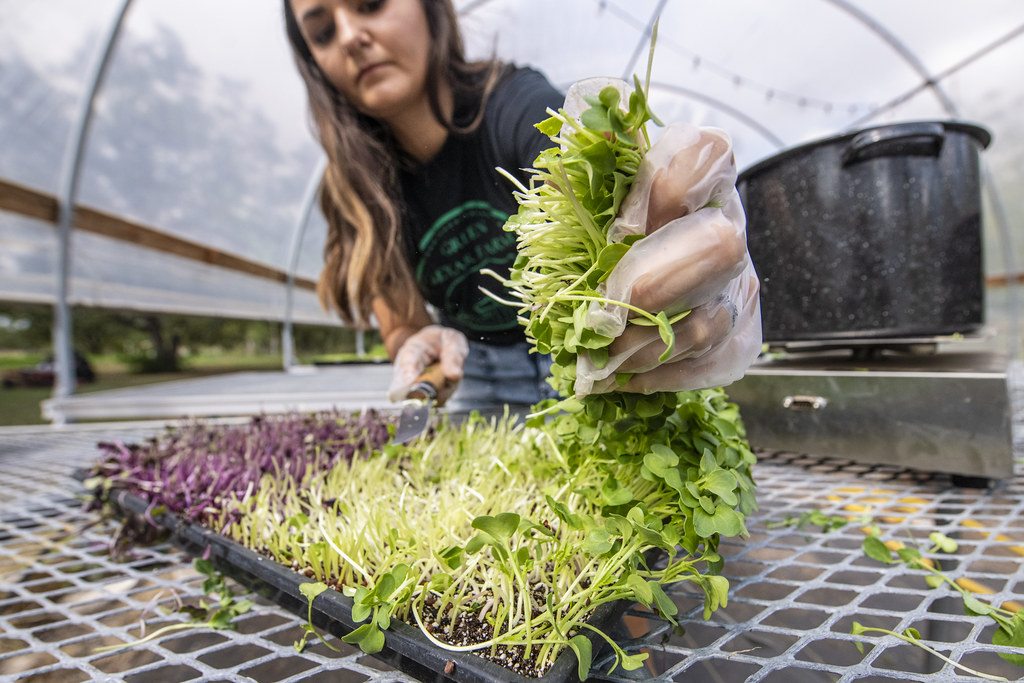
Do Microgreens Regrow After Cutting?
Most microgreens are a one-time harvest. Learn why some shoots may regrow after cutting, how baby greens differ, and when reseeding is the better choice.
8 min read
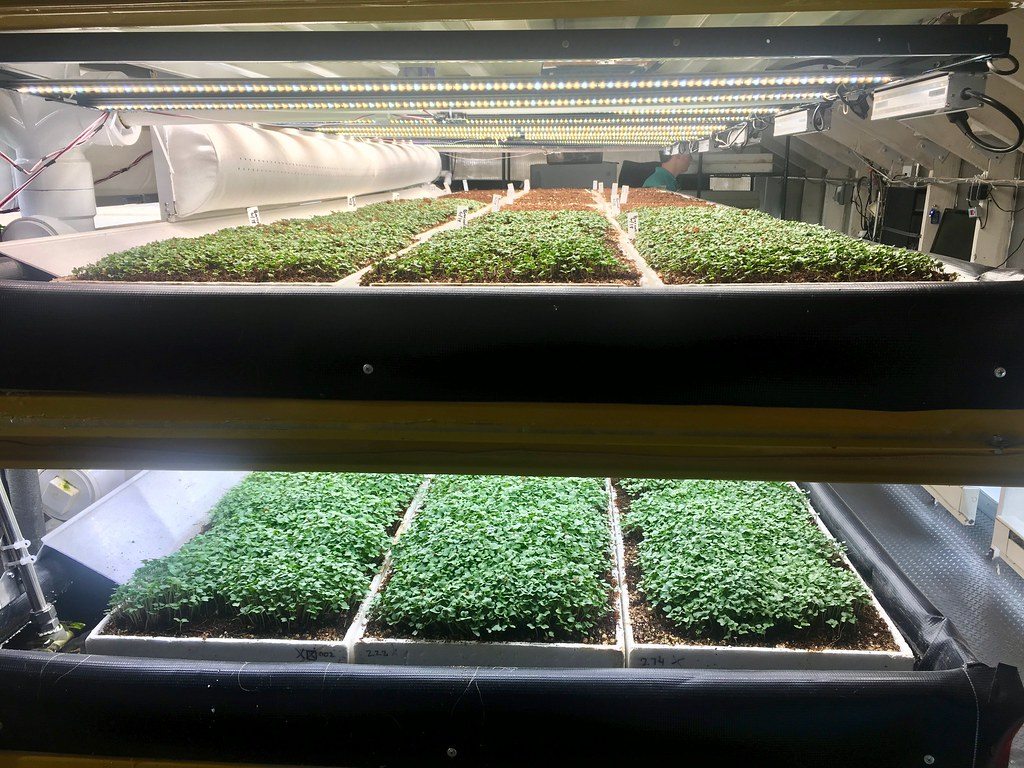
Microgreen Blackout Period: What It Is and Which Crops Need It
Learn what a microgreen blackout period is, how it differs from germination cover, which crops may benefit, and when to move trays into light.
13 min read
Stay in the loop
New guides, when they publish
An occasional email when a new guide goes live. No spam.
Your email is stored privately for future guide updates. No emails are being sent yet. Privacy policy