Growing & Seeds · Growing
How to Bottom-Water Microgreens Without Waterlogging the Tray
To bottom-water microgreens, place a growing tray with drainage holes inside a solid, watertight tray. Add water to the lower tray, let the growing medium absorb moisture from below, then pour off any water that remains. The goal is evenly moist growing medium—not saturated medium—and no persistent standing water beneath the tray. University of Maryland Extension
This guide covers the conventional nested-tray method for media-filled microgreens. The right amount of water and absorption time can vary by crop, growing medium, crop stage, and production setup, so there is no universal watering volume or schedule. Virginia Cooperative Extension
What Does Bottom Watering Mean for Microgreens?
Bottom watering means supplying water from underneath the growing tray instead of pouring or spraying it over the seeds and leaves.
In a conventional setup:
- The upper tray holds the growing medium and seeds and has drainage holes.
- The lower tray is solid and temporarily holds water.
- The growing medium draws water upward through the drainage holes, supplying moisture from below.
Once seedlings are established, bottom watering can limit direct wetting of the edible canopy. That can be useful for moisture management, but it does not guarantee prevention of mold, plant-health problems, or contamination. Penn State Extension
The Two-Tray Setup You Need
Use a perforated tray for the growing medium
The upper microgreen tray needs drainage holes for this method. It holds the medium and seeds while allowing water to move into the medium from below and excess moisture to drain away afterward. University of Maryland Extension
A tray without drainage holes cannot serve as the upper growing tray in this conventional bottom-watering arrangement.
Use a solid tray underneath
The lower tray catches drainage and temporarily holds water while the medium absorbs it. It should not be treated as a permanently full reservoir.
After the medium has had an opportunity to wick up water, inspect the lower tray. If water is still sitting there, pour it off rather than leaving the upper tray over standing water. Utah State University Extension demonstrates this drain-off approach for a coconut-coir tray. Utah State University Extension
This advice applies to conventional media-filled trays. Hydroponic, mat-based, and ebb-and-flow systems may use different irrigation arrangements and reservoir practices.
How to Bottom-Water Microgreens Step by Step
1. Start with evenly pre-moistened medium
Before sowing, moisten the growing medium evenly. It should not be dusty and dry, but it should not be dripping, muddy, or saturated either.
For coconut coir, Utah State University Extension suggests a useful tactile benchmark: the medium should feel wet to the touch but should not drip when squeezed, similar to a wrung-out sponge. This comparison is most useful for coir and similar absorbent media; properly hydrated mats and other media may feel different. Utah State University Extension
Starting with evenly moistened medium makes it easier to maintain consistent moisture after sowing.
2. During early germination, mist only as needed
During the first few days, seeds may need light misting to keep the surface from drying out. University of Maryland Extension recommends misting at this stage, then using bottom or top watering as the crop develops. University of Maryland Extension
Use a light mist only when the seed surface needs moisture. Avoid soaking the tray from above. As seedlings become established, bottom watering can become the main moisture-management method.
There is no single day when every microgreen should switch from misting to bottom watering. Crop type, seed size, medium, and room conditions all matter.
3. Nest the growing tray inside the solid tray
Place the perforated, medium-filled tray inside the solid lower tray. Check that the upper tray sits level and that the lower tray is clean and able to catch drainage.
The growing tray belongs on top; the solid tray belongs underneath.
4. Add a conservative amount of water to the lower tray
Add water to the solid lower tray rather than directly onto the foliage or growing medium.
Start conservatively instead of filling the lower tray deeply. Avoid assuming that every 10×20 tray needs the same water volume. Water use can vary with the crop, medium, stage of growth, and system. Virginia Cooperative Extension
A practical approach is to add a modest amount, allow the medium to absorb it, drain leftovers, and use what you observe to adjust the next watering.
5. Let the medium absorb water from below
Give the medium time to draw water upward from the lower tray. Absorption speed can differ among media and tray setups.
Growing media vary in water-holding capacity and the amount of air they provide around roots. For example, Virginia Cooperative Extension found that hemp and burlap required different irrigation rates in its production setting. Research also shows that substrates differ in water-holding and air-capacity characteristics. Virginia Cooperative Extension Kyriacou et al., Antioxidants
6. Check the lower tray for unabsorbed water
After a short absorption period, look in the lower tray. If water remains after the medium has taken up what it needs, pour it off and let the upper tray drain.
This drain-off step distinguishes conventional bottom watering from leaving plants in a permanent reservoir.
7. Check moisture before watering again
Do not water by the calendar alone. Before watering again, inspect:
- Growing medium: It should feel moist below the surface, not dry and crumbly.
- Appearance: Avoid media that look glossy, muddy, or saturated.
- Lower tray: It should not contain standing water between waterings.
- Tray weight: Over time, you can learn the difference between a freshly watered tray and one that has become noticeably lighter.
- Crop and setup: Compare individual trays rather than assuming they will all dry at the same rate.
Virginia Cooperative Extension notes that irrigation needs change with the production system, substrate, and crop growth stage. Virginia Cooperative Extension
A useful starting example for a 10×20 coconut-coir tray
Example, not a universal recipe: Utah State University Extension demonstrates a 10×20 coconut-coir method that uses 2 cups of water in the solid lower tray, then discards water remaining after 30 minutes. Utah State University Extension
The example is useful for understanding the drain-off principle, not for setting a mandatory volume or soak time. Your tray may behave differently depending on medium depth, crop, seed density, tray design, and growing conditions.
How to Tell Whether a Microgreen Tray Needs Water
A properly watered tray is moist enough to support the crop without remaining saturated.
Use these practical checks:
| Check | What you want to see | What suggests you should adjust |
|---|---|---|
| Medium texture | Moist below the surface | Muddy, heavy, slick, or saturated medium |
| Lower tray | Empty after the growing tray has drained | Water remaining between waterings |
| Tray weight | Lighter than after watering, but not bone-dry | A constantly heavy tray that never seems to dry |
| Canopy | Foliage not repeatedly soaked by irrigation | Persistently wet foliage from frequent misting or other conditions |
| Comparison between trays | Each tray assessed individually | One watering rule used for every crop and medium |
Different crops, media, growth stages, and home growing setups can cause trays to dry at different rates. Rather than relying on a fixed schedule, observe each tray and adjust gradually.
How to Avoid Waterlogging When Bottom Watering
Do not leave excess water in the lower tray
The lower tray is a temporary source of water, not a permanent reservoir. If water remains after the medium has had time to absorb it, drain it away. Utah State University Extension
Persistent water does not diagnose root rot or another specific disease. It is a practical sign that you may need to use less water, wait longer before the next watering, or check whether the tray is level and draining freely.
Use less water when the medium is already moist
Check the medium before adding water. If it is still evenly moist and the tray remains heavy, wait and reassess later.
Adding more water before the tray needs it is a common way to create overly wet medium.
Match watering to the growing medium
Coir, soil-like mixes, hemp products, burlap, and growing mats do not necessarily retain water or provide root-zone aeration in the same way. A suitable medium needs enough water retention for the crop while still allowing air around the root zone. Kyriacou et al., Antioxidants
Do not assume that a coir tray, a soil-based tray, and a mat-based tray should receive the same amount of water or sit in water for the same amount of time.
Adjust as the crop and environment change
Water demand may change as microgreens grow. Research on soilless kale microgreens supports tailoring irrigation to the crop and production conditions rather than applying one universal moisture setpoint to every crop and system. Tavan et al., Frontiers in Sustainable Food Systems
For home growers, the practical takeaway is simple: inspect the tray, use a conservative amount of water, drain excess, and adjust based on how that specific crop and medium respond.
Maintain airflow and avoid constantly saturated conditions
Excess moisture and inadequate drainage can encourage mold or other plant-health problems. Penn State Extension
Bottom watering can reduce direct wetting of established foliage, but it does not guarantee freedom from mold or disease. Good moisture management also includes avoiding saturation and keeping reusable growing equipment clean.
Bottom-Watering Problems and Practical Fixes
| What you notice | Possible moisture-management issue | Practical next step |
|---|---|---|
| Water remains in the lower tray | More water than the medium could use may have been added; the tray may also need a drainage or leveling check | Pour off remaining water; use less next time and confirm the tray sits level |
| Medium stays heavy, muddy, or wet-looking | The tray may have been watered before it needed more moisture | Delay the next watering and reassess the medium first |
| Seed surface dries during early germination | Surface moisture may need temporary support | Use a light mist as needed instead of flooding the tray |
| One tray dries much faster than another | Crop, medium, tray fill, or growing conditions differ | Adjust by tray rather than following one fixed rule |
| Canopy remains wet | Misting, humidity, or limited airflow may be contributing | Once the crop is established, bottom-water where appropriate and reassess conditions |
| Reusable trays have old debris or residue | Cleaning was overlooked between crops | Remove old growing-medium debris and clean trays before reuse |
These signs are practical watering clues, not plant-disease diagnoses.
Common Bottom-Watering Mistakes
- Using a growing tray without drainage holes
- Treating the lower tray as a permanent water reservoir
- Adding water before checking whether the medium is already moist
- Following a rigid daily watering schedule regardless of conditions
- Using the same water amount for every crop and medium
- Over-misting after seedlings are established
- Ignoring standing water left in the lower tray
- Reusing trays without removing old growing-medium debris and cleaning them
University and Extension guidance recommends washing reusable trays and avoiding excess moisture while growing microgreens. University of Maryland Extension Penn State Extension
Bottom Watering, Mold, and Food Safety: A Brief Reality Check
Bottom watering is a moisture-management technique, not a sanitation treatment.
Because water is added below the growing tray, bottom watering can limit direct wetting of the canopy after germination. But it does not guarantee that mold, damping-off, or foodborne contamination will not occur.
In a controlled study of radish microgreens grown from deliberately inoculated seed, E. coli O157:H7 survived and proliferated in both overhead- and bottom-irrigated soil-substitute production systems. That does not mean all microgreens are contaminated; it shows that irrigation method alone does not make a crop microbiologically safe. Xiao et al., Journal of Food Protection
Research & Further Reading
Educational and research sources
University of Maryland Extension. Growing Microgreens and Baby Greens Indoors. https://extension.umd.edu/resource/growing-microgreens-and-baby-greens-indoors
Utah State University Extension. Grow Your Own Microgreens. https://extension.usu.edu/yardandgarden/research/grow-your-own-microgreens
Virginia Cooperative Extension. Introduction to Microgreen Production in Indoor Vertical Farms and Greenhouses. https://www.pubs.ext.vt.edu/SPES/spes-756.html
Pennsylvania State University Extension. A Step-by-Step Guide for Growing Microgreens at Home. https://extension.psu.edu/a-step-by-step-guide-for-growing-microgreens-at-home
Pennsylvania State University Extension. Growing Microgreens. https://extension.psu.edu/growing-microgreens
Tavan, M., et al. Optimizing Sensor-Based Irrigation Management in a Soilless Vertical Farm for Growing Microgreens. Frontiers in Sustainable Food Systems. https://www.frontiersin.org/journals/sustainable-food-systems/articles/10.3389/fsufs.2020.622720/full
Kyriacou, M. C., et al. Phenolic Constitution, Phytochemical and Macronutrient Content in Three Species of Microgreens as Modulated by Natural Fiber and Synthetic Substrates. Antioxidants. https://pubmed.ncbi.nlm.nih.gov/32244953/
Xiao, Z., et al. Proliferation of Escherichia coli O157:H7 in Soil-Substitute and Hydroponic Microgreen Production Systems. Journal of Food Protection. https://pubmed.ncbi.nlm.nih.gov/26408126/
Company/product information — not scientific evidence
Andi’s Way. Growing Trays – 10×20 Flats With OR Without Drain Holes. https://andisway.com/products/growing-trays-with-drain-holes
Frequently asked questions
Related guides
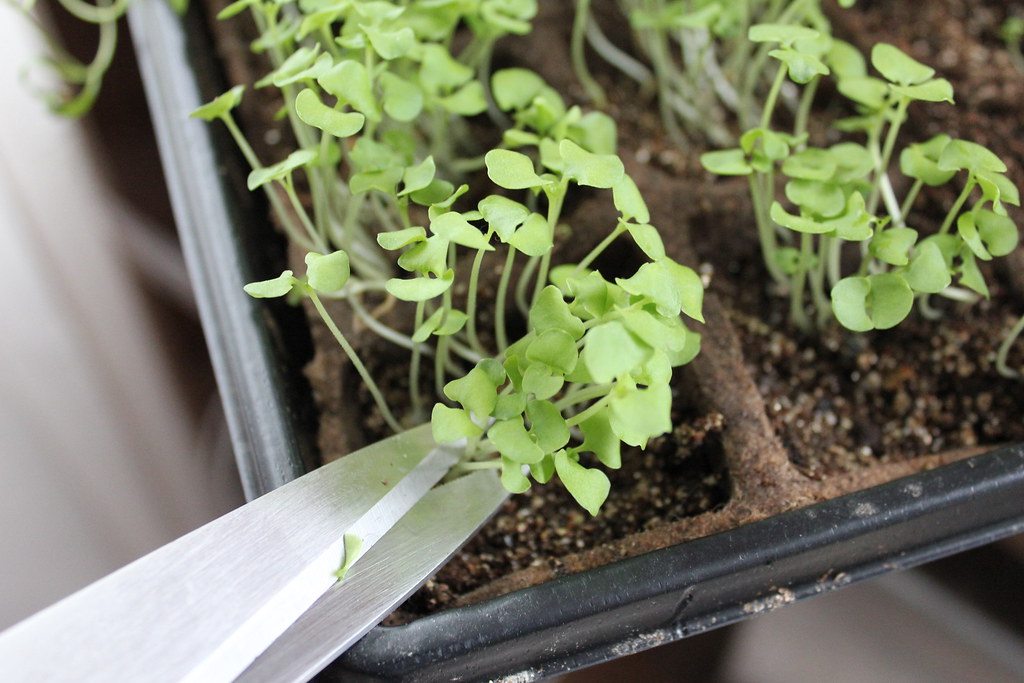
Best Growing Medium for Microgreens: Soil vs Coco Coir vs Grow Mats
Compare potting mix, coco coir, and grow mats for microgreens. Learn the trade-offs in watering, cleanup, crop support, reuse, tray setup, and food safety.
16 min read
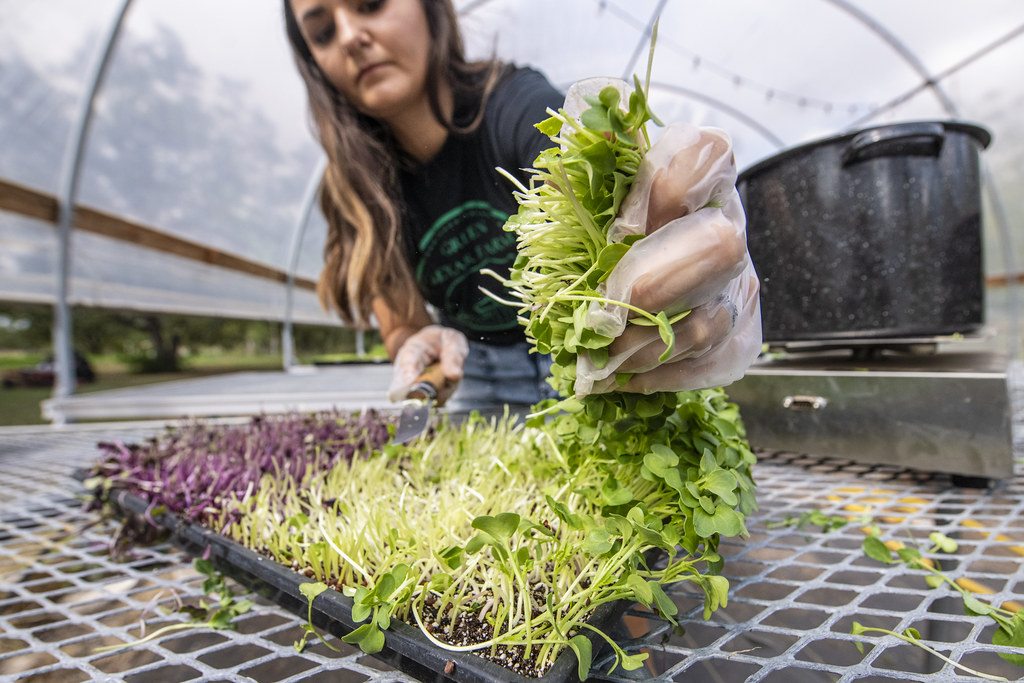
Do Microgreens Regrow After Cutting?
Most microgreens are a one-time harvest. Learn why some shoots may regrow after cutting, how baby greens differ, and when reseeding is the better choice.
8 min read
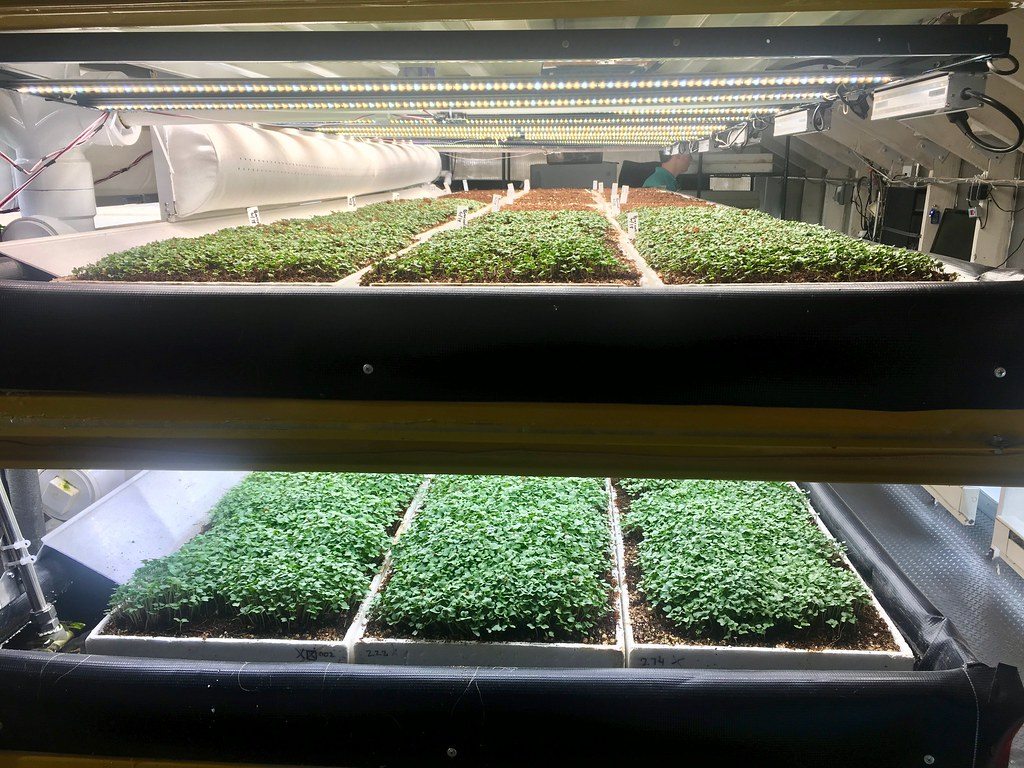
Microgreen Blackout Period: What It Is and Which Crops Need It
Learn what a microgreen blackout period is, how it differs from germination cover, which crops may benefit, and when to move trays into light.
13 min read
Stay in the loop
New guides, when they publish
An occasional email when a new guide goes live. No spam.
Your email is stored privately for future guide updates. No emails are being sent yet. Privacy policy