Growing & Seeds · Growing
Wheatgrass Mold vs Root Hairs: How to Tell the Difference
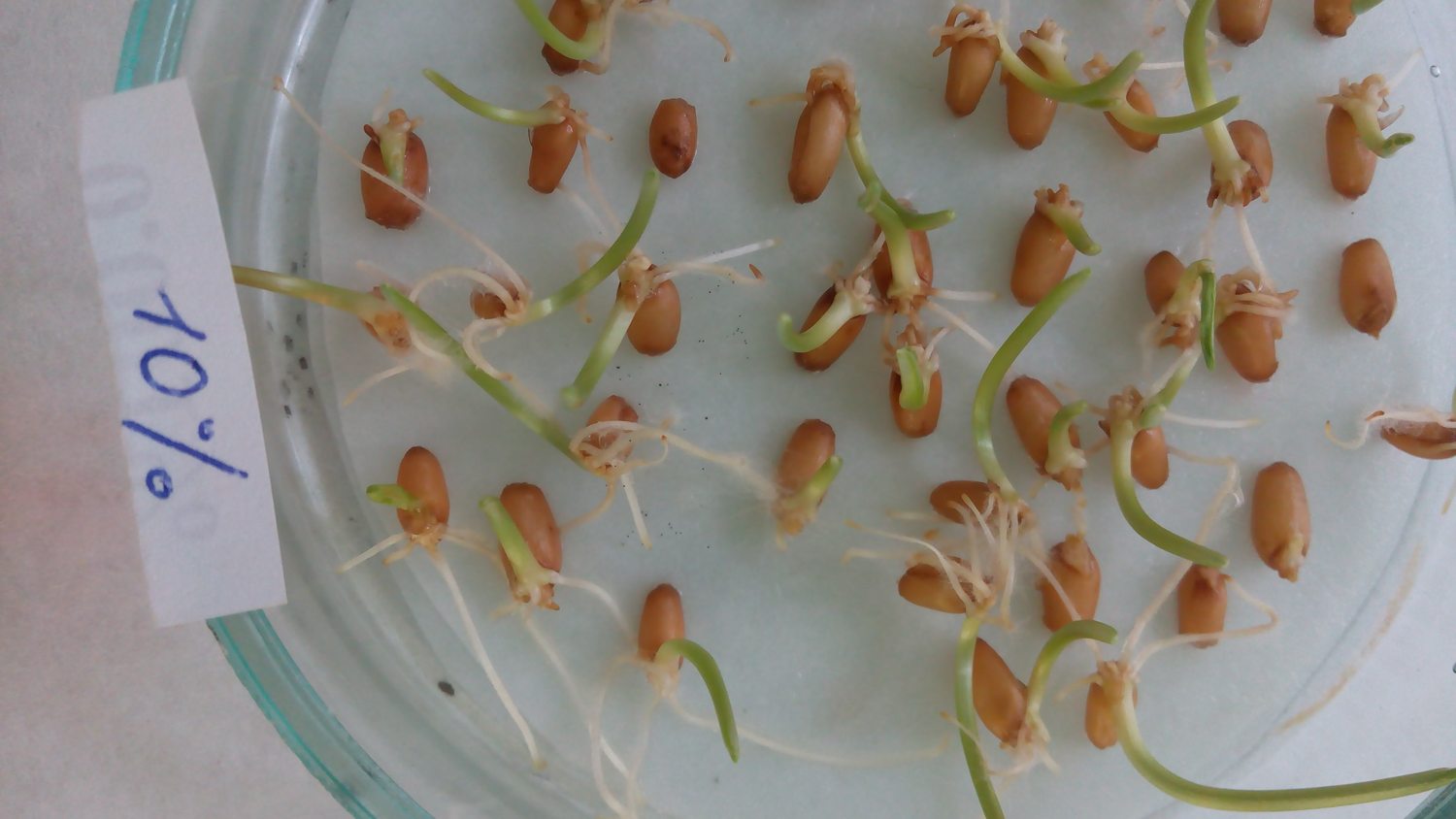
White fuzz in a wheatgrass tray is not automatically mold. Fine, fairly even fuzz that stays closely attached to individual roots is more consistent with normal root hairs. Growth that forms irregular patches, bridges seed hulls or growing medium, spreads across open spaces, or appears alongside decay is more concerning for mold.
Color alone cannot settle the question: mold can be white, and root hairs are often white. If your tray appears likely moldy, has slime or deteriorating seedlings, or still seems questionable before you plan to consume or juice it, the cautious approach is to discard the tray rather than harvest or juice it.
Quick Comparison: Wheatgrass Root Hairs vs. Mold
| Check | More consistent with root hairs | More concerning for mold |
|---|---|---|
| Attachment | Closely attached to individual roots | Extends across seed hulls, growing medium, stems, or open spaces |
| Pattern | Fine, relatively even, root-following halo | Patchy, irregular, cottony, or web-like growth |
| Location | Concentrated in the root zone | Covers decaying seeds, hulls, medium, or multiple surfaces |
| Spread | Remains associated with roots | Expands outward or bridges separate materials |
| Color | Often white | Can also be white; color alone is not diagnostic |
| Tray condition | Seedlings appear firm and normally developing | Slime, decay, discoloration, or collapsed seedlings |
| After light misting | May become less visible as root hairs flatten against roots | The response is inconclusive and cannot confirm safety |
These are practical visual clues, not laboratory identification. For background on root-hair structure, see Oregon State University Extension’s guide to vegetative plant parts. For general guidance on visible mold in moist foods, see the USDA Food Safety and Inspection Service guidance on molds on food.
Visual clues are not laboratory identification. A close look can help you decide whether the fuzz is more consistent with root hairs or likely mold, but it cannot identify a fungal species or prove that a tray is microbiologically safe.
What Normal Root Hairs Look Like on Dense Wheatgrass
Why wheatgrass can look especially fuzzy
Wheatgrass is often grown in dense trays, so many roots emerge in a small area. When those roots overlap, their root hairs can combine visually into a white, fuzzy-looking layer.
That can be especially noticeable early in the grow, when the roots, seed hulls, and growing medium are still easy to see. A white halo around many individual roots does not automatically mean the tray has mold.
Still, density can make a tray harder to inspect. Look beyond one small patch and assess whether the fuzz consistently follows roots or instead spreads over unrelated surfaces.
What root hairs are
Root hairs are normal, delicate extensions of root epidermal cells. They form in a zone just behind a growing root tip and increase the root’s surface area for absorbing water and minerals.
The Oregon State University Extension guide to vegetative plant parts describes root hairs as fine, elongated structures that can look like down on the root surface.
White fuzz is more consistent with root hairs when it:
- follows individual roots;
- stays close to the root surface;
- appears fairly evenly around similar root zones;
- does not form separate threads across seed hulls, medium, or stems; and
- occurs on otherwise firm, normally developing seedlings.
These are useful clues, not proof. Mold can occur close to roots, so inspect the pattern across the full tray.
Signs the White Fuzz Is More Likely Mold
The growth bridges seeds, hulls, medium, or stems
Root hairs should remain associated with roots. Be more cautious when white threads visibly connect separate seed hulls, cross exposed growing medium, coat decomposing seed material, or stretch between seedlings.
Growth that bridges unrelated surfaces is more concerning for mold than a fine halo that follows one root.
The USDA explains that molds are threadlike and that visible mold may represent only part of the organism’s growth. That is one reason a visibly moldy, moist food should not be treated as though only the surface area is affected. USDA Food Safety and Inspection Service: Molds on Food: Are They Dangerous?
The pattern spreads irregularly
Watch how the fuzz changes over time. Growth is more concerning when it:
- expands outward from one area;
- forms patchy, cottony, or web-like sections;
- connects neighboring seeds or seedlings;
- appears across exposed medium rather than only on roots; or
- becomes more noticeable as the tray remains excessively wet.
A single glance can be misleading. If the fuzz appears confined to roots and the tray otherwise looks healthy, recheck it later. If it begins spreading beyond root zones, treat that as a warning sign.
The tray also shows decay or slime
White fuzz deserves more caution when it appears with visible deterioration, such as:
- slimy seeds or growing medium;
- soft, decomposing seed hulls;
- discolored seedlings;
- collapsed or deteriorating plants; or
- standing water or persistently saturated growing material.
These signs cannot identify a particular fungus or confirm a specific pathogen. They do indicate that the tray should not be treated as normal, especially if the wheatgrass is intended for raw consumption or juicing.
You notice an unusual odor
An unusual odor should be treated as a caution signal that something may be wrong with the tray, not as a way to diagnose mold. Do not deliberately sniff a suspect tray closely. The USDA advises against sniffing moldy food because inhalation can cause respiratory irritation or trouble in some people.
Is the Misting Test Reliable?
A light mist may make root hairs flatten against the roots and become less visible. This is why some growers use water as a visual clue when examining white fuzz.
However, misting is not a reliable safety test. A change in appearance after spraying does not prove that the fuzz is root hairs or that a tray is mold-free or safe to juice.
Use the misting response, if you use it at all, only as a supporting observation. Give more weight to:
- where the fuzz is attached;
- whether it follows individual roots;
- whether it bridges seeds, hulls, growing medium, or stems;
- whether it spreads over time; and
- whether the tray shows slime, decay, or seedling collapse.
The misting method is a practical grower heuristic, not a validated way to establish food safety. Quantum Microgreens: Microgreens Mold vs. Root Hairs: How to Identify the Difference
Wheatgrass Mold Decision Path: Keep Observing or Discard?
Step 1: Inspect attachment and location
Look closely at the white fuzz.
- Fuzz attached closely and consistently to individual roots is more consistent with root hairs.
- Fuzz on seed hulls, exposed growing medium, stems, or open spaces is more concerning.
- Growth bridging several separate surfaces should not be assumed to be root hairs.
A close-up photo may help you compare different areas of the tray, but a phone photo cannot reliably establish a fungal species or confirm food safety.
Step 2: Check the pattern and progression
Compare the questionable area with the rest of the tray.
Ask yourself:
- Is the fuzz evenly distributed around many roots?
- Is it forming irregular patches?
- Is it expanding?
- Does it connect separate seeds or seedlings?
- Does it remain in root zones, or is it moving across the tray?
A pattern confined to root zones is less concerning than growth that progressively spreads across hulls, medium, or seedlings.
Step 3: Look for deterioration
Check for slime, decaying seed material, discolored or collapsed seedlings, or persistently wet conditions.
The combination of spreading fuzz and visible deterioration is more concerning than root-associated fuzz on otherwise firm, normally developing wheatgrass.
Step 4: Apply the raw-consumption rule
If the growth appears likely to be mold, do not harvest or juice the wheatgrass.
If growth is widespread, accompanied by slime or decay, or remains uncertain after inspection, discard the tray. This is a conservative home food-safety recommendation based on general mold guidance and microgreen-growing guidance, not a wheatgrass-specific clinical threshold.
A tray that looks normal also cannot be assumed to be free of bacteria or other food-safety hazards.
What to Do If You Think Your Wheatgrass Has Mold
When to discard the entire tray
Discard the tray when:
- the growth is more consistent with mold than root hairs;
- fuzz spreads beyond individual root zones;
- seed hulls or growing medium are slimy or decaying;
- seedlings are collapsing or deteriorating;
- you notice obvious spoilage during normal handling; or
- you cannot confidently distinguish the growth before raw consumption.
For a raw edible crop, discarding a questionable tray is the cautious choice.
What not to do
Do not:
- spot-cut a questionable patch and juice the rest;
- rinse visible mold away and assume the wheatgrass is safe;
- rely on the misting response as proof;
- use a phone photo as a definitive mold diagnosis; or
- apply a household treatment and assume it restores food safety.
General USDA guidance notes that visible mold may not show the full extent of mold growth in moist foods. While this is not a wheatgrass-specific spot-removal study, it supports a conservative approach for a dense, moist tray intended for raw juicing.
How to reset the growing area
After discarding a questionable tray:
- Remove the growing material, roots, and seed debris.
- Clean reusable trays, tools, and nearby work surfaces.
- Sanitize food-contact equipment according to the sanitizer manufacturer’s label instructions.
- Follow the label directions for concentration, contact time, rinsing, and reuse.
- Before restarting, check the setup for standing water, blocked drainage, trapped humidity, and leftover plant residue.
Cleaning and sanitation are important parts of preventing recurring crop problems, but they do not guarantee a pathogen-free crop. Virginia Tech: Introduction to Microgreen Production in Indoor Vertical Farms and Greenhouses
How to Prevent Mold-Friendly Conditions in the Next Wheatgrass Tray
No growing method can guarantee a mold-free or pathogen-free tray. The practical goal is to avoid conditions that favor unwanted growth and to notice problems early.
Start with clean trays and tools
Remove old roots, seed hulls, and growing residue before reusing trays. Clean and sanitize equipment according to the instructions for the product you use on food-contact surfaces.
Sanitation, water management, and proper handling are all part of good microgreen and wheatgrass-growing practice. Penn State Extension: Ensuring Food Safety in Microgreens Production
Sow in an even layer
Avoid piling seeds into multiple layers. An even seed layer makes it easier to monitor moisture and inspect the tray for decay, standing water, and unusual growth.
Even sowing is sensible cultivation practice, but it should not be treated as a proven mold-prevention treatment on its own. Moisture, drainage, airflow, seed condition, sanitation, and room conditions also matter.
Keep the growing medium moist, not saturated
Wheatgrass needs moisture to germinate and grow, but prolonged saturation can create conditions that favor mold and plant-disease problems.
Monitor the tray rather than relying on a rigid watering schedule. Conditions can change with room temperature, airflow, tray depth, light, and the type of growing medium.
Avoid:
- standing water;
- constantly soaked growing material;
- persistently wet seed hulls;
- repeatedly wetting the surface when moisture is already adequate; and
- leaving decomposing seeds in a wet tray.
Use drainage and appropriate bottom watering
Drainage holes help excess water leave the growing tray. Where appropriate, bottom watering can help limit prolonged wetness on the surface of the growing medium.
Neither practice guarantees that mold will not develop. A tray can still become problematic if it is overwatered, poorly ventilated, excessively crowded, or not cleaned between crops.
University extension guidance for home microgreens commonly recommends drainage, avoiding overwatering, and allowing excess water to drain away. University of Maryland Extension: Growing Microgreens and Baby Greens Indoors Penn State Extension: A Step-By-Step Guide for Growing Microgreens at Home
Vent covers and provide gentle airflow
Covers can be useful during germination, but trapped humidity should not continue longer than needed. Vent or remove covers as the crop develops, based on the growing conditions and the wheatgrass stage.
Gentle airflow can reduce stagnant, humid pockets around a dense tray. Avoid airflow strong enough to dry out or damage young seedlings.
Moisture control, ventilation, and air circulation are widely recommended practices for reducing conditions that favor disease and mold in indoor-grown greens. West Virginia University Extension: Grow This: Microgreens
Inspect the tray regularly
Check the wheatgrass regularly for:
- spreading white fuzz;
- excess moisture;
- standing water;
- soft or decaying seed hulls;
- changes in seedling firmness; and
- deterioration in part of the tray.
Regular observation does not prove that wheatgrass is safe to consume, but it can help you identify a questionable tray before harvesting or juicing it.
Food-Safety Note for Wheatgrass You Plan to Juice
Visual inspection can help identify obvious mold or spoilage, but it cannot confirm that wheatgrass is free of bacteria. Normal-looking root hairs are not a microbiological safety test.
For wheatgrass that appears healthy:
- rinse harvested wheatgrass under running water as part of normal produce handling;
- use clean cutting and juicing equipment, following appropriate cleaning and sanitation procedures; and
- do not use visibly moldy, slimy, or spoiled wheatgrass.
FDA guidance on selecting and serving produce safely explains that washing produce can reduce bacteria but does not eliminate all bacteria. Rinsing should not be presented as a way to rescue visibly moldy wheatgrass. Guidance from Virginia Tech on microgreen production also addresses sanitation and production controls.
Pregnant people, young children, older adults, and people with weakened immune systems are more vulnerable to foodborne illness. Those individuals may wish to discuss raw-produce choices with a healthcare professional.
FAQ
Research & Further Reading
Plant biology
- Oregon State University Extension, Vegetative Plant Parts — root-hair biology, location, and function:
- University of Wisconsin–Madison Botany Department, Root Hairs:
Cultivation, drainage, airflow, and sanitation
- University of Maryland Extension, Growing Microgreens and Baby Greens Indoors:
- Penn State Extension, A Step-By-Step Guide for Growing Microgreens at Home:
- Penn State Extension, Ensuring Food Safety in Microgreens Production:
- West Virginia University Extension, Grow This: Microgreens:
- Virginia Tech, Introduction to Microgreen Production in Indoor Vertical Farms and Greenhouses:
Mold and produce food safety
- U.S. Department of Agriculture Food Safety and Inspection Service, Molds on Food: Are They Dangerous?:
- U.S. Food and Drug Administration, Selecting and Serving Produce Safely:
Broader scientific context
- Turner, Ellen R., Yaguang Luo, and Robert L. Buchanan, Microgreen Nutrition, Food Safety, and Shelf Life: A Review, Journal of Food Science:
- Riggio, Giuseppina M., Qianru Wang, Kristin E. Kniel, and Karen E. Gibson, Microgreens—A Review of Food Safety Considerations Along the Farm to Fork Continuum, International Journal of Food Microbiology:
Practical grower reference
- Quantum Microgreens, Microgreens Mold vs. Root Hairs: How to Identify the Difference. This is a practical grower reference for the misting observation, not authoritative scientific or food-safety evidence:
Andi’s Way company and product information
The following links provide company, product, or cultivation information from Andi’s Way. They are not scientific, medical, or food-safety evidence.
- Andi’s Way, Organic Wheat Seed for Growing Wheatgrass — Hard Red Winter Wheat:
- Andi’s Way, Growing Trays — 10x20 Flats With or Without Drain Holes:
- Andi’s Way, How to Grow Wheatgrass Successfully at Home:
Related guides
How to Bottom-Water Microgreens Without Waterlogging the Tray
Learn how to bottom-water microgreens with nested trays, moisture checks, drain-off steps, and practical tips to avoid soggy media and standing water.
12 min read
Best Growing Medium for Microgreens: Soil vs Coco Coir vs Grow Mats
Compare potting mix, coco coir, and grow mats for microgreens. Learn the trade-offs in watering, cleanup, crop support, reuse, tray setup, and food safety.
16 min read
Do Microgreens Regrow After Cutting?
Most microgreens are a one-time harvest. Learn why some shoots may regrow after cutting, how baby greens differ, and when reseeding is the better choice.
8 min read
Stay in the loop
New guides, when they publish
An occasional email when a new guide goes live. No spam.
Your email is stored privately for future guide updates. No emails are being sent yet. Privacy policy