Juicing · Wheatgrass Juicing and Processing
Manual vs Electric Wheatgrass Juicer: Which One Fits Your Routine?

A manual wheatgrass juicer may be a good fit for modest batches, quiet operation, and places without convenient access to an electrical outlet. An electric wheatgrass juicer may be more practical for frequent or repeated juicing because a motor replaces repetitive hand cranking.
Neither format has been shown in the sources reviewed for this guide to be universally better for juice yield or nutrition; cleanup and durability are model-specific practical questions. The available wheatgrass study used a hand juicer but did not compare manual and electric formats (wheatgrass study).
The practical choice depends on your batch size, how often you juice, comfort with hand cranking, available counter space, power access, and willingness to clean and maintain the specific machine.
Manual vs Electric Wheatgrass Juicer at a Glance
| Factor | Manual wheatgrass juicer | Electric wheatgrass juicer | Decision question |
|---|---|---|---|
| Power source | Hand-operated | Requires electrical power | Is an outlet convenient where you will juice? |
| User effort | Requires repetitive cranking | Motor drives extraction | How much hand effort is comfortable? |
| Small batches | May suit modest routines | Can work, but setup may not feel worthwhile for everyone | Are you making occasional shots or repeated batches? |
| Repeated batches | Depends on the machine and user stamina | May be more practical, depending on the model | How much wheatgrass will you process? |
| Noise | No motor noise, though not necessarily silent | Motor and mechanical noise vary by model | Will noise matter in your space? |
| Setup | May require a clamp, suction base, or stable counter | Requires power, usable counter space, and storage | Where will you use and keep it? |
| Cleanup | Removable mechanical parts need cleaning | Food-contact parts need cleaning; follow appliance-specific care instructions | Can you reach the screen, auger, and pulp pathway easily? |
| Maintenance | Screens, augers, gaskets, clamps, and other mechanical parts | Juicing parts plus motor, cord, controls, and service considerations | Are replacement parts and support available? |
| Best fit | Modest batches and comfort with cranking | Frequent use and less repetitive hand effort | Which option matches your real routine? |
What Is the Practical Difference?
Manual Juicer: You Supply the Turning Force
A manual wheatgrass juicer uses a hand crank to move wheatgrass through an auger or similar extraction mechanism. The user supplies the turning force that an electric motor would otherwise provide.
That means a manual juicer typically involves:
- Securing the machine to a stable work surface
- Feeding wheatgrass in manageable amounts
- Turning the crank steadily
- Watching the juice and pulp flow
- Disassembling the food-contact parts after use
The exact design varies. For example, the Healthy Juicer manual instructs users to secure the unit and feed wheatgrass in smaller amounts during operation. Those instructions describe that model rather than every hand-crank juicer. Healthy Juicer Manual Instruction Manual
Because it does not use a powered motor, a manual juicer can be useful where electricity is unavailable or inconvenient. That does not automatically make it portable, however. A clamp-mounted model may require a suitable counter edge, while another design may need a smooth surface for suction or enough clearance for the crank handle to turn.
Electric Juicer: The Motor Supplies the Turning Force
An electric wheatgrass juicer uses a motor to drive its juicing mechanism. This removes the repetitive cranking step, although the user still needs to prepare and feed wheatgrass, assemble the machine, monitor operation, remove pulp, and clean the parts afterward.
“Electric” alone does not tell you a machine’s yield, speed, noise, versatility, or expected service life. Those are model-specific characteristics.
For example, Hamilton Beach documents its FreshMark HWG800 as a commercial wheatgrass juicer with a 375-watt motor and forward, reverse, and off controls. The Hamilton Beach Commercial 2026 catalog lists output of up to 5 ounces, or 150 milliliters, per minute for that specific model. These are manufacturer specifications for one commercial unit—not benchmarks for all electric wheatgrass juicers.
- Hamilton Beach Commercial FreshMark Wheatgrass Juicer, HWG800
- Hamilton Beach Commercial 2026 Global Foodservice Equipment Catalog
Compare the Factors That Matter Before Buying
Effort and Ergonomics
Effort is the most immediate difference between a hand-crank and electric wheatgrass juicer.
With a manual model, you repeatedly turn a handle. That may be comfortable for a small batch, but it can be less appealing when juicing often or processing more wheatgrass at once. The resistance you feel can vary with the machine’s design, the condition of the wheatgrass, and how quickly you feed it.
An electric juicer reduces the need for repetitive cranking, but it does not eliminate all hands-on work. You still need to load the wheatgrass, follow feed instructions, manage containers, disassemble the unit, and wash the components afterward.
Consider how the machine will feel as part of a routine—not just how it feels during one trial use.
Throughput and Juicing Frequency
Your likely juicing routine matters more than whether a machine is manual or electric.
#### Occasional shot-sized batches
A manual model may be a sensible choice if you make only modest amounts and prefer a power-free machine. For some people, the direct operation of a particular manual model may suit an occasional routine.
An electric machine can also handle small batches if it is designed for wheatgrass. Whether it is the better choice depends on its actual setup, storage, assembly, and cleaning requirements.
#### One household batch per day
For a daily routine, either format can work. A manual juicer may be adequate if you are comfortable cranking and your batch remains modest. An electric model may be more attractive if you want to reduce repetitive hand movement.
Treat this as a personal usability consideration: a juicer may feel easier to incorporate into a daily routine when its assembly, disassembly, and food-contact parts are manageable for you.
#### Repeated or larger batches
A powered machine may be more practical when you juice multiple batches or make larger quantities because the motor supplies the turning force. But electric does not automatically mean faster for every batch or every model.
Check the exact model’s:
- Stated throughput or capacity
- Wheatgrass-specific instructions
- Recommended feed rate
- Duty-cycle or operating limits
- Household or commercial positioning
- Warranty and service terms
For high-volume use, a model’s stated capacity matters more than its power format alone.
#### Commercial or high-volume use
For a juice bar or other commercial setting, assess the specific machine’s stated throughput, sanitation procedures, electrical requirements, service support, replacement parts, and applicable certifications. A household electric juicer should not automatically be assumed to be appropriate for commercial operation.
Portability, Power Access, and Counter Setup
Manual juicers do not require a powered motor or nearby outlet. That can be useful in locations where electrical access is limited.
However, manual juicers can have important physical setup requirements. Depending on the design, you may need:
- A firm countertop
- A counter edge for a clamp
- A smooth surface for a suction base
- Room for the crank handle to rotate
- A stable position that prevents shifting during use
Some documented manual wheatgrass juicers use clamps and include parts such as screens, augers, gaskets, and retaining rings. Roots & Harvest Stainless Steel Wheatgrass Juicer Manual
Electric models require power access, but their size, weight, cord arrangement, and storage needs vary substantially. Compare those specifications for the exact product rather than assuming every electric juicer is larger or heavier than every manual model.
Noise
Manual juicers avoid motor noise. That may be helpful in a shared kitchen or when you want to juice early in the morning.
Still, hand-crank juicers are not necessarily silent. The handle, auger, counter surface, and resistance from the wheatgrass can all create sound.
Electric models create motor and mechanical noise, but the level depends on the machine. Without comparative testing, there is no reliable universal decibel comparison between manual and electric wheatgrass juicers.
Cleanup and Food Safety
Juicer cleanup
Neither format is universally easier to clean. Cleanup depends on the exact design, especially the accessibility of the screen, auger, pulp outlet, gaskets, and food-contact surfaces.
When comparing models, look for:
- A removable screen or filter
- Easy access to the auger or pressing mechanism
- The number of seals, rings, and gaskets
- Whether clamps or bases need separate cleaning
- Dishwasher guidance, if provided by the manufacturer
- Included cleaning brushes or tools
- Clear instructions for cleaning and caring for the appliance
Manual models may have several removable mechanical components. Electric models also have removable food-zone parts, but their care instructions may differ because of the motor and controls. Follow the manufacturer’s manual rather than assuming all parts can be immersed, soaked, or placed in a dishwasher.
Disassemble and clean food-contact components promptly after juicing according to the manufacturer’s instructions. Healthy Juicer Manual Instruction Manual Roots & Harvest Stainless Steel Wheatgrass Juicer Manual
Raw-juice safety
Fresh juice made from raw produce has food-safety considerations regardless of whether you use a manual or electric juicer. The juicer type does not eliminate the possibility that bacteria from raw produce can enter fresh-squeezed juice.
The U.S. Food and Drug Administration advises home juice makers to:
- Wash hands before food preparation.
- Wash produce under running water.
- Avoid using soap or commercial produce washes on produce.
- Clean food-contact equipment, utensils, and work surfaces.
- Follow safe food-handling practices when preparing and storing juice.
People at higher risk of serious foodborne illness—including pregnant people, young children, older adults, and people with weakened immune systems—should use additional caution with untreated juice. FDA: What You Need to Know About Juice Safety FDA: 7 Tips for Cleaning Fruits, Vegetables FDA: Food Safety at Home
Maintenance, Replacement Parts, and Service
Manual and electric juicers have different maintenance profiles.
For a manual model, inspect the availability of:
- Screens
- Augers
- Gaskets and seals
- Retaining rings
- Cranks and handles
- Clamps, suction bases, or mounting components
For an electric model, look at the food-contact parts as well as:
- Motor support
- Cord and controls
- Reverse function, if included
- Manufacturer service options
- Warranty terms
- Replacement-part availability
Neither format can be declared universally more durable or easier to repair. A manual machine has fewer electrical components, while an electric machine removes cranking effort but adds a motor and controls. The better choice depends on the model’s construction, care requirements, available parts, and how you plan to use it.
Reading the instruction manual before purchase can reveal operating limits, approved ingredients, cleaning instructions, and replacement parts that may be needed over time.
Wheatgrass Only or Other Compatible Produce?
Some electric masticating juicers may be approved for other produce in addition to wheatgrass. That can be useful if you want one appliance for multiple juicing tasks.
But this is strictly model-specific. Do not assume that every electric juicer can process wheatgrass, leafy greens, fruits, vegetables, or other ingredients equally well.
Before buying, verify the exact model’s:
- Approved ingredients
- Included or optional attachments
- Feed instructions
- Operating limits
- Warranty conditions for different uses
A dedicated wheatgrass juicer and a multipurpose masticating juicer can both be appropriate choices, depending on what you expect to juice. Omega Juicers Instruction Manuals
Does One Type Produce Better Wheatgrass Juice?
What the evidence supports
Individual machine design and use conditions can affect the result. Relevant factors include:
- Auger or pressing design
- Screen design
- Wheatgrass condition
- Feed rate
- Assembly and adjustment
- Whether pulp is run through again
Manufacturer specifications can help compare specific machines, especially when they describe intended use, removable parts, operating controls, or stated throughput.
What the evidence does not establish
The sources reviewed for this guide do not establish that manual juicers consistently produce more wheatgrass juice than electric juicers, or that electric juicers consistently produce more than manual ones.
They also do not establish that hand cranking automatically preserves more nutrients or enzymes, that electric juicing inherently destroys nutrients, or that labels such as “slow,” “masticating,” “cold-press,” or “manual” prove a particular nutritional advantage.
One published study involving wheatgrass juice used a hand juicer, but it did not compare a manual machine with an electric juicer. It therefore cannot show that manual juicing is nutritionally or mechanically superior. Effect of Wheatgrass Juice on Nutritional Quality of Apple, Carrot, Beet, Orange and Lemon Juice
If yield is important to you, compare specific machines under similar conditions. Meaningful testing would use equal starting weights of comparable wheatgrass, consistent feeding, and the same approach to reprocessing pulp.
Who Should Choose a Manual Wheatgrass Juicer?
A manual wheatgrass juicer may be a good fit if:
- You make modest batches.
- You juice occasionally or in small quantities.
- You prefer to avoid motor noise.
- You do not have convenient outlet access where you plan to juice.
- You have a stable counter or suitable mounting setup.
- You are comfortable with repetitive hand cranking.
- You prefer a mechanically operated machine.
Manual does not automatically mean more portable, easier to clean, higher-yielding, or more nutritious. The individual machine and your routine remain more important than the power format alone.
Who Should Choose an Electric Wheatgrass Juicer?
An electric wheatgrass juicer may be a good fit if:
- You juice frequently.
- You want to reduce repetitive hand cranking.
- You expect repeated or larger batches.
- You have reliable power access.
- You have suitable counter and storage space for the specific model.
- You are willing to follow its assembly, cleaning, and maintenance instructions.
- You want to explore other compatible uses offered by a particular model.
Electric does not automatically mean faster, quieter, easier to clean, higher-yielding, or more nutritious. Compare the specific machine’s instructions and specifications before deciding.
A Pre-Purchase Checklist
Before choosing between a manual and electric wheatgrass juicer, ask:
- How much wheatgrass will I juice at one time?
- How often will I use the machine?
- Am I comfortable with repetitive hand cranking?
- Do I have a stable surface for a manual juicer?
- Is an electrical outlet available where I will juice?
- What are the machine’s dimensions, weight, and storage requirements?
- What output, capacity, or duty-cycle information does the manufacturer provide?
- Is the machine specifically approved for wheatgrass?
- Which food-contact parts detach for cleaning?
- What are the manufacturer’s care instructions for the appliance?
- Are replacement screens, augers, gaskets, or other parts available?
- Is the machine approved for other produce I plan to juice?
- What warranty and service support apply?
- Is the model intended for household or commercial use?
Manual vs Electric Wheatgrass Juicer FAQ
Final Decision: Match the Juicer to the Routine
Choose the format that fits how you will actually juice:
- Small batches, no convenient outlet, and comfort with cranking: A manual juicer may fit.
- Frequent use, repeated batches, and less hand effort: An electric juicer may fit.
- Quiet operation: A manual model avoids motor noise, though it is not necessarily silent.
- Other produce uses: Check the exact model’s approved ingredients and attachments.
- Commercial or high-volume use: Review stated throughput, sanitation procedures, power requirements, service support, and applicable certifications.
- Questions about yield or nutrition: Avoid choosing based on unsupported claims that one format always produces better results.
The best manual vs electric wheatgrass juicer is the one that matches your batch size, frequency, physical comfort, setup, cleaning habits, and intended use.
Research & Further Reading
Food-Safety and Government Guidance
U.S. Food and Drug Administration — What You Need to Know About Juice Safety https://www.fda.gov/food/buy-store-serve-safe-food/what-you-need-know-about-juice-safety
U.S. Food and Drug Administration — Food Safety at Home https://www.fda.gov/consumers/womens-health-topics/food-safety-home
U.S. Food and Drug Administration — 7 Tips for Cleaning Fruits, Vegetables https://www.fda.gov/consumers/consumer-updates/7-tips-cleaning-fruits-vegetables
Peer-Reviewed Research
Effect of Wheatgrass Juice on Nutritional Quality of Apple, Carrot, Beet, Orange and Lemon Juice https://pmc.ncbi.nlm.nih.gov/articles/PMC8833947/
This study used a hand juicer in its methods but did not compare manual and electric wheatgrass juicers. It is not evidence that manual juicing is nutritionally superior.
Operating Manuals and Manufacturer Documentation
HealthyJuicer — Healthy Juicer Manual Instruction Manual https://www.healthyjuicer.com/user-manuals/Healthy-Juicer-Manual-Instruction-Manual.pdf
Roots & Harvest — Stainless Steel Wheatgrass Juicer Manual https://s3.amazonaws.com/cdn.rootsandharvest.com/downloads/1502_Wheatgrass_Juicer_Manual_12132019_LowRes-min.pdf
Hamilton Beach Commercial — FreshMark Wheatgrass Juicer, Model HWG800 https://hamiltonbeachcommercial.com/commercial-juicers/freshmark-wheatgrass-juicer-hwg800/
Hamilton Beach Commercial — 2026 Global Foodservice Equipment Catalog https://hamiltonbeachcommercial.com/wp-content/uploads/2026/06/HBC-Catalog-2026.pdf
Omega Juicers — Instruction Manuals https://omegajuicers.com/pages/warranty-manuals
Company and Product Information
Andi’s Way — Wheatgrass Juicers: Manual and Electric Collection https://andisway.com/collections/manual-electric-juicers
This is company and product information, not scientific, medical, nutritional, or food-safety evidence. Confirm current product availability, specifications, and terms directly before purchasing.
Related guides
What Is HPP Wheatgrass Juice? High-Pressure Processing Explained
HPP wheatgrass juice is wheatgrass juice treated with very high hydrostatic pressure to reduce targeted microorganisms without using conventional heat as the primary treatment. HPP stands for high-pressure processing; it is also called high hydrostatic pressure processing and may sometimes be described as high-pressure pasteurization.
12 min read
Frozen Raw vs Refrigerated HPP Wheatgrass Shots: What’s the Difference?
Frozen raw wheatgrass shots and refrigerated HPP wheatgrass shots are preserved and handled differently.
13 min read
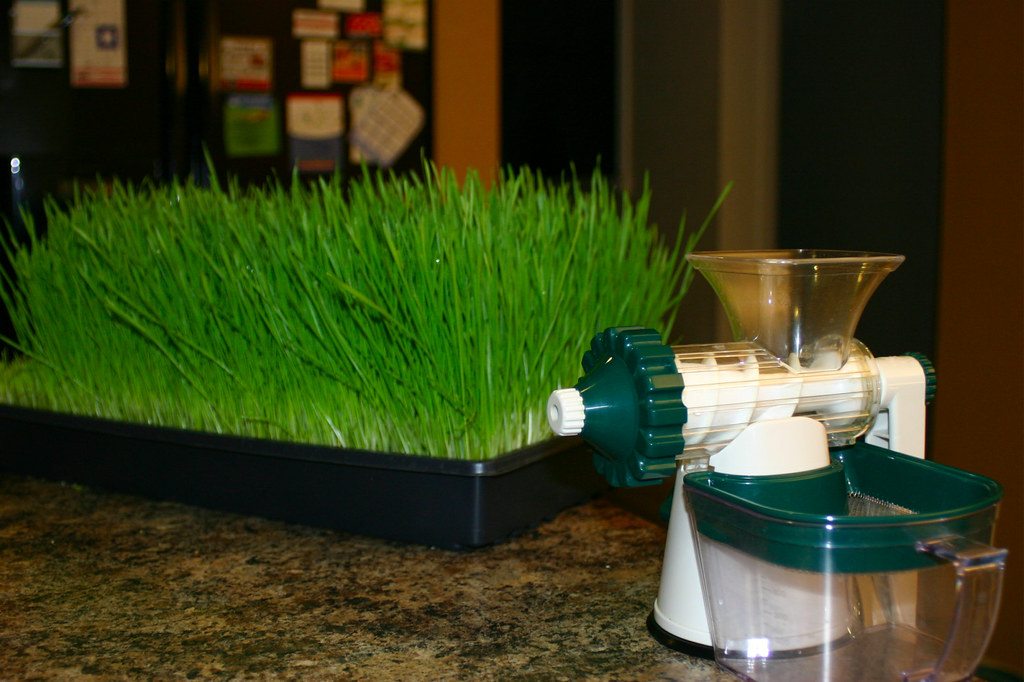
Commercial vs. Home Wheatgrass Juicers: Throughput, Yield, and Cleaning
A commercial wheatgrass juicer may be worth evaluating when a business needs repeatable production during service, a foodservice-oriented cleaning workflow, and support suited to ongoing use. A home masticating juicer can process wheatgrass, but its operating limits, warranty terms, replacement-parts availability, and sanitation fit may not suit a juice bar, café, gym, spa, or other high-use operation.
19 min read
Stay in the loop
New guides, when they publish
An occasional email when a new guide goes live. No spam.
Your email is stored privately for future guide updates. No emails are being sent yet. Privacy policy