Juicing · Wheatgrass Juicing and Processing
Frozen Raw vs Refrigerated HPP Wheatgrass Shots: What’s the Difference?
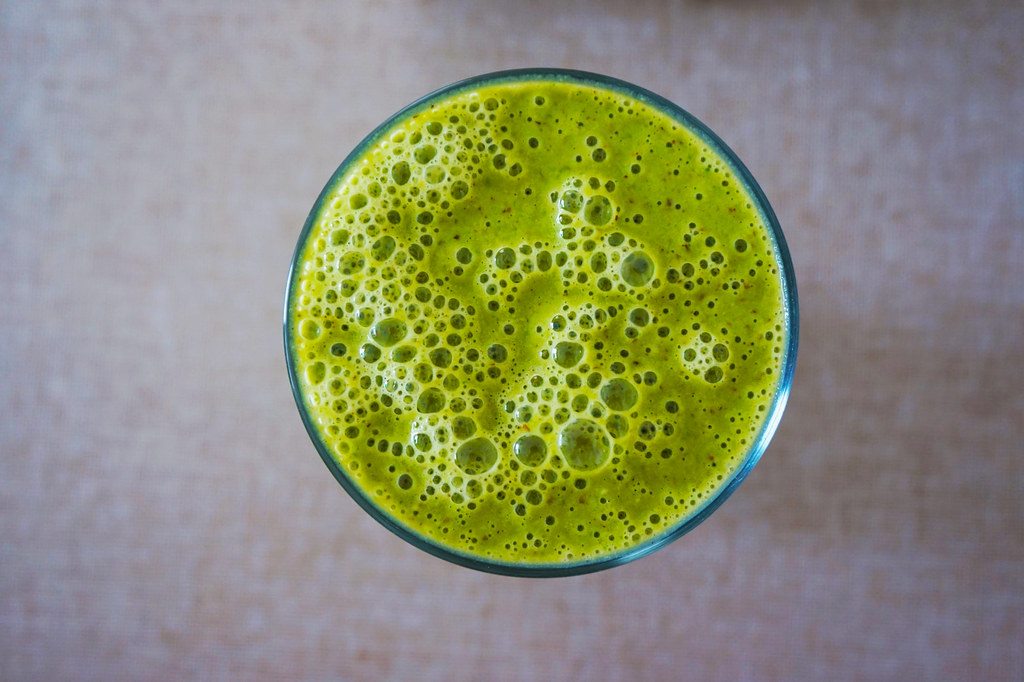
Frozen raw wheatgrass shots and refrigerated HPP wheatgrass shots are preserved and handled differently.
Frozen raw shots are kept in the freezer and are commonly thawed before use, although some products may be intended for partially frozen use—follow the package directions. Freezing slows or stops bacterial growth, but it generally does not kill most bacteria. Refrigerated HPP shots are pressure-processed and kept cold after processing. High-pressure processing (HPP) is used to reduce relevant microorganisms when the process has been validated for the specific juice and target hazard. FDA storage guidance and FDA Juice HACCP guidance
The available evidence does not establish overall superiority for nutrition, taste, or health outcomes between the two formats. Wheatgrass juice preservation review Ali et al., Journal of Food Process Engineering The practical decision is primarily about storage, thawing, processing preference, food-safety considerations, and what the product label actually says.
Frozen Raw vs Refrigerated HPP at a Glance
| Feature | Frozen raw wheatgrass shot | Refrigerated HPP wheatgrass shot |
|---|---|---|
| Main preservation approach | Freezer storage | High-pressure processing plus refrigeration |
| Processing status | May be described as raw or unpasteurized; check the label for treatment details | Pressure-treated; check the label for HPP or high-pressure-processing disclosure |
| Storage | Freezer | Refrigerator |
| Before drinking | Thaw or use partially frozen only as the package directs | Usually ready to drink from the refrigerator; follow label instructions |
| Food-safety implication | Freezing does not generally kill most bacteria | HPP may reduce relevant pathogens when appropriately validated |
| Shelf stability | Not implied by freezing | Not implied by HPP |
| Label priorities | “Keep frozen,” thawing guidance, date | “Keep refrigerated,” processing disclosure, date |
| Nutrition conclusion | No established universal advantage | No established universal advantage |
The central distinction is simple: freezing is primarily a storage method, while HPP is a pressure-based processing intervention. They do different jobs and should not be treated as interchangeable.
What “Frozen Raw” Usually Means
“Frozen” describes storage, not a universal safety treatment
A frozen wheatgrass shot is stored at freezer temperatures to slow spoilage and microbial growth. The FDA notes that freezing at 0°F/-18°C stops bacterial growth, but most bacteria can survive freezing. FDA storage guidance
That does not mean a frozen raw product is automatically unsafe. It means freezing alone should not be described as pasteurization, sterilization, or proof that juice is free of pathogens.
Safe production, packaging, frozen transport, storage, thawing, and use all matter.
Why freezing does not replace a pathogen-reduction step
When a juice remains frozen, microorganisms generally cannot grow. But freezing does not generally kill most bacteria, and surviving organisms can become active again as the product warms.
That is why frozen storage and an HPP treatment are different food-safety controls:
- Freezing manages temperature and slows or stops growth.
- HPP is intended to reduce relevant microorganisms through pressure, when validated for that juice and process.
For juice processors subject to applicable FDA requirements, the standard is a validated 5-log reduction in the pertinent microorganism. A 5-log reduction equals a 100,000-fold reduction. HPP can be one way to meet that target, but only when the exact process has been validated for the specific product. FDA Juice HACCP guidance
Check the processing disclosure, not just one front-label term
Terms such as “raw” and “fresh” do not, by themselves, tell you whether a product received a particular processing treatment. Labeling and product descriptions can vary. If processing status matters to you, check for an explicit processing disclosure or ask the producer.
Look for:
- “Unpasteurized”
- “HPP,” “high-pressure processed,” or “pressure-treated”
- “Keep frozen” or “keep refrigerated”
- A use-by or best-by date
- Ingredients, including added lemon or other acids
- Any juice warning language
- Producer contact information
If the processing method is not disclosed, the FDA advises consumers to ask the producer or retailer. Refrigeration alone does not establish that a product was HPP-treated. FDA juice safety guidance
What Is HPP Wheatgrass Juice?
How high-pressure processing works
High-pressure processing, often shortened to HPP, subjects packaged food or beverages to very high pressure. Pressure is the principal antimicrobial factor.
The effectiveness of HPP depends on the product and processing conditions, including:
- Pressure level
- Hold time
- Product composition
- Acidity
- Temperature
- Packaging
- The target microorganism
For that reason, “HPP-treated” should not be interpreted to mean that every microorganism has been eliminated. The result depends on a validated process for the particular beverage. FDA Juice HACCP guidance
Does HPP use heat?
HPP is commonly used as a nonthermal alternative to conventional heat pasteurization because pressure—not conventional heating—is the primary antimicrobial treatment.
However, “nonthermal” does not mean the product never gets warmer. FDA guidance notes that product temperature can rise during high-pressure processing. It is most accurate to describe a product as HPP-treated or pressure-processed unless the label provides a different processing designation. FDA Juice HACCP guidance
Why HPP shots still need refrigeration
HPP does not automatically make a juice shelf stable. Typical pressure-processing conditions may not inactivate bacterial spores, which is one reason many HPP juices are sold refrigerated rather than at room temperature. Review of HPP in juices and beverages
A refrigerated HPP shot should be handled as the label directs:
- Keep it refrigerated.
- Follow the current use-by date.
- Follow any opening, shaking, or serving instructions.
- Do not assume HPP makes room-temperature storage acceptable.
Food Safety: The Most Important Practical Difference
Freezing and HPP have different roles
Frozen raw and refrigerated HPP shots can both be perishable products, but their risk-management approaches differ.
- Frozen raw juice: relies on safe production and frozen storage. Freezing controls growth while frozen but does not generally kill most bacteria.
- Refrigerated HPP juice: uses pressure as an additional pathogen-reduction step, then relies on refrigeration and the product’s shelf-life controls.
Neither format should be described as automatically risk-free. Food-safety handling and current product instructions matter for both.
What wheatgrass-specific HPP research found
One controlled wheatgrass juice processing study tested high hydrostatic pressure at 500 MPa for 60 seconds. Under those experimental conditions, the process met the study’s 5-log microbial-reduction target for the tested E. coli, Listeria innocua, and Salmonella Typhimurium. The study also compared HPP with thermal and UV-C treatments while measuring selected quality characteristics. Ali et al., Journal of Food Process Engineering
This is useful wheatgrass-specific evidence, but its limits are important:
- It was a controlled processing study, not a brand comparison.
- It did not compare commercial frozen raw shots with commercial refrigerated HPP shots.
- It does not show that every HPP wheatgrass product uses the same conditions.
- It was not a human clinical trial.
Who should take extra care with untreated juice?
The FDA advises that people at higher risk of foodborne illness should take particular care with untreated or unpasteurized juice. This includes people who are:
- Pregnant
- Older adults
- Young children
- Immunocompromised
For people in these groups, treatment status is an especially important label question. FDA juice safety guidance
Storage and Handling
How to handle frozen wheatgrass shots
For frozen wheatgrass shots:
- Keep the product frozen as directed.
- Check the package for storage and date guidance.
- Follow the product’s thawing or serving directions.
- Refrigerator thawing is the conservative general approach for a perishable frozen product.
- Do not leave the product at room temperature unless the manufacturer specifically instructs otherwise.
USDA food-safety guidance recognizes refrigerator thawing and cold-water thawing as safe methods for frozen foods, while counter thawing is not recommended. Product instructions may be more specific, especially for small bottled juice shots. USDA FSIS: Freezing and Food Safety
There is no universal thawing time for every wheatgrass shot. Package size, bottle material, freezer temperature, formulation, and manufacturer instructions can all differ.
How to handle refrigerated HPP shots
For refrigerated HPP wheatgrass shots:
- Keep the product refrigerated.
- Follow the use-by date on the current bottle.
- Shake only if the label instructs you to do so.
- Follow the product’s instructions after opening.
- Do not assume HPP allows the shot to sit at room temperature.
HPP and refrigeration work together for many refrigerated juice products; pressure processing does not make refrigeration optional.
What if a package is damaged, leaking, warm, or past its date?
A comparison article cannot determine whether a particular bottle is suitable to consume. If a shot arrives leaking, unexpectedly warm, swollen, damaged, or past a labeled use-by date, pause and follow the current manufacturer’s or retailer’s guidance for that product. If the package instructions do not address the situation, contact the producer or retailer before use.
Do not use general information about freezing or HPP to override a package’s safety, storage, or date instructions.
Can a partially thawed shot be refrozen?
Follow the package instructions first.
As general USDA guidance, food thawed in the refrigerator can generally be refrozen, although quality may decline. Food that has been held above safe temperatures should not be refrozen. For a perishable wheatgrass shot, the manufacturer may provide more specific handling directions, so product guidance should take priority. USDA FSIS: Freezing and Food Safety
Nutrition, Chlorophyll, and Enzymes: What Research Actually Supports
What the wheatgrass HPP study did—and did not—show
The available wheatgrass HPP study measured selected characteristics, including vitamins, chlorophyll, antioxidant-related measures, enzyme activity, color, and microbial reduction.
In that experiment, HPP had comparatively smaller effects on some measured quality and nutrient-related variables than the specific heat treatment used in the study. But this does not establish that HPP wheatgrass is nutritionally identical to fresh wheatgrass or superior to frozen raw wheatgrass. Ali et al., Journal of Food Process Engineering
The study did not compare:
- Matched commercial frozen raw and refrigerated HPP shots
- Identical wheatgrass lots stored for the same period
- Every freezing or HPP condition
- Taste preferences across brands
- Human health outcomes
Why nutrient retention is product-specific
Nutrient retention cannot be reduced to a single claim such as “frozen preserves everything” or “HPP destroys nutrients.”
It can vary based on:
- The nutrient being measured
- Exposure to oxygen and light
- Storage temperature
- Packaging
- Processing time and pressure
- Storage duration
- The original composition of the juice
Broader fruit and vegetable research supports this product-specific view, but it cannot provide a precise nutrient-retention percentage for every wheatgrass shot. Review of vitamin C stability during processing and storage
Is frozen raw more nutritious than HPP?
The cited evidence does not establish that frozen raw wheatgrass is more nutritious than refrigerated HPP wheatgrass. It also does not establish that HPP is nutritionally superior to every frozen product.
Direct wheatgrass-specific research on preservation methods remains limited, and there is no matched commercial-format comparison in the cited evidence that identifies an overall winner. Wheatgrass juice preservation review
The most defensible conclusion is that nutrition is product- and process-specific.
What about enzymes?
Enzyme activity can be measured in a processing study, but a measured enzyme level is not the same as a demonstrated health benefit in people.
The available evidence does not support claims that:
- Frozen raw wheatgrass preserves all beneficial enzymes
- HPP destroys all useful enzymes
- “Living enzymes” in a wheatgrass shot improve digestion
- One format produces special health benefits because of its enzyme activity
How to Choose Between Frozen Raw and Refrigerated HPP Shots
Frozen raw may fit better if you:
- Have reliable freezer space
- Prefer to store multiple shots in advance
- Do not mind planning thawing or label-directed serving
- Prefer a product labeled raw or unpasteurized
- Are comfortable reviewing untreated-juice handling information
This is a storage and processing preference—not proof that frozen raw is healthier or safer.
Refrigerated HPP may fit better if you:
- Prefer refrigerator storage
- Want to avoid routine thawing
- Want a product that explicitly discloses pressure processing
- Plan to use the product within its refrigerated date window
- Can consistently keep it cold and follow its use-by instructions
This is primarily a convenience and processing preference—not proof of superior nutrition.
Compare the label before choosing
Before buying either format, check:
- Processing: Does the label say unpasteurized, HPP, high-pressure processed, or pressure-treated?
- Storage: Does it say “keep frozen” or “keep refrigerated”?
- Date: What is the current use-by or best-by date?
- Ingredients: Is it only wheatgrass juice, or are lemon, water, sweeteners, or other ingredients added?
- Handling: Are there instructions for thawing, shaking, opening, or serving?
- Warnings: Does it include unpasteurized-juice warning language?
- Clarification: If processing information is unclear, can the producer explain how the juice was treated?
The shortest decision rule
Choose based on your storage routine, thawing tolerance, and preference for untreated or pressure-processed juice—not on unsupported claims that one format is always more nutritious, safer, or healthier.
For either format, follow the current product label.
Frequently Asked Questions
Research & Further Reading
Government and food-safety sources
- U.S. Food and Drug Administration. What You Need to Know About Juice Safety https://www.fda.gov/food/buy-store-serve-safe-food/what-you-need-know-about-juice-safety
- U.S. Food and Drug Administration. Guidance for Industry: Juice Hazard Analysis Critical Control Point Hazards and Controls Guidance, First Edition https://www.fda.gov/regulatory-information/search-fda-guidance-documents/guidance-industry-juice-hazard-analysis-critical-control-point-hazards-and-controls-guidance-first
- U.S. Food and Drug Administration. Juice HACCP Regulator Training https://www.fda.gov/food/hazard-analysis-critical-control-point-haccp/juice-haccp-regulator-training
- U.S. Food and Drug Administration. Are You Storing Food Safely? https://www.fda.gov/consumers/consumer-updates/are-you-storing-food-safely
- U.S. Department of Agriculture Food Safety and Inspection Service. Freezing and Food Safety https://www.fsis.usda.gov/food-safety/safe-food-handling-and-preparation/food-safety-basics/freezing-and-food-safety
- Centers for Disease Control and Prevention. Preventing Food Poisoning https://www.cdc.gov/food-safety/prevention/
Peer-reviewed research and reviews
- Ali et al. Effect of Thermal, High Hydrostatic Pressure, and Ultraviolet-C Processing on the Microbial Inactivation, Vitamins, Chlorophyll, Antioxidants, Enzyme Activity, and Color of Wheatgrass Juice https://onlinelibrary.wiley.com/doi/10.1111/jfpe.13036
- Nutritional and Physiochemical Properties of Wheatgrass Juice and Preservation Strategies https://www.sciencedirect.com/science/article/pii/S2772753X22001241
- Influence of High Pressure Pasteurization on Nutritional, Functional and Rheological Characteristics of Fruit and Vegetable Juices and Purees—An Updated Review https://www.sciencedirect.com/science/article/pii/S0956713522007095
- Factors Affecting Microbial Inactivation During High Pressure Processing in Juices and Beverages: A Review https://doi.org/10.4315/JFP-20-096
- Effect of Alternative Preservation Steps and Storage on Vitamin C Stability in Fruit and Vegetable Products: Critical Review and Kinetic Modelling Approaches https://pmc.ncbi.nlm.nih.gov/articles/PMC8619176/
Company and product information
The following sources provide company-specific product and process information. They are not scientific evidence about nutrition, food safety, or health outcomes. Confirm that product pages remain live and that current product descriptions and handling instructions have not changed before publication.
- Andi’s Way. 2 oz Frozen 100% Raw Wheatgrass Juice https://andisway.com/products/2-oz-frozen-100-raw-wheatgrass-juice
- Andi’s Way. Original Wheatgrass Immunity Shots https://andisway.com/products/original-wheatgrass-immunity
- Andi’s Way. Wheatgrass Shots & Wellness Juice Shots Collection https://andisway.com/collections/raw-organic-wheatgrass-juice
- Andi’s Way. Our Process https://andisway.com/pages/our-process
Related guides

Manual vs Electric Wheatgrass Juicer: Which One Fits Your Routine?
A manual wheatgrass juicer may be a good fit for modest batches, quiet operation, and places without convenient access to an electrical outlet. An electric wheatgrass juicer may be more practical for frequent or repeated juicing because a motor replaces repetitive hand cranking.
14 min read
What Is HPP Wheatgrass Juice? High-Pressure Processing Explained
HPP wheatgrass juice is wheatgrass juice treated with very high hydrostatic pressure to reduce targeted microorganisms without using conventional heat as the primary treatment. HPP stands for high-pressure processing; it is also called high hydrostatic pressure processing and may sometimes be described as high-pressure pasteurization.
12 min read
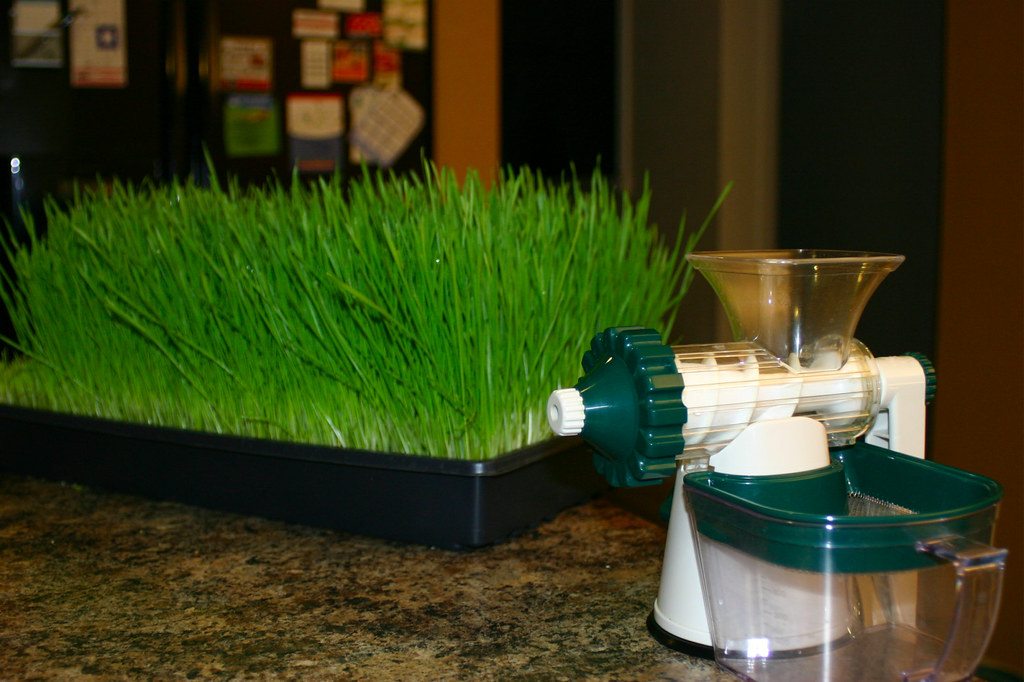
Commercial vs. Home Wheatgrass Juicers: Throughput, Yield, and Cleaning
A commercial wheatgrass juicer may be worth evaluating when a business needs repeatable production during service, a foodservice-oriented cleaning workflow, and support suited to ongoing use. A home masticating juicer can process wheatgrass, but its operating limits, warranty terms, replacement-parts availability, and sanitation fit may not suit a juice bar, café, gym, spa, or other high-use operation.
19 min read
Stay in the loop
New guides, when they publish
An occasional email when a new guide goes live. No spam.
Your email is stored privately for future guide updates. No emails are being sent yet. Privacy policy