Juicing · Wheatgrass Juicing and Processing
What Is HPP Wheatgrass Juice? High-Pressure Processing Explained
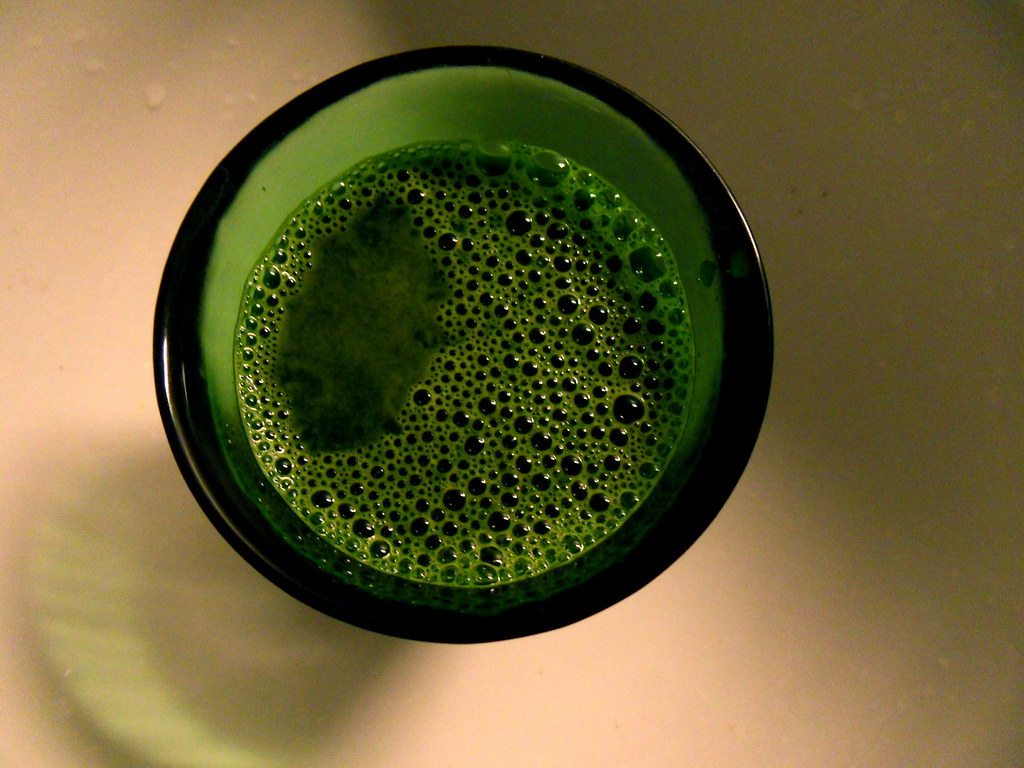
HPP wheatgrass juice is wheatgrass juice treated with very high hydrostatic pressure to reduce targeted microorganisms without using conventional heat as the primary treatment. HPP stands for high-pressure processing; it is also called high hydrostatic pressure processing and may sometimes be described as high-pressure pasteurization.
In a typical HPP process, juice is sealed in a pressure-compatible package, placed in a water-filled vessel, subjected to intense pressure for a set time, and then depressurized. HPP is a processing method—not a synonym for unprocessed, sterile, shelf-stable, or refrigeration-free juice. Its effectiveness depends on the specific juice, package, target microorganisms, pressure, time, temperature, and storage conditions. Aganovic et al., 2021
What this means on a label:
- HPP describes a pressure-based processing treatment.
- It is generally considered nonthermal, but temperature still matters during processing.
- HPP does not automatically make juice shelf-stable.
- Follow the package’s refrigeration, freezing, and date instructions.
What Does HPP Mean on Wheatgrass Juice?
HPP, HHP, and high-pressure pasteurization
The most common term is HPP, meaning high-pressure processing. You may also encounter:
- HHP: high hydrostatic pressure
- High-pressure processed
- High-pressure pasteurized
- High-pressure pasteurization
Terminology can vary between producers and regulatory contexts. Terms such as “high-pressure pasteurized” describe the intended pressure-based treatment, but the wording alone does not reveal the exact pressure, treatment time, temperature, validation method, or expected shelf life. Aganovic et al., 2021
HPP is often described as nonthermal because pressure—not conventional heating—is the primary preservation treatment. That does not mean temperature plays no role. Compressing the product and surrounding water can raise temperatures, and temperature is part of HPP process design. Aganovic et al., 2021
Why HPP is used for juice
HPP can be used as part of a validated pathogen-reduction process for juice and may support refrigerated shelf life. Producers may choose HPP when they want a processing method that does not rely primarily on conventional heat. Aganovic et al., 2021
That said, HPP is not automatically better than every other preservation method. It does not, by itself, prove that a juice has superior flavor, nutrition, safety, or health effects. Those questions depend on the specific product and evidence available for it.
How High-Pressure Processing Works
HPP is usually performed in four broad stages.
1. The juice is packaged
HPP commonly takes place after juice has been filled into a sealed, pressure-compatible package. The package must tolerate the pressure cycle without leaking or otherwise compromising the product.
The exact packaging materials, equipment, and production sequence can vary between processors. One HPP process should not be assumed to be identical to another. Aganovic et al., 2021
2. The package enters a water-filled vessel
The sealed package is placed in a pressure vessel filled with water or another pressure-transmitting fluid. The surrounding fluid applies hydrostatic pressure around the package rather than squeezing it from one direction.
This relatively uniform pressure can act throughout the packaged juice. Aganovic et al., 2021
3. Pressure is held for a specified time
Commercial HPP applications often use pressure in the range of roughly 200 to 600 megapascals (MPa) for relatively short holding periods, although the appropriate setting depends on the product and process goal. Aganovic et al., 2021
The pressure-time combination needed for a particular juice can vary with factors including:
- Acidity and pH
- Ingredients and solids content
- Target microorganism
- Processing temperature
- Packaging
- Post-processing storage conditions
HPP can reduce certain vegetative microorganisms when the process is properly designed and validated. It should not be described as eliminating every microorganism or as a universal sterilization treatment. Aganovic et al., 2021
4. The product is depressurized and stored as directed
After the pressure-holding period, the vessel is depressurized and packages are removed for distribution.
Whether a product must be refrigerated, frozen, or can be stored another way depends on the product’s complete processing system and its label. HPP does not automatically make wheatgrass juice shelf-stable. Follow the package’s storage instructions and date information. FDA, Juice Safety
Is HPP Wheatgrass Juice Pasteurized?
The answer depends on how the word pasteurized is being used.
If pasteurization means conventional heat pasteurization, HPP is different. Thermal pasteurization uses controlled heat as its primary treatment, while HPP uses pressure.
However, HPP can be used as a validated pathogen-reduction control for juice. Under FDA Juice HACCP requirements for applicable juice products, processors must achieve at least a 5-log reduction in the pertinent microorganism. FDA identifies high pressure as one possible control measure when the processor can demonstrate that the specific process consistently achieves the required reduction. FDA, Juice HACCP Q&A
A 5-log reduction is a 100,000-fold reduction in the targeted organism. It does not mean that the product is sterile or contains no microorganisms.
The practical takeaway:
- HPP is not conventional heat pasteurization.
- HPP may be part of a validated juice pathogen-reduction process.
- HPP does not automatically mean raw, unprocessed, sterile, or shelf-stable.
- The full label—including processing, storage, and date information—is more useful than one term alone.
HPP vs. Thermal Pasteurization vs. Freezing
HPP, thermal pasteurization, and freezing are different methods that should not be treated as interchangeable.
| Question | HPP | Thermal pasteurization | Freezing |
|---|---|---|---|
| Primary method | Very high hydrostatic pressure | Controlled heat | Low temperature |
| Main function | Reduction of targeted microorganisms; may support refrigerated shelf life | Reduction of targeted microorganisms | Limits microbial growth during frozen storage |
| Conventional heat process? | No, although temperature remains part of process design | Yes | No |
| Automatically shelf-stable? | No | Not necessarily | No; the product remains frozen |
| Equivalent to sterilization? | No | No; pasteurization is not automatically sterilization | No |
| Typical consumer action | Follow refrigeration and date instructions | Follow package instructions | Keep frozen and thaw as directed |
HPP compared with heat
Thermal pasteurization uses heat as the primary microbial-control treatment. HPP uses pressure.
The two approaches can affect quality characteristics differently, but no method universally preserves every nutrient, enzyme, color characteristic, or flavor attribute. Outcomes depend on the ingredients, formulation, treatment intensity, packaging, and storage period. Aganovic et al., 2021
HPP compared with freezing
Freezing is primarily a storage method. It limits microbial growth while the product remains frozen, but it does not reliably destroy all bacteria that may already be present. Microorganisms can become active again after thawing. USDA FSIS, Freezing and Food Safety
That means freezing alone does not establish that a juice received a pathogen-reduction treatment. A frozen wheatgrass juice product is not automatically equivalent to an HPP-treated wheatgrass juice product.
A product can be frozen and separately processed by another method. Check the specific product’s label and manufacturer information rather than assuming how it was treated.
What Research Says About HPP for Wheatgrass Juice
The research identified for this article on HPP specifically in wheatgrass juice is limited. Existing studies provide useful food-processing information, but they do not establish one universal commercial HPP method for all wheatgrass juices. Food Chemistry Advances review
Findings from a wheatgrass processing study
A controlled laboratory study compared thermal treatment, high hydrostatic pressure, and ultraviolet-C processing in inoculated wheatgrass juice. Ali et al., 2020
Under that study’s conditions, HPP at 500 MPa for 60 seconds reached the researchers’ 5-log reduction target for the tested organisms:
- Escherichia coli
- Salmonella Typhimurium
- Listeria innocua
The same study found that thermal treatment at 75°C for 15 seconds also reached the tested 5-log target. Ali et al., 2020
These results are relevant, but they apply to the study’s particular juice formulation, equipment, inoculated organisms, packaging, and process conditions. Notably, the study tested Listeria innocua, not Listeria monocytogenes.
What the study does not prove
This study does not establish:
- One HPP setting for every wheatgrass juice
- Identical results for every wheatgrass variety or formulation
- Identical results for every package size or HPP system
- Complete elimination of all microorganisms
- Validation of every commercial HPP wheatgrass product
- Superior nutrition compared with every heat-treated or frozen product
- Better human health outcomes
The study evaluated microbial inactivation and product-quality measures. It did not test health outcomes in people. Ali et al., 2020
Quality findings: useful, but product-specific
The wheatgrass study found that HPP and thermal processing affected measured quality characteristics differently under the conditions tested. That is useful for understanding product development, but it does not support broad claims that HPP preserves every nutrient or is nutritionally identical to fresh wheatgrass juice. Ali et al., 2020
In general, nutrient and quality changes can depend on the ingredient mix, pressure level, treatment time, temperature, packaging, and length and conditions of storage. Aganovic et al., 2021
What HPP Does—and Does Not—Mean
HPP can mean
HPP can indicate that:
- The product received a pressure-based processing treatment.
- The producer may be using pressure as part of a validated pathogen-reduction process.
- Conventional heat was not the primary treatment.
- The product may have a refrigerated shelf life that differs from untreated juice, depending on the full process and package.
HPP does not automatically mean
HPP does not automatically mean that juice is:
- Completely raw
- Unprocessed
- Sterile
- Free of all bacteria, yeasts, molds, or spores
- Shelf-stable
- Safe without refrigeration
- More nutritious than heat-treated or frozen juice
- Better for health outcomes
Standard HPP conditions are generally less effective against bacterial spores than against many vegetative bacteria. More intensive pressure-temperature approaches may be needed where spore inactivation is a processing objective. Aganovic et al., 2021
The practical approach is to view HPP as one part of a product’s preservation system—not as a complete safety guarantee.
What to Check on an HPP Wheatgrass Juice Label
1. Processing description
Look for wording such as:
- HPP
- High-pressure processed
- High hydrostatic pressure
- High-pressure pasteurized
- Pasteurized
- Otherwise treated
- Untreated
- Unpasteurized
Terminology alone may not explain the complete treatment. “Cold-pressed,” “fresh,” or “raw” may describe an extraction method or product style without fully explaining the pathogen-reduction treatment. If treatment information is unclear, FDA advises consumers to ask the seller or manufacturer. FDA, Juice Safety
2. Storage requirement
Check whether the juice must be:
- Refrigerated
- Kept frozen
- Stored under another stated condition
If the label says “keep refrigerated,” refrigeration is part of the product’s handling requirements even if the juice has undergone HPP.
3. Use-by or best-by date
Follow the package date and all storage instructions. Do not infer a general shelf life from the word HPP alone.
Shelf life can vary with the formulation, package, processing conditions, and temperature control during distribution and storage. Aganovic et al., 2021
4. Ingredients and product format
Check whether the product contains:
- Only wheatgrass juice
- Other fruit or vegetable juices
- Added acids
- Water
- Other ingredients
Because ingredients, acidity, solids content, and formulation can affect processing behavior, a wheatgrass blend should not be assumed to have exactly the same processing or storage characteristics as 100% wheatgrass juice. Aganovic et al., 2021
Also identify the format: refrigerated, frozen, shelf-stable, concentrate, powder, or another preparation. The format helps explain handling needs, but it does not by itself tell you the complete safety treatment.
5. Warning and treatment information
Look for statements about untreated or unpasteurized juice. FDA notes that unpasteurized juice may carry warning language and recommends asking when the treatment status of refrigerated juice is unclear. FDA, Juice Safety
FAQ
Bottom Line
HPP wheatgrass juice is wheatgrass juice treated with very high pressure, usually after packaging, to reduce targeted microorganisms without relying primarily on conventional heat.
The key points are:
- HPP is a processing method, not a synonym for raw or unprocessed.
- HPP is not the same as conventional heat pasteurization or freezing.
- HPP does not automatically mean sterile, shelf-stable, or refrigeration-free.
- Freezing limits microbial growth during frozen storage but is not a pathogen-kill treatment equivalent to HPP.
- The limited wheatgrass-specific research should not be generalized to every commercial product.
- Check the product’s processing description, storage instructions, date, ingredients, and any warning language.
Research & Further Reading
Scientific and regulatory sources
- Ali N, Popović V, Koutchma T, Warriner K, Zhu Y. “Effect of thermal, high hydrostatic pressure, and ultraviolet-C processing on the microbial inactivation, vitamins, chlorophyll, antioxidants, enzyme activity, and color of wheatgrass juice.” Journal of Food Process Engineering. https://doi.org/10.1111/jfpe.13036
- “Nutritional and physiochemical properties of wheatgrass juice and preservation strategies.” Food Chemistry Advances. https://doi.org/10.1016/j.focha.2022.100136
- Aganovic K, Hertel C, Vogel RF, et al. “Aspects of high hydrostatic pressure food processing: Perspectives on technology and food safety.” Comprehensive Reviews in Food Science and Food Safety. https://doi.org/10.1111/1541-4337.12763
- Podolak R, Whitman DW, Black DG. “Factors affecting microbial inactivation during high pressure processing in juices and beverages: A review.” Journal of Food Protection. https://doi.org/10.4315/JFP-20-096
- U.S. Food and Drug Administration. “Guidance for Industry: Questions and Answers on Juice HACCP Regulation.” https://www.fda.gov/regulatory-information/search-fda-guidance-documents/guidance-industry-questions-and-answers-juice-haccp-regulation
- U.S. Food and Drug Administration. “What You Need to Know About Juice Safety.” https://www.fda.gov/food/buy-store-serve-safe-food/what-you-need-know-about-juice-safety
- U.S. Department of Agriculture Food Safety and Inspection Service. “Freezing and Food Safety.” https://www.fsis.usda.gov/food-safety/safe-food-handling-and-preparation/food-safety-basics/freezing-and-food-safety
- Health Canada. “Novel Food Information: High Pressure Processing (HPP)-Treated Fruit and Vegetable-Based Juices.” Canadian regulatory context. https://www.canada.ca/en/health-canada/services/food-nutrition/genetically-modified-foods-other-novel-foods/approved-products/novel-food-information-high-pressure-processing-treated-fruit-vegetable-based-juices.html
Company information—not scientific evidence
The following company pages may help readers compare stated product formats and storage information. They are not evidence about HPP safety, nutrition, or health outcomes.
- Andi’s Way Raw Organic Wheatgrass Juice collection:
- Andi’s Way Original Wheatgrass Immunity Shots product page:
- Andi’s Way Frozen 2 oz 100% Raw Wheatgrass Juice product page:
Related guides

Manual vs Electric Wheatgrass Juicer: Which One Fits Your Routine?
A manual wheatgrass juicer may be a good fit for modest batches, quiet operation, and places without convenient access to an electrical outlet. An electric wheatgrass juicer may be more practical for frequent or repeated juicing because a motor replaces repetitive hand cranking.
14 min read
Frozen Raw vs Refrigerated HPP Wheatgrass Shots: What’s the Difference?
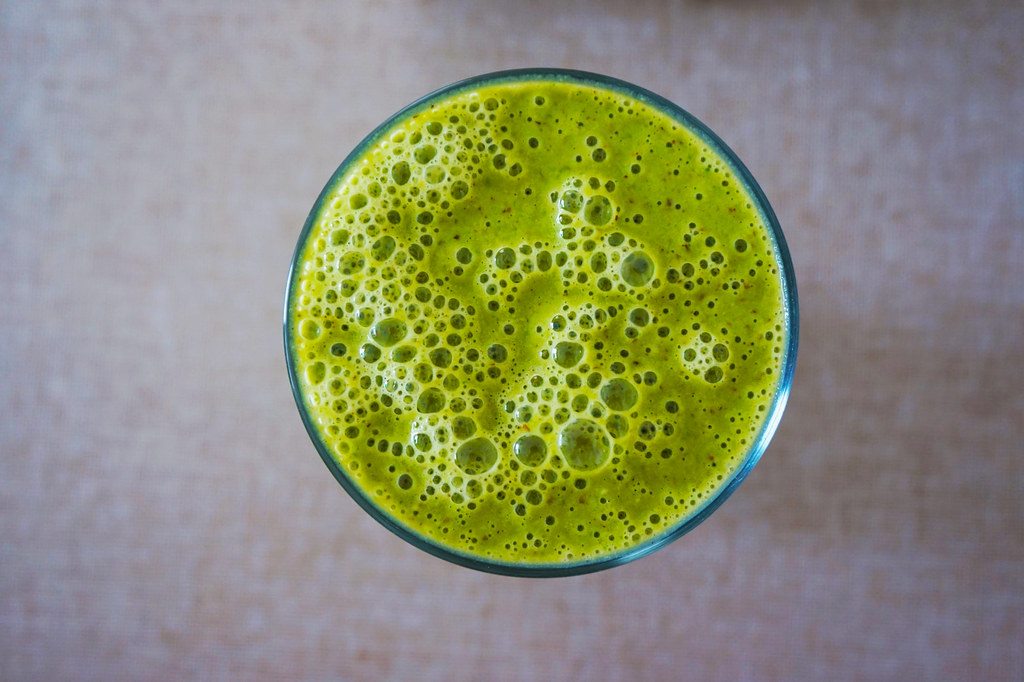
Frozen raw wheatgrass shots and refrigerated HPP wheatgrass shots are preserved and handled differently.
13 min read
Commercial vs. Home Wheatgrass Juicers: Throughput, Yield, and Cleaning
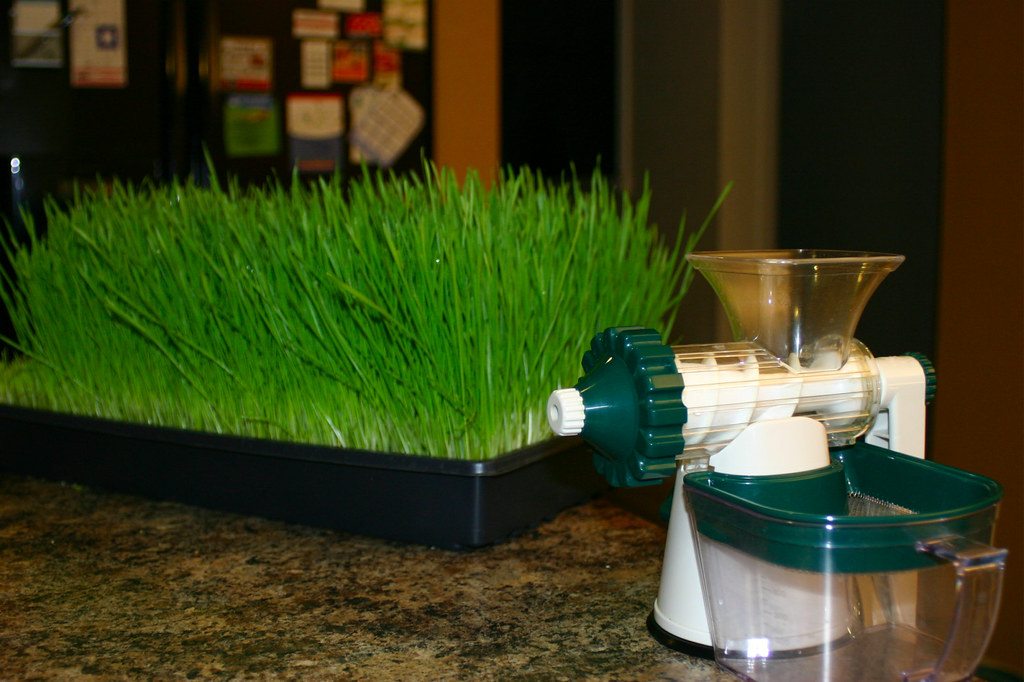
A commercial wheatgrass juicer may be worth evaluating when a business needs repeatable production during service, a foodservice-oriented cleaning workflow, and support suited to ongoing use. A home masticating juicer can process wheatgrass, but its operating limits, warranty terms, replacement-parts availability, and sanitation fit may not suit a juice bar, café, gym, spa, or other high-use operation.
19 min read
Stay in the loop
New guides, when they publish
An occasional email when a new guide goes live. No spam.
Your email is stored privately for future guide updates. No emails are being sent yet. Privacy policy