Juicing · Wheatgrass Juicing and Processing
Commercial vs. Home Wheatgrass Juicers: Throughput, Yield, and Cleaning
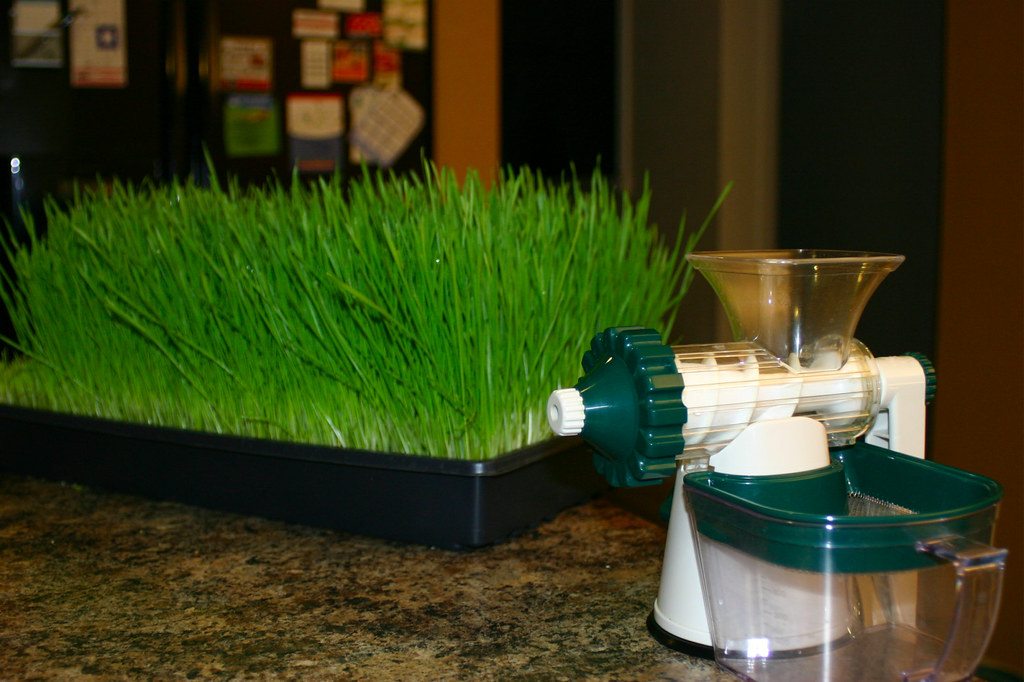
A commercial wheatgrass juicer may be worth evaluating when a business needs repeatable production during service, a foodservice-oriented cleaning workflow, and support suited to ongoing use. A home masticating juicer can process wheatgrass, but its operating limits, warranty terms, replacement-parts availability, and sanitation fit may not suit a juice bar, café, gym, spa, or other high-use operation.
The decision should not rest on motor wattage, RPM, or a headline “high-yield” claim alone. For business use, compare the complete workflow: duty cycle, saleable output per labor minute, cleaning and sanitizing requirements, foodservice equipment acceptance, counter space, and serviceability.
There is no reliable universal number of wheatgrass shots per day at which every business must upgrade to commercial equipment. The best approach is to test candidate machines using your own wheatgrass, staff workflow, cleaning procedure, and expected service conditions.
Commercial vs. home wheatgrass juicers at a glance
| Decision factor | Home or consumer masticating juicer | Commercial wheatgrass juicer |
|---|---|---|
| Typical intended use | Intermittent personal batches | Repeated foodservice production |
| Duty cycle | Check the specific owner’s manual; operating limits may apply | Review manufacturer operating guidance and commercial warranty terms |
| Throughput data | A wheatgrass-specific rate may not be published | May include a wheatgrass extraction-rate specification |
| Workflow planning | Household setup and cleanup | Feeding, pulp handling, cleaning, sanitizing, drying, and reassembly |
| Foodservice suitability | Commercial sanitation conformity may not be specified | Check relevant conformity documentation and local acceptance |
| Serviceability | Consumer warranty and parts model | Ask about screens, gaskets, maintenance kits, repair support, and downtime |
| Footprint and utilities | Often designed for smaller-batch countertop use | May require more counter space, weight handling, and electrical planning |
| Best comparison method | Personal convenience and occasional output | Saleable output per labor minute, sanitation readiness, duty cycle, and support |
This is a purchasing framework, not a claim that every commercial machine is better in every category. A low-volume operation may be able to use a consumer machine if its tested workflow, operating limits, local requirements, and staffing arrangement support that decision.
What should “commercial” mean for a wheatgrass operation?
For wheatgrass, “commercial” should mean more than an electric motor or a larger wattage number. It should mean that the equipment fits the complete production, cleaning, service, and maintenance demands of the operation.
Purpose-built extraction for fibrous grass
Wheatgrass is a fibrous ingredient, so buyers should look for manufacturer documentation that specifically identifies wheatgrass or similar fibrous greens as an intended application.
During a demonstration or trial, ask:
- Is the feeding path designed for wheatgrass?
- Does the manufacturer provide wheatgrass-specific operating guidance?
- Is there a reverse function for clearing fibers?
- Can staff access and remove retained pulp?
- Are the screen, auger, gaskets, and juice path accessible for inspection?
- Can the machine accommodate the operation’s planned batch size and service pattern?
A particular extraction design may affect usability, but design alone does not prove that one machine will deliver more juice than every competing home model.
Rated operating time and duty cycle
A machine can process wheatgrass successfully in a short batch without being suitable for repeated service-period production.
The Omega NC800 is a useful model-specific example. Its manufacturer manual specifies a rated operating time of less than 30 minutes. That does not mean the NC800 cannot juice wheatgrass, and it does not establish the operating limit for every home juicer. It does show why business buyers should read the manual for the exact model rather than assume a consumer machine is intended for sustained commercial use. Omega NC800/NC900 User Manual
Before purchasing, ask:
- What operating time does the manual specify?
- Are rest periods or thermal limits required?
- Does the warranty distinguish household and commercial use?
- What conditions can contribute to clogs, excessive wear, or shutdowns?
- Is the machine intended for occasional batches or repeated production?
Footprint, electrical requirements, and workflow access
Counter space matters because the juicer needs more than a small spot on the counter. Staff may also need room for:
- Washed and drained wheatgrass
- Batch portioning
- Juice collection containers
- Pulp handling
- Access to removable food-contact components
- Cleaning tools and replacement parts
- Safe movement around the prep station
Check electrical requirements before installation, especially if refrigeration, blenders, dish equipment, or other appliances share the same work area or circuit.
For example, Hamilton Beach Commercial lists the FreshMark HWG800 at 375 W and gives dimensions of 12 inches high by 7 inches wide by 19.25 inches deep. Its listed 37-pound figure is a shipping weight, not necessarily the net weight of the machine. These are manufacturer-published specifications that should be reconfirmed before purchase. Hamilton Beach Commercial HWG800
Warranty, wear parts, and service support
For a business, the support system around the machine can be as important as the machine itself.
Ask the manufacturer or supplier:
- Are replacement screens and gaskets available?
- Are maintenance kits offered?
- How quickly can common wear parts be obtained?
- What does the warranty cover?
- Does the warranty apply to the intended commercial use?
- Who handles repairs or replacement?
- Can the business keep critical parts on site?
- Is there a written cleaning and maintenance guide?
A machine that performs well but cannot be returned to service quickly after a screen failure or damaged gasket can create significant operational disruption.
Throughput: how to read an extraction-rate claim
A published extraction rate is not saleable output per labor hour
A manufacturer’s extraction-rate figure is useful, but it is not the same as a fully staffed service-rate estimate.
Actual production can include:
- Washing and draining the wheatgrass
- Weighing or portioning each batch
- Loading the machine
- Feeding and monitoring the grass
- Clearing fibers or pulp
- Pouring and serving the juice
- Cleaning food-contact surfaces
- Sanitizing, drying, and reassembling parts
For that reason, a machine with a fast extraction-rate specification may not necessarily provide the highest saleable output per labor hour in a particular operation. The practical measure is the entire workflow, including downtime between batches.
Manufacturer-rated example: 5 fluid ounces per minute
Hamilton Beach Commercial rates its FreshMark HWG800 wheatgrass juicer at up to 5 fluid ounces, or 150 mL, per minute. This is a manufacturer-published extraction-rate specification, not an third-party service test. Hamilton Beach Commercial 2026 Foodservice Equipment Catalog
At that stated maximum:
- 5 fluid ounces per minute ÷ 2 fluid ounces per serving = 2.5 theoretical two-ounce servings per minute
That calculation does not include prep, loading, pulp handling, customer service, interruptions, pouring, cleaning, sanitizing, drying, or reassembly. It should not be presented as a guaranteed rate of saleable shots during normal service.
Hamilton Beach Commercial’s supplied documentation lists Forward, Reverse, and Off controls for the HWG800. It does not describe a variable-speed control. Hamilton Beach Commercial HWG800
Test real-world throughput before buying
A business can create a more useful comparison by testing each machine with the same wheatgrass and workflow.
#### Suggested in-house comparison protocol
- Weigh a fixed batch of washed and drained wheatgrass.
- Use the intended staff member, feeding method, containers, and machine settings.
- Measure the saleable juice volume.
- Start timing before setup.
- Stop timing only when the machine is cleaned, sanitized according to the operation’s procedure, reassembled, and ready for the next batch.
- Record clogs, reverse cycles, spills, pulp handling, and interruptions.
- Repeat the test with at least three comparable batches.
Then calculate:
- Saleable fluid ounces per pound of wheatgrass
- Saleable fluid ounces per labor minute
- Minutes until the machine is ready for the next batch
This is not a regulatory or scientifically validated test protocol. It is a practical purchasing method that helps a business assess its own operation rather than relying exclusively on a machine-only output figure.
Questions to ask about throughput claims
Before relying on a published rate, ask:
- Is the rate specifically for wheatgrass?
- Is it a maximum, average, or controlled-test result?
- What input condition and feeding method were used?
- Was the grass washed and drained?
- Does the rate include loading or pulp clearing?
- What operating limits apply during a service period?
- How often do screens, gaskets, or other wear parts need replacement?
- Can the supplier explain the cleaning and maintenance procedure?
If the conditions behind a throughput number are unclear, treat it as a limited product specification—not a complete staffing or capacity estimate.
Yield: define the metric before comparing machines
“Yield” can mean several different things
Businesses often use “yield” to describe different measurements. Before comparing machines, define the metric that matters to the operation.
Possible measures include:
- Saleable fluid ounces per pound of fresh wheatgrass
- Juice weight per input weight
- Moisture remaining in pulp
- Saleable fluid ounces per labor hour
- Total usable output after spills, retained juice, and cleanup losses
Ounces per pound is primarily an extraction measure. Ounces per labor minute is an operational productivity measure. Neither should be confused with the other.
Why cross-brand yield claims are difficult to compare
A fair equipment comparison should control and document variables such as:
- Input weight
- Wheatgrass condition at the time of juicing
- Washing and draining procedure
- Batch size
- Feeding method
- Machine settings
- Screen condition
- Operator technique
- Whether pulp is reprocessed
- Whether cleanup time is included in the comparison
Without a consistent protocol, a claimed yield difference can reflect differences in the grass, process, or operator rather than the juicer itself.
No universal commercial-versus-home yield advantage is established
The available manufacturer specifications do not establish that commercial wheatgrass juicers always produce more juice than home machines.
No standardized, third-party head-to-head comparison was identified in the supplied research using the same wheatgrass cultivar, harvest conditions, input weight, operator technique, machine settings, and measurement method. Manufacturer extraction-rate claims can help buyers understand a particular model, but they are not equivalent to third-party cross-brand yield testing.
Avoid unsupported statements such as:
- “Commercial wheatgrass juicers always yield more.”
- “This commercial model yields a fixed percentage more juice.”
- “Higher wattage guarantees better extraction.”
- “Low RPM automatically preserves more nutrients.”
A practical yield worksheet
Use a log such as this when testing candidate equipment:
| Field | Batch 1 | Batch 2 | Batch 3 |
|---|---|---|---|
| Date and time | |||
| Machine and settings | |||
| Input weight | |||
| Wheatgrass condition | |||
| Saleable juice volume | |||
| Pulp condition | |||
| Labor minutes | |||
| Cleaning and reassembly minutes | |||
| Clogs or reverse cycles | |||
| Other interruptions | |||
| Ready for next batch at |
For many businesses, the most meaningful result is not the highest short-term juice volume. It is the most reliable saleable output per labor minute within a clean, repeatable workflow.
Cleaning burden: the business difference is sanitation readiness
Cleaning is not the same as sanitizing
Cleaning removes visible residues such as wheatgrass fibers, pulp, and soil. Sanitizing is a separate food-safety step performed after cleaning, using the applicable procedure and sanitizer.
The FDA Food Code requires food-contact surfaces to be clean and, where required, sanitized before use after cleaning. It also addresses adequate draining or air-drying after cleaning and sanitizing. FDA Food Code 2026
“Easy to clean” should not be treated as equivalent to “sanitized.”
The FDA Food Code is a model code used by federal, state, local, tribal, and territorial jurisdictions. Operations should follow the food code and procedures applicable in their location, along with the equipment manufacturer’s instructions and sanitizer label directions. FDA Food Code
What to inspect before buying
During a product demonstration or equipment trial, determine whether staff can:
- Access the full food zone
- Remove and inspect screens
- Remove and inspect gaskets
- Clean the auger and juice path
- Locate retained wheatgrass fibers or pulp
- Disassemble parts without impractical tools
- Inspect surfaces for cracks, crevices, or hard-to-reach residue
- Allow components to drain or air-dry appropriately
- Follow the operation’s warewashing and sanitizing procedure
The FDA Food Code specifies that multiuse food-contact surfaces should be smooth, free of cracks, seams, pits, sharp angles, and crevices, and accessible for cleaning and inspection. FDA Food Code 2026
Removable parts can be helpful, but removability alone does not establish that a machine is quick or easy to sanitize correctly.
Build cleaning downtime into capacity planning
There is no universal cleaning-time estimate for commercial or home wheatgrass juicers. Cleaning time can differ with the machine design, the amount of grass processed, staff experience, available sinks, cleaning tools, sanitation procedure, and the condition of the pulp.
Measure cleaning, sanitizing, drying, and reassembly as part of the same trial used to assess throughput. This prevents an operation from overestimating capacity based on extraction speed alone.
Cleaning questions for suppliers
Ask:
- Which parts are food-contact surfaces?
- Which components must be removed after a production period?
- Can screens and gaskets be inspected for retained fibers?
- Are replacement screens and gaskets available?
- Are special tools required?
- What cleaning methods and chemicals does the manufacturer permit?
- Does the manufacturer provide a cleaning diagram or maintenance guide?
- Which parts are expected to wear with repeated wheatgrass use?
Certification and compliance: important, but not a shortcut
What NSF/ANSI 8 addresses
NSF/ANSI 8 establishes minimum food-protection and sanitation requirements for the materials, design, and construction of power-operated commercial food-preparation equipment. It can be an important consideration when evaluating a commercial wheatgrass juicer for a foodservice setting. NSF Food Equipment Standards
What certification does not establish
Relevant conformity documentation does not automatically:
- Guarantee approval in every jurisdiction
- Replace local plan review
- Make raw wheatgrass juice safe
- Establish compliance for bottled, wholesale, or distributed juice
- Confirm that the rest of the facility meets applicable food-safety requirements
Equipment standards are one part of an operation’s broader foodservice and regulatory planning.
Confirm local acceptance before purchase
Before purchasing equipment, confirm the intended use with the relevant authority or facility contact, which may include:
- The local health department
- A plan reviewer
- A commissary
- A landlord or facility operator
- A mobile-vending authority, if applicable
Local acceptance can depend on the equipment, the premises, sink and warewashing access, electrical setup, intended production method, and local rules.
Made-to-order wheatgrass shots versus packaged raw juice
The equipment and compliance questions differ depending on how the juice will be sold.
Made-to-order retail service
A made-to-order wheatgrass operation should plan for:
- Washing produce before cutting or juicing
- Protecting clean food-contact surfaces
- Portioning and immediate service
- Cleaning and sanitizing between production periods
- Pulp and waste handling
- Staff training
- Applicable local retail food requirements
The FDA Food Code requires raw fruits and vegetables to be thoroughly washed before being cut, combined, served, or otherwise offered ready-to-eat, subject to stated exceptions. FDA Food Code 2026
Raw or untreated juice can carry food-safety risks if produce handling and sanitation are inadequate, as explained in FDA juice-safety guidance. FDA — What You Need to Know About Juice Safety A commercial juicer does not eliminate those considerations.
Packaged raw wheatgrass juice
A countertop commercial wheatgrass juicer does not, by itself, establish that packaged raw juice is compliant for sale, distribution, or wholesale.
Depending on the operation and distribution model, packaged juice may involve additional considerations such as:
- Juice-processing requirements
- Hazard Analysis and Critical Control Point procedures
- Applicable pathogen-reduction controls
- Sanitation records
- Facility and equipment requirements
- Labeling obligations
- Local, state, and federal regulatory review
FDA guidance distinguishes retail businesses selling juice directly to consumers from juice processors subject to Juice HACCP requirements. Applicability depends on the business model and the nature of distribution. FDA Juice HACCP Regulator Training
A business planning to bottle or distribute raw wheatgrass juice should obtain operation-specific regulatory guidance before treating a countertop juicer purchase as a compliance decision.
Example specification snapshot: two equipment classes, not a ranking
The examples below show how manufacturer-published documentation may differ between a commercial wheatgrass-specific unit and a consumer masticating model. They are not a third-party yield or productivity comparison.
| Specification | Commercial example: Hamilton Beach HWG800 | Consumer example: Omega NC800 |
|---|---|---|
| Comparison purpose | Commercial wheatgrass-specific equipment | Home masticating equipment capable of processing wheatgrass |
| Published rate or rated time | Up to 5 fl oz / 150 mL per minute (manufacturer-published catalog) | Rated operating time: less than 30 minutes |
| Electrical specification | 375 W | 150 W |
| Published controls or speed | Forward, Reverse, and Off controls | Approximately 80 RPM |
| Weight | 37 lb shipping weight | Approximately 20 lb |
| Footprint | 12 × 7 × 19.25 in | 6.5 × 14.5 × 15.5 in |
| Cleaning or service notes | Removable food-zone parts; maintenance information identifies screens and gaskets | Refer to owner manual and rated operating limit |
Source note: The HWG800 information is drawn from manufacturer-published specifications. The NC800 information is drawn from its manufacturer manual. Neither source is an third-party head-to-head performance comparison. Verify current specifications, warranty terms, included parts, and availability before purchasing. Hamilton Beach Commercial HWG800 Hamilton Beach Commercial 2026 Foodservice Equipment Catalog Omega NC800/NC900 User Manual
The differing wattage, RPM, size, and weight figures do not prove that one machine will deliver a fixed yield or productivity advantage in every wheatgrass operation.
Buyer checklist for juice bars and commercial kitchens
Capacity and workflow
- What is the measured saleable output per labor minute?
- Does testing include setup, feeding, pulp handling, cleaning, sanitizing, drying, and reassembly?
- How many batches can be completed during the intended service period?
- How long is the machine unavailable between batches?
Duty cycle
- What operating time does the manual specify?
- Are rest periods or thermal limits required?
- Does the warranty assume a particular usage pattern?
- Is the equipment intended for repeated foodservice production?
Yield measurement
- Is the quoted yield specific to wheatgrass?
- What input weight and grass condition were used?
- Was the grass washed and drained consistently?
- Is the quoted number a maximum, average, or controlled-test result?
- Does it measure machine output only or the complete staffed workflow?
Cleaning and sanitation
- Can all food-contact surfaces be removed and inspected?
- Are screens, gaskets, augers, and juice paths accessible?
- Are special tools required?
- What is the measured cleaning and sanitizing time?
- Can staff follow the operation’s approved warewashing and sanitizing procedure?
Foodservice acceptance
- Is relevant sanitation conformity documented?
- Has the local authority accepted the equipment for the intended premises?
- Is the intended use made-to-order service, packaged juice, or both?
- Could bottling or distribution create additional requirements?
Serviceability
- Are replacement screens, gaskets, and maintenance kits available?
- What is the warranty process?
- Are commercial-use exclusions present?
- How quickly can common wear parts be obtained?
- What happens if the machine is unavailable during service?
Space and utilities
- Does the footprint fit the prep counter?
- Is there sufficient room for safe feeding, pulp handling, and disassembly?
- Is the electrical setup appropriate?
- Is there practical access to approved sinks, warewashing, drying, and storage?
- Can staff clean beneath and behind the equipment as needed?
FAQ
Research & Further Reading
Government and food-safety sources
FDA — Food Code 2026 Food-contact-surface cleanability, produce washing, cleaning, sanitizing, draining, and air-drying requirements. The Food Code is a model code; adoption and implementation vary by jurisdiction. https://www.fda.gov/media/194741/download?attachment=
FDA — FDA Food Code Information about the Food Code’s role as a model for retail food regulation. https://www.fda.gov/food/retail-food-protection/fda-food-code
FDA — Juice HACCP Regulator Training Retail and packaged-juice distinctions, sanitation records, HACCP concepts, and applicable pathogen-reduction requirements. https://www.fda.gov/food/hazard-analysis-critical-control-point-haccp/juice-haccp-regulator-training
FDA — What You Need to Know About Juice Safety Practical produce-washing and untreated-juice safety context. https://www.fda.gov/food/buy-store-serve-safe-food/what-you-need-know-about-juice-safety
NSF — Food Equipment Standards Information about the scope of NSF/ANSI 8 for commercial powered food-preparation equipment. https://www.nsf.org/gb/en/nsf-standards/standards-portfolio/food-equipment-standards
Manufacturer equipment sources
Hamilton Beach Commercial — FreshMark Wheatgrass Juicer, HWG800 Manufacturer-published product specifications, controls, removable food-zone parts, maintenance information, and warranty details. https://hamiltonbeachcommercial.com/commercial-juicers/freshmark-wheatgrass-juicer-hwg800/?v=121172c4d136
Hamilton Beach Commercial — 2026 Foodservice Equipment Catalog Manufacturer-published extraction rate, dimensions, electrical specification, and shipping weight. https://hamiltonbeachcommercial.com/wp-content/uploads/2026/06/HBC-Catalog-2026.pdf
Omega Juicers — NC800/NC900 User Manual Rated operating time, dimensions, wattage, RPM, cleaning instructions, and wheatgrass setup information. https://cdn.shopify.com/s/files/1/2792/7334/files/NC800NC900EFSManual042321.pdf?v=1736355111
Omega Juicers — Warranty and Manual Library Official manufacturer manual index. https://omegajuicers.com/pages/warranty-manuals
Company and product information
Andi’s Way — Wheatgrass Juicers Collection Company and product-category information only; not performance, food-safety, or regulatory evidence. Verify product availability and details before purchasing. https://andisway.com/collections/manual-electric-juicers
Andi’s Way — Hamilton Beach Commercial Wheatgrass Juicer HWG800 Company and product information only. Technical and regulatory claims should be corroborated with manufacturer, FDA, and NSF sources. https://andisway.com/products/hamilton-beach-commercial-wheatgrass-juicer-hwg800
Related guides

Manual vs Electric Wheatgrass Juicer: Which One Fits Your Routine?
A manual wheatgrass juicer may be a good fit for modest batches, quiet operation, and places without convenient access to an electrical outlet. An electric wheatgrass juicer may be more practical for frequent or repeated juicing because a motor replaces repetitive hand cranking.
14 min read
What Is HPP Wheatgrass Juice? High-Pressure Processing Explained
HPP wheatgrass juice is wheatgrass juice treated with very high hydrostatic pressure to reduce targeted microorganisms without using conventional heat as the primary treatment. HPP stands for high-pressure processing; it is also called high hydrostatic pressure processing and may sometimes be described as high-pressure pasteurization.
12 min read
Frozen Raw vs Refrigerated HPP Wheatgrass Shots: What’s the Difference?
Frozen raw wheatgrass shots and refrigerated HPP wheatgrass shots are preserved and handled differently.
13 min read
Stay in the loop
New guides, when they publish
An occasional email when a new guide goes live. No spam.
Your email is stored privately for future guide updates. No emails are being sent yet. Privacy policy