Growing & Seeds · Growing
Hard Red Winter Wheat for Wheatgrass: Why It’s Commonly Used
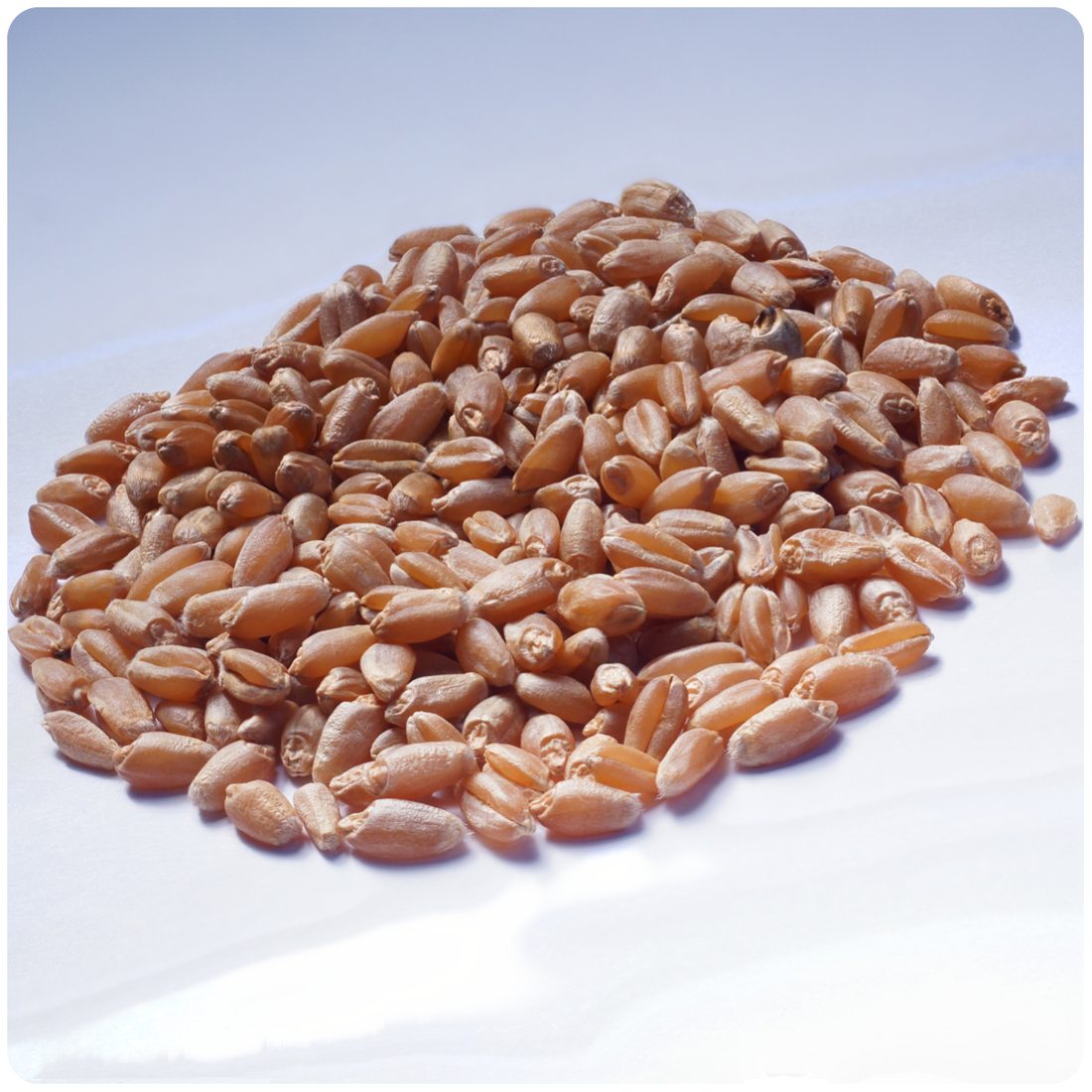
Hard red winter wheat is commonly marketed for wheatgrass because it is a major, widely produced class of common wheat. Its broad production likely contributes to supplier familiarity and availability through established agricultural channels. Suitable, viable seed can produce young wheatgrass when it is untreated and appropriate for the intended use.
That does not mean hard red winter wheat is universally better than hard red spring, hard white, soft red, or other suitable common-wheat seed. Hard red winter wheat is a market class, not one specific variety. For home growers, treatment status, intended use, germination information, seed quality, storage, and supplier transparency may be more immediately useful buying criteria than the market-class name alone.
What Is Hard Red Winter Wheat?
What “Hard,” “Red,” and “Winter” Mean
The name describes several different characteristics of the wheat:
- Hard primarily refers to the kernel and endosperm characteristics.
- Red refers to the color of the bran.
- Winter refers to the crop’s growth habit and its traditional fall-seeded production system.
The University of Missouri describes winter wheat as having a growth habit associated with fall planting and a requirement for vernalization before flowering and grain production. (University of Missouri Extension)
These terms describe agricultural and grain characteristics. They do not, by themselves, prove that the resulting wheatgrass will be stronger, thicker, more nutritious, better tasting, or higher-yielding.
HRW Is a Market Class, Not One Cultivar
Hard red winter wheat, often abbreviated HRW, is a recognized wheat market class. It includes multiple varieties and cultivars rather than one genetically identical type of seed. USDA grain-classification materials distinguish the class from the individual varieties within it. (USDA Agricultural Marketing Service)
That distinction matters when comparing wheatgrass results. Two products may both be labeled hard red winter wheat but differ in:
- Named cultivar
- Seed lot
- Harvest conditions
- Storage history
- Germination performance
- Supplier handling
- Treatment status
The HRW label identifies a broad category, but it does not identify every factor that can affect sprouting or growth. It also cannot guarantee that every seed lot will germinate at the same speed or produce the same amount of grass.
Common Wheatgrass Is Not Every Plant Called Wheatgrass
Common wheatgrass generally refers to young common wheat, usually Triticum aestivum, harvested during its vegetative stage. (Wheatgrass review, PMC)
The word “wheatgrass” can also appear in the names of other plants. Intermediate wheatgrass, for example, is a different perennial species, Thinopyrum intermedium. It should not be treated as interchangeable with the common wheat normally used for tray-grown wheatgrass.
For buyers, the practical point is to identify the actual plant species and intended use rather than relying only on the word “wheatgrass” on a package.
Why Is Hard Red Winter Wheat Commonly Used for Wheatgrass?
Hard red winter wheat is one of the major wheat classes produced in the United States. USDA identifies it as a large U.S. wheat class grown primarily in the Great Plains, accounting for approximately 40% of U.S. wheat production in its sector overview. Oregon State University also describes it as a major U.S. wheat class. (USDA Economic Research Service; Oregon State University)
That broad production likely helps explain why HRW is familiar and available through some grain and seed channels. Its availability in wheatgrass products is a market explanation, not proof of a special biological advantage for growing wheatgrass.
The sources reviewed for this article do not quantify what percentage of commercial wheatgrass seed is hard red winter wheat.
Several factors may contribute to its popularity:
- It is widely produced. HRW is a major U.S. wheat class.
- Its broad production may support supplier familiarity. Businesses working with wheat may already recognize and handle HRW or related varieties.
- Suitable kernels can germinate. Viable, appropriate seed can produce young wheatgrass.
- Its broad agricultural supply may support availability. This may make it practical for some suppliers to source and package.
- It is associated with common wheat. Common wheat is the type generally used for conventional tray-grown wheatgrass.
Availability and familiarity should not be confused with evidence that HRW produces better wheatgrass than every other suitable wheat class.
Is Hard Red Winter Wheat Better Than Other Wheat for Wheatgrass?
Not necessarily. The available evidence does not establish hard red winter wheat as universally superior to every other suitable common-wheat class.
Other common-wheat types may also be suitable for wheatgrass, including:
- Hard red spring wheat
- Hard white wheat
- Soft red winter wheat
- Other cultivars of common wheat
Results can vary with the cultivar, seed lot, growing medium, light conditions, temperature, and other growing conditions. The specific seed and growing system may be more immediately useful buying considerations than the market-class label alone.
What Research Does Show
Research indicates that wheat variety and growing conditions can affect measured outcomes such as:
- Plant height
- Fresh or dry yield
- Juice yield
- Chlorophyll measurements
- Phenolic content
- Antioxidant measurements
One controlled study examined wheat varieties, photoperiod, and growing medium and found that these factors, including their interactions, affected wheatgrass growth and measured composition. (Effect of variety, photoperiod, and growing medium on wheatgrass characteristics)
However, that kind of study does not establish that hard red winter wheat is always the best choice. It also does not prove that a particular laboratory measurement produces a human health benefit. The study used controlled growing conditions and wheat varieties that do not provide a complete, direct comparison of U.S. hard red winter, hard red spring, hard white, and soft red winter seed in typical home trays.
The evidence therefore supports a more limited conclusion: wheat varieties can perform differently, but the available research does not provide a universal ranking for home-grown wheatgrass.
HRW Compared With Other Common Wheat Classes
The major wheat classes differ in grain and agricultural characteristics. Those differences may influence performance in particular growing conditions, but no strong head-to-head evidence reviewed here establishes one class as the universal winner for wheatgrass.
The table below is a cautious overview, not a direct head-to-head ranking. The studies reviewed do not provide a complete comparison of U.S. HRW, hard red spring, hard white, and soft red winter wheat in typical home trays.
| Wheat type | What can be said cautiously |
|---|---|
| Hard red winter wheat | A major, widely produced common-wheat class commonly marketed for wheatgrass |
| Hard red spring wheat | Another common-wheat class that may be suitable when the seed is viable and appropriate for the intended use |
| Hard white wheat | May also produce wheatgrass when the seed is suitable and untreated |
| Soft red winter wheat | Has different grain characteristics; performance should be evaluated using the specific seed and growing conditions |
| Named cultivars within any class | May differ in germination and growth performance |
Claims that HRW always produces the thickest grass, best flavor, fastest harvest, or highest juice yield are not established by the evidence reviewed for this article. Such descriptions may be product-specific or anecdotal unless supported by comparative testing.
Does the “Winter” Type Matter for Indoor Wheatgrass?
What Winter Means Agronomically
Winter wheat is associated with fall seeding and generally requires vernalization before flowering and grain production. In field agriculture, this allows the crop to establish before winter and resume development later in the season. (University of Missouri Extension)
Tray-grown wheatgrass is usually harvested much earlier, while the plant is still young and vegetative. It is not normally grown through flowering and grain production.
What This May Mean for Home Tray Growers
As a practical agronomic inference, the winter classification may matter less for short-cycle indoor wheatgrass than factors such as:
- Seed viability
- Treatment status
- Intended use
- Seed-lot quality
- Storage conditions
- Growing medium
- Temperature and light
This is an inference from the difference between winter wheat’s field life cycle and the young harvest stage of wheatgrass. It is not direct evidence that the winter trait has no effect under every indoor growing system.
In other words, a grower does not generally need to recreate an outdoor winter season simply to harvest young wheatgrass from suitable seed. The word “winter” should not be interpreted as a guarantee of better indoor performance.
What to Look For When Buying Wheatgrass Seed
The market-class label is only one part of the buying decision. The following factors may be more immediately useful when selecting seed for consumable wheatgrass.
Choose Seed Intended for Sprouting or Wheatgrass Use
Look for seed clearly identified for:
- Sprouting
- Wheatgrass production
- Food use, where applicable
- Another clearly described consumable purpose
Virginia Cooperative Extension advises consumers to use seed expressly intended for sprouting and warns that some garden seed may be treated with pesticides. (Virginia Cooperative Extension)
Do not assume that every wheat berry sold for farming, gardening, milling, or animal feed is automatically appropriate for growing food. If the package does not explain the intended use, contact the supplier before planting it for consumption.
A food-use or sprouting-use label is useful information, but it is not by itself a guarantee that the seed is pathogen-free or that it will germinate well.
Confirm That the Seed Is Untreated
Do not use chemically treated planting seed to grow wheatgrass intended for consumption.
Read the package for treatment disclosures and warnings such as:
- “Do not use for food”
- “Do not use for feed”
- “Treated seed”
- Statements referring to pesticide coatings or seed treatments
The National Pesticide Information Center states that treated seed should not be consumed or used as animal feed. USDA labeling guidance also describes warning requirements for certain chemically treated seed. (National Pesticide Information Center; USDA Agricultural Marketing Service)
Do not assume that rinsing makes treated seed suitable for food. If the treatment status is unclear, ask the supplier before using the seed for consumable wheatgrass.
Check Germination and Purity Information
When available, examine information about:
- Germination percentage
- Seed purity
- Other crop seed
- Inert matter
- Seed-lot identification
- Testing date
- Seedling vigor
- Supplier or producer identity
Seed certification and related documentation may provide information about genetic identity, physical purity, germination testing, and seed-lot details. Certification can improve transparency, but it does not guarantee that a particular lot will perform best in every wheatgrass tray. (Colorado State University Seed Programs)
Certification, food-use labeling, and microbial safety are separate issues:
- Certification may provide information about identity, purity, and testing.
- Food-use or sprouting labeling addresses the intended use of the seed.
- Microbial safety depends on production, handling, storage, preparation, and other controls.
None of these categories should automatically be treated as a substitute for the others.
Consider Storage and Seed-Lot History
Germination can vary with the cultivar, seed lot, harvest conditions, storage, temperature, and dormancy. Oklahoma State University research on hard winter wheat varieties describes variation in post-harvest dormancy and heat-sensitive germination. (Oklahoma State University Extension)
The HRW label alone cannot guarantee fast or uniform sprouting.
If a batch performs poorly, that result does not necessarily prove that all hard red winter wheat is unsuitable. The problem may relate to the particular lot, storage history, temperature, moisture, or handling. Check the lot information and contact the supplier before judging the entire wheat class.
Interpret Organic Labeling Carefully
Organic labeling may describe how seed was produced. Organic labeling alone does not answer every question about:
- Germination performance
- Treatment status
- Handling
- Microbial safety
- Raw juice safety
Treat organic status as one production attribute, not as a substitute for checking intended use, treatment disclosures, germination information, and supplier transparency.
Common Claims About Hard Red Winter Wheat
| Common claim | Evidence-based assessment |
|---|---|
| HRW is commonly used for wheatgrass | Reasonable as a market-availability explanation, but its share of the wheatgrass-seed market has not been quantified here |
| HRW is the best wheatgrass seed | Not established |
| HRW produces the highest juice yield | Insufficient evidence for a universal claim |
| HRW produces the thickest grass | Insufficient evidence for a universal claim |
| HRW has the best flavor | Product-specific or anecdotal unless tested comparatively |
| HRW always germinates reliably | Not supported; germination can vary by cultivar and seed lot |
| Other common wheat classes cannot be used | Not supported |
| Any farm-supply wheat berries are safe for food | Not supported; treatment and intended use must be checked |
| Organic seed is automatically pathogen-free | Organic labeling alone does not answer every question about handling or microbial safety; it should not be treated as proof of pathogen-free seed |
| Winter wheat must be planted outdoors in winter | Incorrect for the purpose of harvesting young tray-grown wheatgrass |
The most defensible conclusion is that HRW is a common and practical option, not a scientifically proven universal winner.
Food-Safety Considerations
Treated Seed Is Not Food Seed
Chemically treated planting seed should not be consumed or used to produce food. Check the package for treatment information and food-use restrictions before planting.
If the label is incomplete or unclear, contact the supplier rather than assuming the seed is untreated. This precaution applies regardless of whether the seed is labeled hard red winter, organic, natural, or another wheat type.
Raw Wheatgrass Juice Is Not Risk-Free
Freshly squeezed, raw, or unpasteurized juice may contain harmful bacteria. FDA advises that untreated juice can present food-safety risks and identifies greater concern for children, older adults, pregnant people, and people with weakened immune systems. (U.S. Food and Drug Administration)
Growing wheatgrass at home does not automatically eliminate contamination risks. Fresh, homegrown, or organic juice should not be assumed to be pathogen-free. Clean handling, appropriate refrigeration, and careful preparation are important, but they do not make raw juice risk-free.
People in higher-risk groups may wish to discuss untreated juice with a healthcare professional before consuming it.
FAQ
Research & Further Reading
Wheat Classification and Agricultural Background
- USDA Economic Research Service — Wheat sector overview
- USDA Agricultural Marketing Service — Grain Grading Primer
- University of Missouri Extension — Wheat market classes
- Oregon State University — Hard red winter wheat
- Wheatgrass as a young common-wheat plant and processing considerations
Seed Quality and Germination
- Colorado State University Seed Programs — About seed certification
- Oklahoma State University Extension — Variation in heat-sensitive germination among contemporary hard winter wheat varieties
- USDA Agricultural Marketing Service — Seed testing and regulations
Wheatgrass Research
- Effect of variety, photoperiod, and growing medium on wheatgrass juice characteristics
- Study on wheatgrass juice yield from different wheat varieties and growing conditions
Treated Seed and Food Safety
- USDA Agricultural Marketing Service — Labeling requirements for chemically treated seed
- National Pesticide Information Center — Treated seeds
- Virginia Cooperative Extension — Sprouting seeds for food
- U.S. Food and Drug Administration — What you need to know about juice safety
Company/Product Information
- Andi’s Way — Hard Red Winter Wheat Seed for Growing Wheatgrass
Source type: Company and product information. This page may establish the company’s listed product identity and product details, but it is not scientific evidence that hard red winter wheat is superior for wheatgrass.
Related guides
How to Bottom-Water Microgreens Without Waterlogging the Tray
Learn how to bottom-water microgreens with nested trays, moisture checks, drain-off steps, and practical tips to avoid soggy media and standing water.
12 min read
Best Growing Medium for Microgreens: Soil vs Coco Coir vs Grow Mats
Compare potting mix, coco coir, and grow mats for microgreens. Learn the trade-offs in watering, cleanup, crop support, reuse, tray setup, and food safety.
16 min read
Do Microgreens Regrow After Cutting?
Most microgreens are a one-time harvest. Learn why some shoots may regrow after cutting, how baby greens differ, and when reseeding is the better choice.
8 min read
Stay in the loop
New guides, when they publish
An occasional email when a new guide goes live. No spam.
Your email is stored privately for future guide updates. No emails are being sent yet. Privacy policy