Juicing · Wheatgrass Juicing and Processing
Best Type of Juicer for Wheatgrass: What to Look For
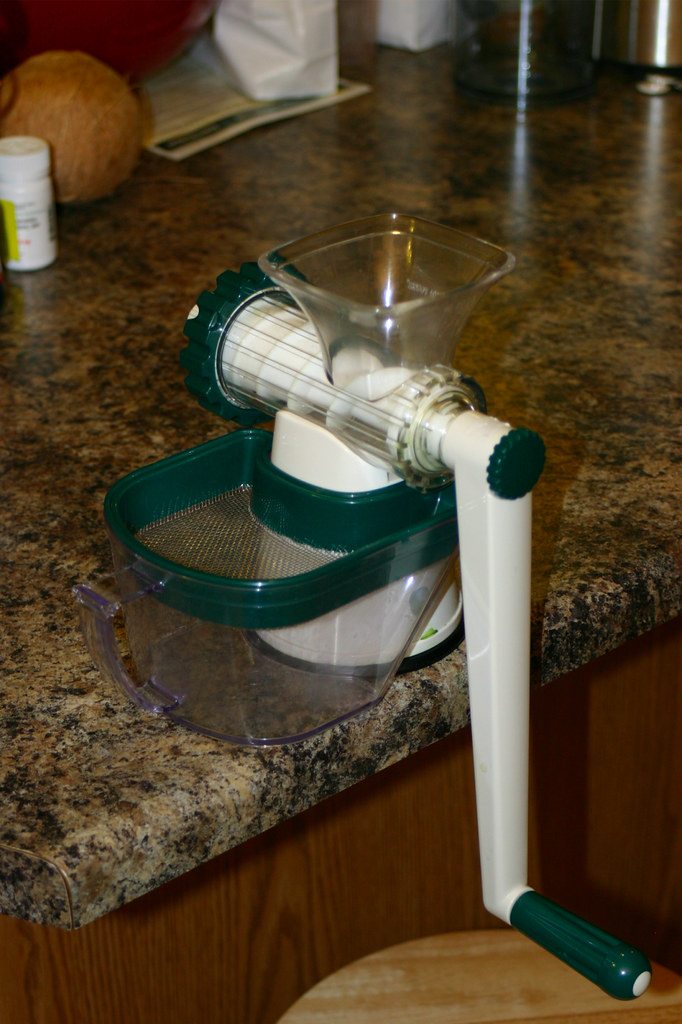
The best wheatgrass juicer for you depends less on a “best overall” label and more on whether the machine is designed to handle fibrous greens, fits your batch size, and is practical to clean and maintain.
Start by looking for a juicer whose manufacturer explicitly lists wheatgrass or grasses among supported ingredients. Leafy-green support can be a useful secondary indicator, but it does not by itself establish that a machine is suitable for wheatgrass. Then choose the category that matches your routine:
- Small, occasional batches: a dedicated manual wheatgrass juicer may be enough.
- Regular home use plus other produce: a wheatgrass-compatible horizontal single-auger masticating juicer may be a practical fit.
- A premium, leafy-green-focused home setup: a twin-gear masticating juicer may be worth considering.
- Juice bars, cafés, and commercial kitchens that process wheatgrass repeatedly or operate under commercial equipment and sanitation requirements: a purpose-built commercial wheatgrass juicer may be the more appropriate starting category.
- An existing centrifugal juicer: use it for wheatgrass only if the manufacturer specifically supports that use.
This guide focuses on choosing a juicer type and evaluating manufacturer information—not ranking individual models or making unsupported nutrition claims.
Start With the Most Important Rule: Verify Wheatgrass Compatibility
Terms such as “slow juicer,” “cold press,” and “masticating juicer” do not automatically mean a machine is appropriate for wheatgrass.
Before purchasing, read the manufacturer’s product page, manual, or specification sheet. Prioritize clear statements about:
- Wheatgrass or grasses
- Recommended and excluded ingredients
- Leafy greens or fibrous produce as secondary compatibility information
- Maximum or continuous operating-time limits
- Feeding and clog-management instructions
- Cleaning and disassembly requirements
- Replacement parts
- Warranty coverage
- Service or repair options
For example, Tribest identifies wheatgrass as a supported ingredient for its Greenstar 5 twin-gear juicer, while Hamilton Beach Commercial markets the HWG800 as a dedicated wheatgrass juicer. These are manufacturer-stated compatibility claims for those specific models; they do do not prove that all machines in the same category will perform the same way. Tribest Hamilton Beach Commercial
Why “cold press” and low RPM are not enough
RPM is one specification, not a stand-alone measure of wheatgrass performance.
A low-speed machine may have a different design and operating method than a high-speed machine, but RPM alone does not tell you:
- Whether the juicer supports wheatgrass
- How effectively it handles long blades
- How readily it clogs
- How much cleanup it requires
- How much juice it produces in your conditions
- Whether it produces nutritionally superior wheatgrass juice
Choose based on stated ingredient compatibility, the machine’s design, and your intended use—not on a low RPM figure or “cold press” label alone.
Why Wheatgrass Requires Different Equipment Considerations
Wheatgrass is long and fibrous, unlike apples, carrots, or other firm produce commonly used in household juicers. That makes the machine’s feed path, pulp handling, and access for cleaning especially important.
When comparing a juicer for wheatgrass, consider how it manages:
- Long strands entering the feed area
- Fibrous pulp moving through the mechanism
- Pulp discharge
- Potential jams or clogs
- Screen, filter, auger, or gear access
- Residue on food-contact parts
A wide feed chute is not necessarily the deciding feature for wheatgrass. More useful questions are whether the machine is intended for fibrous greens and whether its feeding and pulp-handling design suits your routine.
The Main Types of Wheatgrass Juicers
Dedicated Manual Wheatgrass Juicers
A dedicated manual wheatgrass juicer may be a practical option for small, occasional batches and for people who prefer not to use electricity.
#### Best fit
Consider a manual wheatgrass juicer if you:
- Make small servings rather than repeated large batches
- Juice only occasionally
- Prefer a compact, non-electric appliance
- Have limited storage or counter space
- Are comfortable turning a hand crank
- Do not need the machine to juice many types of produce
#### Potential advantages
Manual wheatgrass juicers are generally simple in form and do not rely on a motor. Depending on the design, their compact format may make them easier to store than some larger countertop appliances.
#### Tradeoffs to consider
Manual operation may not be convenient for everyone. Before buying, assess:
- Hand-cranking effort
- Clamp or base stability on your counter
- Ease of assembly and disassembly
- Number of parts that need cleaning
- Whether the machine is intended only for wheatgrass or for other produce as well
A manual juicer should not automatically be assumed to provide greater yield or better nutrition. Its main appeal is a simple, non-electric format for a smaller routine.
Horizontal Single-Auger Masticating Juicers
A horizontal single-auger masticating juicer may suit people who want electric convenience and plan to juice wheatgrass along with other fruits, vegetables, or leafy greens.
#### Best fit
This category may fit buyers who want:
- Regular household use
- Less physical effort than manual cranking
- A machine with broader produce-processing potential
- An auger-based design rather than a high-speed spinning basket
However, compatibility is model-specific. Do not assume every horizontal masticating juicer is suitable for wheatgrass.
#### What to verify
Check the manufacturer documentation for:
- Explicit wheatgrass or grass support
- Guidance for fibrous ingredients
- Reverse or clog-management functions
- Pulp discharge design
- Screen or filter cleaning requirements
- Maximum operating time
- Replacement-part availability
For many households, this category may offer useful versatility—but only when the individual model supports the ingredients you plan to use.
Twin-Gear Masticating Juicers
Twin-gear juicers use two interlocking gears and may appeal to buyers who want a more specialized, leafy-green-oriented appliance.
#### Best fit
A twin-gear machine may be worth considering if you:
- Juice wheatgrass or leafy greens frequently
- Want a heavier-duty home appliance
- Are comfortable with a larger machine and more parts
- Accept a higher upfront cost
- Value ingredient compatibility and long-term serviceability
Tribest’s Greenstar 5, for example, is described by its manufacturer as a horizontal twin-gear masticating juicer that can juice wheatgrass. Tribest also lists a continuous operating limit of up to 40 minutes per session for that model. Those details apply to the Greenstar 5, not to every twin-gear juicer. Tribest product documentation
#### Tradeoffs to consider
Depending on the model, twin-gear machines may involve:
- Higher purchase cost
- More components to assemble and clean
- A larger counter footprint
- More complicated setup
- Model-specific operating limits
Twin-gear construction does not, by itself, prove higher wheatgrass yield or superior nutritional quality. It is primarily a design and usability decision.
Dedicated Commercial Wheatgrass Juicers
A dedicated commercial wheatgrass juicer may be appropriate for a juice bar, café, commercial kitchen, or other business that processes wheatgrass repeatedly.
#### Best fit
Commercial buyers should consider equipment intended for:
- Repeated service throughout the day
- Higher-volume preparation
- Accessible food-contact parts
- Defined cleaning procedures
- Replacement-part and repair support
- Commercial electrical and space requirements
Hamilton Beach Commercial describes its HWG800 as a wheatgrass juicer for commercial use. Its product information lists removable food-zone parts, a stomper designed for longer wheatgrass, a one-year warranty, and 120-volt/375-watt specifications. These are manufacturer specifications, not evidence of superior juice yield or nutrition. Hamilton Beach Commercial HWG800 specification sheet
#### What commercial buyers should evaluate
A commercial purchase should include more than a comparison of juicing mechanisms. Review:
- The manufacturer’s stated duty expectations
- Operating-time limits
- Removable food-zone components
- Cleaning access between uses
- Replacement-part availability
- Warranty conditions
- Repair and service support
- Electrical requirements
- Applicable sanitation standards
- State and local food-service requirements
A commercial machine may be unnecessary for someone making a small amount of wheatgrass at home once or twice a week.
What About Centrifugal Juicers?
A centrifugal juicer is not the first category to consider for wheatgrass unless its manufacturer specifically identifies wheatgrass or fibrous leafy greens as supported ingredients.
That does not mean every centrifugal juicer is incapable of processing wheatgrass. It means you should not assume compatibility simply because the juicer handles apples, carrots, or other produce.
Before using a centrifugal juicer for wheatgrass, check:
- The owner’s manual
- The manufacturer’s supported-ingredient list
- Warnings about fibrous or stringy produce
- Warranty restrictions
- Cleaning and maintenance guidance
Avoid claims that centrifugal juicers inherently “destroy enzymes” or always make nutritionally inferior juice. The studies cited in this guide do not establish that conclusion for wheatgrass.
What to Look For Before You Buy
1. Explicit Wheatgrass or Grass Compatibility
This is the central buying criterion.
Look first for clear manufacturer language about wheatgrass or grasses. Leafy-green or fibrous-produce support can provide additional context, but it should not be treated as proof of wheatgrass compatibility by itself. If wheatgrass is not mentioned on the product page, check the manual or contact the manufacturer before purchasing.
Also review excluded-ingredient guidance. A machine may be marketed for greens generally while still carrying limitations for especially fibrous material.
2. Batch Size and Frequency of Use
Match the machine to your real routine.
Ask yourself:
- How much wheatgrass will I juice at one time?
- Will I use the juicer daily, weekly, or occasionally?
- Will I juice only wheatgrass or other produce as well?
- Do I need to make multiple servings in a row?
- Is this for home use or a food-service business?
As a practical decision framework, manual models may fit small occasional batches, while electric household machines may be more convenient for frequent use. Commercial operations should place greater weight on stated duty expectations, sanitation, and serviceability.
3. Feed Handling and Clog Management
Because wheatgrass is long and fibrous, assess the feed system rather than focusing only on chute width.
Useful features may include:
- A feed opening appropriate for greens
- A stable pusher or stomper
- A reverse function, where available
- A pulp path designed to manage fibrous material
- Clear manufacturer directions for wheatgrass or leafy greens
These features do not guarantee clog-free use. They are simply practical design details to compare before buying.
4. Pulp Ejection and Pressure Adjustment
Review how the machine manages pulp and whether it offers settings or components intended for fibrous ingredients.
Depending on the model, this may include:
- Pulp discharge design
- Pressure adjustment
- Interchangeable screens
- Adjustable end caps
- Access to the auger, gears, or filter
Do not treat adjustable pressure or dry-looking pulp as proof of maximum extraction. They are product features, not standardized measures of wheatgrass performance.
5. Cleanup and Food-Contact Access
Cleanup is a major usability consideration. A juicer that is difficult to disassemble, scrub, and reassemble may be less practical for frequent use.
Before purchasing, check:
- How many parts contact juice or pulp
- Whether the screen is accessible
- Whether the auger or gears can be removed easily
- Whether a cleaning brush is included
- Whether the manufacturer provides clear cleaning instructions
- Whether replacement screens, seals, and other wear parts are available
- Whether food-contact surfaces can be adequately cleaned
For commercial settings, equipment design and maintenance matter because food-contact surfaces need to be cleanable and kept in sanitary condition. FDA Juice HACCP Regulator Training
6. Replacement Parts, Warranty, and Service
A warranty can be valuable, but it is not proof of higher juice quality or yield.
Before buying, review:
- Warranty length and exclusions
- Whether unsupported ingredients affect coverage
- Availability of replacement screens, augers, seals, and brushes
- Manufacturer or distributor repair support
- Expected access to replacement parts
- Whether the model is still actively supported
This is particularly important for businesses, where equipment downtime can disrupt service.
7. Space, Weight, Noise, and Power Requirements
A juicer should fit your kitchen or business setup.
Confirm:
- Counter footprint
- Storage needs
- Machine weight
- Electrical requirements
- Stability during use
- Stated operating limits
- Whether the appliance is realistic to move, clean, and store
Do not infer wheatgrass performance from wattage alone. A higher power rating does not automatically mean higher yield or better-quality juice.
8. Commercial Certification and Sanitation Needs
Commercial operators may need to consider food-equipment standards in addition to machine performance.
NSF/ANSI 8 covers minimum food-protection and sanitation requirements for the materials, design, and construction of powered commercial food-preparation equipment. It can be relevant when selecting equipment for food service, but it is not an FDA approval, nutritional endorsement, or extraction-performance rating. NSF Food Equipment Standards
The FDA Food Code is a model code, not automatically binding law. State, tribal, territorial, and local authorities determine which provisions apply in a specific jurisdiction. Commercial operators should confirm requirements with the relevant regulatory authority. FDA: 2026 Food Code
How to Compare Wheatgrass Juicer Yield Claims
Wheatgrass yield claims can be difficult to compare across brands because manufacturers and reviewers may use different grass, batch sizes, feeding methods, and testing rules.
Use this as a practical GreenRootGuide comparison framework rather than as a formal industry testing standard.
When reviewing a yield claim, ask:
- Was the same weight of wheatgrass used?
- Was the grass harvested at a similar stage and moisture level?
- Was the grass cut to a similar length?
- Were the same feeding methods used?
- Was pulp processed once or run through the machine again?
- Were the same screens, settings, or pressure adjustments used?
- How was the final juice volume measured?
Compare more than a percentage figure. Also consider:
- Juice volume per batch
- Pulp moisture
- Time required to prepare and juice the grass
- Frequency of interruptions or clogs
- Cleanup time
- Physical effort for manual equipment
- Whether results are repeatable across multiple batches
Treat phrases such as “maximum yield” or a precise percentage increase as model-specific marketing or testing claims unless the seller provides a transparent, reproducible test method.
Does Juicer Type Change Wheatgrass Nutrition?
The studies cited here do not establish a universal nutritional advantage for one wheatgrass juicer type over another. The comparative studies discussed below were not wheatgrass-specific.
The available comparative studies are not specific to wheatgrass:
- A grape-juice study reported differences in antioxidant-related measurements among tested household processing methods, including a low-speed masticating juicer and a centrifugal juicer. That finding cannot be assumed to apply to wheatgrass. Grape-juice study
- Another study of fresh fruit juices found no significant initial differences in several measured bioactive compounds and antioxidant-capacity measures between the tested cold-pressed and centrifugal juices. Cold-pressed versus centrifugal study
- An apple-juice study examined enzymatic browning in juice made with a blender and a low-speed masticating household juicer; it was not a wheatgrass study. Apple-juice study
These studies show why broad marketing claims should be interpreted carefully. Results may depend on the ingredient, machine, processing conditions, and storage period.
The cited evidence is not enough to say that a particular juicer design:
- Preserves all wheatgrass nutrients
- Protects all enzymes
- Prevents oxidation
- Guarantees higher wheatgrass yield
- Produces clinically superior juice
- Provides a specific health benefit
For most buyers, compatibility, capacity, cleanup, operating limits, and serviceability are more reliable decision criteria than unverified health or nutrient claims.
Cleaning and Food-Safety Considerations
Home use
Wash fresh wheatgrass and other produce under running water before preparation, and clean juicer parts according to the manufacturer’s instructions. Washing is an important food-safety practice, but it does not eliminate every possible risk. USDA FSIS produce-washing guidance
Choose a machine that allows you to access and clean:
- Screens or filters
- Augers or gears
- Seals and gaskets
- Juice-contact surfaces
- Pulp-contact areas
Prompt cleaning can help prevent residue from drying onto food-contact parts.
Fresh, raw, or unpasteurized juice can carry foodborne-illness risk because bacteria on produce may be transferred into juice during preparation. A juicer does not make raw juice safe by itself. People at higher risk of foodborne illness should take particular care with untreated juices. FDA juice-safety guidance
Commercial use
For juice bars, cafés, and commercial kitchens, cleaning and sanitation are operational requirements—not merely convenience features.
Evaluate whether the equipment has:
- Cleanable food-contact surfaces
- Removable food-zone components
- Accessible screens, gears, or augers
- Documented cleaning instructions
- Appropriate service support
- Suitability for the business’s workflow
- Any applicable sanitation certification
Commercial operators should also follow local requirements and maintain their own food-safety procedures. A sanitation certification can be relevant to equipment selection, but it does not establish that a juicer produces more nutritious juice, more yield, or a health benefit.
Wheatgrass Juicer Decision Guide
| Reader situation | Starting category to consider | Main verification point |
|---|---|---|
| Occasional small wheatgrass batches | Dedicated manual wheatgrass juicer | Hand effort, stability, and manufacturer-stated ingredient support |
| Regular home wheatgrass use plus other produce | Wheatgrass-compatible horizontal single-auger masticating juicer | Model-specific wheatgrass compatibility, cleanup, and operating limits |
| Premium leafy-green-focused home setup | Twin-gear masticating juicer | Cost, complexity, replacement parts, and operating limits |
| Juice bar, café, or commercial kitchen that processes wheatgrass repeatedly | Dedicated commercial wheatgrass juicer | Duty expectations, sanitation, service, and electrical requirements |
| Already own a centrifugal juicer | Use it only if the manufacturer supports wheatgrass | Manual guidance, compatibility, and warranty restrictions |
Frequently Asked Questions
Research & Further Reading
Peer-reviewed research on juicing methods
Park SY, Kang TM, Kim MJ, Kim MJ. Enzymatic browning reaction of apple juices prepared using a blender and a low-speed masticating household juicer. https://pubmed.ncbi.nlm.nih.gov/30146950/
Kim et al. Antioxidant activities of fresh grape juices prepared using various household processing methods. https://pubmed.ncbi.nlm.nih.gov/30263614/
Effect of cold-pressed and normal centrifugal juicing on quality attributes of fresh juices: do cold-pressed juices harbor a superior nutritional quality and antioxidant capacity? https://pubmed.ncbi.nlm.nih.gov/31286079/
Government food-safety and food-service sources
U.S. Food and Drug Administration: What You Need to Know About Juice Safety https://www.fda.gov/food/buy-store-serve-safe-food/what-you-need-know-about-juice-safety
U.S. Food and Drug Administration: Juice HACCP Regulator Training https://www.fda.gov/food/hazard-analysis-critical-control-point-haccp/juice-haccp-regulator-training
U.S. Food and Drug Administration: FDA Releases 2026 Food Code https://www.fda.gov/food/hfp-constituent-updates/fda-releases-2026-food-code
U.S. Department of Agriculture Food Safety and Inspection Service: How Should Fresh Produce Be Washed Before Eating? https://ask.fsis.usda.gov/article/How-should-fresh-produce-be-washed-before-eating
FoodSafety.gov: 4 Steps to Food Safety https://www.foodsafety.gov/keep-food-safe/4-steps-to-food-safety
NSF: Food Equipment Standards https://www.nsf.org/gb/en/nsf-standards/standards-portfolio/food-equipment-standards
Manufacturer sources for product-specific information
Hamilton Beach Commercial: FreshMark Wheatgrass Juicer, Model HWG800 https://hamiltonbeachcommercial.com/commercial-juicers/freshmark-wheatgrass-juicer-hwg800/
Hamilton Beach Commercial: HWG800 Wheatgrass Juicer Specification Sheet https://hamiltonbeachcommercial.com/wp-content/uploads/2018/09/HBC_HWG800.pdf
Tribest: Greenstar 5 Twin-Gear Cold Press Masticating Juicer https://tribest.com/products/greenstar-5-cold-press-masticating-juicer-gs5-2
Manufacturer sources are useful for stated ingredient compatibility, operating limits, specifications, warranties, and equipment features. They are not scientific evidence of nutrition, food safety, yield, or health benefits.
Company and retailer information
Andi’s Way: Manual and Electric Wheatgrass Juicer Collection https://andisway.com/collections/manual-electric-juicers
Andi’s Way is a company and retailer source. Its product pages may provide current product and availability information, but they are not scientific evidence for nutritional, medical, food-safety, or yield claims.
Related guides

Manual vs Electric Wheatgrass Juicer: Which One Fits Your Routine?
A manual wheatgrass juicer may be a good fit for modest batches, quiet operation, and places without convenient access to an electrical outlet. An electric wheatgrass juicer may be more practical for frequent or repeated juicing because a motor replaces repetitive hand cranking.
14 min read
What Is HPP Wheatgrass Juice? High-Pressure Processing Explained
HPP wheatgrass juice is wheatgrass juice treated with very high hydrostatic pressure to reduce targeted microorganisms without using conventional heat as the primary treatment. HPP stands for high-pressure processing; it is also called high hydrostatic pressure processing and may sometimes be described as high-pressure pasteurization.
12 min read
Frozen Raw vs Refrigerated HPP Wheatgrass Shots: What’s the Difference?
Frozen raw wheatgrass shots and refrigerated HPP wheatgrass shots are preserved and handled differently.
13 min read
Stay in the loop
New guides, when they publish
An occasional email when a new guide goes live. No spam.
Your email is stored privately for future guide updates. No emails are being sent yet. Privacy policy