Microgreens · Microgreens
Sunflower Microgreens vs. Pea Shoots: Taste, Growing, Storage, and Use
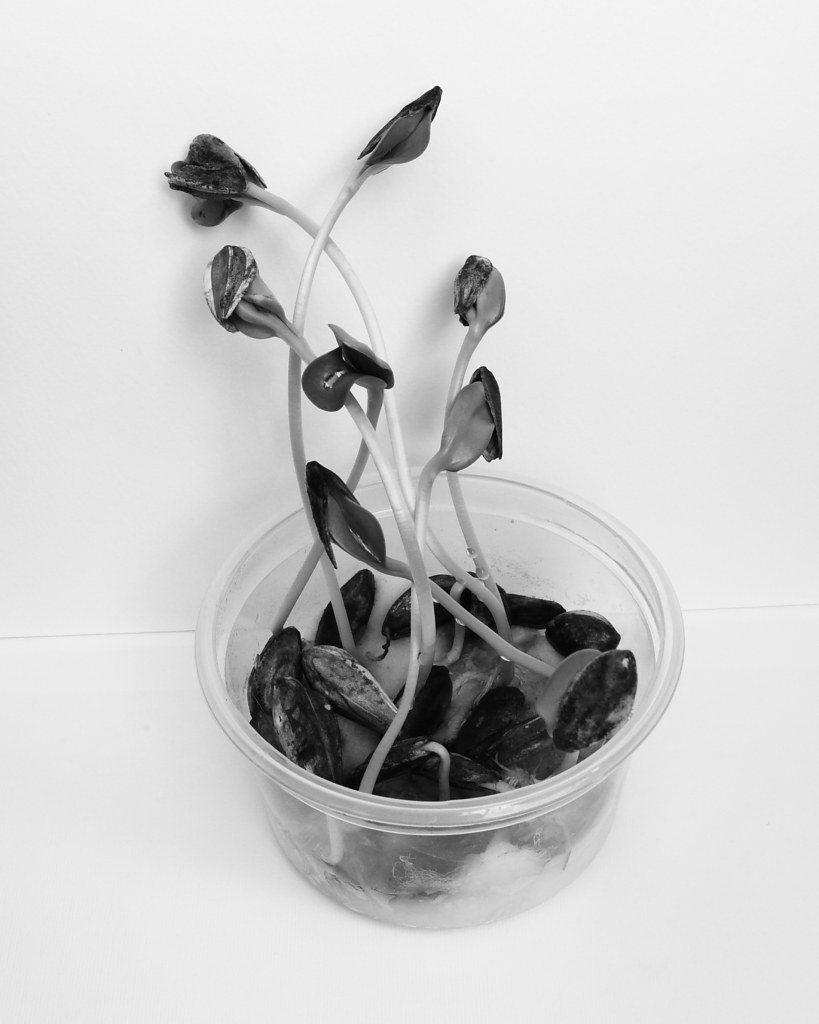
Sunflower microgreens and pea shoots are both popular large-seeded crops for home trays, but they deliver different flavors, textures, and harvest styles.
Choose pea shoots if you prefer a mild, fresh, lightly sweet flavor and tender shoots that can be harvested relatively young or allowed to grow taller. Choose sunflower microgreens if you want a mild, nutty flavor and a more substantial, often crunchier bite.
Both crops use a broadly similar setup: seed suited to growing shoots or microgreens, a shallow tray, a clean growing medium, moisture management, light after germination, and clean harvesting practices. Neither is universally easier to grow, longer-lasting, or more nutritious. The practical choice comes down to taste, texture, harvest preference, and how you plan to use the greens.
Quick Comparison: Pea Shoots vs. Sunflower Microgreens
| Comparison point | Pea shoots | Sunflower microgreens |
|---|---|---|
| Flavor | Mild, fresh, and lightly sweet | Mild and nutty |
| Texture | Tender leaves and stems; can become more structured when grown taller | More substantial bite; often the crunchier option |
| Seed preparation | Often soaked before sowing | Often soaked before sowing |
| Early germination | May benefit from a weighted cover | May benefit from weight; hull retention is an added consideration |
| Typical planning window | About 8–10 days under one university guide | About 9–10 days under one university guide |
| Harvest style | Can be harvested young or allowed to grow taller | Generally harvested young |
| Storage approach | Refrigerate promptly and keep dry | Refrigerate promptly and keep dry |
| Best culinary fit | Salads, bowls, wraps, sandwiches, and lightly cooked dishes | Salads, sandwiches, wraps, and bowls |
| Best fit for | Sweetness, tenderness, and taller shoots | Nutty flavor and crunch |
These are useful generalizations, not guarantees. Cultivar, seed quality, crop age, growing conditions, harvest timing, moisture, and freshness can all affect flavor, texture, and timing.
University of Connecticut Extension describes pea shoots as mild and sweet and sunflower greens as nutty. Utah State University’s home-growing table lists peas at about 8–10 days and sunflower at about 9–10 days under its stated conditions. University of Connecticut Extension · Utah State University Extension
Taste and Texture
What Pea Shoots Taste Like
Pea shoots are commonly described as mild, fresh, and sweet, with a recognizable garden-pea character. Their leaves and stems are usually tender when harvested young.
If allowed to grow longer, pea shoots can develop more mature leaves and a firmer stem structure.
Pea shoots are a good fit if you want a green that:
- Has a fresh, lightly sweet flavor
- Blends easily into salads and bowls
- Can be used raw or lightly cooked
- Offers tender leaves and stems
- Can be harvested at a taller stage than many conventional microgreens
What Sunflower Microgreens Taste Like
Sunflower microgreens, often called sunflower greens, are commonly described as mild and nutty. That does not mean they taste exactly like roasted sunflower seeds; the flavor is usually fresher, greener, and less intense.
Their defining feature is often their eating texture. Fresh sunflower microgreens can have a substantial bite that remains noticeable among other ingredients. This makes them a practical choice for sandwiches, wraps, grain bowls, and salads that need more than a delicate garnish.
Sunflower microgreens may suit you if you want:
- A mild, nutty flavor
- A firmer, more substantial bite
- A compact green for sandwiches or wraps
- A crunchy salad or bowl topping
- A raw ingredient with noticeable texture
Which One Is Crunchier?
Sunflower microgreens are often the better fit when a pronounced crunch is the priority. Pea shoots are generally more tender, especially when harvested young.
That is a culinary preference rather than an objective rule. A crop’s texture changes with maturity, moisture, harvest condition, storage, and freshness. An older pea shoot crop may be firmer than a very young sunflower crop.
Growing Differences at a Glance
Seed Selection and Terminology
Peas and sunflower are both commonly grown as large-seeded microgreen crops. For either crop, choose seed that is intended or suitable for growing shoots, sprouts, or microgreens according to the supplier’s directions.
However, seed intended for these uses is not automatically free of food-safety risks. Clean growing practices still matter.
The terminology around peas can be confusing:
- Pea microgreens usually describes a younger pea crop harvested soon after the first leaves develop.
- Pea shoots may refer to the same crop harvested at a somewhat taller or more mature stage.
- Sprouts are different: they are typically harvested earlier and commonly include the seed.
Microgreens are generally harvested above the growing medium after cotyledons and sometimes early true leaves develop. Calling a young pea crop “pea microgreens” does not make it a sprout. Penn State Extension: Ensuring Food Safety in Microgreens Production
Soaking and Sowing
Both pea and sunflower seeds are often soaked before sowing because they are relatively large seeds. Soaking recommendations can vary by seed lot, growing method, and source, so there is no single timing that fits every crop.
After preparation, both are commonly sown in a shallow tray with clean, moist growing medium. Their basic setup is similar, but their growth habits differ enough that they should not be treated as identical crops.
Germination, Weight, and Sunflower Hulls
A weighted cover can help large seeds stay in contact with the growing medium during early germination. This method is often used for both peas and sunflower seeds.
For sunflower, weighting may provide an additional benefit: it can help loosen hulls from the developing cotyledons as seedlings emerge. Hulls may still cling to some seedlings, so weighting is not a guarantee that every hull will release.
Light, Moisture, and Handling
After germination, both crops need adequate light, careful moisture management, and clean handling through harvest.
Avoid keeping either crop constantly saturated. Use clean trays, tools, water, and growing media, and keep the growing medium from drying excessively. These practices support crop quality and safer handling. Penn State Extension: Ensuring Food Safety in Microgreens Production
This comparison is not a complete crop-specific growing guide. Exact seed rates, soak times, blackout schedules, lighting setups, and watering methods depend on the crop, tray, medium, environment, and growing system.
Which Crop Grows Faster?
The difference is usually small. One Utah State University guide lists peas at approximately 8–10 days and sunflower at approximately 9–10 days under its stated growing conditions.
Treat those figures as planning ranges, not promises. Temperature, light, seed age, moisture, cultivar, and the harvest stage you prefer can all change the schedule.
Harvesting: When Each Crop Is Ready
Harvesting Sunflower Microgreens
Sunflower greens are generally harvested young, after the seedlings have developed their characteristic leaves and reached a texture you enjoy.
Instead of relying only on a calendar, assess the crop’s:
- Leaf development
- Stem strength
- Remaining hulls
- Freshness
- Texture
- Overall eating quality
Sunflower microgreens are usually chosen for their compact form and substantial bite. Letting them grow much taller can change the texture and may make them less suited to the raw uses you had in mind.
Harvesting Pea Shoots
Pea shoots are often allowed to grow taller than many conventional microgreens. Depending on the harvest stage, they may have longer stems and more developed leaves.
Harvest height changes how pea shoots perform in a dish. A younger crop may be especially tender, while a taller crop can provide more volume and a more structured texture.
Harvest when the shoots have the flavor and tenderness you want rather than waiting for a fixed day.
Storage and Food Safety
Refrigerate Harvested Greens Promptly
Both pea shoots and sunflower microgreens are perishable. Refrigerate them promptly, keeping the refrigerator at 40°F or below, the FDA target for perishable foods.
Storage quality depends on several factors:
- How fresh the greens were at harvest
- Whether leaves were wet before storage
- Packaging or container choice
- Refrigerator temperature
- Handling and compression
- Time between harvest and refrigeration
This article did not identify enough directly comparable household-storage evidence to establish one crop as the consistent shelf-life winner. For that reason, it is more useful to focus on prompt refrigeration, gentle handling, and minimizing excess moisture.
Should You Wash Microgreens Before Storage?
For quality, it is generally practical to store harvested microgreens unwashed and wash them close to serving. Extra surface water can shorten their usable quality and make leaves deteriorate faster.
Washing before eating is part of careful produce handling, but it does not eliminate every food-safety risk. Washing cannot correct contaminated seed, unsanitary equipment, poor temperature control, or contamination that occurred during production.
Keep the greens dry when practical, avoid crushing them in storage, and wash gently just before use. Penn State Extension: A Step-by-Step Guide for Growing Microgreens at Home
Food-Safety Basics for Home Growers
Microgreens are different from sprouts, but they still require careful production and handling.
For either peas or sunflower:
- Start with seed suited to the intended growing use.
- Use clean trays, tools, water, and growing media.
- Wash hands before handling seeds or harvested greens.
- Manage moisture rather than leaving trays constantly saturated.
- Keep harvested greens from sitting warm for extended periods.
- Refrigerate harvested crops promptly.
- Wash greens close to serving when practical.
Research has shown that pathogens can transfer from contaminated seed to microgreens during production. Contaminated water, growing media, equipment, and handling can also introduce risk.
Visible deterioration, sliminess, or an unusual odor are good reasons to discard greens. However, normal appearance and smell do not prove that produce is free of pathogens, which is why prevention and careful handling matter from the start.
USDA Agricultural Research Service: Transfer of Foodborne Pathogens From Contaminated Seeds to Microgreens Riggio GM, et al. Microgreens—A Review of Food Safety Considerations FDA: Refrigerator Thermometers—Cold Facts About Food Safety
How Long Do They Last?
University extension guidance commonly places a home refrigerated quality window for harvested microgreens at approximately five to seven days. University of Connecticut Extension gives a range of about five to seven days, while University of Florida IFAS gives approximately five to six days. These are general references, not guaranteed shelf lives for either crop.
Pea shoots or sunflower microgreens may deteriorate sooner or stay acceptable longer depending on harvest condition, moisture, refrigerator temperature, packaging, and handling.
A sunflower-specific postharvest study found that specialized modified-atmosphere packaging and cold storage affected quality. However, that research used controlled packaging systems, so it should not be treated as a normal home-container recommendation.
University of Connecticut Extension: The Amazing Power of Microgreens University of Florida IFAS Extension: Microgreens Azarpazhooh E, et al. Modified Atmosphere Packaging of Sunflower Microgreens
Best Ways to Use Each Crop
Best Uses for Pea Shoots
Pea shoots’ mild sweetness and tender leaves make them flexible in raw dishes and lightly cooked meals. Consider using them in:
- Salads
- Grain bowls
- Wraps
- Sandwiches
- Noodle dishes
- Stir-fries or other lightly cooked dishes
If cooking pea shoots, add them near the end when you want to retain more of their fresh texture.
Best Uses for Sunflower Microgreens
Sunflower microgreens are especially useful in raw dishes where a nutty flavor and noticeable crunch are welcome. Try them in:
- Salads
- Sandwiches
- Wraps
- Grain bowls
- Burgers and other handheld foods
- Toppings for soups or savory dishes
Their substantial bite can make them a useful contrast to softer greens, avocado, cooked grains, or creamy dressings.
When to Use Both Together
You do not have to choose only one. Pea shoots and sunflower microgreens pair well in salads, bowls, wraps, and sandwiches.
Pea shoots bring fresh sweetness and tender leaves, while sunflower greens add a nutty flavor and more pronounced texture. Combining them is a simple way to add variety without treating either crop as inherently superior.
Is One More Nutritious?
Pea and sunflower microgreens can differ in nutrient composition, but measured values vary with cultivar, harvest stage, light, growing conditions, production method, and whether results are reported by fresh or dry weight.
That means there is no evidence-based universal nutrition winner between pea shoots and sunflower microgreens. A difference in one measured nutrient does not establish that one crop is categorically healthier overall.
For most home growers and buyers, taste, freshness, texture, food handling, and intended use are more practical decision factors than trying to rank one as the “best” choice.
Which Should You Choose?
Choose pea shoots if you want:
- A mild, fresh, sweet flavor
- Tender leaves and stems
- The option to harvest a taller crop
- A green that works raw or lightly cooked
- A recognizable garden-pea character
Choose sunflower microgreens if you want:
- A mild, nutty flavor
- A more substantial, often crunchier bite
- A compact raw green
- A topping for salads, sandwiches, wraps, or bowls
- Texture that remains noticeable in a finished dish
Choose either crop if you want:
- A large-seeded crop suitable for home trays
- A broadly similar growing setup
- A planning window of roughly one to one-and-a-half weeks under suitable conditions
- Fresh greens that can be harvested at home
Grow both if you want to compare them directly and vary the flavor and texture of your meals.
The simplest conclusion: pea shoots are usually the better fit for fresh sweetness and tender, taller growth, while sunflower microgreens are usually the better fit for nutty flavor and crunch. Neither has a universal advantage in ease of growing, storage life, or nutrition.
FAQ
Research & Further Reading
Food Safety and Production
- Riggio GM, Wang Q, Kniel KE, Gibson KE. “Microgreens—A Review of Food Safety Considerations Along the Farm to Fork Continuum.”
- Rao AP, Pradhan AK, Patel JR. “Transfer of Salmonella enterica, Escherichia coli O157:H7 and Listeria monocytogenes to Microgreens and Soil From Contaminated Seeds.”
- Penn State Extension. “Ensuring Food Safety in Microgreens Production.”
- “Persistence and Transfer of Foodborne Pathogens to Sunflower and Pea Shoot Microgreens During Production in Soil-Free Cultivation Matrix.”
Growing and Harvest Timing
- Penn State Extension. “A Step-by-Step Guide for Growing Microgreens at Home.”
- Utah State University Extension. “Grow Your Own Microgreens.”
- Purdue Extension. “Grow Microgreens at Home.”
- University of Connecticut Extension. “The Amazing Power of Microgreens: Easy to Grow and a Superfood.”
- Penn State Extension downloadable growing guidance.
Storage and Postharvest Handling
- U.S. Food and Drug Administration. “Selecting and Serving Produce Safely.”
- U.S. Food and Drug Administration. “Refrigerator Thermometers: Cold Facts About Food Safety.”
- University of Connecticut Extension. “The Amazing Power of Microgreens: Easy to Grow and a Superfood.”
- University of Florida IFAS Extension. “Microgreens.”
- Azarpazhooh E, et al. “Modified Atmosphere Packaging of Sunflower Microgreens for Quality and Postharvest Shelf-Life Extension.”
Nutrition Context
- “Nutritional Quality Profiles of Six Microgreens.”
- “Yield Performance, Mineral Profile, and Nitrate Content in a Selection of Seventeen Microgreen Species.”
Andi’s Way Company and Product Information
The following are company or product sources, not scientific evidence for nutrition, food safety, storage life, or growing outcomes:
- Organic sunflower seed for sprouting and microgreens:
- Organic pea seed for pea shoots and microgreens:
- Fresh organic microgreens collection:
- Fresh organic sunflower greens:
- Fresh organic pea greens:
- Growing trays with or without drain holes:
Related guides
What Do Microgreens Taste Like? Sunflower, Pea, Broccoli, and Radish Compared
Microgreens do not all taste alike. Pea greens are usually mild and sweet, sunflower greens are mild and nutty, broccoli microgreens have a mild green or broccoli-like flavor that can be slightly bitter, and radish microgreens bring a clear peppery bite.
12 min read
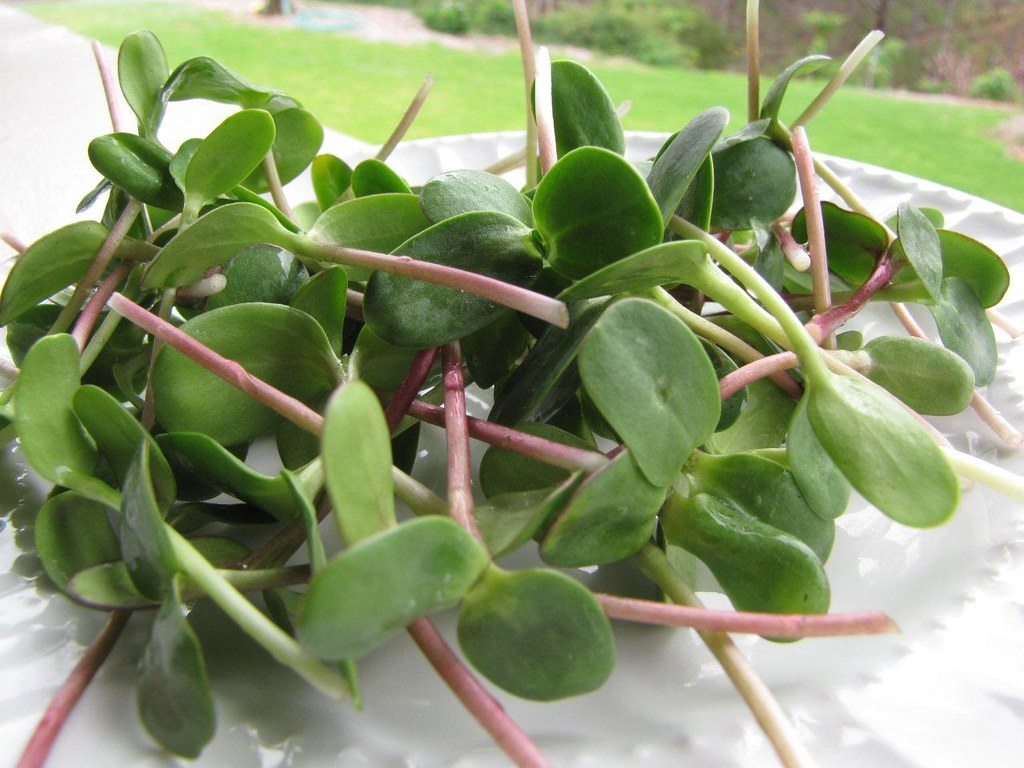
Sunflower Sprouts vs. Sunflower Microgreens: What’s the Difference?
Learn how sunflower sprouts and sunflower microgreens differ in growth stage, harvest method, texture, uses, and raw-food safety considerations.
13 min read
Best Microgreens for Beginners: Radish, Broccoli, Pea, or Sunflower?
Compare radish, broccoli, pea, and sunflower microgreens by seed prep, harvest time, flavor, and beginner-friendliness to choose your first tray.
10 min read
Stay in the loop
New guides, when they publish
An occasional email when a new guide goes live. No spam.
Your email is stored privately for future guide updates. No emails are being sent yet. Privacy policy