Microgreens · Sunflower Microgreens
Sunflower Sprouts vs. Sunflower Microgreens: What’s the Difference?
Sunflower sprouts and sunflower microgreens come from the same crop, but they are generally different foods because they are harvested at different stages and in different ways.
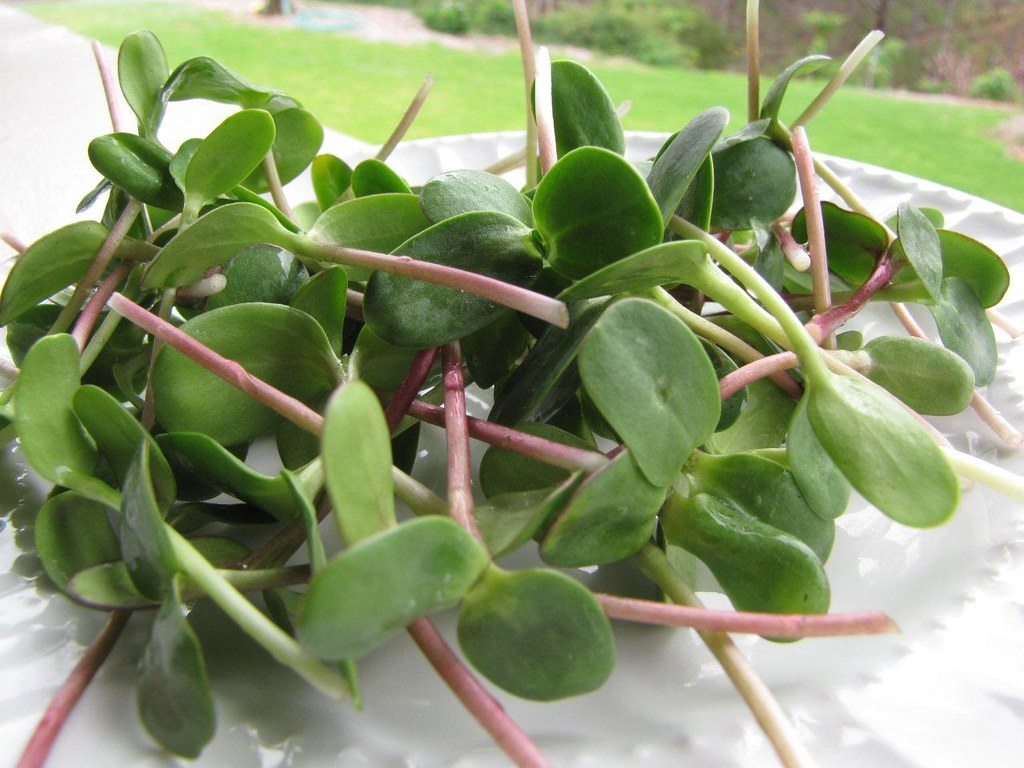
Sunflower sprouts are eaten earlier, usually as a whole germinated seedling that includes the seed, root, stem, and very young leaves. Sunflower microgreens are grown longer into young green seedlings, then typically cut above the growing medium, leaving the roots behind. FDA guidance distinguishes sprouts and microgreens primarily by growth stage and harvest method—not simply by whether they were grown in water or soil. FDA sprout guidance
There is also an important food-safety distinction. Raw sprouts receive specific public-health attention because warm, moist sprouting conditions can allow pathogens already present on seed to multiply. Microgreens are not treated as sprouts under FDA’s sprout-specific Produce Safety Rule requirements, but they are still raw, perishable produce that require careful production, handling, and refrigeration. FDA sprout guidance FDA seed-sprouting guidance
Sunflower Sprouts vs. Sunflower Microgreens at a Glance
| Comparison point | Sunflower sprouts | Sunflower microgreens |
|---|---|---|
| Growth stage | Earlier germination stage, generally before true leaves emerge | Later young-seedling stage |
| Typical growing approach | Germinated under warm, moist conditions; may be grown hydroponically, in trays, or with a substrate | Typically grown in soil or another substrate with light |
| Harvest method | Usually eaten whole | Usually cut above the growing medium |
| Parts eaten | Germinated seed, root, stem, and young leaves | Young stem and leaves; roots are generally left behind |
| Appearance | Whole germinated seedling | Cut green shoots |
| Texture | Often softer, moister, and more seed-forward | Often more substantial, leafy, and crunchy |
| Flavor | May taste more like the germinated seed itself | Often fresh, green, and mildly nutty |
| Typical uses | Whole germinated ingredient in salads, sandwiches, and other fresh preparations | Salad green, sandwich topping, wrap filling, bowl garnish, or fresh side green |
| Food-safety context | Raw sprouts warrant particular attention because of sprouting conditions | Raw produce that is not risk-free and should be handled carefully |
Growth-stage, harvest, and edible-parts distinctions in this table are based on FDA and Washington State Department of Agriculture guidance. Food-safety context is based on FDA sprout-safety guidance. Texture, flavor, and culinary-use descriptions are practical expectations rather than standardized laboratory comparisons. FDA sprout guidance FDA seed-sprouting guidance Washington State Department of Agriculture
What Are Sunflower Sprouts?
An earlier germination stage
Sunflower sprouts are sunflower seeds eaten soon after germination. FDA guidance generally describes sprouts as being harvested before true leaves emerge, while microgreens are grown longer as young greens. FDA sprout guidance
In the typical whole-sprout format, the germinated seed remains part of the food rather than being left behind in a tray. The product is typically a whole germinated seedling, not a cut leafy green.
Usually eaten whole
Sunflower sprouts are commonly sold and eaten with several plant parts intact:
- The germinated sunflower seed
- The root
- The young stem
- Underdeveloped leaves
Washington State agricultural guidance specifically includes sunflower among crops sold as sprouts and describes sprouts as germinated or partly germinated seeds eaten with the seed, stem, root, and underdeveloped leaves. Washington State Department of Agriculture
As a practical rule, a whole germinated sunflower seedling that includes its root is generally best described as a sunflower sprout.
Typical texture and uses
Because they are eaten earlier and whole, sunflower sprouts may be softer, moister, and more seed-forward than sunflower microgreens. Exact texture and flavor can vary with the sunflower variety, growing conditions, and harvest stage.
Sunflower sprouts can work in fresh dishes where a whole germinated seedling is wanted, such as salads and sandwiches. However, raw-sprout food-safety considerations are important when choosing or serving them.
What Are Sunflower Microgreens?
A later young-seedling stage
Sunflower microgreens are sunflower seedlings grown longer than sprouts. They are typically grown in soil or another substrate and exposed to light as they develop into young green plants. They are still harvested well before maturity, but their form is closer to a fresh green than to a newly germinated seed. FDA sprout guidance
Usually cut above the growing medium
Microgreens are generally harvested by cutting the young plants above the soil or other substrate. The roots stay in the tray, along with most seed material attached below the cutting point. Washington State Department of Agriculture
That cut-harvest method creates a product composed mainly of young stems and leaves rather than whole seeds and roots.
A young green rather than a whole germinated seedling
Sunflower microgreens often function like a tender, crunchy fresh green. They can be used in:
- Salads
- Sandwiches and wraps
- Grain bowls
- Tacos
- Fresh garnishes
- Other dishes that benefit from a leafy, crisp component
They are best treated as a perishable fresh green rather than as a shelf-stable pantry ingredient.
Sunflower Shoots vs. Microgreens: Are They the Same?
Not always. Terms such as “sunflower shoots,” “sunflower greens,” and “sunflower sprouts” may be used differently by growers and sellers. These are commercial descriptors, so a label alone may not tell you exactly where a product falls in the sprout-to-microgreen spectrum.
Instead, look at the product itself:
- Does it include the whole germinated seed and root?
It is generally a sunflower sprout.
- Is it a young green cut above soil or another growing substrate?
It is generally a sunflower microgreen or sunflower green.
“Sunflower shoots” may describe a microgreen-style product, but it is not a precise FDA regulatory category. The most useful clues are growth stage, harvest method, and which plant parts are included. FDA sprout guidance
How Growing and Harvesting Differ
Sprouting sunflower seeds
Sprouts develop under warm, moist conditions that encourage rapid germination. While sprouts are often associated with jars or water-based systems, they can also be produced hydroponically in trays or in other systems. The container is not the defining feature. FDA sprout guidance
What matters most is that the seed germinates and the young seedling is typically harvested and eaten whole.
Growing sunflower microgreens in trays
Sunflower microgreens are typically grown in soil or another substrate and allowed to develop longer with light exposure. At harvest, growers generally cut the stems above the growing medium rather than pulling up the entire plant. FDA sprout guidance
This leaves the roots behind and produces a fresh green made primarily of stems and leaves.
Why the method changes the final food
The different harvest stages affect several practical qualities:
- Edible portion: Whole seedling for sprouts; cut greens for microgreens
- Appearance: Germinated seeds and roots versus leafy green shoots
- Texture: Often softer sprouts versus generally crunchier microgreens
- Recipe role: Whole germinated ingredient versus fresh green or topping
- Food-safety context: Raw sprouts have distinct concerns because of their warm, moist germination environment
Taste, Texture, and Ways to Use Each
When sunflower sprouts may fit best
Sunflower sprouts may be a good fit if you want:
- A whole germinated sunflower seedling
- The seed, root, and young shoot included
- A softer, more seed-forward ingredient
- A fresh preparation where whole sprouts are the intended form
Raw sprouts are not the right choice for every eater or situation, particularly when food-safety concerns are relevant.
When sunflower microgreens may fit best
Sunflower microgreens may be a better fit if you want:
- A cut young green instead of a whole germinated seedling
- A crunchy, leafy addition to a meal
- A topping for salads, sandwiches, wraps, or bowls
- Roots left behind in the growing medium
They should be refrigerated promptly and used while fresh. Harvested microgreens can dehydrate, wilt, and decay relatively quickly. USDA Agricultural Research Service
Choose by form, not health hype
Neither sunflower sprouts nor sunflower microgreens should be treated as a disease treatment, “detox” food, or guaranteed nutritional winner. The more useful choice is usually based on the form, texture, recipe use, and food-safety context that best fits your needs.
Food Safety: The Most Important Difference to Understand
Why raw sprouts receive special public-health attention
Raw sprouts deserve special attention because the warm, moist conditions used for sprouting can allow pathogens present on seeds to grow. FDA has issued sprout-specific food-safety guidance because raw and lightly cooked sprouts have been associated with foodborne-illness outbreaks. FDA seed-sprouting guidance
That does not mean every sprout is contaminated or automatically unsafe. It means that, if harmful bacteria are present on or in seed, the sprouting environment can allow them to multiply.
> Raw-sprout safety note: Growing sprouts at home does not guarantee that raw sprouts are free of pathogens. Washing is not a guaranteed way to make contaminated sprouts safe; FDA explains that pathogens on or in sprouting seed can be difficult to eliminate. > FDA seed-sprouting guidance
Why microgreens still need careful growing and handling
Microgreens are not classified as sprouts for purposes of FDA’s sprout-specific Produce Safety Rule requirements. However, they remain covered produce under other applicable provisions and are not risk-free. FDA sprout guidance
Microgreens are a different product category from sprouts, but they are still raw, perishable produce. Careful growing, harvest, refrigeration, and kitchen handling remain important. FDA produce-safety guidance Turner, Luo, and Buchanan, 2020
For purchased or home-grown sunflower microgreens:
- Refrigerate them promptly after harvest or purchase.
- Follow the grower’s or seller’s storage instructions.
- Use clean hands, utensils, and food-contact surfaces.
- Use greens while they remain fresh.
- Discard products that are slimy, spoiled, or deteriorated.
Visible freshness is not a guarantee that produce is free of pathogens, but refrigeration and proper handling help protect quality and reduce avoidable risks. FDA produce-safety guidance
Who should avoid raw sprouts?
FDA identifies raw sprouts as a food of concern for people at higher risk of foodborne illness, including:
- Pregnant people
- Children younger than 5
- Adults age 65 and older
- People with weakened immune systems
CDC advises people with weakened immune systems to choose cooked rather than raw sprouts. FDA: People at Risk of Foodborne Illness CDC: Safer Food Choices
The clearest public-health cautions in these sources concern raw sprouts, not all raw microgreens. That distinction does not make microgreens risk-free; it reflects a different regulatory and evidence context. People with individualized dietary or medical concerns should consult a qualified clinician.
Is One More Nutritious?
The short answer: there is no proven overall winner
The available sources do not provide enough direct, standardized evidence to declare sunflower sprouts or sunflower microgreens nutritionally superior overall.
A meaningful head-to-head comparison would need to use the same sunflower cultivar, matched growing conditions, clearly defined harvest stages, and comparable laboratory methods. Direct evidence of that kind appears limited.
One often-cited comparative study included sunflower sprouts, but compared them with microgreens from other crops—not matched sunflower microgreens. It therefore cannot establish which sunflower form is nutritionally better. Wojdyło et al., 2020
Why nutrition comparisons are complicated
Nutrition measurements can vary with:
- Sunflower cultivar
- Growing conditions
- Light exposure
- Harvest stage
- Storage conditions
- Laboratory methods
- Whether findings are reported by fresh weight, dry weight, or serving size
Microgreen nutrition research consistently shows that measured nutrient values vary by crop and production conditions. That is why a single chart or broad “microgreens are better” claim is not enough to determine which sunflower form is best for every person. Turner, Luo, and Buchanan, 2020
Practical takeaway
Both forms can fit into a varied diet as foods. Choose sunflower sprouts or sunflower microgreens based on taste, texture, intended use, and appropriate food-safety considerations—not unsupported claims of nutritional superiority.
Which Should You Choose?
Choose sunflower sprouts if you want:
- A whole germinated sunflower seedling
- The seed, root, and young shoot included
- A softer, more seed-forward product
- A preparation where you understand and account for raw-sprout safety guidance
Choose sunflower microgreens if you want:
- A cut young green rather than a whole germinated seedling
- A leafy, crunchy ingredient
- A topping for salads, sandwiches, wraps, or bowls
- Roots left behind in the growing medium
- A perishable fresh green that you can refrigerate and use promptly
If you are at higher risk of foodborne illness
FDA and CDC guidance supports avoiding raw sprouts for people at higher risk of foodborne illness, including pregnant people, young children, older adults, and people with weakened immune systems. FDA CDC
Raw microgreens should still be handled as perishable produce, but the available federal guidance does not support treating every raw microgreen the same way as a raw sprout.
Frequently asked questions
Research & Further Reading
Government and public-health sources
- U.S. Food and Drug Administration. Guidance for Industry: Standards for the Growing, Harvesting, Packing, and Holding of Sprouts for Human Consumption.
- U.S. Food and Drug Administration. Guidance for Industry: Reducing Microbial Food Safety Hazards in the Production of Seed for Sprouting.
- U.S. Food and Drug Administration. People at Risk of Foodborne Illness.
- U.S. Food and Drug Administration. Selecting and Serving Produce Safely.
- Centers for Disease Control and Prevention. Safer Food Choices for People With Weakened Immune Systems.
- Washington State Department of Agriculture. Selling Sprouts and Microgreens.
Peer-reviewed and research sources
- Turner ER, Luo Y, Buchanan RL. Microgreen nutrition, food safety, and shelf life: A review. Journal of Food Science. 2020.
- Turner ER, Buchanan R, Luo Y. Microgreen production, nutrition, safety, and shelf life: A review. U.S. Department of Agriculture Agricultural Research Service.
- Wojdyło A, Nowicka P, Tkacz K, Turkiewicz IP. Sprouts vs. Microgreens as Novel Functional Foods: Variation of Nutritional and Phytochemical Profiles and Their In Vitro Bioactive Properties. Molecules. 2020.
- Misra GM, et al. Food Safety Risk in an Indoor Microgreen Cultivation System. Food Protection Trends. 2021.
Company and product information
The following sources are company information for product formats and terminology examples, not scientific, nutrition, or food-safety evidence.
- Andi’s Way. Fresh Organic Microgreens Collection.
- Andi’s Way. Fresh Organic Sunflower Greens.
- Andi’s Way. Organic Sunflower Seeds for Sprouting & Microgreens.
Related guides
What Are Sunflower Microgreens? Taste, Uses, and Growing Basics
Learn what sunflower microgreens are, how they taste, easy ways to eat them, which seeds to use, and the basics of growing and storing sunflower greens.
12 min read
Best Microgreens for Beginners: Radish, Broccoli, Pea, or Sunflower?
Compare radish, broccoli, pea, and sunflower microgreens by seed prep, harvest time, flavor, and beginner-friendliness to choose your first tray.
10 min read
Speckled Pea Seeds for Microgreens: Why Growers Use Them
Learn why growers use speckled pea seeds for pea shoots and microgreens, what to check before buying, and why seed quality matters more than the label alone.
13 min read
Stay in the loop
New guides, when they publish
An occasional email when a new guide goes live. No spam.
Your email is stored privately for future guide updates. No emails are being sent yet. Privacy policy