Growing & Seeds · Troubleshooting
Sunflower Microgreen Mold: Root Hairs, Causes, and Prevention
White fuzz around the roots or base of healthy sunflower microgreens may be normal root-hair growth—not mold. But fuzzy growth that spreads across the growing medium, connects seedlings, moves up stems, or appears with seedling collapse or decay is more concerning.
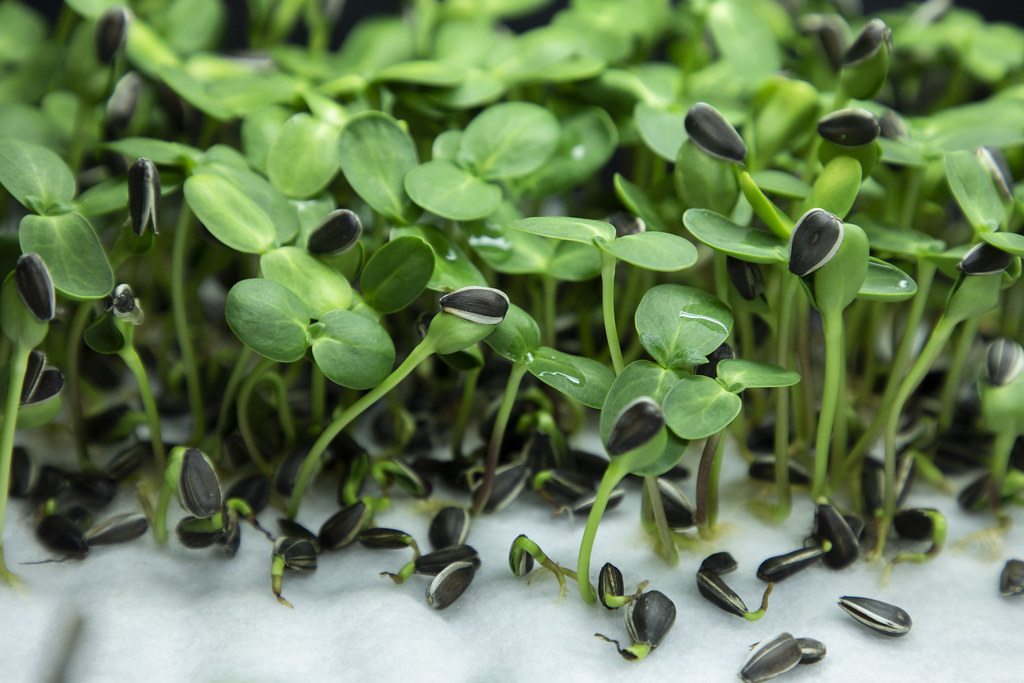
If mold is confirmed, spreading, or the tray remains questionable, take the conservative food-safety approach: do not harvest around it or try to make it safe with a home treatment. Discard the crop and used growing medium, clean reusable equipment, and restart after reviewing moisture, airflow, density, and sanitation. LSU AgCenter and USDA FSIS support a cautious approach to visibly moldy food and microgreen crops.
Is It Mold or Root Hairs on Sunflower Microgreens?
Sunflower microgreens can develop fine white fuzz close to their roots, particularly during early growth. This is a frequent source of confusion because normal root hairs can resemble mold at a glance.
Visual clues can help with troubleshooting, but they are not a laboratory diagnosis and cannot guarantee that a questionable tray is safe to eat.
| What you see | More consistent with root hairs | More concerning for mold |
|---|---|---|
| Location | Concentrated at the roots or seedling base | Spreading across the medium, between seedlings, or up stems |
| Seedling condition | Firm stems and healthy green cotyledons | Collapse, discoloration, decay, or weak-looking seedlings |
| Pattern | Fuzz appears around individual root zones | A spreading or web-like mat that bridges plants |
| Crop decision | Continue normal care while monitoring | Treat the tray as questionable; discard if mold is confirmed or spreading |
Practical visual clues only; they are not a laboratory diagnosis. Sources: Purdue Extension and LSU AgCenter.
Signs That May Point to Normal Root Hairs
White fuzz may be normal root-hair growth when it:
- Stays close to the roots or lower seedling base
- Appears on otherwise healthy, upright seedlings
- Does not spread across the growing medium
- Does not form a mat connecting multiple seedlings
- Is not accompanied by collapse, decay, or unusual discoloration
Purdue Extension notes that root hairs emerging from microgreen seedlings are normal. Purdue Extension
Signs That Are More Concerning for Mold
Treat fuzzy growth as more concerning when it:
- Spreads across the surface of the growing medium
- Bridges from one sunflower seedling to another
- Appears higher on stems rather than remaining at the root zone
- Continues expanding over time
- Occurs with collapsed, slimy, discolored, or decaying seedlings
- Is associated with an off odor
LSU AgCenter guidance identifies unusual fuzzy growth moving up microgreen stems as a warning sign for mold. LSU AgCenter
When You Cannot Tell
Do not rely on the popular “misting test” as proof that white fuzz is root hairs. A change in appearance after misting is not a dependable identification method and does not answer the food-safety question.
If you cannot confidently distinguish root hairs from a developing mold problem, do not assume the tray is suitable for raw eating. A conservative discard decision is reasonable when the crop remains questionable.
Why Sunflower Trays Need Their Own Mold Troubleshooting Guide
Sunflower microgreens share many mold-prevention needs with other microgreens, but they also have a few crop-specific challenges: retained hulls, dense stands, and wet conditions during covered germination.
Retained Sunflower Hulls Are a Cleanup Issue
Sunflower microgreens commonly retain seed hulls. Hulls can stay attached to the cotyledons or fall into the growing medium as the seedlings emerge.
Sunflower hulls are generally removed as part of normal crop preparation and cleanup. UConn Extension and a small sunflower-specific study from George Mason University describe the challenge of hull retention in sunflower microgreen production. George Mason University
Remove loose or attached hulls carefully, especially if they accumulate in wet, crowded areas of the tray. This is useful housekeeping, but it is important not to overstate the evidence: retained hulls have not been proven to cause mold on their own in home sunflower trays.
A small study found that weighted covers and sunflower variety affected hull retention under its particular hydroponic growing conditions. That result may be useful context, but it is not a universal rule for every sunflower variety, tray, or home-growing setup. George Mason University
Dense Sunflower Stands Make Watering Less Forgiving
Sunflower microgreens are grown as a dense crop, but dense should not mean clumped or piled.
When seeds are distributed unevenly, thick sections can stay wetter and receive less air movement than the rest of the tray. This makes it harder to manage moisture and spot early problems. Extension guidance recommends testing density for the particular crop, substrate, tray, and growing environment rather than relying on one universal seeding rate. Virginia Tech
Aim for an even layer of seed. If mold repeatedly begins in the densest areas, reduce the density modestly in your next trial and compare the outcome.
Seed Lots Can Be One Variable—Not the Only Variable
Seeds can carry microorganisms, and seed lots may differ. In a 2023 survey of microgreen seed samples purchased from online vendors, all 10 sunflower samples tested had detectable mold-and-yeast counts. That finding does not mean every sunflower seed lot is contaminated, unsafe, or destined to produce a moldy tray. Frontiers in Sustainable Food Systems
It does mean that seed can be one troubleshooting variable worth recording.
If one bag or lot repeatedly performs poorly while your growing conditions are otherwise similar, compare it with:
- Tray type and drainage
- Growing medium
- Sowing density
- Soak duration
- Cover or blackout time
- Watering method
- Airflow and room humidity
- Hull retention and leftover debris
No seed category, including organic seed, should be described as incapable of carrying microorganisms.
Sunflower Microgreen Mold Causes: What to Check First
Growing Medium That Is Too Wet
Sunflower microgreens need moisture to germinate and grow. The goal is moist growing medium, not saturated medium.
Check for these signs that a tray is staying too wet:
- Water remains in the lower tray for long periods
- The medium looks muddy or waterlogged
- The tray stays unusually heavy after watering
- Dense areas do not dry evenly
- Foliage is repeatedly soaked by overhead watering
University of Maryland Extension advises keeping growing media moist rather than saturated and warns that excess moisture can encourage mold. University of Maryland Extension
Covers That Trap Humidity Too Long
Covered or weighted trays can be useful during early sunflower germination. But covers can also trap moisture and humidity.
As seedlings establish, inspect the tray rather than following a rigid day-by-day schedule. If there is persistent condensation or the crop remains overly wet beneath the cover, vent or remove it as appropriate for the seedlings’ development. University of Maryland Extension
The point is not to avoid covers entirely. It is to avoid keeping emerging seedlings in stagnant, overly humid conditions longer than needed.
Limited Air Circulation
Gentle air movement can help prevent persistently humid conditions around a microgreen tray. University and controlled-environment production guidance identifies humidity and airflow as important factors in managing disease risk. University of Maryland Extension Virginia Tech
Use gentle circulation around the crop rather than forceful airflow directly on tender seedlings.
Overcrowding or Uneven Seed Distribution
An even sunflower seed layer is easier to water, inspect, and manage than a tray with dense mounds and bare patches.
Excessively thick areas can:
- Stay wet longer
- Restrict airflow
- Germinate unevenly
- Make hull removal more difficult
- Hide the first signs of decay or fuzzy growth
Penn State and Virginia Tech both emphasize even sowing and attention to disease risk when managing microgreen density. Penn State Extension Virginia Tech
Unclean Trays, Tools, or Crop Debris
Reusable trays, weights, tools, and work surfaces should be cleaned between crops. Remove old roots, fallen hulls, and used growing medium after a failed tray.
Clean inputs, sanitation, and crop-residue removal are core preventive practices in microgreen production, though they cannot eliminate every source of variability. Virginia Tech
How to Reduce Mold Risk on Sunflower Microgreens
1. Start With Clean Equipment and Growing Materials
Before sowing a new tray:
- Clean trays, weights, tools, and work surfaces.
- Use clean water.
- Remove old roots, hulls, and plant debris from the growing area.
- Use fresh growing medium as the conservative choice, especially after a moldy or failed crop.
Some growing guides discuss reusing media under limited conditions, but after visible mold, discard the used medium rather than attempting to reuse it. Purdue Extension University of Maryland Extension
2. Sow Evenly Rather Than Excessively Thick
Spread seeds in an even layer and avoid large piles or tightly packed clumps.
Keep brief notes as you test density in your own environment. If a tray remains wet, grows unevenly, or repeatedly develops mold, try a modest density reduction in the next batch.
3. Keep the Medium Moist, Not Saturated
Check both the upper growing medium and the lower tray.
A useful moisture-management goal is:
- Moist medium for germination and growth
- No persistent standing water
- Less frequent soaking of foliage when it can be avoided
- Time for excess surface moisture to dissipate between waterings
Do not try to reduce mold risk by keeping sunflower microgreens dry at all times. They still need adequate moisture to grow.
4. Consider Bottom Watering After Establishment
Once seedlings are established, bottom watering may help keep foliage drier than frequent overhead watering. With this method, a drain-hole grow tray sits above a lower tray holding water temporarily, allowing the medium to draw up moisture. Penn State Extension
Do not leave water standing indefinitely. Bottom watering is one moisture-management tool, not a guarantee against mold if the medium remains saturated or the growing area is humid and stagnant.
5. Vent or Remove Covers When Needed
During the covered germination stage, monitor condensation, medium moisture, and seedling development.
Vent or remove the cover when conditions remain persistently humid. The right timing varies with temperature, seed lot, tray depth, medium, and the conditions in your growing area.
6. Provide Gentle Air Movement
Give trays access to gentle circulation, particularly after watering or in humid conditions. Use gentle air circulation around the tray rather than forceful airflow directly on tender seedlings.
7. Remove Hulls Carefully
Remove loose hulls as seedlings emerge. If hulls remain attached to cotyledons, handle them carefully to avoid damaging the tender leaves.
Hull removal is useful crop cleanup. It is not a mold treatment, and it cannot make a tray with confirmed spreading mold safe to eat.
8. Keep a Simple Troubleshooting Log
A short record can reveal patterns that are difficult to see from one tray alone. Track:
- Seed lot or bag identifier
- Tray type
- Growing medium
- Approximate sowing density
- Soak duration
- Cover or blackout duration
- Watering method
- Whether water stood in the lower tray
- Airflow conditions
- Hull retention
- Any mold or decay observed
What to Do If You Find White Fuzz or Mold
If It Appears To Be Normal Root Hairs
If the fuzz is limited to the root zone and the seedlings are healthy, firm, and green, continue normal care and monitor the tray.
Watch for spreading growth, stem involvement, seedling collapse, decay, or other changes. Do not use a misting response as proof that the fuzz is harmless root-hair growth.
If It Is a Small but Uncertain Patch
Do not rely on washing, cutting around the patch, or applying a household spray. A visual check cannot establish food safety.
For sunflower microgreens intended to be eaten raw, discard the tray if the growth remains questionable rather than assuming it is safe.
If Mold Is Confirmed or Spreading
If fuzzy growth is spreading across the medium, linking seedlings, moving up stems, or occurring alongside decay:
- Discard the crop.
- Discard the used growing medium.
- Do not harvest around the affected area.
- Remove roots, hulls, and other crop debris from the growing area.
- Clean reusable trays, weights, and tools before restarting.
- Review moisture, standing water, cover time, airflow, density, sanitation, and seed-lot notes.
LSU AgCenter advises discarding moldy microgreen crops and sanitizing trays. USDA guidance on moldy food also notes that visible mold may extend beyond what can be seen and may coexist with invisible bacteria. LSU AgCenter USDA FSIS
Can You Eat Sunflower Microgreens With Mold?
Do not eat sunflower microgreens from a tray with confirmed or spreading mold.
Mold found on seed hulls alone is not a reliable reason to declare the rest of a dense, moist tray safe for raw eating. Do not cut above visible mold, rinse it away, or use hydrogen peroxide, vinegar, bleach, essential oils, or other household treatments as a proven way to make the tray safe.
Microgreens are generally grown and harvested differently from sprouts, but they are still raw produce and should be grown and handled carefully. FDA
Frequently asked questions
Research & Further Reading
Authoritative and Academic Sources
- University of Maryland Extension — Growing Microgreens and Baby Greens Indoors
- Purdue Extension — Grow Microgreens at Home
- LSU AgCenter — Microgreens: A Guide to Growing Microgreens for the Home Gardener
- UConn Extension — The Amazing Power of Microgreens: Easy to Grow and a Superfood
- Virginia Tech — Introduction to Microgreen Production in Indoor Vertical Farms and Greenhouses
- Penn State Extension — Growing Microgreens
- Frontiers in Sustainable Food Systems — Microbiological quality of microgreen seeds purchased from online vendors and evaluating seed decontamination techniques available online
- U.S. Food and Drug Administration — Guidance for Industry: Standards for the Growing, Harvesting, Packing, and Holding of Sprouts for Human Consumption
- USDA Food Safety and Inspection Service — Molds on Food: Are They Dangerous?
- George Mason University Journal of Student-Scientists’ Research — Removing Inedible Seed Hulls Using Weighted Covers on Two Varieties of Sunflower Microgreens
- George Mason University Journal of Student-Scientists’ Research — Evaluating the Yield of Helianthus annuus Microgreens When Treated with Sodium Hypochlorite and Other Factors
- Virginia Tech thesis — Effects of Seed Density and Other Factors on the Yield of Microgreens Grown Hydroponically on Burlap
Andi’s Way Product Information — not scientific evidence
- Andi’s Way — Organic Sunflower Seeds for Sprouting & Microgreens
Company product information for black-oil sunflower seeds intended for sprouting and microgreens. https://andisway.com/products/black-oiled-sunflower-seed
- Andi’s Way — Growing Trays With or Without Drain Holes
Company product information for 10×20 growing trays with drain-hole and non-drain configurations. https://andisway.com/products/growing-trays-with-drain-holes
Related guides
Microgreen Mold vs. Root Hairs: How to Tell the Difference
White fuzz on microgreens may be normal root hairs—or possible fungal growth. Learn the clues to assess mold, damping-off, and when to discard a tray.
12 min read
Sunflower Sprouts vs. Sunflower Microgreens: What’s the Difference?
Learn how sunflower sprouts and sunflower microgreens differ in growth stage, harvest method, texture, uses, and raw-food safety considerations.
13 min read
Best Microgreens for Beginners: Radish, Broccoli, Pea, or Sunflower?
Compare radish, broccoli, pea, and sunflower microgreens by seed prep, harvest time, flavor, and beginner-friendliness to choose your first tray.
10 min read
Stay in the loop
New guides, when they publish
An occasional email when a new guide goes live. No spam.
Your email is stored privately for future guide updates. No emails are being sent yet. Privacy policy