Growing & Seeds · Sunflower Microgreens
How to Remove Seed Hulls From Sunflower Microgreens
Sunflower microgreen seed hulls—also called seed coats or shells—can often be loosened without pulling on the leaves. Lightly mist the attached hulls with clean water, wait about 30–45 minutes, then make a very gentle pass across the canopy with a clean, soft-bristled brush. This method can remove many hulls, though not necessarily every one. If a few remain firmly attached, avoid damaging the cotyledons just to achieve a perfectly hull-free tray. Perennia Extension
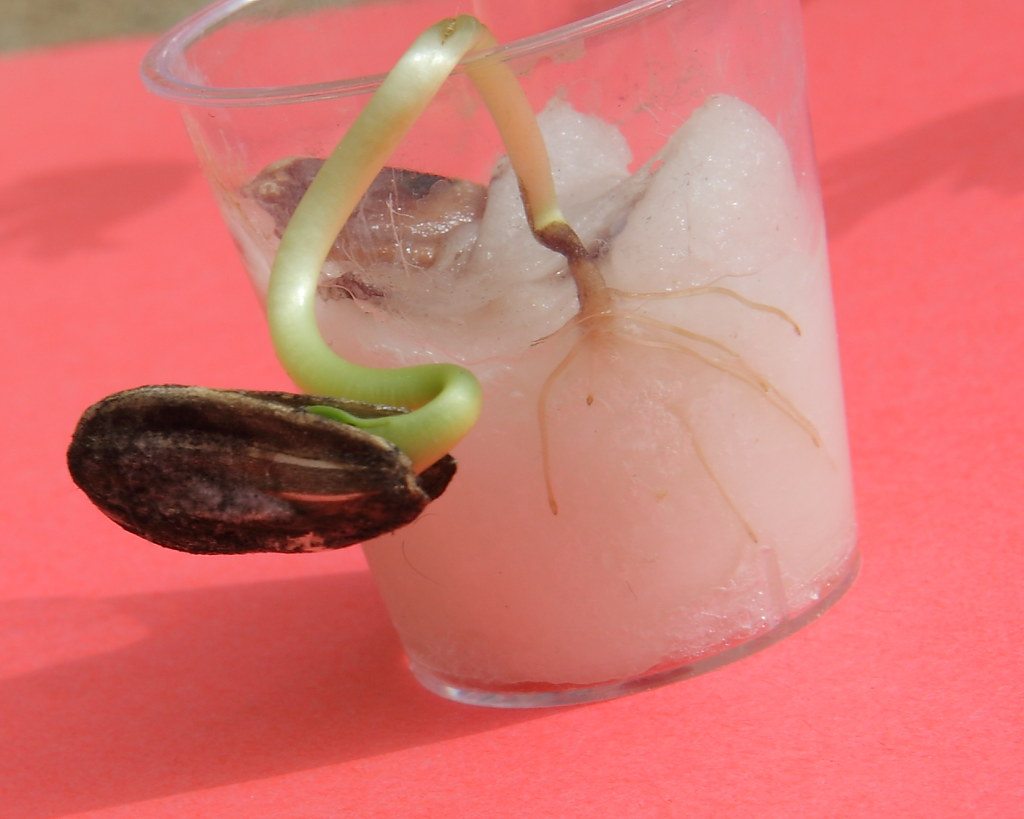
The Quick Fix: Soften and Gently Brush Off Stuck Hulls
Step 1: Lightly mist the attached hulls
Use clean water in a fine-mist spray bottle. Aim the mist at the stuck sunflower hulls rather than soaking the entire canopy or saturating the growing medium.
The goal is to soften the hulls so they release more easily. A light mist is preferable to turning the tray into a prolonged soaking project, especially because excess moisture and poor airflow can contribute to disease pressure in microgreen production. Perennia Extension
Step 2: Wait about 30–45 minutes
Allow roughly 30–45 minutes for the misted hulls to soften before trying to remove them. This timing comes from practical extension guidance and is a useful starting point—not a guarantee that every hull will release in every setup. Perennia Extension
If many hulls remain attached, it is better to repeat the gentle mist-and-brush approach later than to scrub or pull hard. Perennia’s production guidance describes repeating the process over several days to remove most seed coats while minimizing plant damage.
Step 3: Make one gentle pass with a soft brush
Use a clean, soft-bristled brush and sweep lightly across the tops of the sunflower microgreens. Perennia specifically describes a soft-bristled whisk broom for this task. Perennia Extension
Think of the motion as dusting rather than scrubbing:
- Sweep lightly across the canopy rather than pressing down into the shoots.
- Use only enough pressure to dislodge softened, loose hulls.
- Stop if the cotyledons begin tearing or the shoots are being disturbed.
Avoid scraping, pinching, rubbing, or forcefully pulling hulls from the leaves. Manual removal can damage delicate microgreen tissue, which is why gentle brushing is preferable. Bedi et al.
Step 4: Clear away loose hulls
After brushing, remove hulls that have fallen onto the tray surface. This keeps the crop tidier and makes it easier to see which hulls are still attached.
A small number of resistant sunflower microgreen hulls may remain. That is usually a better outcome than damaging otherwise healthy shoots through repeated handling.
If a Sunflower Hull Will Not Come Off
Try one light alternative pass
If a soft brush is not available, a clean hand or plant stake can sometimes help knock already-loose seed coats from sunflower cotyledons. Make one very light pass across the shoots rather than rubbing them repeatedly. Johnny’s Selected Seeds
This is an alternative to gentle brushing—not a reason to keep handling the crop until every hull comes off.
Do not tug on the cotyledons
A sunflower hull can grip the closed cotyledons tightly. If it does not release with light misting and brushing, do not force it off individually.
The goal is a clean, usable harvest—not a damaged tray. A few attached hulls are generally less of a practical problem than torn leaves or broken shoots.
If it is still attached at harvest, remove that shoot
If only a few hulls remain firmly attached when the tray is ready to harvest, remove those individual shoots rather than forcing the hulls off. This is the approach recommended in commercial sunflower-shoot production guidance when seed coats do not release readily. Johnny’s Selected Seeds
Do not delay harvest solely because a small number of sunflower shells are still attached.
Why Sunflower Microgreen Hulls Get Stuck
Hull retention can vary between trays
Stuck sunflower hulls are a recognized growing and handling problem, not necessarily a sign that the entire crop has failed.
Hull retention can vary between trays, and it may be influenced by factors such as seed type, growing medium, moisture, germination conditions, and the growing environment. The evidence on each factor is limited, so it is best to treat prevention changes as variables to test in your own setup—not guaranteed fixes. Bedi et al.
Germination cover technique can affect hull shedding
For a future tray, maintaining gentle pressure over sunflower shoots during germination may help more hulls detach naturally from the cotyledons. Penn State Extension notes that retaining weight over sunflower shoots during germination can facilitate hull detachment. Penn State Extension
A controlled experiment involving sunflower microgreens grown hydroponically on burlap also found fewer attached hulls with weighted covers than with darkness alone. However, this study tested a specific growing system, so its results should not be treated as a universal rule for every tray, medium, or seed lot. Bedi et al.
Seed type may matter, but it is not a guarantee
In the same hydroponic-burlap experiment, black-oil sunflower had fewer attached hulls than gray-striped sunflower under the tested conditions. Bedi et al.
That result does not prove that black-oil sunflower will always produce fewer stuck hulls at home. Still, when growing microgreens for eating, choose untreated seed intended for sprouting or microgreen production rather than assuming seed sold for unrelated purposes is interchangeable. This is a practical seed-selection consideration, not a proven hull-prevention method. Perennia Extension
How to Prevent Stuck Hulls on the Next Tray
Use a clean cover during germination
A clean cover can be part of a germination approach intended to encourage hull shedding as sunflower shoots emerge. This is prevention for the next tray; it will not fix hulls that are already firmly attached to developed microgreens.
Use gentle pressure—not excessive weight
More weight is not automatically better.
In one controlled study, weighted covers were associated with fewer attached sunflower hulls, but greater cover weight was also associated with lower yield. Bedi et al.
For that reason, avoid assuming that the heaviest available cover is the best choice. There is no evidence-based universal cover weight for all tray sizes, seed varieties, growing media, and home environments.
Adjust one variable at a time
If hull retention is a recurring problem, change one part of your process at a time—for example, your cover approach or seed type—then observe the next tray.
This makes it easier to identify what helps in your particular growing conditions. Changing every variable at once can make troubleshooting more difficult.
Manage moisture after uncovering
Light misting can help soften stuck hulls, but avoid leaving the canopy or growing medium unnecessarily wet. Standing water, overly saturated media, humidity, and poor airflow can contribute to damping-off and other disease problems in microgreen production. Perennia Extension
Hull retention and crop disease are separate issues. A tray can have stuck hulls without mold, and a hull-removal attempt should not create excess moisture conditions.
Avoid These Common Mistakes
- Do not pull attached hulls hard. Forceful handling can damage cotyledons.
- Do not scrub or rub the canopy. Use a light sweeping motion instead.
- Do not repeatedly soak the tray. Mist lightly and deliberately.
- Do not leave the crop unnecessarily wet. Moisture management matters after misting.
- Do not delay harvest solely to wait for every hull to drop. A few may remain attached.
- Do not assume heavier covers are always better. More weight can involve tradeoffs.
- Do not treat stuck hulls as proof of mold, contamination, or crop failure. Assess visible mold or other crop-disease concerns separately.
Are Sunflower Seed Hulls a Food-Safety Concern?
A stuck hull alone does not establish that sunflower microgreens are contaminated or spoiled. It is primarily a crop-quality and handling issue: the shell remains attached to the young leaves and can be inconvenient at harvest.
Use clean water and clean tools when misting and brushing the crop. If you see visible mold or other signs of crop disease, do not assume the issue is simply hull retention.
It is also important not to treat sunflower microgreens and sprouts as interchangeable. They are distinct product categories with different growth stages, production practices, and regulatory treatment, so sprout-specific food-safety statements should not automatically be applied to microgreens. U.S. Food and Drug Administration
Research & Further Reading
Research, extension, and government sources
- Bedi P, et al. Removing Inedible Seed Hulls Using Weighted Covers on Two Varieties of Sunflower (Helianthus annuus) Microgreens (Black Oil and Gray Striped) Grown Hydroponically on Burlap.
- DOI record for the sunflower weighted-cover study.
- Penn State Extension, A Step-By-Step Guide for Growing Microgreens at Home.
- Perennia Extension and Advisory Team, Microgreens Fact Sheet.
- U.S. Food and Drug Administration, Guidance for Industry: Standards for the Growing, Harvesting, Packing, and Holding of Sprouts for Human Consumption.
Practical commercial growing reference
- Johnny’s Selected Seeds, How to Grow Sunflower Shoots.
Company and product information, not scientific evidence
- Andi’s Way, Organic Sunflower Seeds for Sprouting.
- Andi’s Way, Growing Trays With or Without Drain Holes.
Frequently asked questions
Related guides
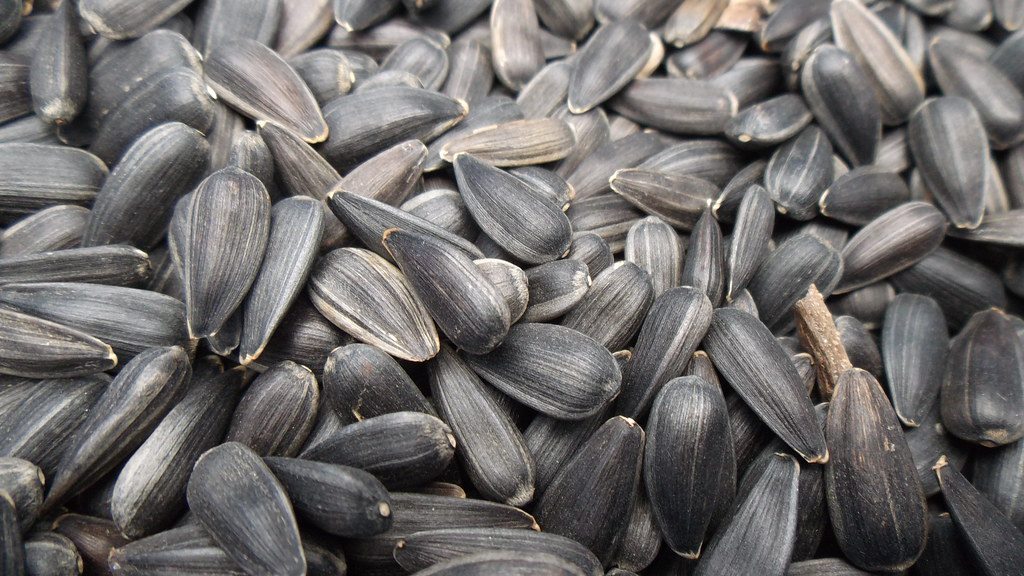
Black Oil Sunflower Seeds for Microgreens: What to Buy and What to Avoid
Learn what to look for in black-oil sunflower seeds for microgreens, how to assess birdseed, and which labels, treatments, and quality signals to avoid.
12 min read
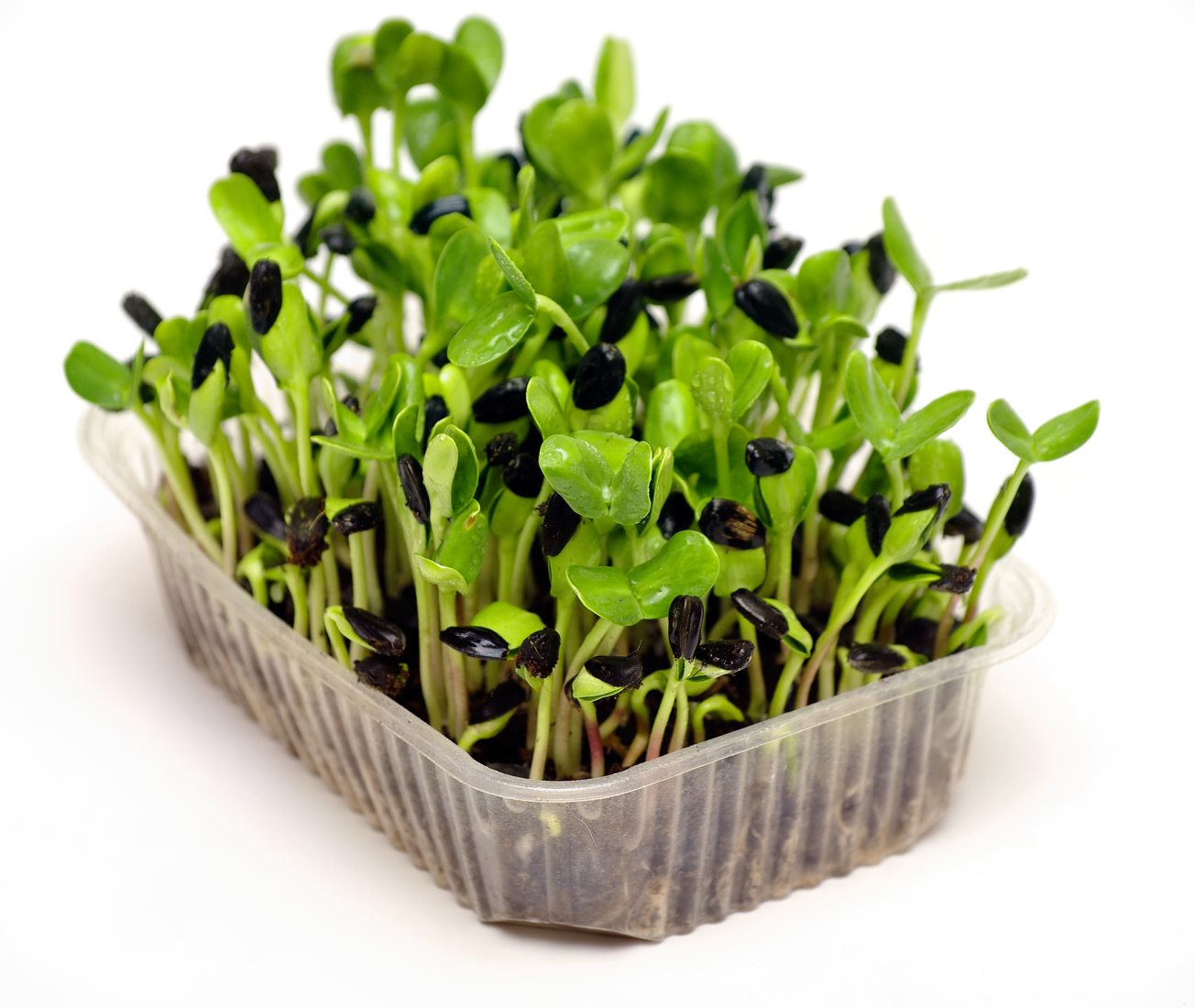
How to Grow Sunflower Microgreens From Seed
Learn how to grow sunflower microgreens from seed with a practical guide to soaking, sowing, weighted blackout, watering, stuck hulls, and harvest timing.
14 min read
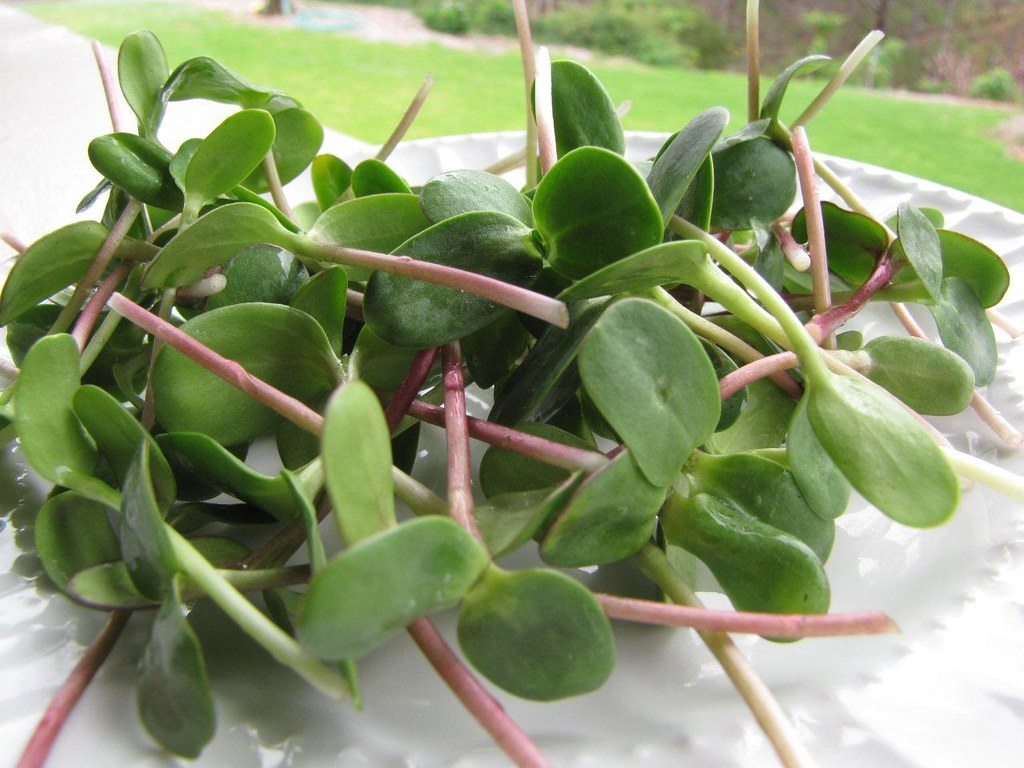
Sunflower Sprouts vs. Sunflower Microgreens: What’s the Difference?
Learn how sunflower sprouts and sunflower microgreens differ in growth stage, harvest method, texture, uses, and raw-food safety considerations.
13 min read
Stay in the loop
New guides, when they publish
An occasional email when a new guide goes live. No spam.
Your email is stored privately for future guide updates. No emails are being sent yet. Privacy policy