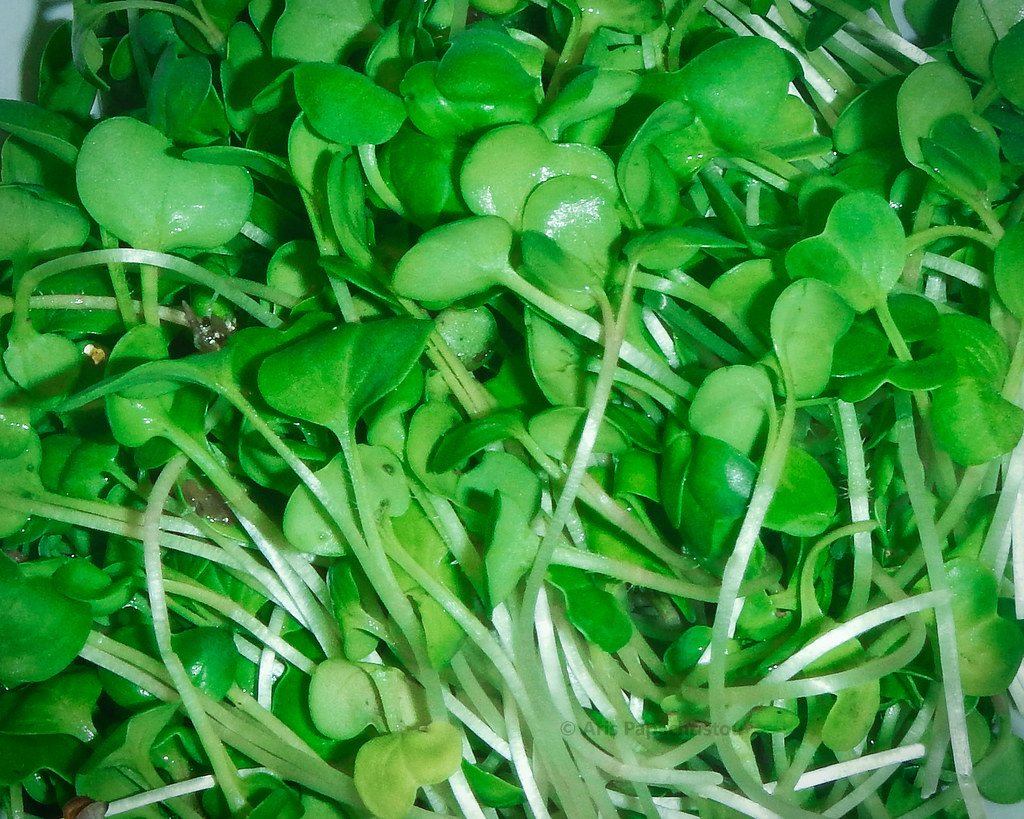
Radish microgreens are young edible seedlings of the radish plant (Raphanus sativus). They are grown from radish seed and typically harvested after the seed leaves, called cotyledons, have opened and as the first true leaves begin to emerge. [1]
Instead of being grown until they form the familiar mature radish root, radish microgreens are usually cut just above the growing medium and eaten fresh. They typically have a crisp texture and a fresh, peppery, radish-like flavor. Common uses include toppings, garnishes, salads, sandwiches, tacos, eggs, and grain bowls.
Radish microgreens are also commonly considered a practical first crop for new microgreen growers. Many radish microgreen crops reach harvestable size in roughly one to two weeks, although the timeline varies by cultivar, temperature, light, and other growing conditions. [8]
Radish Microgreens at a Glance
| Feature | What to know |
|---|---|
| Plant | Radish (Raphanus sativus) |
| Growth stage | Young seedling, generally harvested after cotyledons open and around early true-leaf development |
| Harvest method | Usually cut above the growing medium |
| Flavor | Typically crisp, peppery, sharp, and radish-like |
| Common uses | Toppings, garnishes, salads, sandwiches, tacos, eggs, and bowls |
| Growing overview | Grown from seed and harvested young, often in roughly one to two weeks; timing depends on variety and conditions |
| Food-safety note | Raw produce that requires clean water, equipment, handling, and prompt refrigeration after harvest |
What Are Radish Microgreens?
They Are Young Radish Seedlings
Radish microgreens begin with radish seed, but they are harvested at the seedling stage. They come from the same plant as mature radishes, yet they are cut long before the plant develops the enlarged root commonly used in salads and vegetable trays.
“Microgreen” describes a harvest stage rather than a separate plant species. Radish is one of many crops grown this way, along with broccoli, cabbage, arugula, peas, sunflower, and some herbs.
The harvest stage is part of what makes a microgreen a microgreen. The seed leaves are developed, and the first true leaves may be starting to appear. Exact harvest practices differ among crops, cultivars, and growers, so there is not one universal day when every radish microgreen must be cut. [1]
What Part of the Plant Do You Eat?
Radish microgreens are generally harvested by cutting the plants just above the growing medium. The harvested portion usually includes the tender stems and leaves, while the roots remain in the tray or growing system. [1]
This is different from mature radishes, which are commonly grown for their roots. It is also different from sprouts, which are typically harvested earlier and are often eaten whole, including the seed and root.
Radish Microgreens vs. Sprouts, Baby Greens, and Mature Radishes
These terms are sometimes used loosely, but they refer to different growth stages and usual harvest methods.
| Type | Typical stage | Typical harvest and use |
|---|---|---|
| Radish sprouts | Very early germination stage | Often grown with water and commonly eaten with the seed and root |
| Radish microgreens | Young seedling stage | Usually grown in a substrate or other growing system and cut above the growing medium |
| Baby radish greens | Later leaf stage | Allowed to grow longer, with more developed leaves |
| Mature radishes | Developed plant | Grown primarily for the mature root, and sometimes the leaves |
Radish Microgreens vs. Radish Sprouts
Radish microgreens and radish sprouts are not the same product.
The U.S. Food and Drug Administration distinguishes microgreens from sprouts by their growth stage and typical harvest method. Sprouts are harvested earlier and are commonly consumed whole. Microgreens are generally grown longer—often in soil or another substrate—and are typically cut above the growing medium. [1]
This distinction matters for both culinary use and food safety. Microgreens and sprouts should not be treated as identical foods, but both are raw produce and benefit from careful growing, harvesting, storage, and handling practices.
Radish Microgreens vs. Mature Radishes
Radish microgreens and mature radishes come from the same plant but play different roles in the kitchen.
A mature radish is grown until it develops a recognizable root. Radish microgreens are harvested much earlier, when the plant is still a small seedling. A mature radish might be sliced into a salad, while microgreens are more often scattered over a finished dish for color, texture, and a peppery finish.
Radish Microgreens vs. Baby Greens
Baby greens are generally allowed to grow longer than microgreens and have more developed leaves. The boundary is not always exact because plant development changes with cultivar and growing conditions. [8]
In practical terms, radish microgreens are tender seedlings harvested young, while baby greens are more developed leafy plants.
What Do Radish Microgreens Taste Like?
Radish microgreens usually taste fresh, peppery, and radish-like. Depending on the cultivar, harvest stage, and growing conditions, they may range from mildly spicy to noticeably pungent. Research and sensory work on radish microgreens supports the familiar description of a peppery or spicy flavor with a tender-to-crisp texture. [2]
Their flavor makes them useful when a meal needs brightness, a little bite, or fresh contrast against richer ingredients.
Appearance can vary as well. Some radish microgreens are mostly green, while others have pink, red, or purple stems and leaf tones. Color may reflect differences in cultivar and pigments, but it is not a reliable standalone measure of flavor, nutrition, or growing performance.
How to Use Radish Microgreens
Radish microgreens are commonly eaten fresh. Their peppery flavor can work especially well in dishes that benefit from crunch or a sharp finishing note.
Try them:
- On tacos, wraps, and sandwiches
- Over burgers and savory breakfast sandwiches
- On scrambled eggs, omelets, and avocado toast
- As a topping for grain bowls, rice bowls, and noodle bowls
- Mixed into salads or scattered over a finished salad
- On hummus, dips, yogurt sauces, or soft cheeses
- As a garnish for soups served after cooking
- Added to creamy dishes that benefit from a peppery contrast
Microgreens are commonly used in salads, sandwiches, soups, and as garnishes. [3]
Simple Serving Tip
Add radish microgreens near the end of preparation if you want to keep their fresh texture and peppery flavor. This is a culinary preference, not a food-safety requirement. They can be briefly warmed in a dish, but extended cooking will soften them and may reduce their crispness.
Are Radish Microgreens Nutritious?
Radish microgreens contain nutrients and plant compounds that can be measured in laboratory analyses. Studies of radish microgreen cultivars have found differences in vitamin C, pigments, phenolics, flavonoids, minerals, amino acids, and glucosinolates. [4]
Glucosinolates are naturally occurring plant compounds found in radish and other Brassica-family vegetables. In tested radish microgreen cultivars, researchers have identified glucosinolates including glucoraphasatin and glucoraphenin. Their amounts and profiles can vary by cultivar and growing conditions. [4][5]
What Research Shows
The most accurate takeaway is that radish microgreens have measurable nutritional and phytochemical composition, but there is no single nutrition profile that applies to every radish microgreen.
Measured composition may differ based on factors such as:
- Radish cultivar
- Light conditions
- Harvest timing
- Growing system or substrate
- Temperature and other production conditions
Analytical methods can also affect how nutrient and phytochemical values are reported and how directly results from different studies can be compared.
In one study of 25 commercially available microgreen varieties, green daikon radish microgreens had the highest tocopherol concentration among the varieties tested. That is a useful cultivar-specific finding, but it does not mean that every radish microgreen is high in vitamin E or that radish microgreens are the best source of it overall. [3]
What Research Does Not Show
Nutrient and phytochemical measurements are not the same as human clinical evidence.
Research describing the compounds in radish microgreens does not, by itself, show that eating them prevents, treats, or reverses disease in people. It is not accurate to claim that radish microgreens detox the body, boost immunity, prevent cancer, reduce inflammation in people, or regulate blood sugar.
Like other vegetables and herbs, they can be part of a varied diet—but their composition should not be turned into disease-treatment claims.
Are Radish Microgreens Easy to Grow?
Radish microgreens are commonly considered beginner-friendly because they are grown from seed and harvested while young. They are generally a short-cycle crop, with many crops ready to harvest in roughly one to two weeks. Cultivar, temperature, light, growing medium, and other conditions can make the timeline shorter or longer. [8]
At a high level, growing radish microgreens involves:
- Starting with seed intended for edible growing
- Using a clean tray and an appropriate growing medium or system
- Providing adequate moisture during germination and growth
- Giving the crop light after germination
- Maintaining airflow and clean handling practices
- Harvesting when the seed leaves are open and the crop appears ready
They do not need to become mature radish plants before harvest. That short growing cycle is one reason radish is often suggested to people exploring microgreens for the first time.
Still, “beginner-friendly” does not mean failure-proof. Equipment cleanliness, moisture management, light, airflow, seed quality, and growing conditions all influence the result.
Food Safety for Radish Microgreens
Radish microgreens are distinct from sprouts, but they are still raw produce and should be grown and handled accordingly.
Warm, moist conditions that support seedling growth can also support bacterial growth when sanitation is poor. This does not mean raw microgreens are inherently unsafe. It means that careful production and food handling matter. [6]
For homegrown or purchased radish microgreens:
- Use clean water.
- Clean trays, tools, and food-contact surfaces before sanitizing them with an appropriate food-safe sanitizer according to its label directions.
- Wash hands before handling seed, trays, or harvested greens.
- Use clean cutting tools and hygienic harvesting practices.
- Refrigerate harvested microgreens promptly.
- Discard greens that are visibly spoiled.
Refrigeration helps slow bacterial growth and preserve quality, but it does not eliminate all food-safety risk. Foodborne pathogens also may not always change a food’s appearance, smell, or taste. [7]
Seed intended for edible growing can be a sensible choice, but no seed type—including organic seed—removes the need for clean water, sanitation, and careful handling.
Frequently Asked Questions
Research & Further Reading
Research and Authoritative Sources
- U.S. Food and Drug Administration. Guidance for Industry: Standards for the Growing, Harvesting, Packing, and Holding of Sprouts for Human Consumption.
- University of Maryland. Nutrition, Sensory, Quality and Safety Evaluation of a New Specialty Produce: Microgreens.
https://api.drum.lib.umd.edu/server/api/core/bitstreams/0140c9de-3cd1-4fc6-8968-b40f41aa0cb5/content
- Xiao Z, Lester GE, Luo Y, Wang Q. Assessment of Vitamin and Carotenoid Concentrations of Emerging Food Products: Edible Microgreens. PubMed.
- Tilahun S, Baek MW, An S, et al. Radish microgreens produced without substrate in a vertical multi-layered growing unit are rich in nutritional metabolites. PubMed.
- Demir K, Sarıkamış G, Çakırer Seyrek G. Effect of LED lights on the growth, nutritional quality and glucosinolate content of broccoli, cabbage and radish microgreens. PubMed.
- Penn State Extension. Ensuring Food Safety in Microgreens Production.
- U.S. Department of Agriculture Food Safety and Inspection Service. Refrigeration & Food Safety.
- Turner ER, Luo Y, Buchanan RL. Microgreen nutrition, food safety, and shelf life: A review.
Company/Product Information Only
Andi’s Way. Organic Radish Microgreen Seed. Company product information for readers interested in growing radish microgreens; not scientific, nutrition, or food-safety evidence. Confirm that this product page remains live and relevant before publication. https://andisway.com/products/radish-microgreen-seed
Related guides
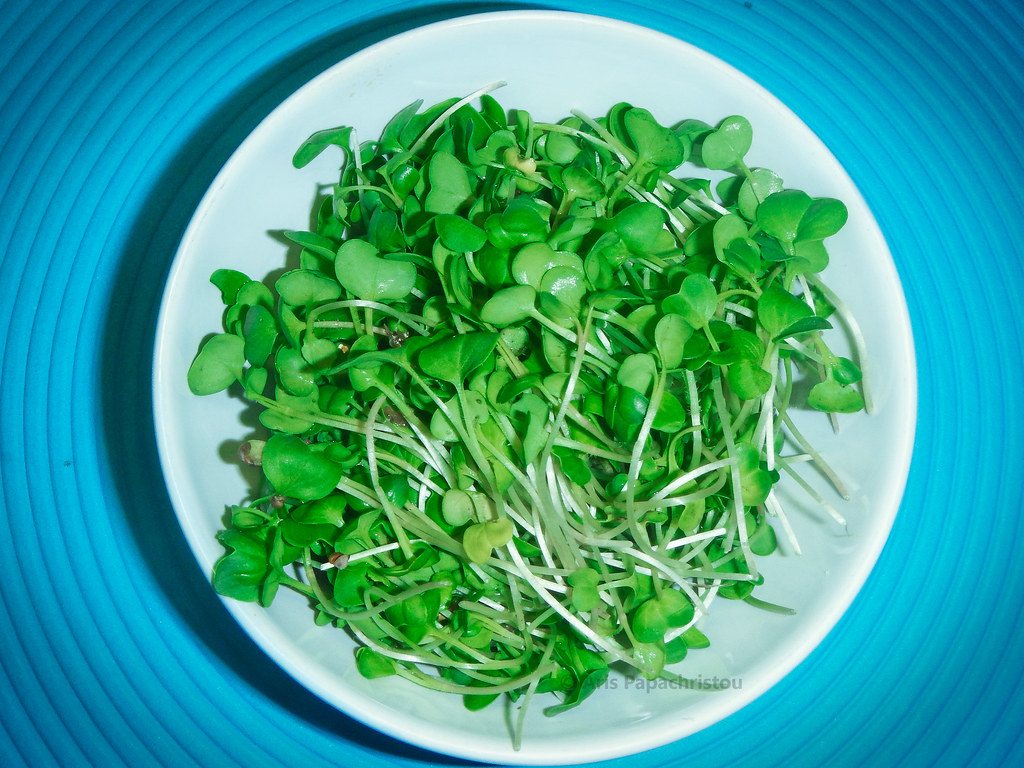
Why Are Radish Microgreens Spicy?
Why do radish microgreens taste spicy? Learn how glucosinolates, myrosinase, and isothiocyanates create their peppery bite—and why flavor varies.
8 min read
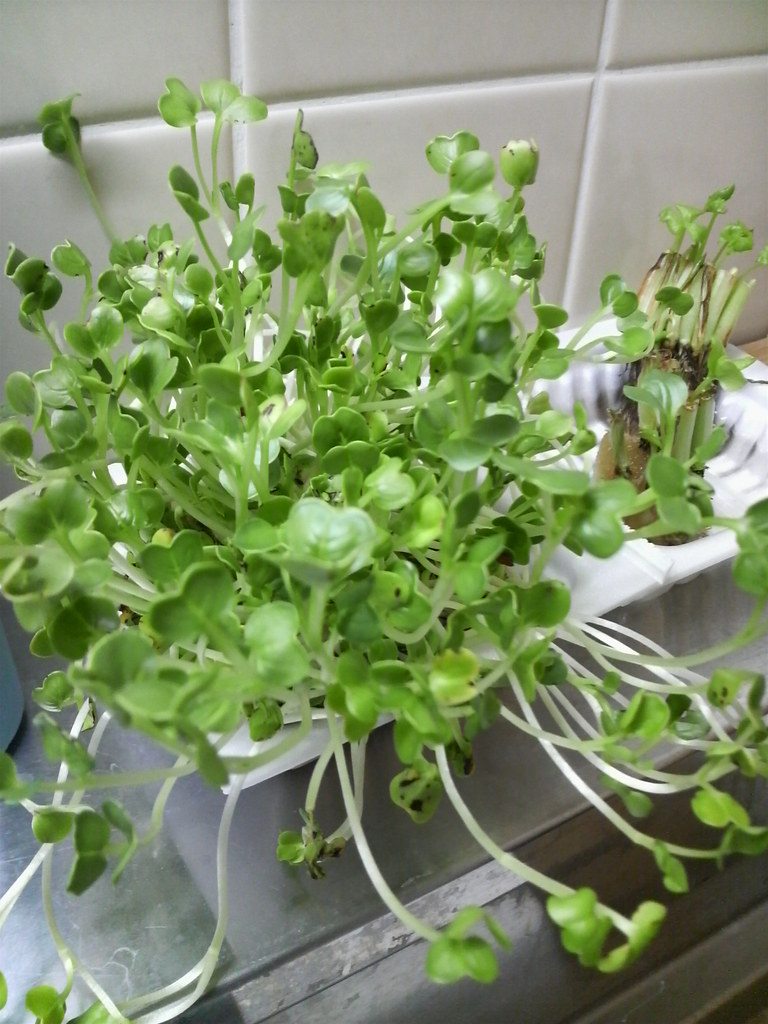
Radish Sprouts vs. Radish Microgreens: What’s the Difference?
Compare radish sprouts and radish microgreens by growth stage, harvest method, flavor, nutrition, and food safety.
13 min read
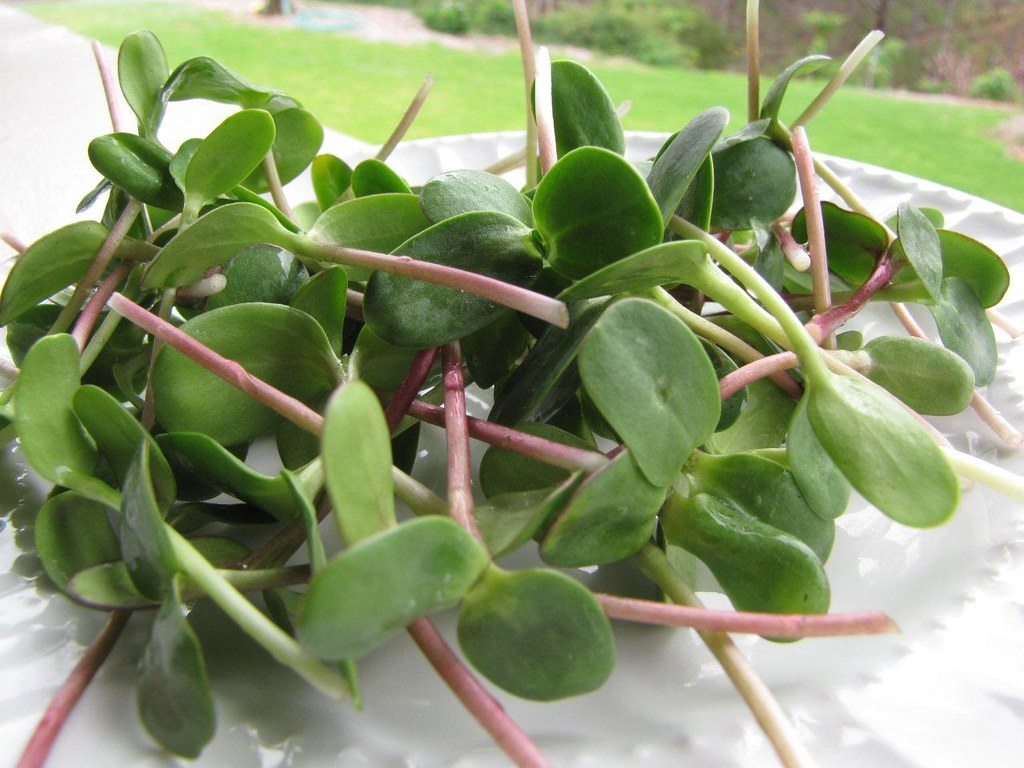
Sunflower Sprouts vs. Sunflower Microgreens: What’s the Difference?
Learn how sunflower sprouts and sunflower microgreens differ in growth stage, harvest method, texture, uses, and raw-food safety considerations.
13 min read
Stay in the loop
New guides, when they publish
An occasional email when a new guide goes live. No spam.
Your email is stored privately for future guide updates. No emails are being sent yet. Privacy policy