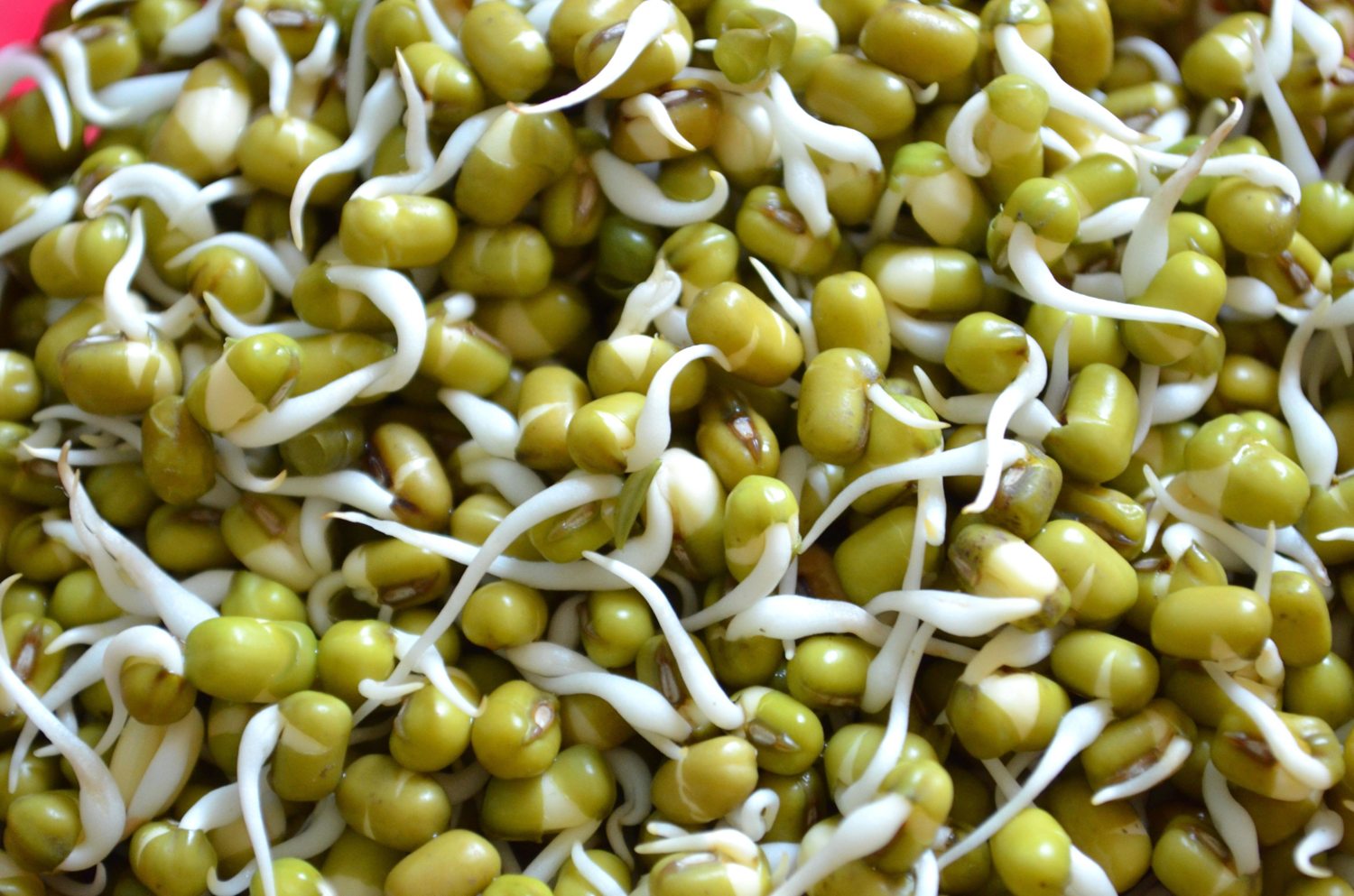
Mung bean sprouts do not have to be completely odorless, but there is no validated household standard for what “fresh” sprouts should smell like. A faint, non-abnormal odor does not automatically mean they are spoiled.
A strong musty or otherwise abnormal odor is more concerning—especially when combined with slime, softness, darkening, dark streaks, decay, or mold. If the sprouts smell strongly unpleasant or show clear deterioration, do not taste them or try to rescue them by rinsing or cooking. Discard the batch.
One important qualification: a normal smell does not prove that raw mung bean sprouts are safe. Harmful pathogens can be present without noticeably changing a food’s smell, appearance, or taste. FDA explains that sensory inspection cannot reliably identify foodborne pathogens.
Should fresh mung bean sprouts smell?
Fresh mung bean sprouts may have a faint odor, but “completely odorless” is too rigid a standard. There is no precise sniff-test threshold that certifies sprouts as fresh or safe.
Instead, consider odor alongside texture and appearance. As a general freshness baseline, mung bean sprouts are typically:
- Crisp rather than limp
- White through most of the stem, or hypocotyl
- Topped with yellow or green cotyledons
- Moist but not coated in slime
- Free from visible decay or mold
The USDA identifies crisp white hypocotyls and yellow or green cotyledons as characteristics of fresh mung bean sprouts. It identifies darkening, dark streaks, sliminess, decay, and musty odor as deterioration symptoms. (USDA Agricultural Research Service)
A mild, non-abnormal smell by itself does not prove that sprouts are spoiled. However, a strong or unusual smell should be treated as a warning, particularly when other quality changes are present.
What do spoiled mung bean sprouts smell like?
People may describe questionable sprouts as smelling:
- Musty
- Sour or fermented
- Rotten
- Sulfur-like or similar to rotten eggs
- Otherwise strongly unpleasant or abnormal
These are subjective consumer descriptions, not validated diagnostic categories. Musty odor is specifically identified by the USDA as a deterioration symptom. The other terms may describe what a person notices, but they should not be used to diagnose the cause of the odor.
A sulfur-like odor does not identify a particular bacterium, and a sour odor does not prove that Salmonella, E. coli, Listeria, or another pathogen is present.
If the smell is clearly abnormal, the safest practical decision is to discard the sprouts—especially if they are also slimy, soft, darkened, or decaying.
Fresh vs. spoiled mung bean sprouts
| Check | Fresher baseline | Possible deterioration |
|---|---|---|
| Odor | Faint or non-abnormal odor; no exact universal standard | Strong, musty, sour, fermented, rotten, or otherwise abnormal odor |
| Texture | Crisp and firm | Slimy, sticky, soft, collapsing, or decaying |
| Color | White stems with yellow or green cotyledons | Darkening, dark streaks, extensive browning, or decay |
| Surface | Moist but not coated in slime | Slime, visible mold, or decay |
| Action | Refrigerate and use promptly | Discard rather than tasting or selectively sorting |
Not every small color change proves that sprouts are dangerous. Appearance can change for several reasons, including age and storage conditions. But a combination of strong abnormal odor, slime, softness, darkening, decay, or mold is a clear reason to discard them.
These signs indicate likely deterioration; they cannot establish whether a batch is free of foodborne pathogens.
Why do mung bean sprouts develop an odor?
Sprouting requires moisture, warmth, and available nutrients. Those same conditions can also support the growth of microorganisms. The FDA notes that the warm, moist, nutrient-rich environment used to grow sprouts can allow harmful microorganisms to multiply. (FDA, FSMA Final Rule on Produce Safety)
Microbial communities can also change while sprouts are stored. Research on mung bean and alfalfa sprouts has documented changes in bacterial communities during refrigerated storage and spoilage. (PubMed-indexed study)
Those changes may occur alongside quality deterioration such as tissue breakdown, slime, decay, and off-odors. However, a household odor cannot reliably identify which microorganism is present or whether it is a foodborne pathogen.
Warm storage, poor drainage, standing water, and unclean equipment may contribute to quality loss or contamination risk. They are not the only possible explanations for an unusual odor, and no single cause can be diagnosed by smell alone.
Contamination can also originate on or in the seed. Harmful microorganisms may multiply during sprouting even when the process is handled carefully. (FDA guidance for sprouting seed)
Can you rinse or cook smelly sprouts?
Rinsing questionable sprouts
Do not use rinsing as a way to reverse spoilage or certify questionable sprouts as safe. FDA produce-safety guidance and sprout-safety guidance support treating washing and handling as risk-management steps, not as proof that contaminated or deteriorated food has become safe. (FDA, Selecting and Serving Produce Safely; FDA guidance for sprouting seed)
If the sprouts have a strong off odor, slime, visible decay, mold, or substantial discoloration:
- Do not taste them to check their condition.
- Do not rinse them and assume the problem has been solved.
- Do not treat rinsing as proof that harmful microorganisms have been removed.
- Do not keep only the pieces that look better from a clearly deteriorated batch.
Rinsing may be part of normal produce handling, but it does not turn spoiled or suspicious sprouts into reliably safe food. When in doubt, discard them.
Cooking fresh versus spoiled sprouts
Thorough cooking reduces the pathogen risk associated with fresh sprouts compared with eating them raw or lightly cooked. The CDC lists raw or undercooked sprouts among riskier food choices and recommends cooked sprouts as the safer option. (CDC, Safer Food Choices)
Cooking should not be treated as a guaranteed rescue method for spoiled food. If sprouts are already strongly off-smelling, slimy, moldy, decaying, or substantially discolored, discard them rather than trying to cook away the problem.
This is an important distinction:
- Fresh sprouts: Thorough cooking can reduce pathogen risk.
- Spoiled sprouts: Discard them instead of relying on cooking to make them acceptable.
Why smell is not a complete food-safety test
A bad smell can be a reason to discard mung bean sprouts, but a normal smell cannot prove that they are safe to eat raw.
Foodborne pathogens do not always change a food’s smell, appearance, or taste. Sprouts have an especially relevant risk profile because they are grown in conditions that can support microbial multiplication. Seed contamination, handling, equipment, and the sprouting environment can all be relevant to food safety.
Odor also cannot tell you whether Salmonella, E. coli, Listeria, or another specific pathogen is present. Sensory inspection is not a substitute for appropriate food-safety controls or testing, and a test of one sample would not automatically certify an entire household batch.
People at higher risk from foodborne illness—including pregnant people, young children, older adults, and people with weakened immune systems—should avoid raw or lightly cooked sprouts and choose thoroughly cooked sprouts instead. (FDA food-safety guidance)
Should you discard the whole batch?
If a batch has a strong abnormal odor or clear signs of spoilage, the prudent choice is to discard the batch rather than sort out only a few questionable sprouts. The USDA lists musty odor, darkening, dark streaks, sliminess, and decay as deterioration signs, while FDA guidance emphasizes that sensory checks cannot establish that food is free from pathogens. (USDA Agricultural Research Service; FDA, Fact or Fiction: Food Safety for Moms-to-Be)
This recommendation does not mean that every individual sprout has been tested or proven contaminated. It reflects the difficulty of reliably separating affected pieces from a moist, closely packed batch and the lack of a dependable household method for confirming that the remaining pieces are safe.
Discard the batch when you notice combinations such as:
- Strong musty, sour, fermented, rotten, or otherwise abnormal odor
- Slime or a sticky coating
- Soft, collapsing, or mushy texture
- Darkening or dark streaks
- Visible decay or mold
Avoid tasting the sprouts as a final check. If the smell is questionable but there are no other obvious signs, the absence of visible spoilage still does not prove that raw sprouts are pathogen-free.
How to reduce deterioration and handling risks in the next batch
For future batches, use general hygiene, moisture-control, and refrigeration practices. FDA sprouting guidance and food-storage guidance provide the relevant safety framework for seed selection, equipment hygiene, handling, drainage, and refrigeration. (FDA guidance for sprouting seed; FDA, Are You Storing Food Safely?)
- Use seed intended for sprouting.
- Keep jars, trays, and other equipment clean.
- Follow a reliable sprouting and rinsing method.
- Drain thoroughly instead of leaving sprouts submerged.
- Avoid leaving sprouts warm and stagnant after sprouting.
- Refrigerate harvested sprouts promptly.
- Use them promptly and monitor their odor, texture, and appearance.
These practices may help reduce deterioration and handling risks, but they cannot guarantee pathogen-free sprouts or prevent every unpleasant odor. Storage life varies with factors such as temperature, packaging, moisture, handling, and whether the sprouts were grown at home or purchased. There is no single storage duration or odor rule that applies to every batch.
Homegrown sprouts are not automatically safer than store-bought sprouts. Growing them yourself does not remove the possibility of contaminated seed or microbial growth during sprouting. (FDA guidance for sprouting seed; Penn State Extension, What You Should Know About Sprouts)
Frequently asked questions
Research & Further Reading
Government and institutional sources
- USDA Agricultural Research Service — Commercial Storage of Fruits, Vegetables, and Florist and Nursery Stocks
- FDA — Selecting and Serving Produce Safely
- FDA — Fruits, Veggies and Juices: Food Safety for Moms-to-Be
https://www.fda.gov/food/people-risk-foodborne-illness/fruits-veggies-and-juices-food-safety-moms-be
- FDA — Fact or Fiction: Food Safety for Moms-to-Be
- FDA — Are You Storing Food Safely?
- FDA — FSMA Final Rule on Produce Safety
- FDA — Guidance for Industry: Reducing Microbial Food Safety Hazards in the Production of Seed for Sprouting
- CDC — Safer Food Choices
- Penn State Extension — What You Should Know About Sprouts
Peer-reviewed and academic research
- Frontiers in Microbiology — Microbiomes Associated With Foods From Plant and Animal Sources
- PubMed — Dynamics of bacterial communities in alfalfa and mung bean sprouts during refrigerated conditions
- PMC — Involvement of Bacterial Quorum-Sensing Signals in Spoilage of Bean Sprouts
Company-specific product information
- Andi’s Way — Organic Mung Beans for Sprouting
This Andi’s Way page is company and product information only. It is not scientific or food-safety evidence and does not establish that the product prevents contamination, guarantees freshness, or produces safer sprouts.
Related guides
Can You Eat Mung Bean Sprouts Raw? Food-Safety Guide
Mung bean sprouts can be eaten raw, but raw and lightly cooked sprouts carry a foodborne-illness risk. Learn who should avoid them and how to cook them safely.
11 min read
Sunflower Sprouts vs. Sunflower Microgreens: What’s the Difference?
Learn how sunflower sprouts and sunflower microgreens differ in growth stage, harvest method, texture, uses, and raw-food safety considerations.
13 min read
Best Microgreens for Beginners: Radish, Broccoli, Pea, or Sunflower?
Compare radish, broccoli, pea, and sunflower microgreens by seed prep, harvest time, flavor, and beginner-friendliness to choose your first tray.
10 min read
Stay in the loop
New guides, when they publish
An occasional email when a new guide goes live. No spam.
Your email is stored privately for future guide updates. No emails are being sent yet. Privacy policy