Growing & Seeds · Growing
Microgreen Blackout Period: What It Is and Which Crops Need It
A microgreen blackout period is a temporary period without light, usually created by covering a tray after sowing. Growers use the term in more than one way: it can mean a dark germination phase, a weighted stack during early growth, or continued darkness after sprouts begin emerging to encourage longer stems. University of Maryland Extension Utah State University Extension
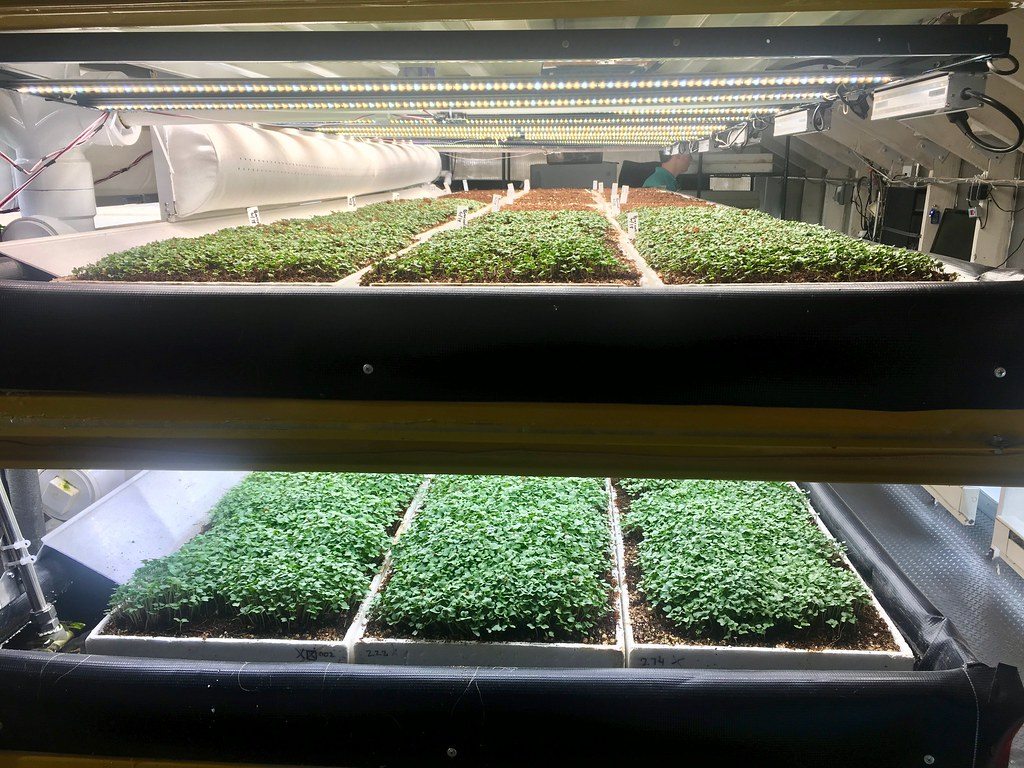
The key point is that microgreens do not all need the same blackout protocol. A covered tray can help maintain germination conditions for many crops, but a weighted stack and an extended blackout after emergence are crop-specific choices. Pea and sunflower are well-supported examples for early tray weight. Sunflower may also be worth testing with a longer early dark treatment, while the same treatment reduced arugula yield in one controlled study. Penn State Extension Kong and Zheng, Canadian Journal of Plant Science
Blackout, Germination Darkness, and Stacking Are Not the Same
“Blackout” is often used as a catch-all term, but it can describe several different practices. Separating them makes it easier to choose the right method for the crop and avoid leaving trays covered longer than necessary.
Covering Seed With Growing Medium
Covering seeds with a light layer of growing medium is different from placing a dark cover over an entire tray.
The decision to cover seed with medium varies by crop. University of Florida IFAS guidance lists broccoli and cabbage among crops that do not need a medium cover, while radish and sunflower are listed among crops for which a cover is considered best. This refers to the seed at planting—not necessarily to an extended period of darkness after seedlings emerge. University of Florida IFAS
In other words, a crop that benefits from a light medium cover does not automatically need a prolonged blackout period.
Covering a Tray During Germination
A tray-level cover blocks light and can help retain the warm, humid conditions that support germination and early emergence. This is often what home growers mean when they say a tray is “in blackout.”
The purpose is practical rather than universal: a cover can reduce moisture loss and help create a favorable environment while seeds germinate. It does not mean every microgreen species biologically requires darkness to germinate. University of Maryland Extension
Stacking or Weighting Trays
Stacking means placing an empty tray, lid, or appropriate weight on top of a newly seeded tray during early germination.
A weighted stack creates darkness, but its role is more than light exclusion. The added pressure helps keep seeds in contact with the growing medium and encourages roots to grow downward into the medium rather than lifting seeds upward as they develop. Utah State University Extension
Pea and sunflower are practical examples. Penn State Extension specifically recommends weight during germination for these crops to maintain seed-to-soil contact. Penn State Extension
Extended Blackout After Sprouting Begins
An extended blackout continues after sprouts have started developing rather than ending once germination is underway. Growers often use this approach to lengthen the hypocotyl—the stemlike section below the seed leaves.
Longer stems may make a crop easier to harvest or create a preferred appearance. But height alone is not a measure of quality. Extra darkness can also involve tradeoffs in leaf development, crop structure, or yield depending on the species and growing conditions.
Why Growers Use a Blackout Period
To Support Germination Conditions
A cover can help hold humidity and warmth around a newly seeded tray. This can be useful in dry indoor environments or when the growing medium loses moisture quickly. University of Maryland Extension
The goal is moist—not saturated—conditions. A cover should be monitored rather than sealed in place without checking the tray.
To Improve Seed Contact and Root Anchoring
For larger seeds, weight can help maintain close contact with the growing medium while roots establish. This is one reason weighted germination is commonly used for pea and sunflower trays. Penn State Extension
Once roots are visibly pushing into the medium and shoots begin lifting the upper tray or cover, the tray can usually move beyond the weighted stage. Utah State’s method transitions from a contacting, weighted tray to a non-contacting cover if additional darkness is desired. Utah State University Extension
To Encourage Longer Stems
Darkness continued into early seedling growth can encourage hypocotyl elongation. University of Maryland Extension describes a blackout period of a few days after germination as a way to lengthen stems for harvesting. University of Maryland Extension
That does not make extended blackout a universal requirement. It is a crop-management choice that should be judged by the resulting tray—not by stem length alone.
Why the Goals Can Conflict
A grower may want even emergence, good root anchoring, a manageable harvest stem, broad cotyledons, and strong fresh yield. More darkness does not necessarily improve all of those characteristics at once.
A controlled indoor study illustrates the difference. Researchers grew ‘Black oil’ sunflower and ‘Rocket’ arugula microgreens under an LED system, comparing a five-day dark treatment after sowing with immediate light exposure. Both crops developed longer hypocotyls in the dark treatment. But sunflower fresh yield increased by 13%, while arugula fresh yield decreased by 24% and arugula cotyledons were smaller. The elongated arugula also appeared more susceptible to lodging, or leaning and falling over. Kong and Zheng, Canadian Journal of Plant Science
The practical lesson is not that sunflower always needs five days of darkness or that arugula should never be covered. It is that crop response matters.
Do All Microgreens Need a Blackout Period?
No—not in the same form or for the same length of time.
Many growers cover trays during germination. But that is different from saying every crop needs a weighted stack or a prolonged dark period after sprouts emerge.
Utah State University’s microgreen guide uses different covered-time examples by crop: arugula, kale, and radish are listed at one to two days; pea and sunflower at three days; broccoli at two to four days; basil at four to seven days; and cilantro at seven to 14 days. These are practical examples within that guide’s growing method, not a universal blackout calendar. Utah State University Extension
Use timing as a starting point. Then watch the tray’s actual progress, including root anchoring, emergence, tray lift, stretching, and moisture conditions.
Which Microgreens May Benefit From Weight or Extended Darkness?
Pea and Sunflower: Strong Examples for Early Tray Weight
Pea and sunflower are among the clearest examples of crops that may benefit from weight during germination. Their relatively large seeds can be held in better contact with the growing medium when a tray or other appropriate weight is placed on top. Penn State Extension
That does not mean pea and sunflower require identical timing. Remove weight based on crop progress—especially visible root anchoring and shoots beginning to lift the cover—rather than following a fixed number of days without checking the tray.
Sunflower: A Crop Worth Testing Carefully
Sunflower has direct, but limited, research support for testing a longer early dark treatment.
In the controlled study described above, five days of darkness after sowing increased sunflower hypocotyl length and fresh yield by 13%. The finding applies to the ‘Black oil’ sunflower cultivar and the specific indoor LED production conditions used by the researchers. Kong and Zheng, Canadian Journal of Plant Science
It supports careful experimentation, not a universal five-day blackout rule. Different varieties, growing systems, temperatures, harvest goals, and light conditions may produce different results.
Arugula: Taller Does Not Always Mean Better
Arugula is an important example of why longer stems should not be the only goal.
In the same controlled study, five days of early darkness lengthened arugula hypocotyls, but fresh yield fell by 24% and cotyledons were smaller. The dark-treated arugula also appeared more susceptible to lodging under the study conditions. Kong and Zheng, Canadian Journal of Plant Science
For arugula, it makes sense to move the tray into light once emergence is established rather than applying a sunflower-style extended-darkness routine by default.
Broccoli, Kale, and Radish
Broccoli, kale, and radish may be grown with a covered germination phase, but they should not automatically receive a prolonged blackout after emergence.
Utah State’s guide lists shorter covered-time examples for kale and radish than for pea and sunflower, while its broccoli example ranges from two to four days. These differences reinforce the value of crop-specific observation rather than one universal schedule. Utah State University Extension
Medium-cover preferences are also separate from tray blackout. UF/IFAS lists broccoli as a crop that does not need a medium cover, while radish is listed among crops that perform best with one. Neither designation establishes a need for extended post-emergence darkness. University of Florida IFAS
Basil and Cilantro
Basil and cilantro are slower-growing crops compared with fast microgreens such as radish and broccoli. Both are listed as slow-growing options in University of Maryland guidance, and Utah State’s chart gives them longer covered-time ranges than many fast crops. University of Maryland Extension Utah State University Extension
Slow emergence does not automatically mean a tray should remain in darkness. Watch the tray’s moisture, emergence, and root development, and avoid forcing a slow crop into a fast-crop blackout schedule.
Crop Examples: Starting Points, Not Rules
Table caption: Crop-specific microgreen blackout and stacking examples: starting points, not fixed rules.
| Crop | What May Be Useful | What Not to Assume | Practical Cue for Moving On |
|---|---|---|---|
| Sunflower | Dark germination, early tray weight, and carefully tested extended darkness | More darkness always improves yield or quality | Roots are anchored and shoots are lifting the cover |
| Pea | Early tray weight during germination | Pea should use the same extended-darkness approach as sunflower | The tray is rooted and shoots are emerging upright |
| Arugula | A short covered germination phase as needed | Longer darkness improves yield because stems become longer | Emergence is established; move to light promptly |
| Radish | Covered germination as appropriate; a medium cover may be useful | A medium cover means prolonged post-germination blackout is required | Even emergence and a tray that no longer needs covering |
| Broccoli and kale | A covered phase as needed for germination conditions | They need the weighted stack commonly used for pea or sunflower | Germination and early emergence are established |
| Basil and cilantro | Patience and crop-specific observation during slower emergence | A fast crop’s blackout schedule transfers directly | Emergence and moisture conditions, not the calendar alone |
Source note: Crop-specific covered-time examples and weighted germination guidance come from Utah State University Extension and Penn State Extension. Seed-medium-cover distinctions come from University of Florida IFAS. These sources provide practical growing guidance, not a single universally validated blackout schedule. Utah State University Extension Penn State Extension University of Florida IFAS
How to Know When to Move Microgreens Into Light
A calendar is useful, but the tray should guide the final decision.
Check Root Anchoring
If you used weight, look for roots visibly pushing into the medium. At that point, the crop may no longer need pressure from an upper tray to keep seeds in place. Utah State University Extension
Watch for Tray Lift and Emerging Shoots
Shoots that are beginning to lift the cover or upper tray are a practical sign that the crop has progressed beyond the weighted phase. Keeping a tray covered solely because a preset number of days has not passed can create unnecessary stretching.
Check Moisture and Condensation
A cover can maintain useful humidity, but excessive condensation, saturated medium, or stagnant air are signs that the setup needs attention. University of Maryland Extension recommends keeping the medium moist rather than saturated, periodically venting covers, and maintaining gentle air movement. University of Maryland Extension
Consider the Crop’s Growth Goal
A grower seeking a shorter crop may transition to light earlier and assess the tray’s overall quality—not just stem length.
What Happens if Microgreens Stay in Blackout Too Long?
Excess Stretching
Continued darkness can lengthen hypocotyls. This can be useful in some crops and systems, but it is not automatically an improvement.
Potential Quality and Yield Tradeoffs
The sunflower-and-arugula research shows why the same blackout treatment should not be assumed to work across crops. Under the study’s conditions, sunflower yield rose after five days of darkness, while arugula yield declined and cotyledons became smaller. Kong and Zheng, Canadian Journal of Plant Science
Other crops may respond differently, and more crop-specific research is needed.
Leaning or Lodging in Some Crops
Longer stems are not necessarily stronger stems. In the controlled arugula study, the elongated seedlings appeared more susceptible to lodging. That finding should not be generalized to every microgreen, but it is a useful reminder to assess structure as well as stem length. Kong and Zheng, Canadian Journal of Plant Science
Excess Moisture Under the Cover
Covered trays retain moisture. If the medium becomes overly wet or air exchange is limited, vent the cover and reassess whether the tray still needs darkness. Keeping the medium moist rather than saturated and maintaining gentle airflow are basic management steps during covered phases. University of Maryland Extension
A Simple Decision Framework for Blackout Use
- Identify the goal. Are you trying to support germination, improve seed contact, encourage longer stems, or combine these goals?
- Separate the practices. Decide whether the crop needs a seed-medium cover, tray-level darkness, weight, or additional darkness after emergence.
- Start with the crop. Pea and sunflower may benefit from early weight; do not automatically apply that approach to arugula, brassicas, basil, or cilantro.
- Watch the tray. Check roots, emergence, tray lift, stretching, condensation, and growing-medium moisture.
- Transition to light when the crop is ready. Do not rely on the calendar alone.
Research & Further Reading
- Kong, Y., & Zheng, Y. Early-stage dark treatment promotes hypocotyl elongation associated with varying effects on yield and quality in sunflower and arugula microgreens. Canadian Journal of Plant Science.
https://doi.org/10.1139/cjps-2021-0050
- University of Maryland Extension. Growing Microgreens and Baby Greens Indoors.
https://extension.umd.edu/resource/growing-microgreens-and-baby-greens-indoors
- Utah State University Extension. Grow Your Own Microgreens.
https://extension.usu.edu/yardandgarden/research/grow-your-own-microgreens.pdf
- Penn State Extension. A Step-By-Step Guide for Growing Microgreens at Home.
https://extension.psu.edu/a-step-by-step-guide-for-growing-microgreens-at-home
- University of Florida IFAS Gardening Solutions. Microgreens.
https://gardeningsolutions.ifas.ufl.edu/plants/edibles/vegetables/microgreens/
- Andi’s Way. Organic Microgreen Seeds and Beans. Company/product source; not evidence for growing protocols, crop science, food safety, or yield.
https://andisway.com/collections/organic-sprouting-seeds
Frequently asked questions
Related guides
How to Bottom-Water Microgreens Without Waterlogging the Tray
Learn how to bottom-water microgreens with nested trays, moisture checks, drain-off steps, and practical tips to avoid soggy media and standing water.
12 min read
Best Growing Medium for Microgreens: Soil vs Coco Coir vs Grow Mats
Compare potting mix, coco coir, and grow mats for microgreens. Learn the trade-offs in watering, cleanup, crop support, reuse, tray setup, and food safety.
16 min read
Do Microgreens Regrow After Cutting?
Most microgreens are a one-time harvest. Learn why some shoots may regrow after cutting, how baby greens differ, and when reseeding is the better choice.
8 min read
Stay in the loop
New guides, when they publish
An occasional email when a new guide goes live. No spam.
Your email is stored privately for future guide updates. No emails are being sent yet. Privacy policy