Growing & Seeds · Growing
How Long Do Microgreen Seeds Last? Storage and Germination Guide
Microgreen seeds do not have one universal expiration date. Their useful life depends on the crop, how dry and cool the seed has remained, and how it was packaged and handled. A bag from last year may still perform well, while a newer bag that spent time in heat or humidity may germinate poorly.
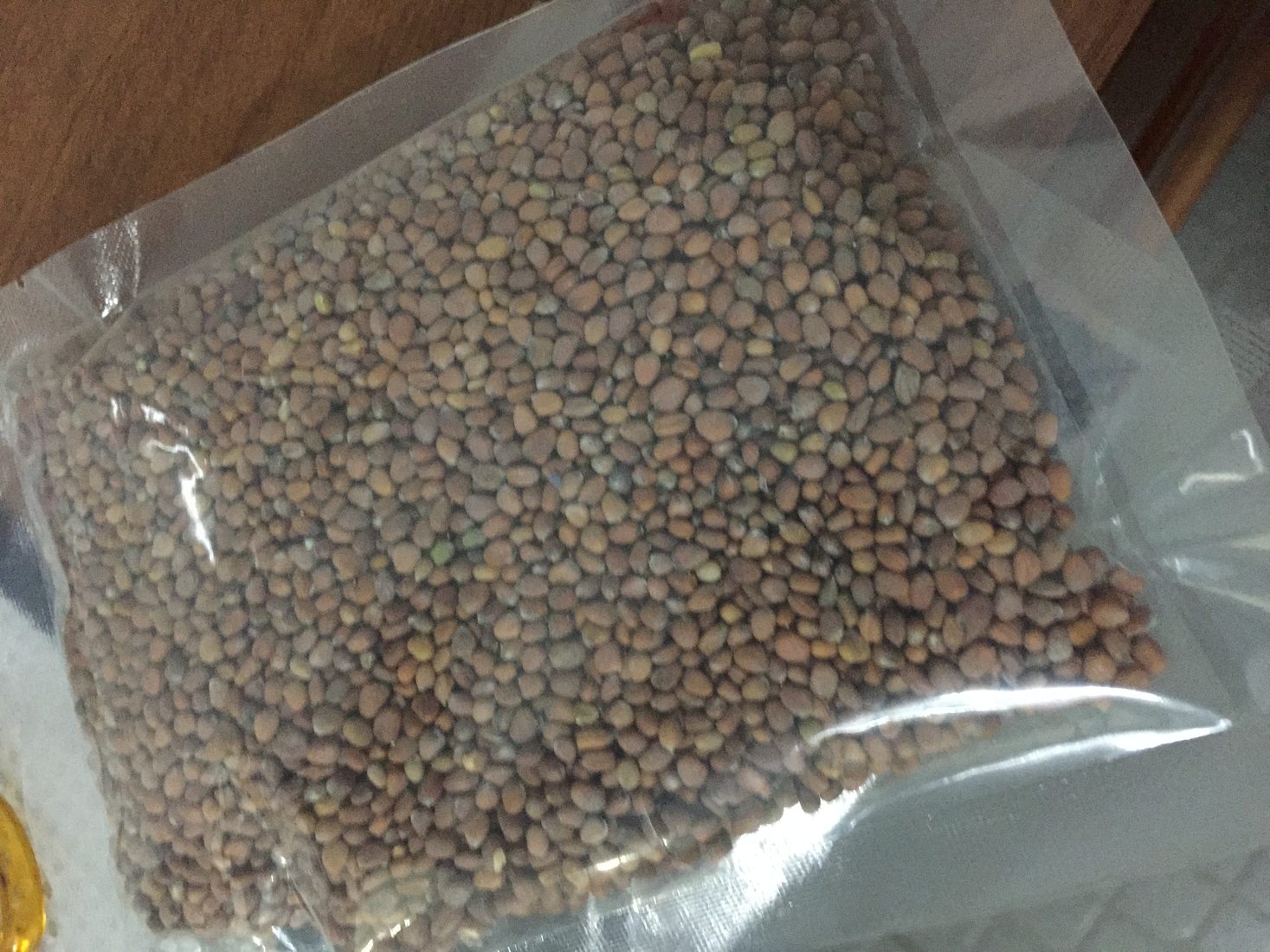
The most practical way to evaluate an older or opened seed lot is to store it well and run a small germination test before sowing a full tray.
This guide covers dry seed before planting. It does not address how long harvested microgreens last in the refrigerator; harvested microgreens are perishable and require separate refrigerated-storage practices.
Microgreen Seed Shelf Life Depends on the Crop and Storage Conditions
Seed age is useful context, but it is not a complete answer. A seed lot’s practical performance can depend on:
- Crop species: Different crops naturally retain viability for different lengths of time.
- Storage temperature: Prolonged heat can shorten seed life.
- Humidity and seed moisture: Dry seed generally stores better when protected from moisture.
- Packaging: A well-sealed, moisture-protective container limits exposure to humid air.
- Storage history: Conditions before and after purchase can affect viability.
- Your growing goal: A lot may produce some sprouts in a paper-towel test but still be too uneven for the dense, uniform canopy wanted in a microgreen tray.
In other words, “Will some seeds sprout?” is not quite the same question as “Will this seed lot grow an even tray?”
University Extension guidance consistently identifies crop type, seed moisture, temperature, and humidity as important factors in seed longevity. Iowa State University Extension and University of Nebraska–Lincoln Extension provide useful household seed-storage guidance.
Typical Storage-Life Estimates for Common Microgreen Crops
> Important: These are approximate Extension estimates for vegetable seeds held under favorable storage conditions. They are not guarantees for a particular bag of microgreen seed, and they do not predict dense-tray performance.
| Crop | Approximate storage estimate under favorable conditions | Practical takeaway |
|---|---|---|
| Broccoli | About 4–5 years | Often listed among longer-lived vegetable seeds. Test older lots before planting a large tray. |
| Radish | About 5 years | May remain viable for several years when stored well, but individual lots vary. |
| Pea | About 3 years | Can remain usable for multiple years, though poor storage can shorten that period. |
| Onion | About 1 year | Commonly listed as comparatively short-lived. Do not apply this estimate to other crops. |
| Wheatgrass | No precise estimate included here | Store it cool, dry, and sealed, then use a germination test rather than relying on a generalized number. |
For example, Iowa State Extension lists broccoli at about five years, peas at about three years, radishes at about five years, and onion at about one year under proper storage conditions. Utah State Extension lists broccoli at about four years, peas at about three years, and radishes at about five years. The difference illustrates why seed-life charts are planning references rather than hard expiration rules. Sources: Iowa State University Extension; Utah State University Extension
A lot may germinate beyond a typical storage estimate, while another lot may decline earlier because of its storage history. Use a shelf-life estimate as a reason to test—not as an automatic reason to discard seed.
How to Store Microgreen Seeds for Better Germination
Keep Seed Dry
For home storage, the central goal is simple: keep dry seed dry. Moisture and high humidity can reduce seed longevity, so avoid storage areas that are consistently damp or humid.
Rather than assuming a particular room is always suitable, consider the conditions in your home. A basement, garage, shed, laundry area, or pantry may be acceptable in one climate and unsuitable in another. Choose a location that stays relatively cool and dry.
If seeds appear damp, clumped, or otherwise changed from their normal condition, do not assume they will perform as expected. Run a germination test before using them in a full tray.
Keep Seed Cool
A stable, cool location is generally better than a place that becomes hot or experiences large temperature swings. Avoid leaving seed in car trunks, sunny windows, hot garages, or near heat-producing appliances.
There is no single household temperature that works best for every situation. The practical priorities are to avoid unnecessary heat, limit humidity, and keep containers sealed. Sources: University of Illinois Extension; University of Nebraska–Lincoln Extension
Use Well-Sealed, Moisture-Protective Containers
A practical approach is to keep the original package inside a well-sealed outer container, such as a glass jar, sealed bucket, or another moisture-protective container with a secure lid.
For larger seed quantities, consider separating seed into smaller sealed portions. This lets you open one working portion while leaving the remaining seed protected.
Label each lot with:
- Crop and variety
- Seed source
- Purchase year
- Date opened
- Storage location
- Germination-test date and result
Good records are often more useful than trying to remember whether a bag is “old.”
Should You Refrigerate Microgreen Seeds?
Refrigeration can be useful because it provides a cool environment. However, refrigerators are also humid, so seed should be stored in a well-sealed, moisture-protective container before it goes inside.
Do not place an open or loosely closed seed bag directly in the refrigerator. The benefit of cool storage can be undermined if seed absorbs moisture. Sources: Iowa State University Extension; Utah State University Extension
Can You Freeze Microgreen Seeds?
Freezing can be an option for long-term storage when seed is thoroughly dry and packaged to prevent moisture exposure. Colorado State and Utah State Extension guidance notes that properly prepared seed in airtight freezer storage may retain viability for substantially longer periods—sometimes up to roughly 10 years under favorable conditions.
That is a best-case storage approach, not a promise that every crop, seed lot, or household freezer-stored bag will remain high-performing for 10 years. Freezer storage is usually most useful for seed you do not expect to use for a long time. Sources: Colorado State University Extension; Utah State University Extension
Let Cold Seed Warm Before Opening
When you remove seed from a refrigerator or freezer:
- Take out the sealed container.
- Leave it closed until it reaches room temperature.
- Open it only after it has warmed.
This reduces the chance that condensation will form on cold seed when it contacts warm room air. University of Illinois Extension
How to Test Old Microgreen Seeds for Germination
A paper-towel germination test is a simple way to check whether an older seed lot is still sprouting before you commit seed, growing medium, and tray space to a full planting.
What You Need
- A counted seed sample
- Paper towel, cloth, or similar germination material
- Water
- A plastic bag or covered container
- A label or marker
- A warm location appropriate for the crop
When practical, test 25 to 50 seeds. A 10-seed test can be a quick household screen, but a larger sample gives a more useful estimate. Sources: Utah State University Extension; University of Illinois Extension
Paper-Towel Germination Test: Step by Step
- Count the seed sample.
Use 25 or 50 seeds when possible.
- Moisten the paper towel.
It should be damp, not dripping or waterlogged.
- Spread the seeds out.
Leave enough space to see and count emerging roots.
- Fold or roll the towel.
Place it in a plastic bag or covered container to help retain moisture.
- Keep the sample warm.
Use conditions appropriate to the crop rather than assuming one temperature works for every type of seed.
- Check during the crop’s expected germination period.
Count seeds that have germinated, usually indicated by an emerging root, also called a radicle.
- Record the result.
Note how many seeds germinated and whether sprouting was reasonably even or delayed.
This method is based on common Extension germination-testing guidance. Sources: Iowa State University Extension; University of Nebraska–Lincoln Extension
How to Calculate Germination Percentage
Use this formula:
(Number of seeds germinated ÷ Total number of seeds tested) × 100
For example:
- 22 seeds germinated out of 25 tested
(22 ÷ 25) × 100 = 88% germination
This is a calculation method, not a universal microgreen pass-or-fail benchmark.
What a Germination Test Can—and Cannot—Tell You
A home test can help indicate:
- Whether the tested sample still sprouts
- Whether an older lot may be worth trying in a small tray
- Whether replacing the seed is likely to be more predictable
It cannot tell you:
- Exact yield from a full tray
- Whether a densely sown tray will be uniform
- Microbiological quality or food safety
A germination test measures sprouting performance, not microbial contamination. Research on microgreen seeds has evaluated microbiological quality separately from germination, so good germination should not be treated as a food-safety test. Frontiers in Sustainable Food Systems
How to Interpret Old Microgreen Seed Germination Results
There is no single germination percentage that is “good enough” for every microgreen tray. The useful threshold depends on the crop, seed size, intended sowing density, available growing space, seed cost, and how important a uniform tray is to you.
When an Older Seed Lot May Still Be Worth Using
An older lot may be worth trying when:
- It was stored cool, dry, and well sealed
- The test shows strong, reasonably even germination
- You are willing to run a small tray trial
- Minor variability is acceptable for your goals
A strong paper-towel result is encouraging, but it does not guarantee dense, even tray performance.
When a Small Tray Trial Makes Sense
Consider a small trial tray when:
- The germination result is neither clearly strong nor clearly poor
- You have a large amount of seed remaining
- The seed is costly enough that testing is worthwhile
- You need to assess density, timing, and uniformity under your own growing conditions
This is especially useful for microgreens because they are sown densely. Moderate germination losses can be more noticeable when they create bare areas across a tray.
When Replacing the Seed May Be More Practical
Replacing a lot may be more predictable when:
- Germination is very low or inconsistent
- You need reliable, uniform trays
- Growing medium or tray space is limited
- The cost of a failed tray outweighs the cost of fresh seed
This is a practical production decision, not a conclusion about food safety.
Can You Compensate by Sowing More Seed?
For a mildly reduced seed lot, a small tray trial with a modestly adjusted sowing rate may be worth considering. However, “just double the seeding rate” is not a reliable universal solution.
Adding more seed may not correct uneven germination, delayed growth, or poor tray uniformity. It can also make results harder to predict and increase waste. A small tray trial is generally more informative than guessing at a new seeding rate. Extension guidance supports adjusting sowing rates for lower-germination seed in some garden settings, but there is no universal adjustment formula for dense microgreen trays. Sources: Iowa State University Extension; University of Nebraska–Lincoln Extension
Common Seed-Storage Mistakes to Avoid
- Treating every crop as if it has the same shelf life
- Using the purchase year as the only sign of viability
- Storing seed where heat or humidity are common
- Refrigerating seed without well-sealed packaging
- Opening a cold seed container immediately after removing it from cold storage
- Assuming a germination test proves food safety
- Expecting a paper-towel test to guarantee dense, uniform tray performance
- Treating soaking or home decontamination methods as a reliable way to restore lost seed viability
Research on online microgreen seed-treatment advice found that recommendations were not consistently evidence-based. Storage problems and low viability are better addressed through sound storage, germination testing, and replacing poorly performing seed when necessary. Frontiers in Sustainable Food Systems
Research & Further Reading
Seed-Storage and Germination Sources
- Iowa State University Extension and Outreach — How to Store Seeds and Test Germination Rates
https://yardandgarden.extension.iastate.edu/how-to/how-store-seeds-and-test-germination-rates
- University of Illinois Extension — Will My Seeds Still Grow?
https://extension.illinois.edu/sites/default/files/seed_viability.pdf
- Utah State University Extension — Collecting and Storing Seeds from Your Garden
https://extension.usu.edu/yardandgarden/research/collecting-and-storing-seeds-from-your-garden.pdf
- University of Nebraska–Lincoln Extension — Vegetable Garden Seed Storage and Germination Requirements
https://extensionpubs.unl.edu/publication/g2090/2011/pdf/view/g2090-2011.pdf
- Colorado State University Extension — Storing Vegetable and Flower Seeds
https://www.extension.colostate.edu/docs/pubs/garden/07221.pdf
Microgreen-specific context
- Frontiers in Sustainable Food Systems — Microbiological quality of microgreen seeds purchased from online vendors and evaluating seed decontamination techniques available online
https://www.frontiersin.org/journals/sustainable-food-systems/articles/10.3389/fsufs.2023.1264472/full
- Purdue Extension FoodLink — Microgreens
https://extension.purdue.edu/foodlink/food.php?food=microgreens
Company product information only
- Andi’s Way — Organic Microgreen Seeds and Beans
Company product-category information only; not evidence for seed storage, germination, or food safety. https://andisway.com/collections/organic-microgreen-seeds
Frequently asked questions
Related guides
How to Bottom-Water Microgreens Without Waterlogging the Tray
Learn how to bottom-water microgreens with nested trays, moisture checks, drain-off steps, and practical tips to avoid soggy media and standing water.
12 min read
Best Growing Medium for Microgreens: Soil vs Coco Coir vs Grow Mats
Compare potting mix, coco coir, and grow mats for microgreens. Learn the trade-offs in watering, cleanup, crop support, reuse, tray setup, and food safety.
16 min read
Do Microgreens Regrow After Cutting?
Most microgreens are a one-time harvest. Learn why some shoots may regrow after cutting, how baby greens differ, and when reseeding is the better choice.
8 min read
Stay in the loop
New guides, when they publish
An occasional email when a new guide goes live. No spam.
Your email is stored privately for future guide updates. No emails are being sent yet. Privacy policy