Buying & Storage · Microgreens
Buy Fresh Microgreens or Grow Your Own? Cost, Time, Shelf Life, and Control
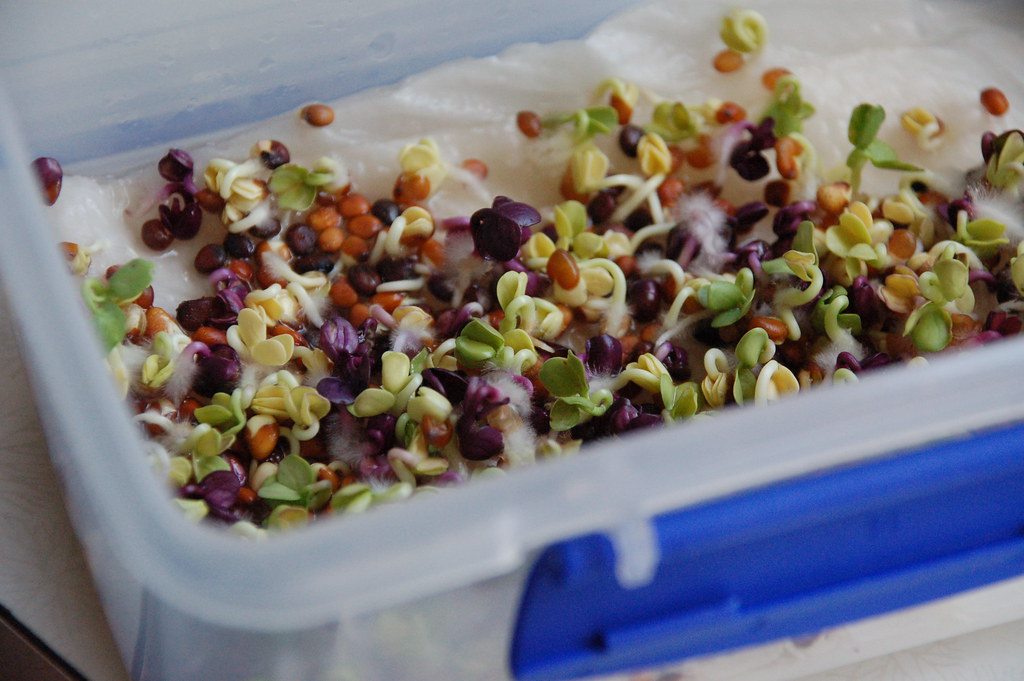
Buying fresh microgreens is usually the simpler choice when you want greens soon, prefer predictable portions, and do not want to manage a growing routine. Growing your own may be worthwhile if you eat microgreens regularly, can plan ahead for a crop cycle, and value choosing the varieties and harvest timing yourself.
Growing is not automatically cheaper. Seeds are only one part of the calculation. Trays, growing medium, lighting when needed, water, electricity, cleanup, time, crop failures, and unused harvest can all affect the real cost.
For some households, the most practical choice is a hybrid: buy fresh microgreens when you need them immediately, while growing one recurring tray to see whether home production fits your space, schedule, and appetite.
Buy Fresh Microgreens vs. Grow Your Own
| Comparison point | Buy fresh microgreens | Grow microgreens at home |
|---|---|---|
| Time to eat | Available to use promptly after purchase, following package directions | Requires a crop cycle before harvest |
| Setup | Shopping, refrigeration, and normal food handling | Seeds, growing medium, a suitable container, drainage, and routine care |
| Cost predictability | Depends mainly on local price, package size, and waste | Depends on startup equipment, supplies, utilities, time, and crop success |
| Routine work | Store and use the greens before quality declines | Sow, water, monitor, harvest, clean, and reset trays |
| Shelf-life management | Refrigerate promptly and follow package guidance | Harvest closer to use when practical, then store cut greens properly |
| Variety control | Limited to what is available locally or online | Greater choice of crop, seed, growing method, and harvest stage |
| Waste risk | Unused packages may decline in quality | Failed, overgrown, or unwanted trays may be wasted |
| Best fit | Occasional use, immediate meals, and low effort | Frequent use, hands-on interest, and more control over timing |
This is a workflow comparison, not a universal ranking of nutrition, safety, or quality. Purchased and homegrown microgreens can both be handled well—or poorly—depending on production, storage, and preparation practices.
Is It Cheaper to Buy Microgreens or Grow Them?
There is no one answer that fits every household. Whether it is cheaper to buy or grow microgreens depends on what you already own, how often you eat them, which crops you choose, local retail prices, and how much of each purchase or harvest you actually use.
A first tray can seem inexpensive if you already have suitable containers, growing medium, and adequate light. It can look costly if you are buying equipment before planting. Over multiple growing cycles, one-time equipment expenses may be spread across more harvests, but seeds, medium, utilities, and your time still matter.
Separate startup costs from recurring costs
A realistic home-growing comparison includes more than seed.
Possible startup costs
- Trays or other food-suitable containers
- A drainage tray or under-tray
- Lighting, if your growing area needs it
- Shelving or support equipment, if desired
- Scissors or a harvesting tool
- Initial growing supplies
Possible recurring costs
- Seeds
- Growing medium
- Water
- Electricity
- Cleaning supplies
- Replacement equipment
- Time spent sowing, watering, monitoring, harvesting, and cleaning
- Crops that fail or are not eaten
The University of Missouri Extension microgreens planning budget is a useful reminder that growing costs extend beyond seed. However, it is a commercial Missouri greenhouse budget based on 2024 price forecasts—not a household cost estimate. Its dollar figures and production assumptions should not be used to predict what a home grower will spend.
Purchased microgreens also involve more than the shelf price. Package size, transportation or delivery costs, and the amount left unused before quality declines can affect the effective cost per serving.
Use a personal cost worksheet
Rather than relying on a broad claim such as “homegrown microgreens are half the price,” compare the options using your own numbers:
Startup equipment should be allocated across the number of growing cycles or harvests you expect to use it for, rather than automatically assigning the full purchase cost to one tray.
To make the calculation more useful:
- List the equipment you would need to buy.
- Add the recurring cost of seeds and growing medium.
- Include water and electricity if they are meaningful for your setup.
- Decide whether to assign a value to your time. This is personal, not a standardized cost.
- Account for trays that fail, grow poorly, or go uneaten.
- Estimate the amount you are likely to eat—not simply the amount that grows.
- Compare that result with the local cost of purchased microgreens in a similar amount.
If you already have a suitable setup and grow repeatedly, equipment costs may matter less over time. If you only want microgreens occasionally, buying fresh may be the lower-effort choice even if a homegrown tray could produce a lower theoretical cost per ounce.
Why a cost-per-ounce verdict can mislead
The sources reviewed for this article do not provide a reliable, universal household cost-per-ounce comparison between homegrown and purchased microgreens across regions. The result can change based on:
- Local retail prices
- Seed prices and package sizes
- Growing-medium costs
- Electricity rates
- Existing equipment
- Crop yield
- Shipping or transportation
- The value you place on your time
- How frequently you grow
- Failed or unused trays
- How much of a purchased package is eaten
Growing may be economical for one household and inconvenient or more expensive for another. The best comparison is one based on your actual habits and local options.
Time: Ready Today Versus Days to Harvest
Buying provides immediate access
Purchased fresh microgreens can meet an immediate meal need. Once you have them, you can use them promptly while following the product’s storage and handling instructions.
Home growing requires planning. Even a fast-growing crop needs time between sowing and harvest. A tray that has not been planted cannot replace greens needed for dinner that night.
Home-growing time varies by crop
Microgreens do not all grow at the same speed. Virginia Cooperative Extension provides the following approximate sowing-to-harvest ranges for selected crops:
| Crop example | Approximate sowing-to-harvest range |
|---|---|
| Radish | 6–10 days |
| Broccoli | 8–13 days |
| Sunflower | 9–12 days |
| Beet | 12–23 days |
These are planning ranges, not guaranteed harvest dates. Temperature, light, seed quality, growing medium, moisture, crop variety, and harvest stage can all affect the timing.
The main comparison point is simple: growing microgreens generally takes days, not hours. A crop cycle can fit comfortably into a weekly routine, but it is not an immediate replacement for a package of fresh greens.
Include the work between sowing and harvest
Home growing involves more than waiting for seeds to sprout. The basic workflow may include:
- Preparing a clean container and growing medium
- Sowing seeds
- Watering appropriately
- Monitoring moisture and light
- Watching for growth problems
- Harvesting at the desired stage
- Cleaning and resetting the tray
The amount of attention depends on the crop and setup. Some people enjoy these recurring tasks; others prefer the convenience of buying greens when needed.
Do You Need Expensive Grow Lights?
Not necessarily for a first tray. Penn State Extension’s home-growing guide describes a basic setup using clean, food-suitable containers, drainage, growing medium or mats, seeds, water, and scissors. Specialized shelving and lighting are not mandatory for every beginner.
Whether grow lights are useful depends on:
- The amount and consistency of natural light
- The season
- The crop you are growing
- The location of the tray
- Whether you want repeated, year-round production
- How consistent you want growth and harvest timing to be
A windowsill may work in some situations, but it does not guarantee a successful crop. Conversely, supplemental lighting can be useful when natural light is limited or when you want a more consistent growing schedule. Start with your actual growing environment rather than assuming you need either a bare windowsill or a large indoor rack.
Shelf Life, Freshness, and Waste
Purchased cut microgreens are perishable
Fresh-cut microgreens are delicate produce. Their quality can change with the crop, temperature, packaging, handling, moisture, and whether they have been washed. A review of microgreen production, nutrition, safety, and shelf life identifies shelf life as a significant challenge for these products.
In one study, packaged microgreens had a fresh-cut shelf life of no more than 10 days at 5°C under the researchers’ specific test conditions. In a separate study, mustard microgreens maintained good sensory quality for 14 days at 5°C in the tested polyethylene packaging, while warmer storage temperatures shortened acceptable quality.
Those findings show why cold storage matters, but neither result is a universal consumer shelf-life guarantee. A package of radish microgreens, sunflower greens, pea shoots, or another crop may respond differently based on its variety, packaging, handling history, and storage conditions.
How growing changes the workflow
A home tray may let you harvest closer to the time you plan to eat the greens. That can reduce the time between cutting and serving when your crop and routine make it practical.
This is a workflow benefit, not proof that homegrown microgreens are automatically safer, more nutritious, or better in every respect. Microgreen quality and nutrient levels can vary with the crop, cultivar, growing conditions, harvest stage, storage, and handling, as discussed in the microgreen production and nutrition review and Virginia Cooperative Extension guidance.
Harvesting later also requires planning. You still need to decide how much to cut, how soon to use it, and how to refrigerate anything left after harvest.
Practical storage guidance
For purchased microgreens:
- Refrigerate them promptly.
- Follow the package’s storage and handling instructions.
- Use the greens while they remain in good condition rather than relying only on a general number of days.
- Avoid leaving delicate greens at room temperature longer than necessary.
For homegrown microgreens:
- Harvest close to use when practical.
- Refrigerate cut greens if they will not be eaten promptly.
- Wash close to use when washing is needed, because washing can shorten storage life.
- Use clean equipment and careful handling during harvest and storage.
Do not assume that a living tray will always outlast packaged cut greens. Keeping greens uncut may change the harvest schedule, but available evidence does not establish a universal shelf-life advantage for every living tray.
Waste is a trade-off
Buying and growing create different waste risks.
With purchased greens, the main risk is buying more than you can use before quality declines. Smaller packages may reduce waste for occasional users, while larger packages may suit households that use microgreens frequently.
With home growing, you may be able to harvest only what you need. However, waste can still occur if:
- A tray fails
- A crop grows past your preferred harvest stage
- You plant more than your household can eat
- A variety is not enjoyed
- Multiple trays mature at the same time
- Growing conditions lead to poor-quality greens
Growing may help match harvest to demand, but it does not eliminate food waste. The lower-waste route depends on crop planning, household consumption, and how consistently you maintain the growing schedule.
What Growing at Home Lets You Control
Seed choice and variety
When you buy fresh microgreens, your options depend on what growers and retailers have available. Growing from seed gives you more control over:
- Crop type
- Variety or cultivar
- Seed source
- Growing medium
- Watering method
- Light exposure
- Harvest timing
- Portion size
- The order and timing of future plantings
This can be useful if you want a particular flavor, texture, color, or harvest schedule. It can also appeal to people who enjoy experimenting with different crops.
Greater choice does not guarantee a better result. The crop still depends on appropriate growing conditions, clean equipment, suitable water, and careful handling.
Harvest timing and portion size
Home growing can make it easier to stagger trays rather than buy or harvest everything at once. For example, you might plant one tray, see how quickly your household uses it, and adjust the next planting.
That control comes with scheduling responsibilities. If you wait too long between plantings, you may have no greens ready. If you plant too many trays at once, several crops may mature before you can use them.
Control requires routine care
The same setup that gives you more control also gives you more responsibility. Penn State Extension’s food-safety guidance for microgreens emphasizes the importance of sanitation, water quality, and careful production practices.
Useful risk-reduction steps include:
- Cleaning trays and tools
- Using potable water
- Washing hands before sowing and harvesting
- Providing drainage
- Avoiding excessively wet growing conditions
- Supporting appropriate airflow
- Keeping pets and other contamination sources away from the growing area
- Refrigerating harvested greens that will not be eaten promptly
These practices reduce risk; they do not guarantee safety.
Control is not the same as guaranteed quality
Growing your own lets you choose and observe more of the production process. It does not automatically establish that homegrown microgreens are safer, cleaner, fresher in a nutritional sense, or more nutritious than purchased greens.
The same applies in the other direction. Purchased microgreens should not automatically be considered unsafe or inferior. Production methods, sanitation, water, temperature, packaging, and handling all matter.
Terms such as “fresh,” “local,” “organic,” and “homegrown” can describe aspects of a product or production method, but they do not by themselves establish superior food safety or nutrition. Food-safety guidance from Penn State Extension and the microgreen production review support evaluating production and handling practices rather than relying on labels alone. Food-safety practices and crop-specific conditions remain important whether you buy or grow.
Food Safety for Both Options
Microgreens and sprouts are not interchangeable
Microgreens and sprouts are related young plant foods, but they are not the same production stage. Sprouts are generally harvested very early, while microgreens are grown further and typically cut above the growing medium.
The U.S. Food and Drug Administration distinguishes microgreens from sprouts in this way. Because their growth and harvest practices differ, advice about sprouts should not automatically be transferred to microgreens.
Basic precautions for home growers
Home production is not automatically risk-free. Moist growing conditions can support microbial risks when water quality, equipment sanitation, or handling practices are poor.
For homegrown microgreens:
- Start with clean trays and tools.
- Use potable water.
- Wash hands before handling seeds, trays, or harvest.
- Provide drainage and avoid standing water.
- Avoid keeping growing medium excessively wet.
- Keep pets and potential contamination sources away from the growing area.
- Refrigerate harvested greens that will not be eaten promptly.
For purchased greens, refrigerate promptly and follow the package’s handling instructions. Neither buying nor growing should be presented as automatically safer than the other.
Which Option Is Best for You?
Choose purchased fresh microgreens if you:
- Use microgreens occasionally
- Need them for a meal today or soon
- Prefer minimal setup and cleanup
- Do not want to monitor a crop
- Prefer predictable portions
- Have limited suitable growing space or light
Buying avoids the delay and recurring tasks of a crop cycle.
Choose homegrown microgreens if you:
- Eat microgreens regularly
- Can plan several days ahead
- Want control over crop choice and harvest stage
- Have a suitable small growing area
- Enjoy hands-on food production
- Are willing to sow, water, monitor, harvest, and clean
- Can adjust planting frequency to match household demand
For these households, the value may be more than financial. Variety, control, and the ability to harvest close to use may matter even if home growing does not produce the lowest theoretical cost.
Choose a hybrid routine if you:
- Need purchased greens for immediate meals
- Want to test whether you enjoy growing
- Are unsure how much your household will eat
- Prefer to begin with one crop rather than several trays
- Want to avoid investing heavily in equipment before establishing a routine
A hybrid approach can make the decision less rigid. You can buy fresh greens when you need them immediately while learning what time, space, and harvest volume a home-growing routine requires.
FAQ
Research & Further Reading
Scientific and authoritative sources
- Turner, E. R., Buchanan, R. L., and Luo, Y. “Microgreen Production, Nutrition, Safety, and Shelf Life: A Review.” Journal of Food Science.
- Renna, M., et al. “Nutritional Characterization and Shelf-Life of Packaged Microgreens.” Food Research International.
- Yadav, S., et al. “Effect of Storage Temperature on Storage Life and Sensory Attributes of Packaged Mustard Microgreens.” Life.
- Xiao, Z., Lester, G. E., Luo, Y., and Wang, Q. “Microgreens: Production, Shelf Life, and Bioactive Components.” Critical Reviews in Food Science and Nutrition.
- U.S. Food and Drug Administration. “Guidance for Industry: Standards for the Growing, Harvesting, Packing, and Holding of Sprouts for Human Consumption.”
- Penn State Extension. “A Step-By-Step Guide for Growing Microgreens at Home.”
- Penn State Extension. “Ensuring Food Safety in Microgreens Production.”
- Virginia Cooperative Extension. “Introduction to Microgreen Production in Indoor Vertical Farms and Greenhouses.”
- University of Missouri Extension. “Microgreens Planning Budget.” This is a commercial production budget, not a household cost estimate.
Company and product information
The following Andi’s Way pages are company or product information, not scientific evidence for cost, nutrition, shelf life, or food safety. Check current availability, configurations, pricing, shipping, and destination URLs before purchase.
- Andi’s Way fresh microgreens collection:
- Andi’s Way organic sprouting-seeds collection:
- Andi’s Way growing trays:
Related guides
Buying Fresh Microgreens in Bulk: Supplier, Quality, and Cold-Chain Checklist
When buying fresh bulk microgreens, choose a supplier that can clearly identify the crop and product format, confirm pack specifications and harvest or pack timing, explain refrigerated handling, and provide usable lot information. Before committing to recurring orders, test an actual delivery using your normal receiving, storage, and service process.
19 min read
Fresh Wheatgrass Storage and Shelf Life: How Long It Lasts and How to Store It
Plan for about 7–10 days of refrigerated storage for fresh-cut wheatgrass when it arrives cold and remains properly refrigerated. This is a planning range, not a universal safety guarantee.
10 min read
How to Store Sunflower Microgreens After Harvest
Learn how to store sunflower microgreens after harvest, including refrigerator temperature, washing guidance, moisture control, food safety, and realistic shelf-life expectations.
10 min read
Stay in the loop
New guides, when they publish
An occasional email when a new guide goes live. No spam.
Your email is stored privately for future guide updates. No emails are being sent yet. Privacy policy