Buying & Storage · Microgreens
Buying Fresh Microgreens in Bulk: Supplier, Quality, and Cold-Chain Checklist
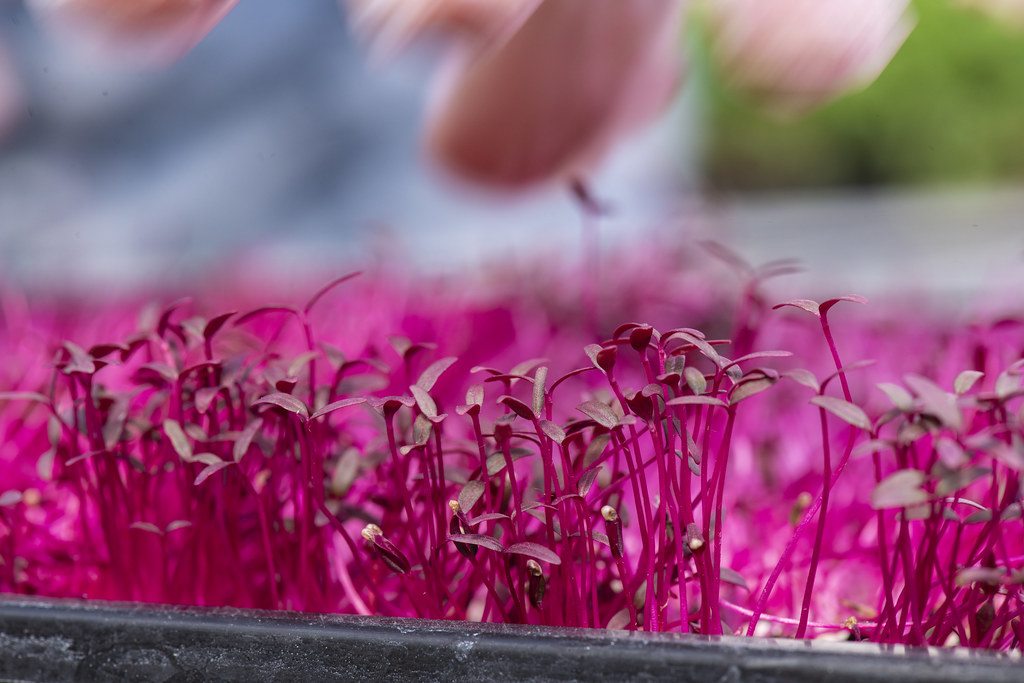
When buying fresh bulk microgreens, choose a supplier that can clearly identify the crop and product format, confirm pack specifications and harvest or pack timing, explain refrigerated handling, and provide usable lot information. Before committing to recurring orders, test an actual delivery using your normal receiving, storage, and service process.
Fresh microgreens can deteriorate quickly after harvest, so refrigeration, packaging, handling, and delivery reliability matter. But visual freshness checks have limits: crisp greens, clean packaging, and a normal smell are useful quality indicators, not proof that a product is free of pathogens. FDA guidance and microgreen food-safety research support a preventive, traceable farm-to-fork approach.
Bulk Microgreens Buying Checklist at a Glance
| Procurement area | Questions to answer | Records or information to request | Receiving checks | Potential red flags |
|---|---|---|---|---|
| Product specification | What crop, format, and pack size are being sold? | Product specification, purchase order, case label | Product matches the order | Vague product identity or unclear weights |
| Freshness | When was it harvested and packed? | Harvest date, pack date, quality window | Crisp condition; no major deterioration | Significant wilt, slime, mold, decay, or excess free moisture |
| Cold chain | How was it cooled and transported? | Storage instructions, delivery procedure, temperature-handling process | Product arrives according to the agreed refrigerated specification | Warm product, damaged packs, unexplained delay |
| Traceability | Can the shipment be connected to its supplier and lot? | Supplier identity, invoice, lot or batch code | Label information is legible and matches records | Missing or mismatched lot information |
| Food safety | What preventive practices and records does the supplier maintain? | Relevant food-safety practices, training, audit, certification, or testing information | Required receiving documentation is complete | Unsupported marketing claims or no clear issue-contact process |
| Commercial fit | Can the supplier meet your format and schedule needs? | Delivery calendar, pack configuration, substitution policy | Correct quantity arrives in the agreed window | Repeated shortages, substitutions, or late deliveries |
This is a practical purchasing framework, not a universal legal compliance checklist. Requirements may vary by product form, location, buyer program, supplier operation, and applicable food-code rules.
1. Specify Exactly What You Are Buying
Confirm the crop, variety, and product format
“Microgreens” is a broad buying term, not a complete specification. A buyer should identify the crop and format rather than assume all products sold near the microgreens category perform the same way in storage, on the plate, or in retail display.
Specify:
- Common crop name, such as radish, broccoli, mustard, arugula, or basil
- Variety or cultivar, when relevant to flavor, color, or menu consistency
- Cut microgreens or living product sold with roots and growing medium attached
- Whether the item is a microgreen, pea shoot, sunflower green, tendril, or mixed pack
- Intended application, such as garnish, salad, sandwich, bowl, juice, catering, meal preparation, or retail sale
Pea shoots, sunflower greens, tendrils, and living trays may be marketed alongside microgreens, but buyers should treat them as distinct or adjacent crop formats unless the supplier’s specification says otherwise.
FDA guidance distinguishes microgreens from sprouts based on characteristics including growth stage, growing medium, and harvest method. Microgreens are generally grown in soil or another substrate and harvested above the substrate line, while sprouts are typically consumed with the seed, root, and shoot. Microgreens are not subject to the sprout-specific requirements in Subpart M of FDA’s Produce Safety Rule solely because they are microgreens, though other produce-safety requirements may apply depending on the operation and exemptions.
That regulatory distinction does not eliminate the need for supplier controls, refrigerated handling, and traceability.
Define the pack specification
Before ordering, document what a pack, case, or delivery unit actually includes. A phrase such as “one box of microgreens” is not enough for a food-service buyer, retailer, or caterer trying to forecast yield and manage waste.
Ask the supplier to specify:
- Net weight per package
- Number of packages per case
- Total case weight
- Fixed net weight or approximate farm-packed weight
- Package and case dimensions
- Retail-ready or food-service packaging
- Packaging material
- Cut or living format
- Required label information
- Lot or batch code
- Substitution policy
The purchase order, order confirmation, or product specification sheet should make these terms clear. If a listed crop is unavailable, determine whether the supplier will contact you before making a substitution, offer an agreed alternative, or omit the item.
Clear product, supplier, lot, and pack identification are sensible wholesale purchasing controls. NC State Extension’s wholesale buyer guidance recommends communicating these expectations clearly.
Confirm harvest, pack, and delivery timing
Ask for:
- Harvest date
- Pack date
- Order cutoff time
- Expected delivery day and receiving window
- Typical harvest-to-delivery timing
- Supplier-recommended storage conditions
- Expected quality window or use-by guidance
A harvest date and a pack date answer different questions. The harvest date indicates when the crop was cut; the pack date indicates when it entered its final package. Both can help buyers assess freshness and plan inventory rotation.
Neither date proves that a product is safe or guarantees a certain amount of shelf life. Fresh microgreen quality depends on crop type, harvest maturity, packaging, temperature, handling, and time in distribution. Research on individual crops consistently shows that storage conditions matter, but it does not support a universal claim such as “all microgreens last one week.” A review of microgreen nutrition, food safety, and shelf life and crop-specific postharvest studies support asking each supplier for a realistic, product-specific quality window.
2. Vet the Supplier Before the First Order
Request a product specification sheet
A formal specification sheet is useful, but it does not need to look identical for every supplier. A small local farm may use a simpler document or provide the same information through a consistent order guide and invoice process.
The important question is whether the supplier can communicate the information your operation needs.
Useful fields include:
- Crop and variety
- Product format
- Net weight and case configuration
- Packaging type
- Storage instructions
- Typical harvest and pack schedule
- Farm or production location
- Country of origin, when relevant
- Quality-complaint contact
- Recall or withdrawal contact
- Ingredient or allergen information, when applicable
- Delivery and receiving instructions
A supplier that cannot consistently identify the product, lot, delivery terms, or contact person for a problem may be difficult to manage as volume grows.
Ask about food-safety controls
Food-safety prevention for fresh microgreens is a farm-to-fork issue. Potential control points can include production inputs, water, growing media, employee hygiene, harvest practices, equipment sanitation, packaging, storage, and transportation. A peer-reviewed review of microgreen food-safety considerations found that the evidence base is still limited but identified important prevention opportunities throughout production and distribution. Riggio and colleagues’ review provides additional context.
Depending on your operation’s size and requirements, ask about:
- Worker hygiene and training
- Harvest and packing practices
- Equipment and surface sanitation
- Water management
- Growing-medium or substrate practices
- Storage and packaging areas
- Pest-management practices
- Product-hold procedures
- Complaint, withdrawal, and recall procedures
- Relevant GAP, GHP, audit, or certification information
- Microbial, water, or environmental testing programs
- The scope and date of any audit or testing program
The appropriate documentation level may differ between a restaurant buying directly from a local grower and a retailer supplied through a distributor. Do not assume every farm must hold the same audit or certification.
Likewise, do not treat an audit, certification, or testing program as proof that every package is pathogen-free. These materials may indicate that controls exist, but they do not eliminate risk.
Verify marketing claims
Marketing language should lead to follow-up questions, not assumptions.
| Supplier claim | Buyer follow-up question |
|---|---|
| Organic | Which certification or documentation supports this claim? |
| Third-party tested | What was tested, how often, and what does the result represent? |
| Local | Where is the farm located, and what route does the product travel? |
| Farm-direct | Who grows, packs, and delivers the product? |
| Fresh-cut | When is the crop generally harvested and packed? |
| Sustainable packaging | What material is used, and how should it be handled after use? |
“Organic” should not be treated as synonymous with pathogen-free or automatically safer. USDA organic certification concerns compliance with organic production and handling standards; it is not a food-safety guarantee. USDA Agricultural Marketing Service guidance explains the certification framework.
Similarly, a “third-party tested” claim needs context. Ask whether the statement refers to finished product, water, environmental swabs, production inputs, or another part of the operation. Ask about testing frequency and how the supplier responds to an out-of-specification result.
3. Evaluate Freshness and Quality at Receiving
Create a written receiving specification before the first delivery. It should define which conditions lead to acceptance, a hold for review, supplier contact, or rejection.
Receiving checklist
At delivery, inspect and record:
- Product condition against the agreed temperature specification
- Packaging integrity
- Clean, intact, nonleaking packages
- Product and quantity against the purchase order
- Legible lot or batch information
- Harvest or pack date, when provided
- Crispness and hydration
- Visible mold, slime, or decay
- Severe yellowing or browning
- Pest or foreign-material concerns
- Strong or unusual odors
- Excess free water
- Evidence of crushing or rough handling
- Remaining quality window
A small amount of moisture or condensation may occur depending on the crop and package design. The relevant question is whether moisture is excessive for the agreed specification or is associated with leakage, deterioration, or shortened usability.
Conditions that may justify holding or rejecting a shipment
Under an agreed buyer-supplier specification, consider holding the product for review, documenting the issue, or rejecting the shipment when there is:
- Warm product or an unexplained temperature excursion
- Crushed, open, leaking, or contaminated packaging
- Missing or illegible lot information
- Mismatched product, pack size, or quantity
- Significant wilt
- Mold, slime, or decay
- Strong off odors
- Product outside the agreed quality window
- Missing documentation required by the buyer’s food-safety program
Photograph affected packages and retain the lot code, invoice, delivery date, observed condition, and disposition. Clear records help resolve a supplier complaint and identify patterns over time.
Why appearance is not a food-safety test
Fresh produce can look and smell normal even when it presents a food-safety concern. FDA notes that washing can reduce bacteria on produce but does not eliminate all contamination. FDA’s produce-safety guidance is clear that normal appearance should not substitute for preventive controls and safe handling.
Laboratory research has also shown that inoculated Salmonella can survive and grow under certain experimental microgreen-production conditions. This is controlled challenge research, not evidence that commercially sold microgreens are routinely contaminated. Its practical implication is that prevention should address the production and handling system rather than depend only on final visual inspection. The full study is available through PubMed Central.
4. Protect the Cold Chain From Delivery to Service
Storage temperature is a major driver of microgreen quality and shelf life. Packaging and handling also affect moisture loss, sensory quality, and deterioration. However, the best storage conditions can vary by crop, package, and supply chain.
Studies involving radish, mustard, and Tartary buckwheat microgreens demonstrate why a single universal storage temperature is not appropriate for every product. Radish microgreen research, mustard microgreen research, and Tartary buckwheat microgreen research all support product-specific handling decisions.
Questions to ask the supplier
Before starting a recurring order, ask:
- Is the product cooled after harvest?
- What storage temperature does the supplier specify for each crop and package?
- How soon after harvest is the product packed?
- Is delivery refrigerated or otherwise temperature controlled?
- Is temperature monitored during storage or transit?
- Are temperature records available for the account type?
- What happens if a delivery is delayed?
- What is the supplier’s procedure for a temperature excursion?
- Who handles quality complaints?
- How are shortages, substitutions, credits, or replacements addressed?
Not every supplier will provide continuous temperature data for every account. The appropriate documentation level should match the buyer’s volume, food-safety program, and contract terms.
Receiving and storage practices for buyers
After delivery:
- Move the product into appropriate refrigeration promptly.
- Use a calibrated thermometer and your facility’s documented receiving procedure.
- Record product condition or temperature observations according to your operation’s program.
- Keep microgreens away from raw meat, poultry, seafood, leaks, and other cross-contamination sources.
- Store packages so they are not crushed, and follow package- and supplier-specific guidance about spacing or air circulation.
- Use first-expire, first-out inventory rotation.
- Record opening dates where appropriate.
- Follow the supplier’s product-specific storage instructions and applicable local requirements.
- Track quality loss and usable yield, not only the date of delivery.
Refrigeration can slow quality deterioration, but it does not sterilize food or erase prior temperature abuse.
Understanding the 40°F and 41°F references
FDA consumer guidance recommends storing perishable fresh fruits and vegetables in a clean refrigerator at 40°F or below. FDA’s produce guidance provides that recommendation.
For food establishments, FDA guidance on cut leafy greens uses 41°F (5°C) or below for receiving and cold holding. FDA’s cut leafy greens temperature guidance and the FDA Food Code provide relevant food-service context.
However, buyers should not automatically present the 41°F cut-leafy-greens benchmark as a universal legal classification or receiving requirement for every harvested microgreen. Product classification, local code adoption, and supplier instructions matter.
A practical buyer approach is to:
- Follow the supplier’s crop- and package-specific storage instructions.
- Maintain a documented refrigerated receiving and storage process.
- Use applicable local food-code requirements.
- Investigate shipments that arrive warm, damaged, leaking, or otherwise outside the agreed specification.
- Avoid applying one study temperature to every crop and pack format.
5. Build Traceability Into the Purchase Order
Traceability does not need to be complicated to be useful. The goal is to identify what was received, from whom, when it arrived, which lot it came from, and where it was used or distributed.
Minimum receiving record
For each delivery, retain:
- Supplier name and contact information
- Farm or production location, if supplied
- Product name
- Variety, when relevant
- Product format
- Pack size and quantity
- Lot or batch code
- Harvest date, if supplied
- Pack date, if supplied
- Date and time received
- Receiving temperature or condition observation
- Invoice or purchase-order number
- Receiving employee
- Disposition, such as accepted, held, rejected, returned, used, or distributed
If a product is divided among departments, stores, customers, or event locations, record where each lot went.
University Extension resources recommend clear package identification and records that can connect production, harvest, and delivery. See NC State Extension’s wholesale buyer guide and University of Nevada Extension’s microgreens produce-safety resource.
Why traceability matters
Clear records can help a buyer:
- Identify affected inventory
- Contact the appropriate supplier quickly
- Investigate quality complaints
- Support a withdrawal or recall
- Determine which location, department, or customer received a lot
- Compare supplier performance over time
These records are practical operational controls even when a buyer is not certain that a particular product falls under enhanced federal traceability requirements.
Regulatory note
FDA’s Food Traceability Rule applies based on the exact food, form, applicable exemptions, and regulatory circumstances. Buyers should not assume that every microgreen product is automatically covered, and they should not assume that ordinary traceability practices are unnecessary.
Congress directed FDA not to enforce the Food Traceability Rule before July 20, 2028, and FDA states that it intends to comply with that direction. FDA’s current rule page provides the current status. The Food Traceability List and FDA’s traceability-rule FAQs provide further detail.
This is not a state-specific or operation-specific legal compliance guide. Businesses with questions about a particular product, facility, or transaction should consult the applicable regulator or qualified food-safety counsel.
6. Compare Suppliers Using a Pilot Order
Start with a realistic initial order
A first order should test real operating performance, not just a sales sample or conversation.
Order an amount that reflects realistic near-term use without creating more inventory than your operation can properly receive, refrigerate, and use. There is no universal pilot-order quantity because needs vary by crop, pack size, menu demand, retail turnover, delivery schedule, and expected prep loss.
During the pilot, assess:
- Whether the ordered crop and format arrive as specified
- Whether pack weights and case configurations are accurate
- Whether delivery occurs in the agreed window
- Whether the product arrives according to the refrigerated specification
- How much product is usable after sorting or preparation
- Whether packaging protects the greens
- How the product performs in your actual storage environment
- How promptly the supplier responds to questions or problems
Supplier scorecard
Score suppliers using the same criteria for every delivery. A 1-to-5 scale is often enough to make patterns visible.
| Category | What to measure |
|---|---|
| Crop accuracy | Correct crop, variety, format, and quantity |
| Quality consistency | Appearance, texture, flavor, and condition across deliveries |
| Pack accuracy | Actual net weight and case configuration |
| Harvest or pack transparency | Availability and clarity of timing information |
| Remaining quality window | Usable time after receipt under your conditions |
| Delivery reliability | On-time arrival and complete order |
| Temperature condition | Receiving observations and evidence of proper handling |
| Packaging performance | Protection, labeling, leakage, and moisture management |
| Traceability | Lot codes, invoices, and supplier records |
| Usable yield | Product remaining after sorting or preparation |
| Responsiveness | Speed and usefulness of issue resolution |
| Commercial fit | Ability to meet your schedule, format, and communication needs |
Do not evaluate solely by cost per ounce. A lower price may not be the better value if the product creates more waste, arrives inconsistently, or requires emergency replacement purchases.
Review several real deliveries before making a long-term decision. One successful shipment does not establish consistent performance, and one poor shipment may warrant investigation before ending a relationship.
7. Adjust the Checklist by Buyer Type
Restaurants
Restaurants should prioritize:
- Crop and flavor consistency
- Plate appearance
- Delivery timing
- Pack accuracy
- Prep loss
- Remaining quality window
- Communication about shortages or substitutions
- Lot information for each delivery
A restaurant may need smaller or more frequent deliveries than a retailer, but this is an operational arrangement to negotiate directly with the supplier rather than assume as a standard wholesale term.
Retailers
Retail buyers should focus on:
- Retail-ready packaging
- Labeling and coding
- Net-weight accuracy
- Display-life expectations
- Shrink and unsold inventory
- Replenishment schedule
- Lot traceability
- Packaging durability during display and customer handling
Ask how the supplier defines the product’s quality window in a retail display environment, not just when it leaves the farm or distribution site.
Caterers and meal-prep operators
Caterers and meal-prep businesses should emphasize:
- Delivery timing
- Event-day or production-day quality
- Batch traceability
- Forecast accuracy
- Consistent pack quantities
- Product performance after preparation
- Contingency plans for delayed or short deliveries
A product that is acceptable for routine restaurant service may be less useful for a large event if it arrives too close to service to allow inspection, replacement, or preparation.
Frequently Asked Questions
Research & Further Reading
Government and Regulatory Sources
U.S. Food and Drug Administration. Selecting and Serving Produce Safely. https://www.fda.gov/food/buy-store-serve-safe-food/selecting-and-serving-produce-safely
U.S. Food and Drug Administration. Compliance with the Regulation on Production, Collection, and Hold of Produce for Human Consumption: What You Need to Know About the Food Safety Modernization Act Final Rule on Sprouts. https://www.fda.gov/media/102430/download
U.S. Food and Drug Administration. Program Information Manual: Recommendations for the Temperature Control of Cut Leafy Greens During Storage and Display in Retail Food Establishments. https://www.fda.gov/food/retail-food-industryregulatory-assistance-training/program-information-manual-retail-food-protection-recommendations-temperature-control-cut-leafy
U.S. Food and Drug Administration. FDA Food Code. https://www.fda.gov/food/retail-food-protection/fda-food-code
U.S. Food and Drug Administration. FSMA Final Rule on Requirements for Additional Traceability Records for Certain Foods. https://www.fda.gov/food/food-safety-modernization-act-fsma/fsma-final-rule-requirements-additional-traceability-records-certain-foods
U.S. Food and Drug Administration. Food Traceability List. https://www.fda.gov/food/food-safety-modernization-act-fsma/food-traceability-list
U.S. Food and Drug Administration. Frequently Asked Questions: FSMA Food Traceability Rule. https://www.fda.gov/food/food-safety-modernization-act-fsma/frequently-asked-questions-fsma-food-traceability-rule
U.S. Department of Agriculture, Agricultural Marketing Service. Organic Certification. https://www.ams.usda.gov/services/organic-certification/certification
Peer-Reviewed Research
Turner ER, Luo Y, Buchanan RL. Microgreen nutrition, food safety, and shelf life: A review. https://pubmed.ncbi.nlm.nih.gov/32144769/
Riggio GM, Wang Q, Kniel KE, Gibson KE. Microgreens—A review of food safety considerations along the farm to fork continuum. https://pubmed.ncbi.nlm.nih.gov/30308448/
Xiao Z, Luo Y, Lester GE, Kou L, Yang T, Wang Q. Postharvest quality and shelf life of radish microgreens as impacted by storage temperature, packaging film, and chlorine wash treatment. https://doi.org/10.1016/j.lwt.2013.09.009
Effect of Storage Temperature on Storage Life and Sensory Attributes of Packaged Mustard Microgreens. https://pmc.ncbi.nlm.nih.gov/articles/PMC9966302/
Effects of Storage Temperature, Packaging Material and Wash Treatment on Quality and Shelf Life of Tartary Buckwheat Microgreens. https://pmc.ncbi.nlm.nih.gov/articles/PMC9689458/
Postharvest Quality of Arugula (Eruca sativa) Microgreens Determined by Microbiological, Physico-Chemical, and Sensory Parameters. https://pmc.ncbi.nlm.nih.gov/articles/PMC11476110/
Plant-Microbe and Abiotic Factors Influencing Salmonella Survival and Growth on Alfalfa Sprouts and Swiss Chard Microgreens. https://pmc.ncbi.nlm.nih.gov/articles/PMC5930314/
University and Extension Sources
University of Nevada, Reno Extension / Desert Farming Initiative. Microgreens and Produce Safety. https://naes.agnt.unr.edu/PMS/Pubs/2020-3468.pdf
NC State Extension. Buying Local: A Guide for Retail and Wholesale Buyers. https://content.ces.ncsu.edu/buying-local-a-guide-for-retail-and-wholesale-buyers
Penn State Extension. The ABCs of Microgreens. https://extension.psu.edu/the-abcs-of-microgreens
Company/Product Information — Not Scientific Evidence
Andi’s Way. Fresh Organic Microgreens collection. This page provides company and product-category information only; it is not evidence for nutrition, food safety, cold-chain performance, wholesale terms, or supplier quality. https://andisway.com/collections/microgreens
Related guides
Buy Fresh Microgreens or Grow Your Own? Cost, Time, Shelf Life, and Control
Buying fresh microgreens is usually the simpler choice when you want greens soon, prefer predictable portions, and do not want to manage a growing routine. Growing your own may be worthwhile if you eat microgreens regularly, can plan ahead for a crop cycle, and value choosing the varieties and harvest timing yourself.
16 min read

Fresh Wheatgrass Storage and Shelf Life: How Long It Lasts and How to Store It
Plan for about 7–10 days of refrigerated storage for fresh-cut wheatgrass when it arrives cold and remains properly refrigerated. This is a planning range, not a universal safety guarantee.
10 min read

How to Store Sunflower Microgreens After Harvest
Learn how to store sunflower microgreens after harvest, including refrigerator temperature, washing guidance, moisture control, food safety, and realistic shelf-life expectations.
10 min read
Stay in the loop
New guides, when they publish
An occasional email when a new guide goes live. No spam.
Your email is stored privately for future guide updates. No emails are being sent yet. Privacy policy