Food Safety · Wheatgrass Safety, Testing, and Buying
How Wheatgrass Is Tested for Mold, Yeast, and Microbes
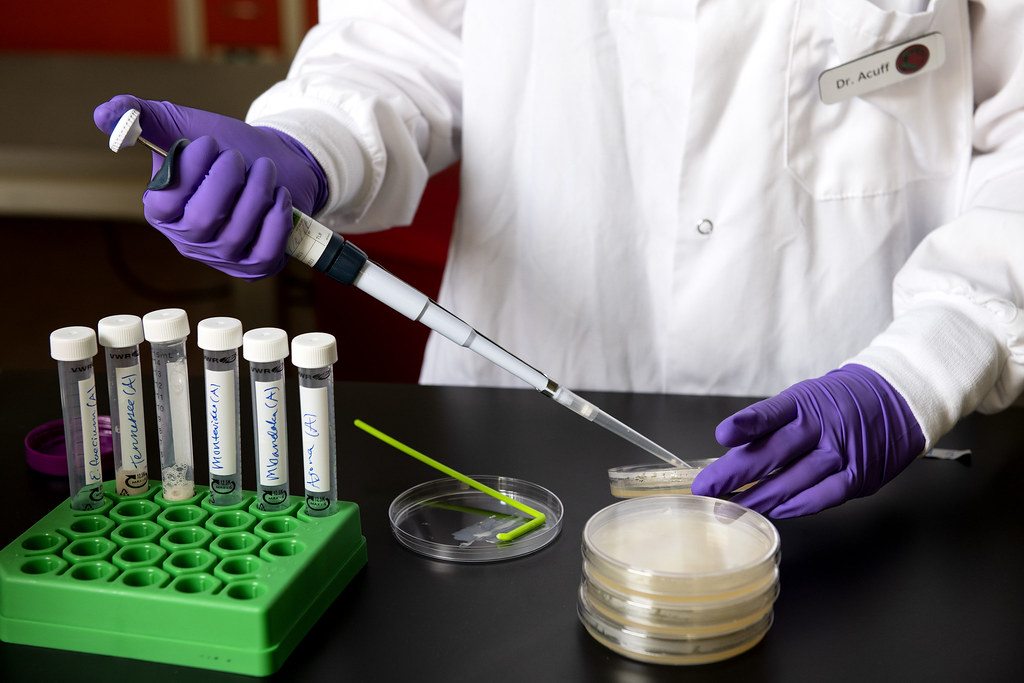
When a wheatgrass product is tested for microbial quality, a representative sample of fresh grass, juice, frozen juice, or powder is sent to a food laboratory. The laboratory may use several different tests: broad microbial counts such as an aerobic plate count and yeast-and-mold count; hygiene indicators such as coliforms or generic E. coli; and targeted tests for pathogens such as Salmonella.

These tests do not produce one universal “food-safety score.” Each answers a different question. A favorable result is useful evidence about the sample tested and the sampling plan behind it, but it cannot prove that every blade, bottle, or package in an entire production lot is free of microorganisms. Testing is most meaningful as part of a larger preventive system that includes water controls, sanitation, employee hygiene, equipment maintenance, traceability, and corrective actions. FDA’s Bacteriological Analytical Manual (BAM) includes separate methods for these different microbiological questions.
What Microbial Testing for Wheatgrass Measures
Yeast and mold: spoilage and quality indicators
A yeast-and-mold test estimates the number of yeasts and molds able to grow under the conditions of a specified laboratory method. Results are commonly reported as colony-forming units per gram or milliliter: CFU/g or CFU/mL.
Yeasts and molds can contribute to food deterioration, so these counts may be used to monitor product quality, handling, sanitation, and consistency over time. The FDA’s food microbiology methods include procedures for enumerating yeasts and molds in foods. (FDA BAM Chapter 18: Yeasts, Molds and Mycotoxins)
A yeast-and-mold result has important limits:
- It does not ordinarily identify every fungal species in the sample.
- It does not determine the cause of a specific product-quality problem.
- It does not test for bacterial pathogens.
- It is not automatically “good” or “bad” without the product’s test method, handling conditions, unit of measurement, and acceptance specification.
Fresh wheatgrass, refrigerated juice, frozen juice, powders, and tablets are different product matrices. A yeast-and-mold count from one format should not automatically be compared with a count from another.
Aerobic plate count: broad microbial load
An aerobic plate count (APC) estimates the level of aerobic microorganisms recoverable under the conditions of the laboratory method. It is a broad measure of microorganisms capable of growing on the selected culture medium under defined incubation conditions—not a complete inventory of every microorganism in the food. (FDA BAM Chapter 3: Aerobic Plate Count)
APC can be useful for quality monitoring and sanitation trending. For example, an unexpected increase may prompt a facility to review water management, equipment cleaning, employee handling, or storage conditions.
However, APC is not a pathogen test. A low APC does not establish that Salmonella, Listeria monocytogenes, or pathogenic E. coli are absent. Those organisms require targeted methods. FDA juice guidance also makes clear that a general reduction in plate count is not a substitute for controls directed at the relevant pathogen. (FDA Juice HACCP Hazards and Controls Guidance)
| Result category | What it can help indicate | What it cannot establish by itself |
|---|---|---|
| Aerobic plate count | Broad aerobic microbial level under the stated method | Whether a specific pathogen is present or absent |
| Yeast-and-mold count | Spoilage-related quality information | Every fungal species present or mycotoxin status |
| Coliforms or generic E. coli | Possible sanitation or hygiene concerns that may need investigation | The identity of a particular pathogen |
| Targeted pathogen assay | Whether the named organism was found in the stated test portion | Absolute absence from every item in an entire lot |
Coliforms and generic E. coli: hygiene indicators
Coliforms are a broad group of bacteria that can be used as indicators of general sanitary conditions. A coliform result alone does not mean that harmful bacteria are present, and it should not automatically be treated as proof of fecal contamination. (FDA BAM Chapter 4: Enumeration of Escherichia coli and the Coliform Bacteria)
Generic E. coli is a more specific indicator organism. Depending on the product and circumstances, its presence may suggest recent fecal contamination or unsanitary processing conditions that warrant investigation. But generic E. coli is not automatically a pathogenic strain and is not the same as a targeted test for Shiga toxin-producing E. coli or another pathogenic E. coli group. (FDA BAM Chapter 4)
Targeted pathogens: Salmonella, Listeria, and pathogenic E. coli
Targeted pathogen testing is designed to detect a named organism using a method appropriate to that organism and food matrix. A wheatgrass testing plan may include Salmonella and, depending on the product, process, facility environment, and hazard analysis, may also consider Listeria monocytogenes or pathogenic E. coli.
General counts cannot substitute for these targeted assays. FDA maintains separate methods for detecting Salmonella and Listeria monocytogenes, reflecting the fact that pathogen testing requires organism-specific procedures. (FDA BAM Chapter 5: Salmonella; FDA BAM Chapter 10: Detection and Enumeration of Listeria monocytogenes)
Not every wheatgrass producer uses the same testing panel. An appropriate panel may depend on:
- Whether the product is fresh grass, juice, frozen juice, powder, or another format
- Whether it is raw, treated, or otherwise processed
- Water sources and growing conditions
- Equipment and processing-environment risks
- Storage and distribution conditions
- The facility’s food-safety plan and hazard analysis
How Food Laboratories Test Wheatgrass and Wheatgrass Juice
Representative sampling and lot identification
Laboratory testing begins with the sample and the sampling plan. The laboratory should know whether it is testing fresh-cut wheatgrass, newly pressed juice, frozen juice, or powder, and the sample should be connected to a defined production lot or batch.
Sampling matters because foodborne microorganisms may not be evenly distributed throughout a lot. A microbe can be present in one part of a batch but absent from the portion selected for testing. No finite sampling plan can prove that every unit in a larger lot lacks an organism. (USDA Agricultural Research Service: Statistics of Sampling for Microbiological Testing of Foodborne Pathogens)
The confidence supplied by a favorable result depends not only on the result itself, but also on the sampling plan, sample size, tested portion, method, and lot linkage.
Culture-based count tests and CFU results
For APC and yeast-and-mold testing, laboratories commonly use culture-based methods. In general, the laboratory prepares and dilutes a sample, places it on or into suitable growth media, incubates it under defined conditions, and counts colonies that grow. (FDA BAM Chapter 3; FDA BAM Chapter 18)
Results are often expressed as:
- CFU/g: colony-forming units per gram
- CFU/mL: colony-forming units per milliliter
A colony-forming unit is a practical culture-based measure. It may represent a single organism or a small cluster of organisms capable of forming a visible colony under the test conditions.
A CFU value is not a universal safety verdict. It needs to be interpreted alongside the tested product format, unit, method, reporting limit, and the manufacturer’s applicable specification.
Pathogen detection, enrichment, and confirmation
Pathogen testing differs from a basic count test. A pathogen may be present at a low level among many other microorganisms, so laboratories may use enrichment, isolation, screening, and confirmation steps to improve the likelihood of detecting the target organism.
Results are often reported as detected or not detected in a defined test portion. The exact workflow, test portion, and report format can vary by laboratory and validated method. (FDA BAM Chapter 5: Salmonella)
Rapid molecular methods
Some laboratories use validated molecular methods to support faster screening or confirmation. These methods can detect genetic material associated with a target organism, rather than relying solely on colonies visible on culture media.
The term “rapid” does not mean a method is automatically appropriate for every product. Validation matters because the food matrix, sample preparation, detection limit, intended use, confirmation procedure, and target organism can affect test performance. (FDA: Guidelines for the Validation of Microbiological Methods for the FDA Foods Program)
Where Microbial Controls and Verification May Occur
Finished-product testing is one checkpoint, not the entire food-safety system. A risk-based program may evaluate and verify controls at multiple stages.
Water, growing inputs, and growing conditions
Water that contacts produce can be an important microbial-control point. Depending on how wheatgrass is grown, harvested, rinsed, or processed, water may contact the crop or food-contact surfaces at multiple stages. (FDA: Guide to Minimize Microbial Food Safety Hazards for Fresh Fruits and Vegetables)
For farms covered by applicable FDA Produce Safety Rule provisions, certain harvest and post-harvest agricultural-water requirements include no detectable generic E. coli in 100 mL. Applicability, exemptions, water use, and other regulatory details matter, so this should not be treated as a universal requirement for every wheatgrass operation. (FDA: Requirements for Harvest and Post-Harvest Agricultural Water in Subpart E)
Wheatgrass should not automatically be treated as interchangeable with edible sprouts. The products can share some growing-stage considerations, but they are distinct food categories.
Harvest and juicing equipment
Food-contact equipment can transfer microorganisms if sanitation and handling controls fail. Harvest tools, cutting surfaces, juicers, containers, transfer lines, and packaging equipment may all be relevant within a preventive food-safety system.
The appropriate sanitation procedures and verification steps vary by facility. The central principle is that equipment controls should complement—not be replaced by—finished-product testing.
Environmental swabbing
Depending on a facility’s process and risk assessment, environmental swabbing can help monitor sanitation and processing-environment conditions. Swabs may be collected from appropriate food-contact or non-food-contact surfaces to investigate potential concerns and verify that sanitation measures are working as intended. (FDA: Environmental Sampling)
An environmental monitoring program is not a universal checklist. The locations, organisms, frequency, and corrective actions should be appropriate to the facility, product, equipment, and hazard analysis.
Finished-product testing and traceability
Testing finished wheatgrass, juice, frozen juice, or powder can provide a useful verification check within a broader control program. A result is most useful when it can be linked to a defined production lot, date, product format, and applicable specification.
Traceability supports a facility’s ability to investigate a result that falls outside expectations and to take appropriate corrective action.
How to Read a Wheatgrass Microbiology Report
A microbiology report or certificate of analysis is easier to interpret when it contains more than a statement such as “passed” or “third-party tested.”
CFU/g and CFU/mL
Start with the unit. Fresh grass may be reported in CFU/g, while liquid juice is often reported in CFU/mL. Powder may have a different test matrix, method, and specification than fresh or frozen wheatgrass products.
Do not compare results across formats without understanding the method and applicable acceptance criteria.
Detected, not detected, and the test portion
“Not detected” does not mean sterile. It means the laboratory did not find the target organism in the tested portion under the stated method.
For a pathogen result, useful questions include:
- What organism was tested?
- What amount of product was tested?
- Which method was used?
- Was a detection or reporting limit provided?
- Which production lot did the sample represent?
A “not detected” result is meaningful evidence about the tested sample. It is not a guarantee that zero organisms exist throughout every unit in the entire lot.
Information that makes a report easier to interpret
A useful report commonly identifies:
- Product name and format
- Production lot or batch number
- Sample collection date or report date
- Analyte tested
- Test method
- Sample size or test portion
- Result and unit
- Detection or reporting limit, when relevant
- Acceptance specification or pass/fail criterion
- Laboratory identity
These fields are not a universal legal report template. They are the details that help a buyer understand what was tested and what the result actually means.
Why one count is not automatically a pass or fail
This research did not identify a universal FDA finished-product microbial specification unique to all wheatgrass formats.
That does not mean microbial quality is unimportant. It means there is no responsible one-size-fits-all cutoff that can be applied automatically to fresh wheatgrass, raw juice, frozen juice, powders, and tablets. A meaningful specification should account for the product type, test method, unit, processing conditions, intended storage, and food-safety plan.
What Yeast-and-Mold Results Can—and Cannot—Tell You
What a low result may indicate
A lower yeast-and-mold count may be useful quality information for the tested sample when compared with the relevant product specification. It may also help a company trend the consistency of sanitation, handling, storage, and production controls.
A low yeast-and-mold result does not establish that pathogens are absent, nor does it prove that every portion of a lot has identical microbial conditions.
Why a routine count does not identify every fungus
A culture-based yeast-and-mold count is not ordinarily a full fungal identification profile. It measures organisms capable of growing under the selected method—not every organism that might theoretically be present.
It is not appropriate to infer a specific mold species, toxin, or health outcome from a routine count alone.
Why yeast-and-mold testing is not mycotoxin testing
A yeast-and-mold count and a mycotoxin analysis answer different questions.
Mycotoxins are chemical compounds produced by certain fungi. Their analysis requires separate analytical approaches from routine culture-based yeast-and-mold enumeration. A low yeast-and-mold count does not prove mycotoxins are absent, and a mold result should not automatically be treated as evidence of mycotoxin exposure. (FDA: Mycotoxins)
This article focuses on living microorganisms and spoilage testing, not pesticides, heavy metals, fertilizers, or other chemical contaminants.
Why Finished-Product Testing Is Not Enough
Microorganisms can be unevenly distributed in food, and a laboratory can only test the sample it receives. That is why finished-product testing should be viewed as one part of a preventive system rather than a stand-alone guarantee.
Important controls may include:
- Water quality and water-system management
- Cleanable equipment and appropriate sanitation procedures
- Employee hygiene and training
- Protection from contamination during harvest and processing
- Environmental monitoring where appropriate
- Lot traceability and corrective-action procedures
Testing can help verify elements of this system, but it cannot fully replace prevention.
Raw juice context
Raw or untreated juice has food-safety considerations because bacteria on raw produce can enter juice during processing. FDA identifies pregnant people, young children, older adults, and people with weakened immune systems as groups who should take particular care with untreated juice. (FDA: What You Need to Know About Juice Safety)
This does not mean raw wheatgrass juice is inherently unsafe. Treatment status, handling, storage, preventive controls, and individual vulnerability all matter.
Questions to Ask a Wheatgrass Seller About Testing
If a company says its wheatgrass is “third-party tested,” these questions can help clarify what that statement means:
- Which microorganisms does the company test for?
- Does the panel include aerobic plate count, yeast and mold, coliforms, generic E. coli, or targeted pathogens?
- Is the tested product fresh wheatgrass, juice, frozen juice, powder, or another format?
- Is testing performed on every lot, on a regular schedule, or periodically?
- Which laboratory method is used?
- What sample size or test portion was analyzed?
- What does “not detected” mean under that method?
- What acceptance criteria or internal specification applies?
- Can the seller provide a current, lot-specific laboratory report or COA?
- What water, sanitation, environmental-monitoring, traceability, and corrective-action controls support finished-product testing?
Not every seller will publicly disclose every operational detail. Still, these questions can help distinguish a broad marketing statement from a specific testing and preventive-control program.
Frequently asked questions
Sources & further reading
- U.S. Food and Drug Administration — Bacteriological Analytical Manual (BAM)government
- U.S. Food and Drug Administration — BAM Chapter 3: Aerobic Plate Countgovernment
- U.S. Food and Drug Administration — BAM Chapter 4: Enumeration of Escherichia coli and the Coliform Bacteriagovernment
- U.S. Food and Drug Administration — BAM Chapter 5: Salmonellagovernment
- U.S. Food and Drug Administration — BAM Chapter 10: Detection and Enumeration of Listeria monocytogenes in Foods and Environmental Samplesgovernment
- U.S. Food and Drug Administration — BAM Chapter 18: Yeasts, Molds and Mycotoxinsgovernment
- U.S. Food and Drug Administration — Guidelines for the Validation of Microbiological Methods for the FDA Foods Programgovernment
- U.S. Food and Drug Administration — Juice HACCP Hazards and Controls Guidancegovernment
- U.S. Food and Drug Administration — Guide to Minimize Microbial Food Safety Hazards for Fresh Fruits and Vegetablesgovernment
- U.S. Food and Drug Administration — Environmental Samplinggovernment
- U.S. Food and Drug Administration — Requirements for Harvest and Post-Harvest Agricultural Water in Subpart E for Covered Produce Other than Sproutsgovernment
- U.S. Food and Drug Administration — What You Need to Know About Juice Safetygovernment
- U.S. Food and Drug Administration — Mycotoxinsgovernment
- U.S. Department of Agriculture, Agricultural Research Service — Statistics of Sampling for Microbiological Testing of Foodborne Pathogensgovernment
- Andi's Way — Frozen 2 oz Raw Wheatgrass Juice — company product information, not nutrition, medical, or food-safety evidence.other
- Andi's Way — Our Process — company process information.other
Related guides
Wheatgrass Food Safety Checklist: What to Look for Before Buying
Use this wheatgrass food safety checklist to compare fresh and frozen products, raw juice, storage, shipping, labels, testing claims, and recalls.
14 min read
Does Wheatgrass Grow Back After Cutting?
Wheatgrass can regrow after cutting if its base and roots remain healthy, but a second harvest is not guaranteed. Learn what affects wheatgrass regrowth.
14 min read
Wheatgrass Mold vs Root Hairs: How to Tell the Difference
White fuzz in a wheatgrass tray is not always mold. Learn how to spot normal root hairs, recognize likely mold, know when to discard a tray, and prevent recurrence.
13 min read
Stay in the loop
New guides, when they publish
An occasional email when a new guide goes live. No spam.
Your email is stored privately for future guide updates. No emails are being sent yet. Privacy policy