Food Safety · Safety, Testing, and Buying
How Wheatgrass Is Tested for Heavy Metals and Other Contaminants
Wheatgrass heavy metals testing can measure a defined list of contaminants in a specific sample of fresh grass, juice, frozen juice, or powder. But a “lab-tested” claim is meaningful only when the documentation shows what was tested, which product and lot were tested, the numerical results, and the laboratory’s reporting limits.
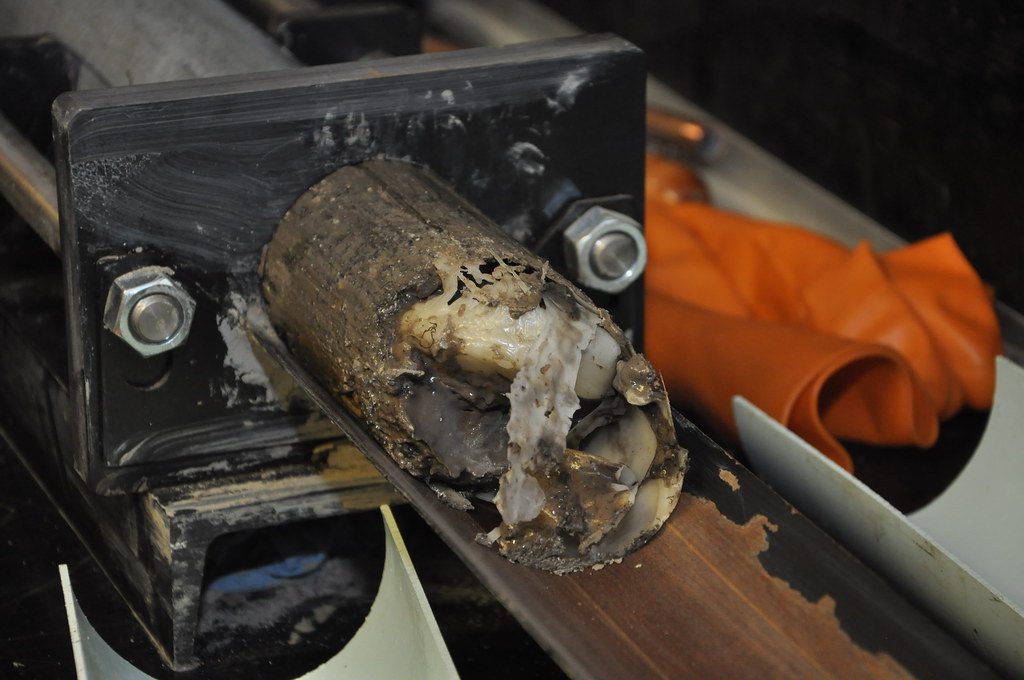
Heavy metals and pesticide residues require different laboratory methods and test panels. For elemental contaminants, a food laboratory may prepare a sample with acid digestion and measure specified elements using inductively coupled plasma–mass spectrometry (ICP-MS). Pesticide and herbicide testing is separate and should identify the individual compounds included in the test panel. (FDA Elemental Analysis Manual, Section 4.7 | FDA Total Diet Study: Analytical Methods)
The most useful documentation is a recent, lot-specific Certificate of Analysis (COA) or lab report. It should identify the product format, lot or batch, sample and report dates, analytes tested, results and units, method, detection or quantitation limits, laboratory, and the benchmark behind any “pass” result.
Why Wheatgrass May Be Evaluated for Metals and Chemical Residues
Wheatgrass is a young wheat plant. Like other crops, it may be evaluated in light of its growing and handling environment. Potential contamination pathways a producer may assess include:
- Soil, compost, or other growing media
- Irrigation water
- Agricultural inputs
- Environmental contamination near a growing area
- Pesticide drift from neighboring land
- Harvesting, processing, and handling conditions
These are potential exposure pathways—not evidence that a particular wheatgrass product contains contaminants.
Research involving wheat grown in contaminated soils shows that cadmium and lead can be taken up by the plant. In one experiment, wheat roots retained more of these elements than above-ground tissues, but some movement into shoots still occurred. (Liu et al., Journal of the Science of Food and Agriculture)
A separate study in a documented contaminated agricultural area in Xinjiang, China, also found that local soil, irrigation water, and crop conditions can influence trace-element exposure and uptake. Those regional findings should not be generalized to all wheat farms, much less all U.S. wheatgrass products. (Wang et al.)
This research supports the rationale for evaluating growing conditions and, where appropriate, testing harvested wheatgrass. It does not establish that commercially sold wheatgrass is routinely contaminated. The research reviewed for this guide did not identify nationally representative U.S. surveillance data for heavy metals or pesticide residues specifically in wheatgrass products.
Which Contaminants Can a Wheatgrass Testing Plan Cover?
A test report covers only the contaminants included in the requested panel. Terms such as “tested for toxins” or “lab tested” do not, by themselves, reveal what was measured.
Metals and toxic elements
In consumer discussions, arsenic, cadmium, lead, and mercury are often grouped as “heavy metals,” although arsenic is technically a metalloid.
A food elemental-analysis panel may include:
- Arsenic
- Cadmium
- Lead
- Mercury
Depending on the panel, a laboratory may also measure elements such as chromium, nickel, copper, manganese, selenium, or zinc. Consumers should confirm the analyte list rather than assume every panel includes the same elements. FDA’s food elemental method includes multiple elements, provided the method’s performance has been verified for the relevant food matrix. (FDA Elemental Analysis Manual, Section 4.7)
A report that simply says “heavy metals” without naming the tested elements provides limited information. A more useful report lists each analyte and its result.
Pesticides, herbicides, and other chemical residues
A metals panel does not automatically test for pesticides, herbicides, fungicides, or industrial chemicals.
Pesticide-residue testing uses different extraction and measurement methods from elemental testing. Food laboratories may use multi-residue approaches such as QuEChERS extraction followed by liquid chromatography–tandem mass spectrometry (LC-MS/MS) and/or gas chromatography–mass spectrometry methods. (FDA Total Diet Study: Analytical Methods)
A multi-residue pesticide panel may cover many compounds, but it is not necessarily universal. Some chemical groups, including acid herbicides, may require separate analytical methods. That is why the practical question is:
Pesticide tested for which compounds?
Ask for the analyte list and method scope instead of relying only on a general “pesticide tested” statement.
What this guide does not cover: microbial and mold testing
Testing for mold, yeast, bacteria, and pathogens is separate from metals and chemical-residue testing. A metals panel alone does not establish whether a product was tested for microbial concerns. A consolidated COA could include multiple testing categories, but each category should be clearly documented.
How Wheatgrass Heavy Metals Testing Works
Laboratories may use different validated workflows depending on the food format and requested analytes. Still, a typical elemental-analysis process has several basic stages.
Step 1: Define the product sample
The first question is: What exactly was tested?
A laboratory may receive:
- Fresh-cut wheatgrass
- Fresh wheatgrass juice
- Frozen wheatgrass juice
- Wheatgrass powder
A finished-product result is the most direct test record for the particular product format and lot sampled. For example, a COA for wheatgrass powder should not automatically be treated as evidence about frozen wheatgrass juice.
Soil, water, seeds, compost, and growing media can also be tested. These tests may help investigate possible upstream sources of contamination. However, they do not directly describe what was present in the finished grass, juice, or powder that was sampled.
A report should identify a lot or batch number whenever possible. Without traceable lot information, it is difficult to determine whether a result applies to the product being sold.
USDA organic-program sampling guidance recognizes testing of raw or processed commodities as well as, where appropriate, environmental or production materials such as soil, water, seed, waste, and plant tissue. (USDA National Organic Program, NOP 2610)
Step 2: Prepare the sample
For elemental analysis, the laboratory prepares the food sample so that the elements of interest can be measured. This often includes homogenizing the sample and using acid digestion to release measurable elements from the material.
FDA’s Elemental Analysis Manual includes a food method using microwave-assisted acid digestion before ICP-MS analysis. (FDA Elemental Analysis Manual, Section 4.7)
Step 3: Measure elements with ICP-MS
ICP-MS stands for inductively coupled plasma–mass spectrometry. In plain language, it is a laboratory technique used to measure specified elements at low concentrations in a prepared sample.
FDA’s method uses ICP-MS for total acid-extractable concentrations of arsenic, cadmium, chromium, lead, mercury, and other elements within the method’s verified scope. (FDA Elemental Analysis Manual, Section 4.7)
ICP-MS is a recognized food-analysis technique, but the method name is not a safety verdict by itself. The usefulness of a test record also depends on:
- Whether the sample matches the product and lot being sold
- Which elements were included in the panel
- Whether the method is suitable for the product format
- The laboratory’s reporting limits
- The actual numerical results and units
- The benchmark, if any, used to interpret the result
Step 4: Understand what “total” testing means
A general elemental panel may report total acid-extractable arsenic. That is not necessarily the same as a measurement of inorganic arsenic.
Arsenic exists in different chemical forms. If a report provides only total arsenic, consumers should not assume that it also measured individual arsenic species. A report would need to identify a specific arsenic-speciation method to support that conclusion. (FDA Elemental Analysis Manual, Section 4.7)
Step 5: Look for traceability and method documentation
A useful report allows a buyer to connect the result to a defined sample and analytical process. It should identify the sample description, lot or batch, test date, analytes, method, laboratory, results, units, and applicable reporting limits.
Laboratory quality systems may include calibration, blanks, reference materials, and fortified samples to help evaluate analytical performance. However, a consumer should not assume every possible quality-control measure was used simply because a report names a sophisticated method. Report-specific details still matter. (FDA Elemental Analysis Manual, Section 4.7 | FDA Recording of Results Analyst Worksheet)
How Pesticide-Residue Testing Differs From Metals Testing
Pesticides are chemically different from metals, so they require different laboratory approaches.
Food laboratories may use multi-residue extraction methods such as QuEChERS, followed by LC-MS/MS or GC-MS methods, to assess selected pesticide residues and—in some testing programs—other industrial chemicals. (FDA Total Diet Study: Analytical Methods)
The value of a pesticide-residue report depends on:
- The specific compounds included in the panel
- The product format tested
- The method scope
- The reporting limits
- Whether separate methods were used for compounds not covered by the main screen
A broad pesticide screen can be useful, but it should not be described as proof that every pesticide, herbicide, fungicide, or environmental chemical was ruled out.
How to Check a Wheatgrass Test Report or COA
The following checklist is practical consumer guidance, not a universal federal template for commercial wheatgrass COAs. Its purpose is to help buyers determine whether a document provides enough information to assess what was tested and whether the result applies to a particular product.
| Look for | Why it matters |
|---|---|
| Exact product identity and format | Fresh grass, juice, frozen juice, and powder are not automatically comparable. |
| Lot or batch number | Connects the result to a traceable production lot. |
| Sample and report dates | Helps show whether the documentation is current and relevant to the production period. |
| Analyte list | Shows which metals, pesticides, herbicides, or other residues were actually tested. |
| Numerical results and units | Provides more information than a standalone “passed” statement. |
| LOD, LOQ, or reporting limit | Explains the sensitivity behind “not detected,” trace, and quantified results. |
| Test method | Identifies the analytical approach used for the panel. |
| Laboratory identity | Supports transparency and traceability. |
| Accreditation status, if stated | Can provide context about laboratory competence, but does not validate a specific result by itself. |
| Pass/fail benchmark or acceptance criterion | Explains what a “pass” statement is being compared with. |
A report should also identify whether results are reported on a wet-weight, dry-weight, as-is, or other basis. Moisture content and processing can affect how concentrations are expressed. For that reason, powder results should not be directly compared with fresh-juice results unless the product form, units, and reporting basis are clear.
Laboratory accreditation to ISO/IEC 17025 can be useful context, but accreditation is not a shortcut around reviewing the actual product match, analyte list, method scope, reporting limits, and numerical results. (National Institute of Standards and Technology — ISO/IEC 17025:2017)
What “Not Detected,” “Trace,” and “Pass” Really Mean
“Not detected” is not the same as zero
“Not detected” generally means the analyte was not found at or above the laboratory’s stated detection threshold. It does not necessarily establish that absolutely none of the substance was present. The result becomes more interpretable when the report states the relevant detection limit, quantitation limit, or reporting limit. (FDA Elemental Analysis Manual, Section 3.2)
LOD and LOQ: two limits worth checking
Laboratories may use related terms and reporting conventions differently, but two common concepts are:
- Limit of detection (LOD): The approximate lowest level at which the laboratory can distinguish an analyte signal from background noise.
- Limit of quantitation (LOQ): The approximate lowest level at which the laboratory can report a numerical result with specified reliability.
A report may distinguish among:
- A result below the detection limit
- A trace-level signal that is detected but not reliably quantifiable
- A numerical result above the LOQ
These categories should not be treated as interchangeable. (FDA Elemental Analysis Manual, Section 3.2)
A numerical result needs context
A reported concentration does not interpret itself. To understand a number, a reader needs to know:
- Which analyte was measured
- The units used
- The product form
- The reporting basis
- The laboratory’s reporting limits
- Any applicable comparison level or acceptance criterion
The presence of a detectable amount of a metal is not, by itself, a complete safety determination. Chemical-contaminant assessment depends on exposure, the specific substance, the food category, and other context. (FDA Chemical Contaminants & Pesticides)
“Pass” requires a named standard
A “pass” designation is not very informative unless the report explains what it means. Depending on the product and analyte, a pass/fail statement may reflect:
- A company’s internal specification
- A retailer requirement
- A regulatory comparison level, where applicable
- Another stated benchmark
There is not one universal U.S. pass/fail cutoff for every contaminant in every wheatgrass format. FDA may establish action levels, guidance levels, tolerances, or other benchmarks for some contaminants and foods. EPA pesticide tolerances are specific to particular pesticides and food commodities. (FDA Chemical Contaminants & Pesticides | EPA: Setting Tolerances for Pesticide Residues in Foods)
Does Organic Wheatgrass Need Contaminant Testing?
Organic certification is meaningful information about agricultural production and handling standards. However, organic certification is not the same as a finished-product contaminant test for a particular lot of wheatgrass.
USDA organic-program materials provide for residue testing in risk-based situations, including suspected contamination, pesticide drift, investigations, surveillance, supply-chain audits, or suspected use of prohibited substances. (USDA National Organic Program, NOP 2610)
That does not mean organic wheatgrass is inherently contaminated. It means organic production standards and lot-specific contaminant testing answer different questions:
- Organic certification: Were production and handling practices managed under applicable organic standards?
- Contaminant testing: What did a laboratory measure in this particular product sample or lot?
Neither should be represented as a substitute for the other.
Testing Limits Consumers Should Understand
Testing documentation can be useful, but it has boundaries.
- A COA is a sampled snapshot. It describes the sample or traceable lot tested, not necessarily every past or future batch.
- A metals panel is not a pesticide panel. Ask for both if both concerns matter to you.
- A pesticide screen is not universal. Check which compounds were included and whether separate methods were used where needed.
- A soil or water result is not a finished-product result. Upstream testing can help investigate potential sources, but it does not directly describe the wheatgrass product itself.
- Total arsenic is not arsenic speciation. A total-element panel does not automatically identify inorganic arsenic.
- Product formats are not automatically comparable. Confirm the units and reporting basis before comparing fresh grass, juice, frozen juice, and powder.
- “Not detected” needs a stated limit. Without an LOD, LOQ, or reporting limit, the phrase provides less useful information.
- Testing does not address every food-safety question. Metals, pesticides, and microbial hazards are separate testing areas.
Questions to Ask a Wheatgrass Seller
When evaluating wheatgrass safety documentation, consider asking:
- Do you test the finished wheatgrass product, rather than only soil, water, or ingredients?
- Which product format was tested: fresh grass, juice, frozen juice, or powder?
- Can you provide a recent COA or laboratory report tied to the relevant lot or batch?
- Which metals or toxic elements are included in the panel?
- Does the report include arsenic, cadmium, lead, and mercury?
- Is pesticide and herbicide testing performed separately from elemental testing?
- Which pesticide or herbicide compounds are included in the test panel?
- Does the report show numerical results, units, LODs, and LOQs?
- What laboratory performed the analysis, and what method was used?
- If the report says “pass,” what acceptance criterion or comparison standard was used?
Frequently asked questions
Sources & further reading
- U.S. Food and Drug Administration — Elemental Analysis Manual for Food and Related Productsgovernment
- U.S. Food and Drug Administration — Elemental Analysis Manual, Section 4.7: ICP-MS determination of arsenic, cadmium, chromium, lead, mercury, and other elements in foodgovernment
- U.S. Food and Drug Administration — Elemental Analysis Manual, Section 3.2: Analytical Limits, Detection, and Quantitationgovernment
- U.S. Food and Drug Administration — Total Diet Study: Analytical Methodsgovernment
- U.S. Food and Drug Administration — Chemical Contaminants & Pesticidesgovernment
- U.S. Food and Drug Administration — Recording of Results Analyst Worksheetgovernment
- U.S. Environmental Protection Agency — Setting Tolerances for Pesticide Residues in Foodsgovernment
- U.S. Department of Agriculture, National Organic Program — NOP 2610: Sampling Procedures for Residue Testinggovernment
- U.S. Department of Agriculture, National Organic Program — Periodic Residue Testing of Organic Productsgovernment
- National Institute of Standards and Technology — ISO/IEC 17025:2017, General Requirements for the Competence of Testing and Calibration Laboratoriesgovernment
- Journal of the Science of Food and Agriculture — Liu, J. et al. — Accumulation and distribution of cadmium and lead in wheat (Triticum aestivum L.) grown in contaminated soils from the oasis, north-west Chinapeer-reviewed study
- PubMed — Wang, Y. et al. — Bioaccumulation and translocation of trace elements in soil-irrigation water-wheat in arid agricultural areas of Xin Jiang, Chinapeer-reviewed study
- PubMed — Shumaker, K. L., and Begonia, G. — Heavy metal uptake, translocation, and bioaccumulation studies of Triticum aestivum cultivated in contaminated dredged materialspeer-reviewed study
- Andi's Way — Our Process (company process information only — not contaminant evidence)other
Related guides
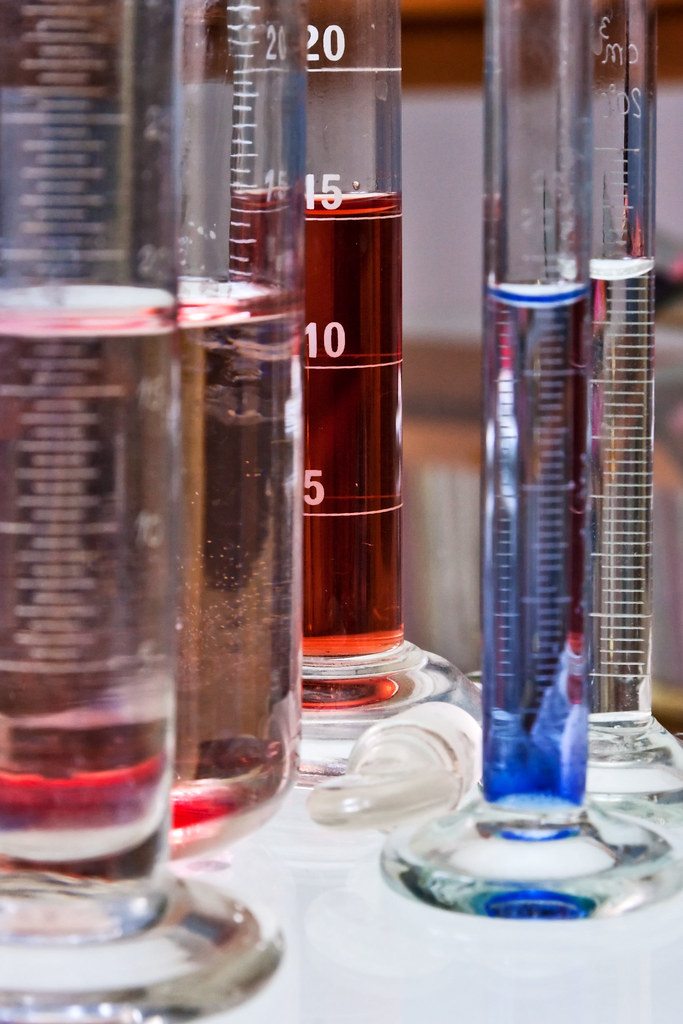
Wheatgrass Certificates of Analysis: What They Show and How to Read Them
Learn how to read a wheatgrass Certificate of Analysis, including lot numbers, test dates, laboratory methods, “Not Detected” results, limits, and Pass/Fail claims.
14 min read
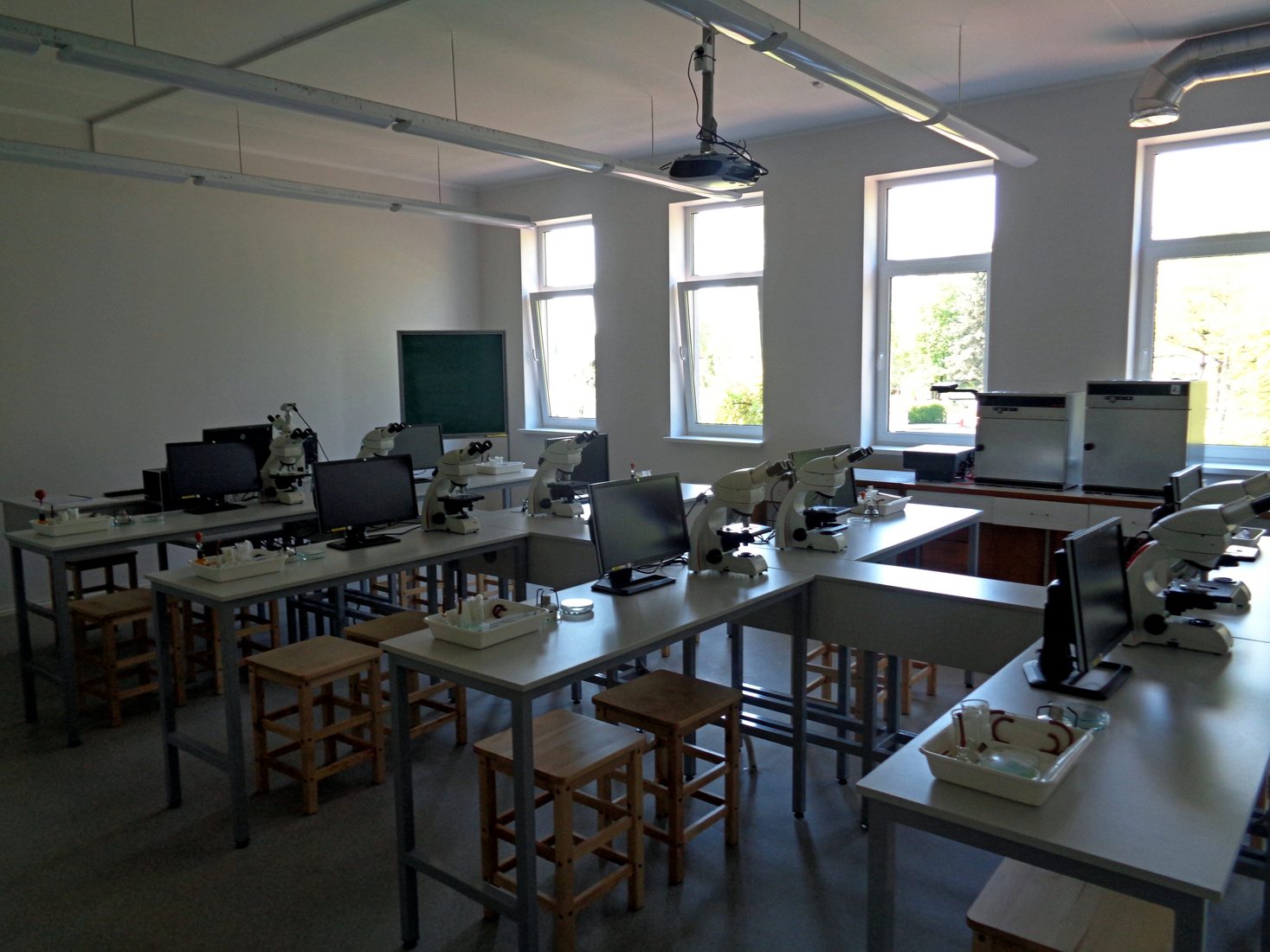
How Wheatgrass Is Tested for Mold, Yeast, and Microbes
Learn how wheatgrass and wheatgrass juice are tested for mold, yeast, bacteria, and pathogens—and how to interpret CFU counts, “not detected,” and microbial COA results.
13 min read
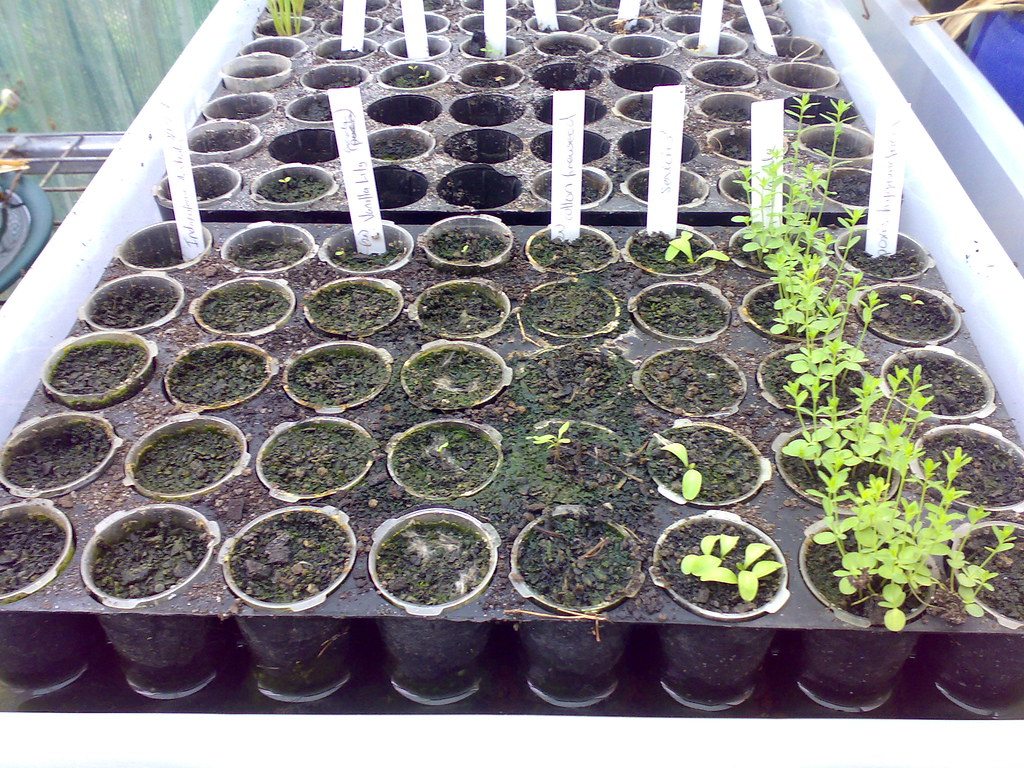
How to Clean and Sanitize Microgreen Trays Between Crops
Learn how to clean and sanitize microgreen trays between crops with a wash-rinse-sanitize-dry workflow for reusable 1020 trays and bottom trays.
15 min read
Stay in the loop
New guides, when they publish
An occasional email when a new guide goes live. No spam.
Your email is stored privately for future guide updates. No emails are being sent yet. Privacy policy