Juicing · Wheatgrass Juice Processing, Raw Claims, and Preservation
How Wheatgrass Is Harvested, Juiced, and Frozen
Wheatgrass juice is generally made by cutting young wheatgrass shoots above the growing medium, handling the harvested grass hygienically, preparing it as needed, mechanically extracting the liquid, packaging the juice, and freezing it for longer storage.
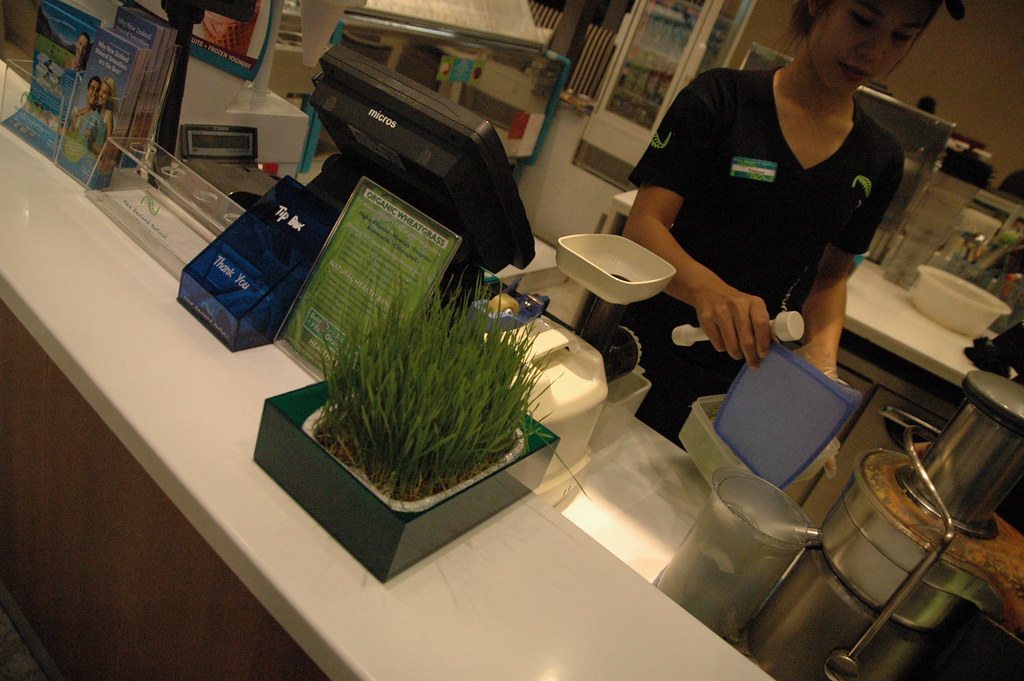
The exact workflow varies by producer and facility. However, one distinction is important: freezing can extend storage time, but it is not pasteurization and does not reliably eliminate microorganisms already present in juice. Food-safety risk management depends on the quality of the crop and water, sanitary handling, clean equipment, and appropriate process controls before the juice is frozen.
Wheatgrass Juice Processing at a Glance
| Stage | What Happens | Why It Matters |
|---|---|---|
| 1. Harvest | Young wheatgrass shoots are cut above the soil or growing-medium line. | Separates the harvested shoots from roots and growing medium. |
| 2. Hygienic handling | Grass is moved in clean containers and handled with sanitary tools and surfaces. | Helps limit damage and reduce opportunities for contamination. |
| 3. Preparation | Depending on the processor, grass may be inspected, sorted, trimmed, rinsed, drained, or cooled. | Removes visible debris and prepares the crop for extraction; rinsing is not a sterilization step. |
| 4. Juicing | A juicer mechanically expresses or extracts liquid from the grass. | Separates juice from much of the fibrous pulp. |
| 5. Packaging | Juice is portioned into clean, sealed containers. | Prepares the juice for frozen storage and distribution. |
| 6. Freezing | Packaged juice is frozen and held frozen. | Extends storage time but does not make the juice pasteurized. |
1. Harvesting Wheatgrass for Juice
Wheatgrass is harvested as a young grass crop
Wheatgrass is harvested while the wheat plant is still in its young grass stage, rather than after it has matured to produce grain. Harvest timing can vary with the wheat variety, growing conditions, season, and the producer’s intended product characteristics.
There is no single universal “best” harvest day, blade height, or nutritional peak for every wheatgrass crop. In one wheatgrass-specific study, harvest stage and season affected several measured juice characteristics. That shows harvest stage is a meaningful processing variable, but it does not establish one universally superior height or age for wheatgrass. (Skoczylas et al.)
Why wheatgrass is usually cut above the growing medium
For juice production, wheatgrass is generally harvested by cutting the shoots above the soil or growing-medium line. This keeps roots and growing media out of the harvested portion and makes the crop easier to prepare for juicing.
University of New Hampshire Extension discusses wheatgrass in the context of microgreen-style crops that are cut above the substrate line rather than consumed with their roots attached. (University of New Hampshire Extension)
2. What Happens Immediately After Harvest
Sorting, trimming, and moving the grass
After cutting, wheatgrass may be inspected for visible debris, damaged blades, or material that does not meet a processor’s quality standards. Depending on the facility, workers may sort or trim the grass before it moves to the juicing area.
The harvested grass should be handled in clean containers and protected from avoidable contamination. This matters because wheatgrass juice is made from raw plant material: material present on the crop or on food-contact surfaces can potentially be carried into the extracted juice.
Not every producer follows the same preparation sequence. Some may move the grass quickly from harvest to juicing, while others may include sorting, rinsing, draining, cooling, or other handling steps.
Washing and water quality
Some processors may rinse or wash wheatgrass as part of their workflow. Rinsing can remove visible debris and reduce some bacteria on the surface of the grass. It is not, however, a sterilization step and does not eliminate all microorganisms.
The U.S. Food and Drug Administration notes that washing produce under running water can reduce bacteria but cannot remove all bacteria or other contaminants. That principle also applies when considering wheatgrass preparation before juicing. (FDA: Selecting and Serving Produce Safely)
Water quality matters because water may contact harvested wheatgrass, harvest containers, processing equipment, and other food-contact surfaces. If it is not properly managed, water can introduce contamination rather than reduce it. FDA produce-safety guidance addresses water management as part of broader controls for growing, harvesting, packing, and holding produce. (FDA: Agricultural Water Requirements FAQ)
Sanitation is a system, not a single step
Food safety does not depend on rinsing alone. It depends on preventive controls throughout the process, which can include:
- Water quality and water-management practices
- Worker hygiene and handwashing
- Clean harvest tools and containers
- Sanitary food-contact equipment
- Facility cleanliness
- Temperature management where applicable
- Clean transport and storage conditions
- Traceability practices
FDA guidance emphasizes that minimizing microbial food-safety hazards requires attention across growing, harvesting, packing, and holding—not just at one stage. (FDA: Guide to Minimize Microbial Food Safety Hazards Fact Sheet)
3. How Wheatgrass Is Juiced
Pressing or extracting the liquid from the grass
Wheatgrass juice is made by mechanically expressing or extracting the liquid portion of the grass. FDA guidance defines juice as the aqueous liquid expressed or extracted from fruits or vegetables. (FDA: Questions and Answers on Juice HACCP Regulation)
In practice, the grass passes through a juicing system that separates liquid from plant material. Much of the insoluble fibrous material remains behind as pulp, while the extracted liquid becomes wheatgrass juice.
This is different from blending wheatgrass into a drink. Blending retains the plant material in the beverage, while juice extraction removes much of the pulp from the liquid fraction.
Equipment can vary, but the basic principle remains the same: liquid is mechanically extracted from the grass.
Why juice requires careful handling
Juicing changes the handling considerations for raw produce because bacteria present on produce can enter the beverage during fresh squeezing or raw extraction.
The FDA explains that bacteria from raw fruits and vegetables can end up in untreated juice. That does not mean untreated juice is automatically contaminated, but it explains why preventive controls before and during extraction are important. (FDA: What You Need to Know About Juice Safety)
A manual juicer, a cold-press-style juicer, or a small-batch process should not be treated as a pathogen-kill step by itself. Clean inputs, sanitary equipment, and well-managed processing practices remain important.
A brief note on Juice HACCP
Commercial juice processing in the United States is subject to hazard-based Juice HACCP requirements when it falls within the regulation’s scope; retail establishments and certain other operations may be exempt. HACCP—Hazard Analysis and Critical Control Point—is a preventive system for identifying biological, chemical, and physical hazards and managing those reasonably likely to occur in an operation.
HACCP is not a guarantee of zero risk. It is a structured approach to hazard identification and control. (FDA: Hazard Analysis Critical Control Point | FDA: Questions and Answers on Juice HACCP Regulation)
4. Packaging Wheatgrass Juice Before Freezing
Portioning and sealing
After extraction, wheatgrass juice may be portioned into clean, sealed containers before freezing. The package might be a bottle, pouch, cup, or another sealed portion format, depending on the producer’s equipment and intended use.
Packaging helps prepare juice for storage and distribution while limiting additional handling after extraction. Package type, portion size, and storage design can vary widely among producers.
Packaging is not a substitute for food-safety controls
A sealed package is one part of a preservation process. It does not establish that untreated juice is free of pathogens, nor does it replace sanitation and preventive controls before packaging.
Food safety depends on the full chain of production: the crop, water, worker hygiene, harvest and processing equipment, sanitation practices, temperature control, package integrity, and any validated treatment steps used by the processor.
5. Why Wheatgrass Juice Is Frozen
Freezing extends storage time
Freezing is used to preserve wheatgrass juice for longer storage than would be possible if it remained unfrozen. It can also make it easier to distribute or use juice over time rather than immediately after extraction.
According to the U.S. Department of Agriculture, freezing prevents microbial growth while food remains frozen and slows many quality-related changes. (USDA FSIS: Freezing and Food Safety)
Frozen juice is not unchanged indefinitely. Its quality can be affected by the condition of the grass at harvest, the time before freezing, packaging, freezing rate, storage temperature, and storage duration.
Why freezing speed and temperature control matter
Faster freezing is generally used to limit the formation of large ice crystals, which can help protect food quality. (USDA FSIS: Freezing and Food Safety) For juice, freezing conditions may influence physical characteristics such as color or separation, as well as other measured quality-related characteristics.
Rapid freezing should not be described as preserving all nutrients, enzymes, color, or flavor. Outcomes depend on the product and the specific freezing and storage conditions.
Consistent temperature control also matters after the juice is frozen. Frozen storage works as intended only while the product remains frozen.
Frozen, unpasteurized, and treated describe different things
These terms are often confused, but they refer to different aspects of a product.
| Term | What It Describes | What It Does Not Establish by Itself |
|---|---|---|
| Frozen | Storage condition and preservation method | Whether the juice was pasteurized or otherwise treated |
| Unpasteurized | The product has not been heat-pasteurized | Whether it was frozen or received another pathogen-reduction treatment |
| Raw | A product-label term that may vary by producer | Whether the juice was pasteurized, otherwise treated, or free of microorganisms |
| Pasteurized or otherwise treated | A processing approach intended to reduce pathogens | Whether the juice is sold fresh or frozen |
A frozen wheatgrass juice product may be pasteurized, otherwise treated, or untreated, depending on the producer and product. Freezing alone does not answer that question. When treatment status is unclear, check the product label or ask the seller directly. (FDA: What You Need to Know About Juice Safety)
6. What Freezing Can—and Cannot—Do
What freezing can do
When wheatgrass juice is held frozen, freezing can:
- Extend its usable storage time
- Prevent microbial growth while the juice remains frozen
- Slow many quality-related changes compared with leaving the juice unfrozen
- Support portioned storage and distribution of a perishable juice
These effects depend on appropriate freezing and storage conditions. Freezing does not permanently stop every chemical or quality change.
What freezing cannot do
Freezing also has important limits:
- It does not automatically pasteurize juice.
- It does not reliably eliminate bacteria, yeasts, or molds already present.
- It does not guarantee unchanged color, flavor, enzyme activity, or nutrient composition.
- It does not replace preventive sanitation and food-safety controls before juicing.
Microorganisms can survive freezing and may become active again after thawing if conditions allow. (USDA FSIS: Freezing and Food Safety)
7. What Research Says About Frozen Wheatgrass Juice Quality
The available wheatgrass-specific evidence
Research directly examining frozen wheatgrass juice is limited. One relevant study by Skoczylas and colleagues compared fresh wheatgrass juice with juice that had been frozen and stored for three months under specific study conditions.
The researchers reported changes in several measured quality-related characteristics after freezing and frozen storage. These included dry matter, chlorophylls, carotenoids, antioxidant activity, catalase activity, and color quality. The study also found that harvest stage and season influenced measured juice characteristics. (Skoczylas et al.)
These findings show that frozen wheatgrass juice should not automatically be assumed to be chemically identical to freshly made juice.
Why one study cannot set a universal rule
The study provides useful direct evidence for the conditions researchers tested, but it cannot establish a universal rule for every frozen wheatgrass juice product.
Results may differ based on factors such as:
- Wheat variety and growing conditions
- Harvest stage and season
- Time between harvest and juicing
- Extraction method
- Package type and oxygen exposure
- Freezing rate
- Frozen storage temperature
- Storage duration
The available research does not establish universal nutrient-retention percentages, a universally best harvest point, or a conclusion that frozen wheatgrass juice is inherently better or worse than fresh juice.
8. Food-Safety Considerations for Raw and Frozen Wheatgrass Juice
Untreated juice needs preventive controls before it is frozen
Untreated wheatgrass juice is made from raw plant material. Because raw produce can carry bacteria, untreated juice may also contain bacteria that were present on the produce.
This is why prevention before freezing matters. Clean water, good worker hygiene, sanitary equipment, clean food-contact surfaces, and appropriate handling procedures are central to reducing risk. (FDA: What You Need to Know About Juice Safety)
Organic production and whether a juice has received a validated pathogen-reduction treatment are separate issues. Organic status should not be treated as a food-safety guarantee, and untreated juice should not automatically be described as unsafe.
Freezing is not a pathogen-reduction treatment
Freezing slows or stops microbial growth while juice remains frozen, but it does not reliably eliminate bacteria already present. Yeasts and molds can also survive freezing.
This distinction is especially important for untreated frozen wheatgrass juice. Even when a product remains frozen from production through purchase, freezing itself is not the same as a validated treatment intended to reduce pathogens. (USDA FSIS: Freezing and Food Safety)
Who should take extra care with untreated juice?
The FDA identifies several groups that may be more vulnerable to serious foodborne illness:
- Young children
- Older adults
- Pregnant people
- People with weakened immune systems
People in these groups may wish to use extra care with untreated juice and review product labels for information about pasteurization or other processing methods. Individual dietary decisions can also be discussed with a qualified healthcare professional. (FDA: What You Need to Know About Juice Safety)
Key Takeaways: From Harvest to Freezer
- Wheatgrass is generally harvested as young shoots cut above the growing medium.
- Food-safety risk management depends on hygienic handling throughout the process, not on one wash step.
- Juicing mechanically extracts the liquid portion of the grass and leaves much of the fibrous pulp behind.
- After extraction, juice may be portioned into clean, sealed containers for frozen storage.
- Freezing extends storage time and prevents microbial growth while the juice remains frozen.
- Frozen does not mean pasteurized, and freezing does not reliably kill microorganisms already present.
- Limited wheatgrass-specific research suggests freezing and frozen storage can change some measured quality indicators, with results influenced by crop and processing conditions.
FAQ
Sources & further reading
- U.S. Food and Drug Administration — What You Need to Know About Juice Safetygovernment
- U.S. Food and Drug Administration — Selecting and Serving Produce Safelygovernment
- U.S. Food and Drug Administration — Guide to Minimize Microbial Food Safety Hazards Fact Sheetgovernment
- U.S. Food and Drug Administration — Frequently Asked Questions: Agricultural Water Requirements under the FSMA Produce Safety Rulegovernment
- U.S. Food and Drug Administration — Hazard Analysis Critical Control Point (HACCP)government
- U.S. Food and Drug Administration — Guidance for Industry: Questions and Answers on Juice HACCP Regulationgovernment
- Electronic Code of Federal Regulations — 21 CFR § 120.3 — Definitionsgovernment
- U.S. Department of Agriculture, Food Safety and Inspection Service — Freezing and Food Safetygovernment
- Journal of Food Processing and Preservation — Skoczylas Ł, Korus A, Tabaszewska M, Gędoś K, Szczepańska E. Evaluation of the quality of fresh and frozen wheatgrass juices depending on the time of grass harvest. 2018;42:e13401.peer-reviewed study
- University of New Hampshire Extension — Sprouts or Microgreens: Where Does Your Farm Fall Under FSMA?university
- Andi's Way — 2 oz Frozen 100% Raw Wheatgrass Juice — product-specific information about Andi's Way's own raw status, harvesting, juicing, freezing, storage, and thawing descriptions. This is not scientific evidence.other
- Andi's Way — Our Process — company process information only; not evidence of nutrient retention, food-safety performance, or health outcomes.other
Related guides
What Does “Raw” Mean in Wheatgrass Juice?
Learn what “raw” usually means on wheatgrass juice labels, how it differs from unpasteurized, frozen, and fresh, and which food-safety details to check.
9 min read
Can Wheatgrass Juice Help Ulcerative Colitis? Benefits, Evidence, and How to Use It Safely
What the limited clinical evidence says about wheatgrass juice and ulcerative colitis, how it fits beside prescribed treatment, and how to choose a product safely.
9 min read

How Wheatgrass Is Tested for Mold, Yeast, and Microbes
Learn how wheatgrass and wheatgrass juice are tested for mold, yeast, bacteria, and pathogens—and how to interpret CFU counts, “not detected,” and microbial COA results.
13 min read
Stay in the loop
New guides, when they publish
An occasional email when a new guide goes live. No spam.
Your email is stored privately for future guide updates. No emails are being sent yet. Privacy policy