Microgreens · Sunflower Microgreens
What Are Sunflower Microgreens? Taste, Uses, and Growing Basics
Sunflower microgreens are young, edible sunflower seedlings harvested soon after their seed leaves (cotyledons) open. They are commonly cut above the growing medium while still young, leaving the roots behind. You may see sunflower microgreens sold as sunflower greens. They differ from sunflower sprouts: microgreens are typically grown in a medium, exposed to light after germination, and harvested without the root attached. University of Florida IFAS
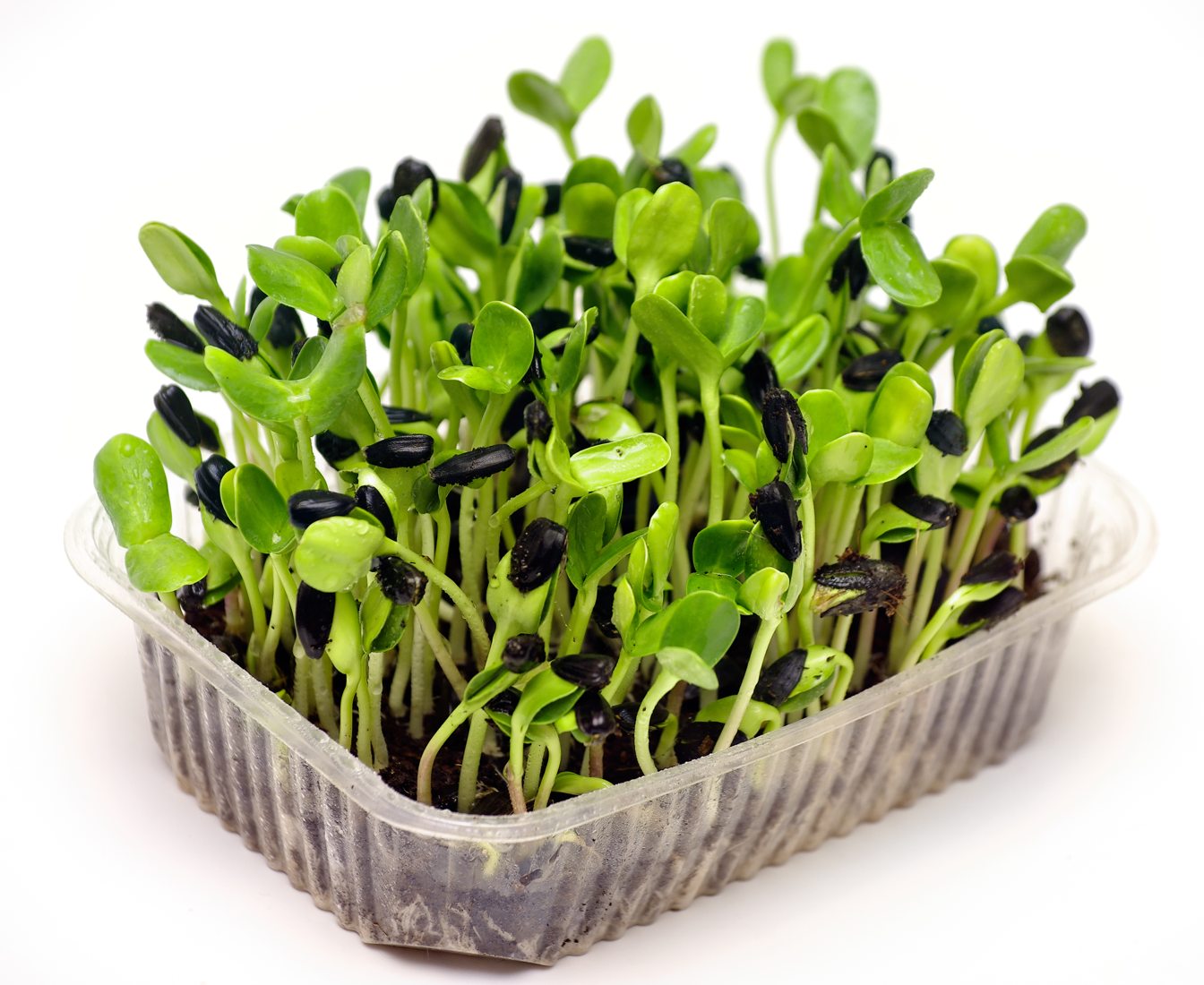
Sunflower microgreens are known for thick, juicy stems and a crisp crunch. Their taste is often mild, slightly sweet, and nutty. They are easy to use in sandwiches, salads, wraps, grain bowls, tacos, and other finished dishes—and they can also be grown at home in trays.
What Are Sunflower Microgreens?
Sunflower microgreens are the early edible stage of a sunflower plant. Rather than allowing a sunflower to develop into its mature leafy, flowering form, growers harvest the young shoots after the paired seed leaves have opened and sometimes as the first true leaves begin to emerge.
They are usually grown densely in a shallow tray with a moist growing medium. At harvest, the stems are cut above the medium.
Sunflower microgreens tend to feel more substantial than many delicate microgreens. Their thick stems and broad seed leaves make them useful as a crunchy topping, sandwich filling, or salad ingredient rather than only as a small garnish.
Are Sunflower Greens and Sunflower Microgreens the Same Thing?
You may see sunflower microgreens sold as sunflower greens. Product names can vary among growers and sellers, so it is still worth checking a product description to see whether it is sold as a microgreen, sprout, or more mature leafy green.
Sunflower Microgreens vs. Sprouts vs. Baby Greens
Microgreens, sprouts, and baby greens come from young plants, but they differ in how long they are grown and how they are harvested.
| Feature | Sunflower microgreens | Sunflower sprouts | Baby greens |
|---|---|---|---|
| Growth stage | Seed leaves open; sometimes early true leaves | Very early germination stage | More mature leafy stage |
| Typical growing method | Usually grown in a growing medium | Commonly germinated in water | Grown longer in soil or another medium |
| Harvest method | Cut above the growing medium | Often eaten whole, including root and seed | Leafy growth is cut |
| Typical texture | Thick, juicy, crunchy stems | Tender and moist | Leafier and more mature |
| Light exposure | Typically moved into light after emergence | May be eaten before substantial leaf growth | Grown with light for longer |
Microgreens and sprouts should not be treated as interchangeable. They are different foods with different production and harvest methods. Both are raw foods, so careful growing, storage, and food handling matter. Penn State Extension
What Do Sunflower Microgreens Taste Like?
Sunflower microgreens are often described as:
- Mild
- Fresh
- Slightly sweet
- Nutty
- Crisp and juicy
Their thick stems create a noticeable crunch, which is a major part of their appeal. They are generally milder than peppery microgreens such as radish, with a texture that can stand up well in sandwiches, wraps, and bowls.
Flavor and texture can vary by seed variety, harvest stage, freshness, light, temperature, and other growing conditions. Oregon State Extension describes black-oil sunflower microgreens as juicy, crunchy, mild, sweet, and nutty—useful expectations, but not a guarantee that every crop will taste exactly the same. Oregon State University Extension
Why Their Texture Works So Well in Meals
Sunflower greens can add a lettuce-like crunch, but with thicker, more succulent stems. They work particularly well in:
- Sandwiches and wraps
- Salads with hearty ingredients
- Grain, rice, and noodle bowls
- Tacos, burgers, and veggie burgers
- Avocado toast
- Egg dishes
- Finished soups and roasted vegetables
Heat softens the stems, so sunflower microgreens are generally best added after cooking or just before serving.
How to Eat Sunflower Greens
Sunflower microgreens are commonly eaten fresh. Their mild flavor makes them easy to add to everyday meals without overwhelming the rest of the dish.
Everyday Uses for Sunflower Microgreens
Try them in any of these ways:
- Layer them into sandwiches, pitas, and wraps.
- Use them as a crunchy salad base or combine them with other greens.
- Add a handful to grain bowls, rice bowls, or noodle bowls.
- Top tacos, burgers, or veggie burgers.
- Pile them onto avocado toast.
- Add them to scrambled eggs, omelets, or breakfast sandwiches.
- Scatter them over soup after serving.
- Use them as a fresh topping for roasted vegetables, pasta, or stir-fries.
Their stems can be blended into smoothies or sauces, but many people prefer to eat them whole for the crunch.
Can You Eat Sunflower Microgreens Raw?
Yes. Sunflower microgreens are commonly eaten raw, especially in salads, sandwiches, wraps, and bowls.
Like other raw produce, however, they are perishable and need safe handling. Keep them refrigerated, use clean hands and utensils, and follow package instructions if a purchased product is labeled ready-to-eat or prewashed. FDA produce-safety guidance
Should You Cook Sunflower Microgreens?
You can add sunflower microgreens to warm foods, but they are not usually cooked for long periods. Extended heat softens their stems and reduces their crisp texture.
For the best results, add them at the end of cooking or use them as a fresh finishing ingredient.
What Seeds Are Used for Sunflower Microgreens?
Black-oil sunflower seed is used for sunflower microgreen production. Sunflower-microgreen research and home-growing guidance use black-oil sunflower for the thick-stemmed greens associated with this crop. Di Gioia et al. Utah State University Extension
The crop type alone, however, does not establish whether a particular seed lot is suitable for edible microgreens.
Is Black-Oil Sunflower Seed Used for Microgreens?
Yes. Black-oil sunflower is one seed type used for growing sunflower microgreens. For home growing, choose untreated seed identified by the seller for microgreen or sprouting production.
That is more appropriate than assuming bird seed, ornamental seed, or seed from an unknown source is suitable for growing food that will be eaten raw. Seed marketed for another use may not be handled, labeled, or selected with edible production in mind. Penn State Extension
What Seed Should You Avoid?
Avoid making assumptions about seed intended for another purpose. In particular:
- Do not assume bird seed is suitable for edible microgreens.
- Avoid ornamental seed that may have been treated.
- Avoid seed from an unknown source that is not identified for food-growing use.
- Do not assume that organic or untreated seed guarantees pathogen-free greens.
Careful seed selection is an important risk-reduction step, but it cannot eliminate all food-safety risk.
Sunflower Microgreens Growing Basics
Sunflower microgreens can be a practical crop for beginners because they grow quickly, but they still need clean equipment, appropriate seed, steady moisture, and adequate light. This is a basic orientation rather than a complete production guide.
The Basic Process
- Choose suitable seed. Start with untreated seed identified for microgreens or sprouting.
- Soak the seed. Many growers soak sunflower seed before sowing. Recommended soaking times vary among seed suppliers and university guides, so follow the directions provided with your seed instead of treating one duration as universal.
- Sow in a clean tray. Use a clean, shallow tray with moist growing medium.
- Cover during early germination. Sunflower seeds are commonly covered while they germinate and push upward.
- Provide light after emergence. Once seedlings emerge, move them into adequate light and maintain even moisture without leaving the growing medium waterlogged.
- Harvest young. Cut the shoots above the growing medium once the seed leaves are open and the stems are sturdy.
This broad process is consistent with university home-growing guidance for microgreens. University of Florida IFAS Penn State Extension
Helpful Beginner Tip: Hull Shedding
Sunflower seed hulls can sometimes cling to the young leaves. During early germination, some growers place another tray over the crop and add light weight. This approach may help seedlings shed their hulls as they grow. Oregon State University Extension
The best approach varies by tray, seed lot, growing medium, temperature, and home setup. There is no universal tray weight, blackout schedule, seed density, or watering routine that works exactly the same for every crop.
How Long Do Sunflower Microgreens Take to Grow?
Sunflower microgreens are often ready to harvest in about 9 to 10 days, although timing varies with temperature, light, seed variety, germination conditions, and harvest preference. Utah State University Extension lists sunflower microgreens at approximately 9 to 10 days in its home-growing guidance. Utah State University Extension
Rather than relying only on the calendar, look for open seed leaves, upright growth, healthy color, and thick stems before harvesting.
Are Sunflower Microgreens Nutritious?
Like other vegetables and microgreens, sunflower microgreens contain nutrients and plant compounds. Laboratory studies of sunflower microgreens have measured substances including minerals, vitamin C, phenolic compounds, and fatty acids. Nutritional quality profiles of six microgreens Salt eustress and sunflower microgreens
There is no single nutrition profile that represents every sunflower microgreen crop. Nutrient results can vary with cultivar, harvest timing, growing medium, light exposure, water, environmental conditions, and laboratory methods. Renna et al.
Sunflower microgreens can be a flavorful way to add plant-food variety to meals. However, laboratory measurements of antioxidants or other plant compounds do not establish that sunflower microgreens prevent, treat, or cure disease in people.
Nutrition Claims to Keep in Perspective
Be cautious with broad “superfood” claims. In particular:
- Nutrient values from one study may not match a crop grown under different conditions.
- It is not accurate to claim that all sunflower microgreens are more nutritious than mature vegetables or sunflower seeds.
- A food’s place in a diet depends on the overall dietary pattern, serving size, preparation, and individual needs.
- Laboratory findings should not be converted into disease-prevention or treatment claims.
Food Safety and Storage Basics
Sunflower microgreens are raw, perishable produce. Contamination can occur through seed, water, growing medium, trays, tools, handling, storage, or contact with other foods. That possibility does not mean a particular crop is contaminated, but it does mean safe production and handling practices matter. Turner, Luo, and Buchanan
Food-Safety Practices for Home Growers and Buyers
Whether you grow or buy sunflower microgreens, take these basic precautions:
- Wash hands before handling the greens.
- Use clean trays, scissors, containers, counters, and food-contact surfaces.
- Use potable water for growing and rinsing.
- Keep microgreens away from raw meat, poultry, seafood, eggs, and their preparation surfaces.
- Refrigerate greens promptly after harvest or purchase.
- Discard greens that are moldy, slimy, severely wilted, or otherwise appear spoiled.
These practices reduce risk, but no home-growing or washing routine can guarantee pathogen-free produce. Penn State Extension FDA produce-safety guidance
Should You Rinse Sunflower Microgreens?
Rinse sunflower microgreens under running water before eating unless package instructions say they are ready-to-eat or prewashed.
Do not wash microgreens with soap, bleach, household detergent, or commercial produce washes. The FDA does not recommend these products for washing produce. Rinsing can remove surface debris and may reduce some surface bacteria, but it does not eliminate all food-safety risk. FDA produce-safety guidance
How to Store Sunflower Microgreens
Refrigerate harvested or purchased sunflower microgreens promptly at 40°F / 4°C or below. FDA produce-storage guidance
Shelf life varies with freshness at harvest or purchase, packaging, moisture, handling, and refrigerator temperature. Instead of relying on a fixed number of days, inspect the greens before using them.
Discard sunflower microgreens if they are:
- Slimy
- Moldy
- Severely wilted
- Foul-smelling
- Otherwise visibly spoiled
Research & Further Reading
Government and University Guidance
- U.S. Food and Drug Administration — Selecting and Serving Produce Safely
- U.S. Food and Drug Administration — Guidance for Industry: Standards for the Growing, Harvesting, Packing, and Holding of Sprouts for Human Consumption
- University of Florida IFAS Gardening Solutions — Microgreens
- Penn State Extension — The ABCs of Microgreens
- Penn State Extension — A Step-By-Step Guide for Growing Microgreens at Home
- Penn State Extension — Ensuring Food Safety in Microgreens Production
- Oregon State University Extension — High Desert Gardening Newsletter, April 2025
- Utah State University Extension — Grow Your Own Microgreens
Peer-Reviewed Research
- Turner ER, Luo Y, Buchanan RL. Microgreen nutrition, food safety, and shelf life: A review.
- Renna M, et al. Yield performance, mineral profile, and nitrate content in a selection of seventeen microgreen species.
- Di Gioia F, et al. Zinc biofortification through seed nutri-priming using alternative zinc sources and concentration levels in pea and sunflower microgreens.
- Nutritional quality profiles of six microgreens.
- Salt eustress modulates physiological responses and enhances yield, nutritional quality, and antioxidant capacity in sunflower microgreens.
- Persistence and Transfer of Foodborne Pathogens to Sunflower and Pea Shoot Microgreens During Production in Soil-Free Cultivation Matrix.
Company and Product Information — not scientific evidence
Confirm current product availability and descriptions directly on these company pages before relying on them for product information or enabling related CTAs.
- Andi’s Way — Organic Sunflower Seeds for Sprouting & Microgreens
- Andi’s Way — Fresh Organic Sunflower Greens
- Andi’s Way — Fresh Organic Microgreens Collection
Frequently asked questions
Related guides
Sunflower Sprouts vs. Sunflower Microgreens: What’s the Difference?
Learn how sunflower sprouts and sunflower microgreens differ in growth stage, harvest method, texture, uses, and raw-food safety considerations.
13 min read
Best Microgreens for Beginners: Radish, Broccoli, Pea, or Sunflower?
Compare radish, broccoli, pea, and sunflower microgreens by seed prep, harvest time, flavor, and beginner-friendliness to choose your first tray.
10 min read
Speckled Pea Seeds for Microgreens: Why Growers Use Them
Learn why growers use speckled pea seeds for pea shoots and microgreens, what to check before buying, and why seed quality matters more than the label alone.
13 min read
Stay in the loop
New guides, when they publish
An occasional email when a new guide goes live. No spam.
Your email is stored privately for future guide updates. No emails are being sent yet. Privacy policy