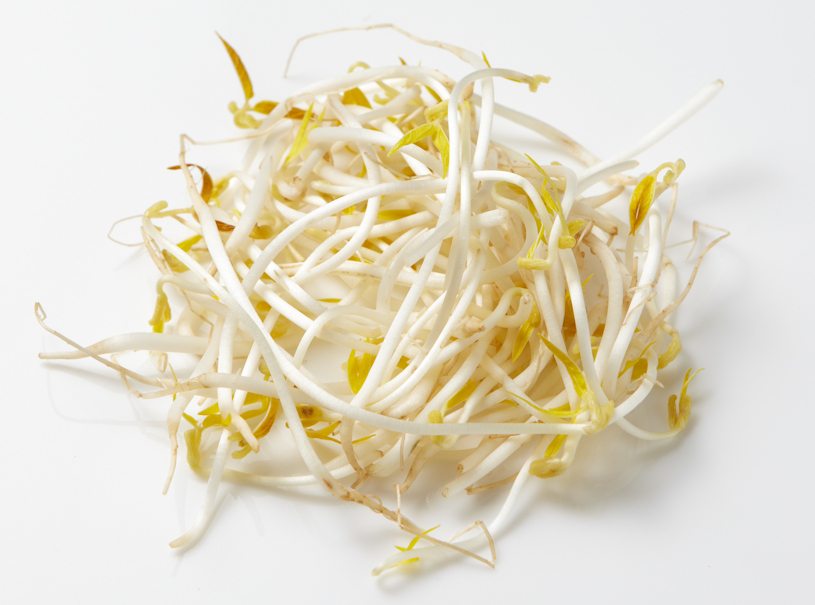
Mung bean sprouts and mung bean microgreens come from the same plant, but they are harvested at different stages of development.
Mung bean sprouts are harvested early, generally before true leaves emerge. They are commonly grown in water or a very moist system, and the seed, stem, and root-like radicle may all be eaten.
Mung bean microgreens are allowed to develop further into young leafy plants. They are typically grown in a tray with soil, soilless media, or another substrate, then cut above the growing medium.
The main difference is not necessarily the seed. It is the growth stage, cultivation method, harvest point, and portion of the plant that is eaten. This stage-based distinction is consistent with guidance from the FDA and Penn State Extension.
Quick Comparison: Mung Bean Sprouts vs Microgreens
| Comparison point | Mung bean sprouts | Mung bean microgreens |
|---|---|---|
| Growth stage | Usually harvested before true leaves emerge | Harvested later, around cotyledon development and often early true-leaf development |
| Growing method | Water or a very moist system; soil is not required | Usually soil, soilless media, or another substrate; water-based systems are also possible |
| Light | Often grown with little or no light | Generally grown with light exposure |
| Harvest timing | Commonly ready within a few days under suitable conditions | Many microgreens are harvested roughly 7–21 days after germination, although timing varies |
| Edible portion | Seed, stem, and radicle may be eaten | Young stems and leaves are generally cut above the growing medium |
| Texture | Crisp, juicy, and crunchy | More tender and leafy |
| Common uses | Stir-fries, noodle dishes, salads, wraps, and sandwiches | Salads, bowls, sandwiches, garnishes, and other dishes using young greens |
| Food-safety distinction | Raw sprouts receive specific food-safety attention because of their production conditions | Later-stage microgreens are distinguished from sprouts in U.S. FDA guidance, but they remain raw produce and are not risk-free |
Sources for the comparison: The U.S. FDA sprout guidance, Penn State Extension’s microgreens guidance, and Iowa State University Extension’s microgreens guide support the general distinctions in growth stage, growing medium, harvest method, edible portions, and timing. Exact practices vary by crop, cultivar, and production system.
What Are Mung Bean Sprouts?
Mung bean sprouts are young germinated mung beans harvested during the early part of the plant’s development.
They are commonly produced by soaking mung beans and keeping them in a consistently moist environment. Soil is not required. A container, jar, or sprouting system can be used as long as moisture, drainage, and cleanliness are managed appropriately. A mung bean study also describes sprout production as a process that does not require soil or sunlight. (Research study)
Many sprouts are produced with little or no light. This is a practical difference from most microgreen systems, which use light to support development of young leaves. Exact appearance varies with seed, temperature, moisture, airflow, and the desired harvest stage.
What part of the sprout is eaten?
The edible portion of a mung bean sprout commonly includes:
- The original mung bean seed
- The young stem
- The root-like radicle
Some people remove part of the radicle or seed covering for appearance or texture, but the whole sprout may be eaten according to common culinary practice. This is one of the clearest differences from microgreens, which are generally cut above their growing medium. (Penn State Extension)
How long do mung bean sprouts take to grow?
Mung bean sprouts can reach harvestable size within a few days under suitable conditions. The exact timing depends on:
- Seed quality and handling
- Temperature
- Moisture
- Air movement
- Desired length and texture
- The point at which the grower considers the sprout ready
A particular study or product instruction should not be treated as a universal schedule for every home-growing setup.
What do mung bean sprouts taste and feel like?
Mung bean sprouts are generally associated with a crisp, juicy, crunchy texture. They are commonly used in:
- Stir-fries
- Noodle dishes
- Salads
- Wraps
- Sandwiches
- Spring rolls and similar dishes
Their main culinary contribution is usually crunch rather than leafy texture.
What Are Mung Bean Microgreens?
Mung bean microgreens are young mung bean plants harvested after they have developed further than a typical sprout.
They generally pass through the cotyledon stage, when the first seed leaves appear, and may be harvested as the first true leaves begin to develop. The exact definition can vary somewhat among growers, but the important distinction is that microgreens are allowed to become young leafy plants before cutting. (FDA guidance; Penn State Extension)
How are mung bean microgreens grown?
Microgreens are typically grown in shallow trays containing:
- Soil
- A soilless growing medium
- Coco-peat or another substrate
- In some systems, water or a nutrient solution
Soil is common, but it is not an absolute requirement for every microgreen system. Mung bean microgreens have also been studied in water-based and other non-soil growing systems. That does not mean a water-based system is the standard or easiest method for every home grower. (Kaur et al.)
Unlike many sprouts, microgreens are generally grown with light exposure. Light supports the development of the young leaves and helps distinguish a leafy microgreen crop from an early-stage sprout in typical production, although light exposure is not an absolute rule for every system. (Penn State Extension)
What part of the microgreen is eaten?
Mung bean microgreens are generally harvested by cutting the young stems above the soil or other growing medium. The harvested portion primarily consists of:
- Young stems
- Cotyledons
- Emerging true leaves, depending on harvest timing
The roots usually remain in the growing medium rather than being included in the harvested portion. This harvesting method is part of the practical distinction between microgreens and sprouts. (Iowa State University Extension)
How long do mung bean microgreens take to grow?
Many types of microgreens are harvested approximately 7–21 days after germination. This is a general range rather than a guaranteed schedule for mung beans. (Penn State Extension)
Timing can change with:
- Cultivar
- Temperature
- Light
- Growing medium
- Seed density
- Water management
- Desired leaf stage
Development is often more useful than a fixed day count:
- Harvest sprouts while they remain at an early germination stage.
- Harvest microgreens once the young stems and leaves have developed sufficiently for cutting above the growing medium.
What do mung bean microgreens taste and feel like?
Mung bean microgreens are generally more tender and leafy than conventional mung bean sprouts. They can be used in:
- Salads
- Grain bowls
- Sandwiches
- Wraps
- Garnishes
- Other dishes that benefit from young greens
They may have some stem texture, but they are not usually as juicy and crunchy as a typical mung bean sprout. Texture varies with harvest age, growing conditions, and storage.
Mung Bean Sprouts vs Microgreens: Key Differences
Growth stage and true leaves
The clearest difference is the stage at which the plant is harvested.
Mung bean sprouts are generally harvested before true leaves emerge. The seed has germinated, but the plant has not developed into a young leafy shoot.
Mung bean microgreens are allowed to develop further. They are commonly harvested after the cotyledons have developed and as the first true leaves begin to appear.
True leaves are different from cotyledons, which are the first seed leaves produced during germination. In practical terms, true-leaf emergence helps distinguish a young microgreen from an earlier-stage sprout, although growers may use slightly different harvest definitions. (FDA guidance)
Growing medium
Mung bean sprouts are commonly produced in water or a very moist system. They do not require soil.
Mung bean microgreens are more commonly grown in trays with soil, a soilless medium, or another substrate. Water-based and other non-soil systems have also been studied, so it would be inaccurate to say that all microgreens must be grown in soil. (Iowa State University Extension; Kaur et al.)
The difference is therefore a matter of typical practice rather than an absolute rule:
- Sprouts: usually water-based and enclosed
- Microgreens: usually tray-grown in a substrate, with water-based alternatives also possible
Light
Sprouts are often grown with little or no light. Microgreens are generally exposed to light so their young leaves can develop.
This is a useful practical distinction, but neither description is an absolute requirement for every production system. Growing methods differ, and light exposure can be adjusted for particular crops and production goals. (Penn State Extension)
Harvest time
Mung bean sprouts are usually harvested after a few days.
Microgreens generally take longer. Many microgreens are harvested about 7–21 days after germination, although mung bean timing can vary according to the growing environment and desired stage. (Penn State Extension)
Development is often more useful than a fixed day count:
- Harvest sprouts while they remain at an early germination stage.
- Harvest microgreens once the young stems and leaves have developed sufficiently for cutting above the growing medium.
Edible portions
With mung bean sprouts, the original seed, stem, and radicle may all be eaten.
With mung bean microgreens, the harvest generally consists of the young stem and leaves above the growing medium. The roots typically remain in the tray.
Sprouts are therefore eaten more like a whole germinated seed, while microgreens are eaten more like a young leafy vegetable.
Texture and culinary use
Mung bean sprouts are usually chosen when a dish needs crunch. Their texture works well in stir-fries, noodle dishes, salads, wraps, and sandwiches.
Mung bean microgreens are usually chosen for a more tender, leafy texture. They work well in salads, bowls, sandwiches, and as garnishes.
These are typical use cases, not exclusive rules. Both forms can be used in similar dishes, but they contribute different textures:
- Choose sprouts for crispness and juiciness.
- Choose microgreens for young leaves and a softer texture.
Are Mung Bean Sprouts and Microgreens Grown From the Same Seed?
They may be grown from the same type of mung bean seed, but the seed should be appropriate for the intended use.
The main distinction is usually the growing endpoint:
- Germinate the seed and harvest early for sprouts.
- Allow the young plant to develop further and cut it above the growing medium for microgreens.
However, not every mung bean product should automatically be assumed to be interchangeable. Seed labeling, source, handling, and intended use matter, particularly for sprouting. Readers should check whether a product is intended for sprouting or microgreen production rather than assuming that any mung beans sold for cooking will perform equally well. (FDA sprout guidance)
Seed labeled for sprouting or microgreen production can support a more informed sourcing decision, but it does not guarantee a pathogen-free crop or successful growth.
Food-Safety Considerations
Food safety is one of the most important differences between the two categories.
Why raw mung bean sprouts receive specific attention
The warm, moist conditions used to produce sprouts can also support the growth of foodborne pathogens. U.S. FDA guidance identifies raw or lightly cooked mung bean sprouts as a food-safety concern involving pathogens such as:
- Salmonella
- Listeria
- Pathogenic E. coli
This does not mean that every package or batch of sprouts is contaminated. It means that the production environment can create conditions in which pathogens may grow to high levels if they are present on or in the seed. (FDA)
Raw sprouts therefore deserve specific caution rather than either absolute reassurance or alarmist claims that all sprouts are dangerous.
Guidance for people at higher risk
The U.S. FDA advises people at higher risk of serious foodborne illness to avoid raw or lightly cooked sprouts. Thorough cooking can reduce the risk associated with raw sprouts, although cooking should not be described as a guarantee of sterility. (FDA)
Are mung bean microgreens safer than sprouts?
Not automatically.
In the United States, the FDA’s regulatory framework distinguishes later-stage microgreens from sprouts for purposes of sprout-specific requirements. Microgreens are not subject to the same sprout-specific requirements when they meet the relevant later-stage definition, but they remain covered produce under other applicable food-safety requirements. This U.S.-specific regulatory distinction is not a guarantee that microgreens are free from contamination or universally safer to eat raw. (FDA sprout guidance; University of New Hampshire Extension)
Microgreens remain raw fresh produce. Contamination can occur through:
- Seed
- Water
- Growing media
- Trays and tools
- Hands
- Harvest equipment
- Storage and later handling
These contamination pathways are addressed in food-safety guidance from the FDA and Iowa State University Extension.
Growing microgreens in soil or another substrate does not eliminate food-safety risks. Likewise, growing a crop in water does not automatically make it a sprout or determine that it is unsafe.
Handling and storage after harvest
Both sprouts and microgreens should be handled hygienically and stored according to applicable fresh-produce safety guidance. Keep hands, containers, trays, and tools clean, and prevent contact with raw animal products and other contamination sources. Perishable produce should be handled and refrigerated appropriately. (FDA; Iowa State University Extension)
Because shelf life varies with the crop, harvest stage, packaging, and storage conditions, there is no single storage period that applies to every batch of mung bean sprouts or microgreens.
Are Mung Bean Microgreens More Nutritious Than Sprouts?
Current evidence does not support naming one form universally more nutritious.
One 2026 study comparing mung bean sprouts and microgreens reported higher values for some measured nutrients in the microgreens, including dietary fiber, selected minerals, and ascorbic acid. However, the study reported proximate-composition findings separately from mineral and ascorbic-acid measurements, and the analytical methods and reporting bases were not identical across all results. The findings should not be treated as though every nutrient was compared on one uniform fresh-weight basis. Protein and fat results also did not follow the same pattern. (Marottickal et al.)
Other research has found that nutrient and antioxidant differences depend on factors such as:
- Species
- Plant tissue
- Developmental stage
- Growing system
- Harvest age
- Whether results are reported by fresh weight or dry weight
These variables are reflected in research on Vigna species and comparative sprout and microgreen composition. (Developmental and Species-Specific Variation of Selected Vigna Species; Wojdyło et al.)
Earlier comparative research across several species reported a different overall antioxidant pattern, illustrating why results cannot be reduced to a universal sprouts-versus-microgreens winner. (Wojdyło et al.)
These studies measure nutrient composition or laboratory activity. They do not establish that mung bean sprouts or microgreens prevent or treat disease in people.
The most accurate conclusion is that nutritional differences may exist, but the evidence is study-specific and variable. No reliable universal claim can currently establish that mung bean microgreens are healthier than mung bean sprouts, or vice versa.
Which Should You Grow or Eat?
Neither form is universally better. The more suitable choice depends on your growing setup, preferred harvest time, texture, and intended use.
Choose mung bean sprouts when you want:
- A short growing cycle
- Water-based growing without soil
- Crisp, juicy texture
- Whole-sprout use
- Ingredients for stir-fries, noodle dishes, salads, wraps, or sandwiches
Raw-sprout food-safety precautions are especially important, and people at higher risk of serious foodborne illness should follow U.S. FDA guidance regarding raw or lightly cooked sprouts.
Choose mung bean microgreens when you want:
- Young leafy greens
- Tray-based growing
- A tender texture
- Ingredients for salads, bowls, and sandwiches
- A garnish-style crop
- Harvesting above the growing medium
Microgreens are not automatically safer than sprouts. They still require clean production, careful handling, and appropriate storage.
Frequently Asked Questions
Research & Further Reading
Government and Food-Safety Sources
FDA — Guidance for Industry: Standards for the Growing, Harvesting, Packing, and Holding of Sprouts for Human Consumption https://www.fda.gov/regulatory-information/search-fda-guidance-documents/guidance-industry-standards-growing-harvesting-packing-and-holding-sprouts-human-consumption
FDA — Final Sprout Guidance PDF https://www.fda.gov/media/102430/download
FDA — Selecting and Serving Produce Safely https://www.fda.gov/food/buy-store-serve-safe-food/selecting-and-serving-produce-safely
FDA — Fruits, Veggies and Juices: Food Safety for Moms-to-Be https://www.fda.gov/food/people-risk-foodborne-illness/fruits-veggies-and-juices-food-safety-moms-be
University and Extension Sources
Penn State Extension — The ABCs of Microgreens https://extension.psu.edu/the-abcs-of-microgreens
Iowa State University Extension — How to Grow Your Own Microgreens https://yardandgarden.extension.iastate.edu/how-to/how-grown-your-own-microgreens
University of New Hampshire Extension — Sprouts or Microgreens: Where Does Your Farm Fall Under FSMA? https://extension.unh.edu/blog/2021/10/sprouts-or-microgreens-where-does-your-farm-fall-under-fsma
Peer-Reviewed and Research Sources
Marottickal et al. — Enhanced Nutritional Value of Mung Bean Microgreens Compared to Sprouts: A Quantitative Study https://pmc.ncbi.nlm.nih.gov/articles/PMC12919383/
**Developmental and Species-Specific Variation of Selected Vigna Species** https://www.jstage.jst.go.jp/article/hortj/95/2/95_SZD-102/_html/-char/ja
Wojdyło et al. — Sprouts vs. Microgreens as Novel Functional Foods https://www.mdpi.com/1420-3049/25/20/4648
Kaur et al. — Impact of Growing Conditions on Mung Bean Microgreens https://onlinelibrary.wiley.com/doi/10.1111/jfpp.16655
Company-Specific Seed Information
Andi’s Way — Organic Mung Beans for Sprouting https://andisway.com/products/organic-mung-beans
This Andi’s Way page provides company, product, and usage information. It is not scientific, nutrition, or food-safety evidence. Confirm the page remains live and accurately describes the product before publication.
Related guides
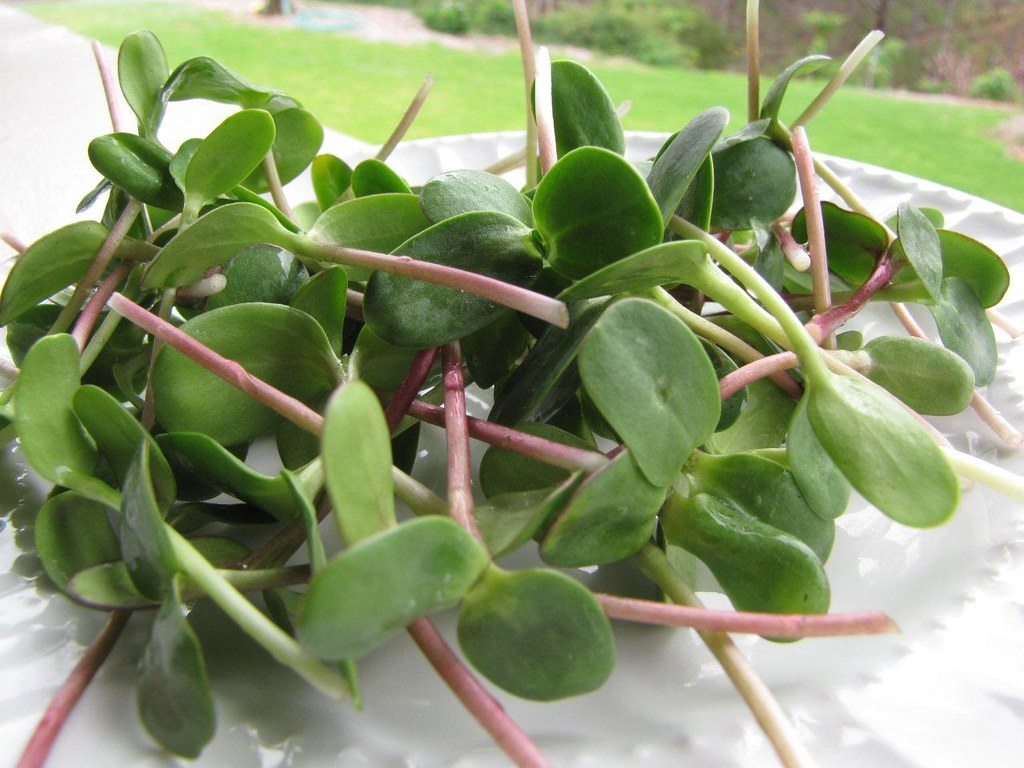
Sunflower Sprouts vs. Sunflower Microgreens: What’s the Difference?
Learn how sunflower sprouts and sunflower microgreens differ in growth stage, harvest method, texture, uses, and raw-food safety considerations.
13 min read
Best Microgreens for Beginners: Radish, Broccoli, Pea, or Sunflower?
Compare radish, broccoli, pea, and sunflower microgreens by seed prep, harvest time, flavor, and beginner-friendliness to choose your first tray.
10 min read
Speckled Pea Seeds for Microgreens: Why Growers Use Them
Learn why growers use speckled pea seeds for pea shoots and microgreens, what to check before buying, and why seed quality matters more than the label alone.
13 min read
Stay in the loop
New guides, when they publish
An occasional email when a new guide goes live. No spam.
Your email is stored privately for future guide updates. No emails are being sent yet. Privacy policy