Microgreens · Basics
Microgreens vs. Sprouts: What’s the Difference?
Microgreens and sprouts both begin with seed germination, but they are not the same food. Sprouts are generally eaten whole at a very early stage, including the seed remnant, root, and young shoot. Microgreens are grown longer, usually in a shallow tray with soil or a soilless growing medium, then cut above the medium for their stems and young leaves.
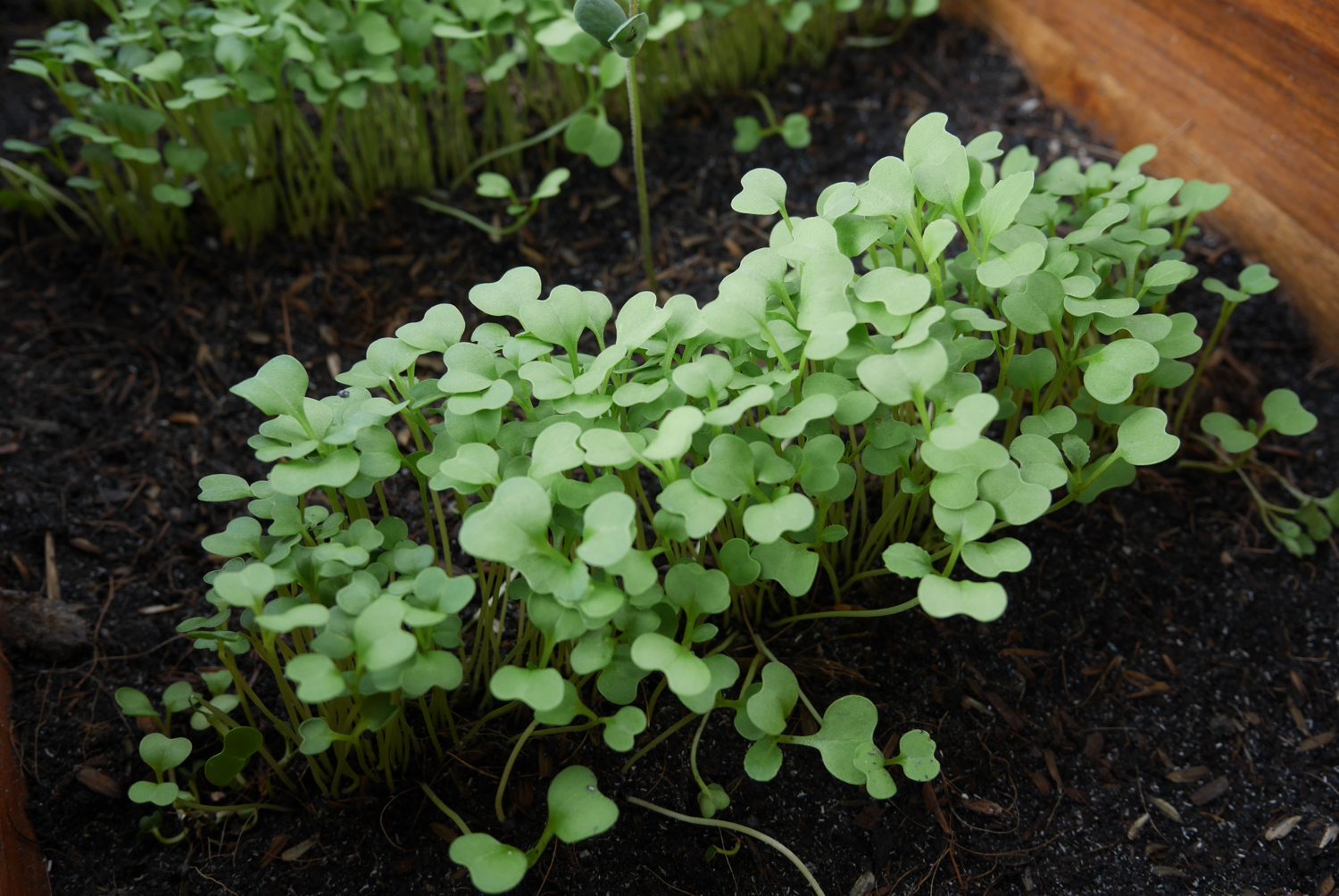
The biggest practical differences are growth stage, growing setup, harvest method, food safety, texture, and kitchen use. Raw sprouts need particular food-safety attention because warm, moist sprouting conditions can allow harmful bacteria already present on or in seeds to multiply. FDA: Selecting and Serving Produce Safely Microgreens have a different risk profile, but they are still perishable raw produce that requires careful handling. FDA guidance distinguishes sprouts and microgreens as different products.
Microgreens vs. Sprouts at a Glance
| Feature | Sprouts | Microgreens |
|---|---|---|
| Growth stage | Germinated seed, generally harvested before true leaves emerge | Later seedling stage, typically with developed cotyledons and sometimes emerging true leaves |
| Typical growing setup | Water-based germination in warm, moist conditions | Shallow tray with soil or a soilless growing medium; light is generally used after germination |
| Harvest method | Usually eaten whole | Usually cut above the growing medium |
| Edible portion | Seed remnant, root, and young shoot | Stem and young leaves |
| Typical harvest timing | Often ready in days | Often roughly 7–21 days after germination, depending on crop and conditions |
| Main food-safety focus | Seed-associated contamination can multiply during sprouting | Safe seed, water, growing medium, equipment, handling, and refrigeration remain important |
| Typical kitchen role | Crisp, juicy ingredient for sandwiches, salads, and cooked dishes | Leafy topping, salad ingredient, bowl addition, or garnish |
These are broad patterns rather than rules for every crop. Species, growing method, and harvest preference affect how a product looks, tastes, and is used.
Are Microgreens Just Older Sprouts?
Both Start With Germination, but They Are Different Products
A seed must germinate before it can become either a sprout or a microgreen. That shared starting point can make the terms seem interchangeable, but they refer to different harvested foods.
The FDA distinguishes sprouts from microgreens primarily by their stage of leaf development. Sprouts are harvested very early, while microgreens are grown to a later seedling stage and usually harvested as cut greens. FDA also notes that microgreens are not subject to the sprout-specific requirements in Produce Safety Rule Subpart M, although they may still be covered produce under other requirements. FDA sprout guidance
In practical terms, a microgreen is not simply a sprout left to grow for a few more days. The growing environment, light exposure, harvest method, and edible portion are usually different.
The Growth-Stage Difference: Cotyledons and True Leaves
When a seedling first develops, it produces cotyledons, or embryonic seed leaves. These differ from true leaves, which develop later and more closely resemble the foliage of the mature plant.
Sprouts are generally harvested before true leaves begin to emerge. Depending on the crop and harvest point, their cotyledons may be undeveloped or only partly developed.
Microgreens are typically grown longer. Their cotyledons are developed, and the first true leaves may be emerging by harvest. There is no universal day count or identical harvest stage for every microgreen, however. Different crops grow at different speeds, and growers may harvest earlier or later depending on the desired size, texture, and flavor. FDA sprout guidance
The Harvest Difference: Whole Plant vs. Cut Greens
The clearest visual difference is what is eaten.
- Sprouts are generally eaten whole, including the seed remnant, root, stem, and young shoot.
- Microgreens are usually cut above the growing medium, leaving the roots behind. The harvested portion is primarily the stem and young leaves.
This changes their texture and preparation. Sprouts often add moisture and crunch, while microgreens generally behave more like delicate leafy greens. Penn State Extension: The ABCs of Microgreens
How Growing Microgreens and Sprouts Differs
Growing Sprouts
Sprouts are commonly produced through water-based germination. Seeds are soaked, rinsed, drained, and kept moist while they germinate and grow for a short period. Jars are a familiar home-sprouting tool, but they are not the only option.
Many sprouts are ready in days rather than weeks, although timing varies by crop, temperature, and the harvest size you prefer.
The warm, moist conditions that encourage germination also explain why sprouts need special food-safety attention. If harmful bacteria are present on or in seed, those conditions can allow bacteria to multiply. FDA: Selecting and Serving Produce Safely
Growing Microgreens
Microgreens are commonly grown in shallow trays containing soil or a soilless growing medium. Some growers also use hydroponic or other substrate-based systems, so soil is common but not mandatory. Penn State Extension: Growing Microgreens
After germination, microgreens are generally exposed to light so they can develop green growth. They are harvested by cutting the stems above the growing medium.
Many microgreens take roughly 7–21 days after germination to reach harvest size, though the range varies substantially by crop and conditions. Some are harvested with fully opened cotyledons, while others are allowed to develop until the first true leaves begin to appear. Penn State Extension: The ABCs of Microgreens
Can You Use the Same Seeds for Both?
Some edible crops can be grown as either sprouts or microgreens. The same crop may become a very different ingredient depending on whether it is harvested as a whole sprout or as a cut microgreen.
Do not assume every seed sold for gardening is intended for edible sprouting or microgreen production. Follow the supplier’s use instructions for the seed and growing project you choose. Growing methods and harvest timing differ between the two formats.
Food Safety: Why Raw Sprouts Need Extra Care
Why Sprouts Have a Distinctive Risk Profile
Raw sprouts have a well-established food-safety concern that differs from most other fresh produce. Harmful bacteria can sometimes be present on or in seeds before sprouting begins. Because sprouting requires warm, moist conditions, bacteria on contaminated seed can multiply to high levels during growth. FDA: Selecting and Serving Produce Safely
This does not mean every raw sprout is contaminated or that raw sprouts are automatically unsafe. It means the sprouting environment creates a distinctive risk that deserves attention.
Why Washing Does Not Eliminate the Risk
Washing fresh produce is a useful handling practice, but it cannot guarantee that raw sprouts are free of pathogens.
Washing may reduce bacteria on the surface, yet it cannot reliably remove bacteria associated with the seed or eliminate bacteria that multiplied during sprouting. Careful sanitation, clean equipment, and refrigeration reduce risk, but they do not eliminate it. FDA: Selecting and Serving Produce Safely
Are Microgreens Safer Than Sprouts?
Microgreens do not have the same sprout-specific risk profile, but they are not risk-free.
Like other raw produce, microgreens can be contaminated through seed, water, growing media, equipment, harvesting, packaging, handling, or storage. Controlled research, including work involving Salmonella on Swiss chard microgreens, has found that pathogens may survive or grow under certain conditions. That evidence does not mean that all microgreens are routinely contaminated; it shows why preventive food-safety practices still matter. Reed et al., 2018
The most accurate comparison is:
- Raw sprouts have a distinct, well-documented food-safety concern because of the sprouting environment.
- Microgreens have a different, nonzero food-safety risk profile.
Neither statement is a guarantee about an individual product.
Who Should Avoid Raw or Lightly Cooked Sprouts?
The FDA and CDC advise people at higher risk of foodborne illness to avoid raw or lightly cooked sprouts. This includes:
- Pregnant people
- Young children
- Older adults
- People with weakened immune systems
Thorough cooking reduces the food-safety risk from sprouts. It does not make every food-related risk disappear, but it is safer than eating sprouts raw or lightly cooked for people in higher-risk groups. FDA: Selecting and Serving Produce Safely CDC: Safer Food Choices for People With Weakened Immune Systems
Nutrition: Is One Better Than the Other?
There Is No Universal Nutrition Winner
Neither microgreens nor sprouts are universally more nutritious. Their nutrient composition can vary based on:
- Crop type
- Cultivar
- Growing conditions
- Light exposure
- Harvest stage
- Storage conditions
- Whether nutrients are measured on a fresh-weight or dry-weight basis
A comparison between one specific sprout and one specific microgreen may be useful, but it should not be used to declare an overall winner for every sprout and microgreen. Reviews of the research consistently show that composition varies substantially among crops and production conditions. Choe et al., 2020 Turner, Luo, and Buchanan, 2020
Both can add flavor, variety, and nutrients to meals. In everyday cooking, the more useful question is often which crop and format you enjoy eating consistently and can handle safely.
What Nutrition Studies Can—and Cannot—Tell Us
Researchers have measured vitamins, minerals, phytochemicals, fiber, and other components in sprouts and microgreens. These studies help describe food composition and show that values differ by crop and growing stage.
But nutrient-composition research is not the same as randomized human clinical research. Finding a higher concentration of a nutrient or plant compound does not by itself prove that a food prevents, treats, or reverses disease in people. Choe et al., 2020
Be cautious with broad “superfood,” detoxification, immunity, cancer-fighting, or disease-treatment claims. Those claims go beyond what composition studies can establish.
Why the “4 to 40 Times More Nutrients” Claim Does Not Answer This Question
You may see a statement that microgreens contain “4 to 40 times more nutrients.” That phrase is often used inaccurately in microgreens-versus-sprouts comparisons.
The commonly cited study measured nutrient concentrations in selected microgreens and compared them with mature leaves of the same crops. It did not compare microgreens with sprouts. Xiao et al., 2012
That research may be useful when considering selected microgreens relative to mature vegetables, but it does not show that microgreens contain 4–40 times more nutrients than sprouts.
Flavor, Texture, and Best Uses
When Sprouts May Fit Best
As broad kitchen tendencies, sprouts are often crisp and juicy. They work well when you want texture and a quick burst of freshness.
Common uses include:
- Sandwiches and wraps
- Salads
- Rice or noodle dishes
- Tacos and bowls
- Thoroughly cooked stir-fries
- Fresh toppings for savory dishes
Flavor depends strongly on the crop. Bean sprouts, alfalfa sprouts, and radish sprouts can differ substantially in texture, pungency, and moisture.
When Microgreens May Fit Best
Microgreens are generally leafier than sprouts and may be aromatic, grassy, sweet, nutty, or peppery depending on the crop. They are often used as a fresh finishing ingredient rather than a bulk ingredient.
Common uses include:
- Salads
- Grain bowls
- Egg dishes
- Sandwiches
- Tacos
- Soups as a finishing garnish
- Pizza after baking
- Fresh garnishes for vegetables, fish, or other main dishes
Because microgreens are cut greens, they can bring color and a leaf-forward appearance to a plate.
Storage and Handling Basics
Both fresh sprouts and microgreens should be treated as perishable produce.
For safer handling:
- Refrigerate fresh, perishable produce.
- Wash hands before preparing food.
- Clean preparation surfaces and utensils.
- Keep produce separate from raw meat, poultry, and seafood.
- Follow package handling instructions when provided.
- Discard products that are spoiled.
Refrigeration and clean handling are important, but they do not guarantee that raw sprouts or microgreens are free of pathogens. FDA: Selecting and Serving Produce Safely
Should You Grow or Buy Microgreens or Sprouts?
There is no single best choice. The right option depends on the flavor, texture, harvest style, and food-safety considerations that fit your kitchen.
| If You Want… | Consider… | Why |
|---|---|---|
| The fastest harvest and whole, crisp young plants | Sprouts | They are commonly ready in days and are generally eaten whole. |
| Leafier flavor and a cut-greens harvest | Microgreens | They are grown to a later seedling stage and used like delicate young greens. |
| A tray-growing project with light after germination | Microgreens | They are commonly grown in shallow trays with a growing medium. |
| A crisp addition to sandwiches, wraps, or noodle dishes | Sprouts | Their whole-plant texture often suits quick, fresh uses. |
| Fresh toppings, salads, bowls, or garnishes | Microgreens | Their stems and young leaves work like miniature leafy greens. |
| To reduce raw-sprout concerns in a high-risk household | Thoroughly cooked sprouts or another appropriate produce option | FDA and CDC advise higher-risk groups to avoid raw or lightly cooked sprouts. |
Whichever option you choose, use appropriate food-handling practices. If you grow either at home, cleanliness and careful handling can reduce risk, but they do not create an absolute guarantee of safety.
Research & Further Reading
Government and Public-Health Sources
- U.S. Food and Drug Administration. Guidance for Industry: Standards for the Growing, Harvesting, Packing, and Holding of Sprouts for Human Consumption.
https://www.fda.gov/media/102430/download?attachment=
- U.S. Food and Drug Administration. Selecting and Serving Produce Safely.
https://www.fda.gov/food/buy-store-serve-safe-food/selecting-and-serving-produce-safely
- U.S. Centers for Disease Control and Prevention. Safer Food Choices for People With Weakened Immune Systems.
https://www.cdc.gov/food-safety/foods/weakened-immune-systems.html
Peer-Reviewed Research and Reviews
- Riggio, G. M., et al. Microgreens—A Review of Food Safety Considerations Along the Farm to Fork Continuum.
https://pubmed.ncbi.nlm.nih.gov/30308448/
- Turner, E. R., Luo, Y., and Buchanan, R. L. Microgreen Nutrition, Food Safety, and Shelf Life: A Review.
https://pubmed.ncbi.nlm.nih.gov/32144769/
- Reed, E., et al. Plant-Microbe and Abiotic Factors Influencing Salmonella Survival and Growth on Alfalfa Sprouts and Swiss Chard Microgreens.
https://pubmed.ncbi.nlm.nih.gov/29453267/
- Xiao, Z., et al. Assessment of Vitamin and Carotenoid Concentrations of Emerging Food Products: Edible Microgreens.
https://pubmed.ncbi.nlm.nih.gov/22812633/
- Choe, U., et al. Sprouts vs. Microgreens as Novel Functional Foods: Variation of Nutritional and Phytochemical Profiles and Their In Vitro Bioactive Properties.
https://pubmed.ncbi.nlm.nih.gov/33053861/
University Extension Sources
- Penn State Extension. The ABCs of Microgreens.
https://extension.psu.edu/the-abcs-of-microgreens
- Penn State Extension. Growing Microgreens.
https://extension.psu.edu/growing-microgreens
- Penn State Extension. Ensuring Food Safety in Microgreens Production.
https://extension.psu.edu/ensuring-food-safety-in-microgreens-production
Company/Product Information — Not Scientific Evidence
- Andi’s Way. Fresh Organic Microgreens Collection. This is company product information, not evidence about nutrition or food safety.
https://andisway.com/collections/microgreens
- Andi’s Way. Organic Microgreen Seeds and Beans. This is company product information, not evidence about nutrition or food safety.
https://andisway.com/collections/organic-microgreen-seeds
Frequently asked questions
Related guides
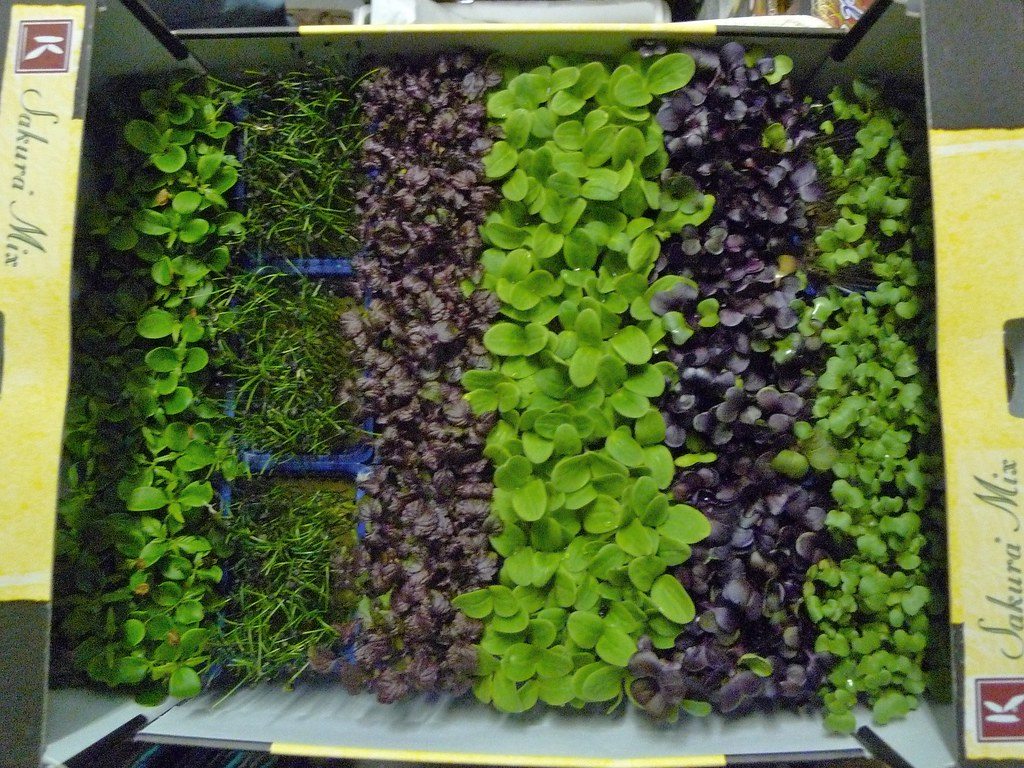
Best Microgreens for Beginners: Radish, Broccoli, Pea, or Sunflower?
Compare radish, broccoli, pea, and sunflower microgreens by seed prep, harvest time, flavor, and beginner-friendliness to choose your first tray.
10 min read
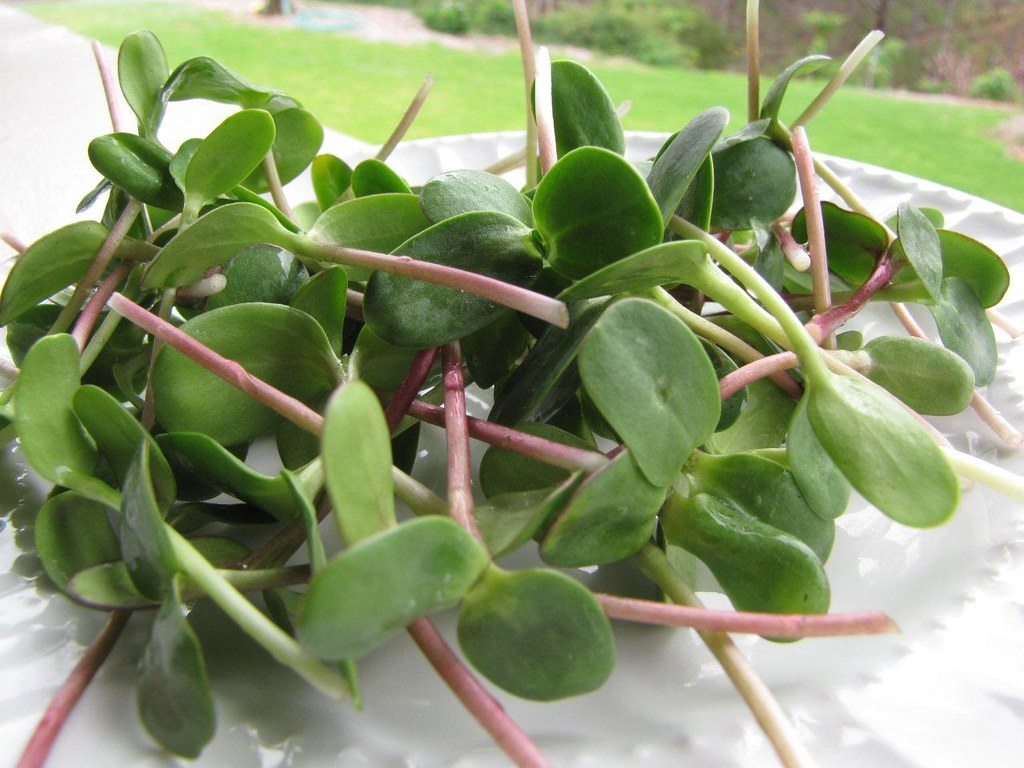
Sunflower Sprouts vs. Sunflower Microgreens: What’s the Difference?
Learn how sunflower sprouts and sunflower microgreens differ in growth stage, harvest method, texture, uses, and raw-food safety considerations.
13 min read
Speckled Pea Seeds for Microgreens: Why Growers Use Them
Learn why growers use speckled pea seeds for pea shoots and microgreens, what to check before buying, and why seed quality matters more than the label alone.
13 min read
Stay in the loop
New guides, when they publish
An occasional email when a new guide goes live. No spam.
Your email is stored privately for future guide updates. No emails are being sent yet. Privacy policy