Growing & Seeds · Basics
Microgreen Seeds vs. Regular Garden Seeds: What’s Actually Different?
In most cases, microgreen seeds and regular garden seeds are not inherently different kinds of seed. “Microgreen seed” usually describes how the seed is intended to be grown and harvested—densely planted and cut as young edible shoots—rather than a separate biological category.
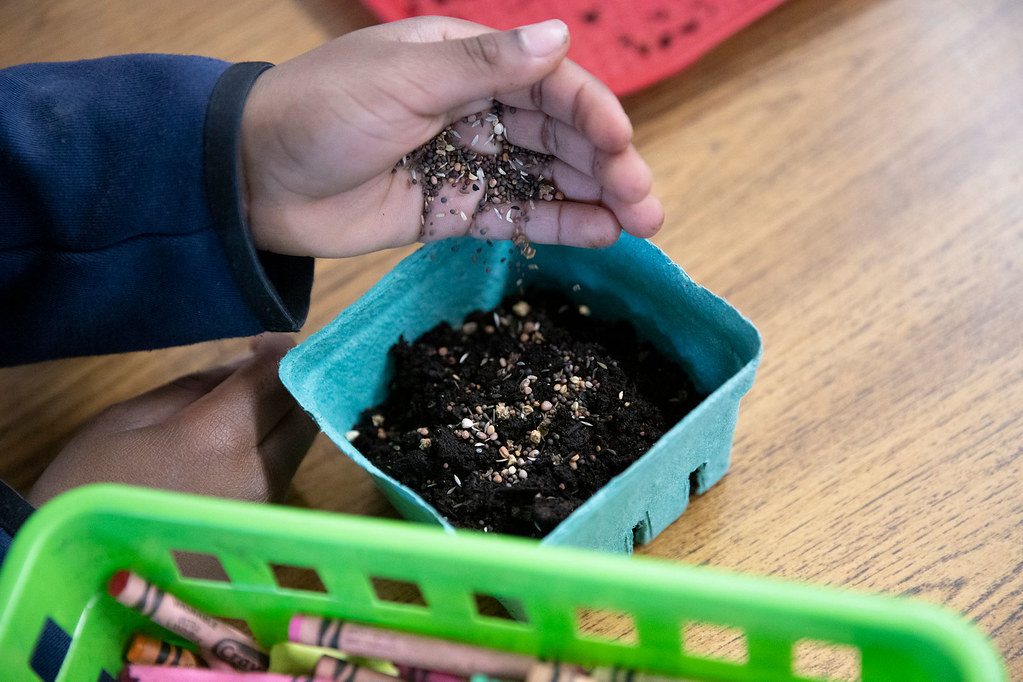
A regular garden seed packet can be suitable for microgreens when the crop is appropriate for edible young shoots, the seed has no treatment or warning that rules out food use, and the package or supplier provides useful quality information. The biggest differences are typically treatment status, crop suitability, labeling, germination details, package size, and supplier transparency.
Are Microgreen Seeds Actually Different From Garden Seeds?
Same plant seed, different intended use
A seed sold for microgreens may be the same crop—and sometimes the same variety—as one sold for a mature vegetable garden. The seed itself is not transformed into a distinct “microgreen seed” because it will be harvested young.
In practical terms, “microgreen seed” is a retail-use description. It signals that the seller expects the buyer to grow the crop as edible young shoots rather than to maturity.
U.S. seed-labeling rules focus on characteristics such as seed kind, variety, purity, germination, and chemical treatment. They do not establish “microgreen seed” as a separate biological seed class. That makes this a practical buying distinction, not a formal scientific or legal category. USDA Agricultural Marketing Service — Federal Seed Act
Why suppliers label seed for microgreens
Microgreen growers often have different needs from gardeners growing mature vegetables. They may want:
- Larger package sizes for frequent tray planting
- Crops commonly grown as edible shoots
- Germination or lot information
- Straightforward treatment-status details
- Seed formats convenient for repeated indoor growing
Still, the words “microgreen seed” alone do not prove that a product is untreated, organic, pathogen-tested, or superior in germination. A specific package or supplier may provide documentation for those characteristics, but the marketing category by itself does not establish them.
Can You Use Regular Garden Seeds for Microgreens?
Yes—regular garden seed can work for microgreens, but not every packet is a suitable choice. Use this checklist before planting.
The four-part suitability checklist
- Choose an appropriate edible crop.
Select a crop with an established history of microgreen use. A plant that is edible when mature is not automatically appropriate to eat as a young shoot.
- Check the treatment statement.
Avoid pesticide-treated seed for edible microgreens. Penn State Extension notes that seed hulls can remain attached to some harvested microgreens, which is one reason treatment status matters. Penn State Extension — Growing Microgreens
- Look for useful quality and traceability details.
Prefer seed that clearly identifies the crop and, when available, the variety, germination percentage, test date, lot number, and supplier contact information.
- Use sound handling practices.
Seed sourcing is only one part of the result. Proper storage, clean water, clean trays and tools, appropriate growing media, and hygienic harvesting all matter.
When a small garden packet makes sense—and when it does not
A small garden packet can be reasonable when you are:
- Testing a new crop before buying more seed
- Growing an occasional tray
- Using leftover seed that meets the checklist
- Trying a crop that does not require much seed
A microgreen-oriented bulk package may be more practical for frequent growers. Microgreens are typically sown much more densely than crops grown to maturity, so a small packet can be used quickly. University of Maryland Extension — Growing Microgreens and Baby Greens Indoors
That does not mean bulk seed is always a better value or better quality. Choose a quantity that matches how often you plan to grow and what you can store properly.
The Biggest Difference: Treatment, Coatings, and Food Use
What “treated” means on a seed label
Treatment information is one of the most important details to review before using seed for edible microgreens. For seed regulated under the Federal Seed Act in interstate commerce, chemical treatment information is subject to labeling requirements. USDA Agricultural Marketing Service — Federal Seed Act
Read the whole package, including treatment statements, cautionary language, and instructions. Do not make assumptions based on the crop name, package design, or where the seed was sold.
Why “do not use for food or feed” ends the decision
This is the clearest rule:
> If a seed package says not to use the seed for food or feed, do not use it for edible microgreens.
USDA guidance requires specified warnings for certain chemically treated seed when treatment remaining on the seed could be harmful if used for food, feed, or oil purposes. Home rinsing, soaking, or similar practices do not override that warning. USDA Agricultural Marketing Service — Labeling Requirements for Chemically Treated Seed
Coated and pelleted seed: verify rather than guess
Do not judge treatment status by appearance alone.
Some seed is coated or pelleted to make it easier to handle and sow. Pelleting can use inert materials such as clay, while other coatings may involve treatments that require specific labeling. A visible coating, bright color, or pellet does not by itself tell you whether a seed is appropriate for edible microgreens. University of Georgia Cooperative Extension — Starting Plants From Seed for the Home Gardener
Instead:
- Read the treatment statement.
- Look for food-use warnings.
- Review the supplier’s product information.
- Ask for written clarification if the label is unclear.
Organic vs. untreated: related but not interchangeable
“Organic” and “untreated” answer different questions.
USDA organic guidance distinguishes between treated and non-treated seed and recognizes pelleted seed as a separate seed form. If untreated seed matters to you, look for an explicit untreated claim or contact the supplier for details rather than treating “organic” as a universal shorthand for uncoated or never-treated seed. USDA Agricultural Marketing Service — National Organic Program Handbook 5029
Likewise, conventional seed is not automatically unsuitable. The relevant questions are whether the crop is appropriate for microgreen harvest and whether the package information is compatible with edible use.
What to Look for on a Microgreen Seed Label
Use this table when comparing microgreen-marketed seed with a standard garden packet.
| Label or Supplier Detail | Why It Matters | Buyer Action |
|---|---|---|
| Crop or species | Confirms what you are growing | Choose crops with an established history of edible microgreen use. |
| Variety, when listed | Identifies the specific seed more precisely | Compare similar crops and varieties when evaluating options. |
| Treatment statement | Identifies whether seed has been treated | Avoid treatment information incompatible with edible use. |
| Food or feed warning | May rule out edible use entirely | Do not use seed marked against food or feed use for edible microgreens. |
| Germination percentage | Provides a useful seed-quality indicator | Use it to compare options, not as a guarantee of tray performance. |
| Germination test date | Adds context to the germination result | Prefer current, clearly stated information when available. |
| Lot number, when available | Supports traceability | Keep it in case you need to contact the supplier. |
| Purity or weed-seed information | Provides additional quality context | Review it when supplied, especially for larger purchases. |
| Supplier contact information | Makes follow-up possible | Ask for written clarification when treatment or intended use is unclear. |
| Food-safety documentation, if supplied | May offer useful transparency | Do not assume every product labeled for microgreens has testing documentation. |
Seed-labeling requirements can vary by seed type, package, and sales context, so not every retail packet will present information in the same format. Still, crop identity, germination information, purity, treatment information, and seller identity are meaningful details when they are available. USDA Agricultural Marketing Service — Federal Seed Act
Germination information is useful, but it cannot guarantee identical results in every tray. Storage conditions, crop type, sowing density, temperature, moisture, light, and sanitation can all affect performance. Penn State Extension — Growing Microgreens
Not Every Garden Seed Makes a Good Microgreen
Choose crops with an established microgreen use
Treatment status is not the only consideration. A seed can be untreated and still be a poor choice for raw microgreen harvest.
Choose crops with an established history of being grown and eaten as microgreens. Common examples include radish, broccoli, peas, sunflower, and wheat. The right choice depends on the crop’s known suitability as a young edible shoot—not simply on whether its mature leaves, fruit, or roots are edible. Penn State Extension — The ABCs of Microgreens
Crops to avoid
Extension guidance specifically identifies several crops that should not be grown for microgreen harvest, including:
- Tomato
- Pepper
- Eggplant
- Potato
- Tomatillo
North Carolina State University lists tomato, eggplant, pepper, and potato among crops to avoid. Oregon State University also includes tomatillo. North Carolina State University — What Are Microgreens? Oregon State University Extension — Microgreens
The broader lesson is simple: do not assume every garden vegetable is appropriate to eat at the microgreen stage.
Why Microgreen Seed Is Often Sold in Larger Quantities
Microgreens are planted densely and harvested young, often after a short growing cycle. That is why seed intended for microgreen growing is commonly sold in larger bags than ordinary garden packets. University of Maryland Extension — Growing Microgreens and Baby Greens Indoors
For someone growing one short row of mature radishes, a small packet may be plenty. For someone planting trays of radish microgreens repeatedly, that same packet may be used up quickly.
A larger package may be practical when you:
- Grow microgreens often
- Use the same crop repeatedly
- Want to reduce the need for frequent reordering
- Have suitable storage conditions for unused seed
Larger is not automatically better. Buy only what you can reasonably use and store well.
Microgreen Seed Sourcing and Food Safety
Microgreens are not sprouts
Microgreens and sprouts are different products. Microgreens are generally grown in soil or another growing medium and harvested above the growing medium. Sprouts are usually grown and harvested earlier, often with the seed and root still attached. U.S. Food and Drug Administration — Standards for the Growing, Harvesting, Packing, and Holding of Sprouts for Human Consumption
The distinction matters because sprouts have their own FDA food-safety guidance and a different production profile. Microgreens should not be assumed to have identical food-safety risks or identical seed-handling requirements.
Practical home-growing precautions
Seed sourcing matters, but it is only one part of food safety. For home-grown microgreens:
- Use clean water.
- Start with clean trays, tools, and work surfaces.
- Use appropriate growing media.
- Handle harvested microgreens hygienically.
- Choose suppliers that provide clear product and contact information.
University of Nevada Extension identifies seed handling, water, growing media, environmental conditions, sanitation, harvest practices, and worker hygiene as relevant to safer microgreen production. University of Nevada, Reno Extension — Microgreens and Produce Safety
No seed label should be treated as a guarantee of zero food-safety risk. The word “microgreen” alone does not establish that seed was pathogen-tested, although a supplier may provide product- or lot-specific documentation separately. University of Nevada, Reno Extension — Microgreens and Produce Safety Clean growing and handling practices remain important.
Bottom Line: Which Should You Buy?
Choose based on the seed’s actual information—not just whether the package says “microgreen” or “garden.”
- Use a suitable garden seed packet when it identifies the crop, has no incompatible treatment statement or food-use warning, and provides enough seed for your plans.
- Choose microgreen-marketed seed when it offers a useful crop selection, convenient larger quantities, and clear details for the way you intend to grow.
- Do not use seed for edible microgreens when the package says it is not for food or feed use.
- Do not rely on marketing language alone. Check crop identity, treatment status, germination information, lot details when available, and supplier documentation.
The most useful distinction is not “microgreen seed versus garden seed.” It is whether a particular seed lot is appropriate, clearly labeled, and practical for growing edible microgreens.
Research & Further Reading
Government and Food-Safety Sources
- USDA Agricultural Marketing Service — Federal Seed Act
https://www.ams.usda.gov/rules-regulations/fsa
- USDA Agricultural Marketing Service — Labeling Requirements for Chemically Treated Seed
https://www.ams.usda.gov/sites/default/files/media/LabelingRequirementsforChemicallyTreatedSeed.pdf
- USDA Agricultural Marketing Service — Seeds and Planting Stock Practice Standard
https://www.ams.usda.gov/grades-standards/seeds-and-planting-stock-practice-standard
- USDA Agricultural Marketing Service — National Organic Program Handbook 5029: Seeds, Annual Seedlings, and Planting Stock in Organic Crop Production
https://www.ams.usda.gov/rules-regulations/organic/handbook/5029
- U.S. Food and Drug Administration — Guidance for Industry: Standards for the Growing, Harvesting, Packing, and Holding of Sprouts for Human Consumption
https://www.fda.gov/media/102430/download
- U.S. Food and Drug Administration — Selecting and Serving Produce Safely
https://www.fda.gov/food/buy-store-serve-safe-food/selecting-and-serving-produce-safely
University and Extension Sources
- Penn State Extension — Growing Microgreens
https://extension.psu.edu/growing-microgreens
- Penn State Extension — The ABCs of Microgreens
https://extension.psu.edu/the-abcs-of-microgreens
- University of Maryland Extension — Growing Microgreens and Baby Greens Indoors
https://extension.umd.edu/resource/growing-microgreens-and-baby-greens-indoors
- North Carolina State University, Plants for Human Health Institute — What Are Microgreens?
https://stem.plantsforhumanhealth.ncsu.edu/wp-content/uploads/sites/164/2026/02/2022-Microgreens-card-PRINT.pdf
- Oregon State University Extension — Microgreens
https://extension.oregonstate.edu/imported-publication/microgreens
- University of Georgia Cooperative Extension — Starting Plants From Seed for the Home Gardener
https://site.extension.uga.edu/colquittag/files/2025/05/B-1432_4.pdf
- University of Nevada, Reno Extension — Microgreens and Produce Safety
https://naes.agnt.unr.edu/PMS/Pubs/2020-3468.pdf
Company / Product Information
- Andi’s Way — Organic Sprouting Seeds collection. This is company product information, not evidence about food safety, nutrition, or health effects.
https://andisway.com/collections/organic-sprouting-seeds
Frequently asked questions
Related guides
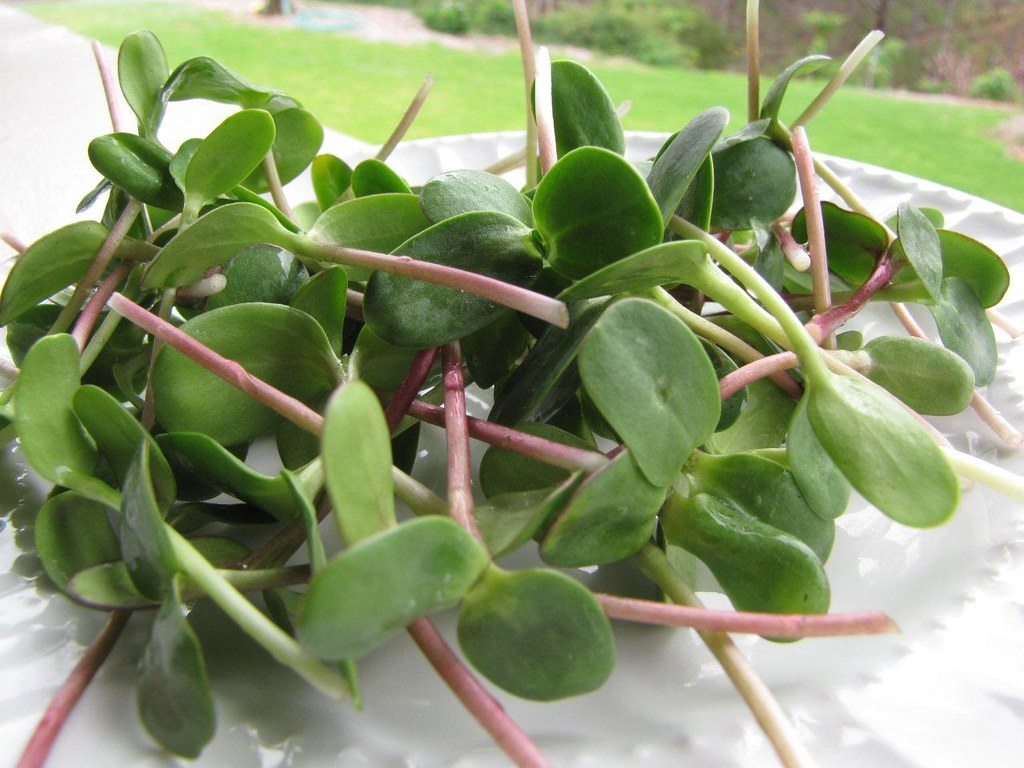
Sunflower Sprouts vs. Sunflower Microgreens: What’s the Difference?
Learn how sunflower sprouts and sunflower microgreens differ in growth stage, harvest method, texture, uses, and raw-food safety considerations.
13 min read
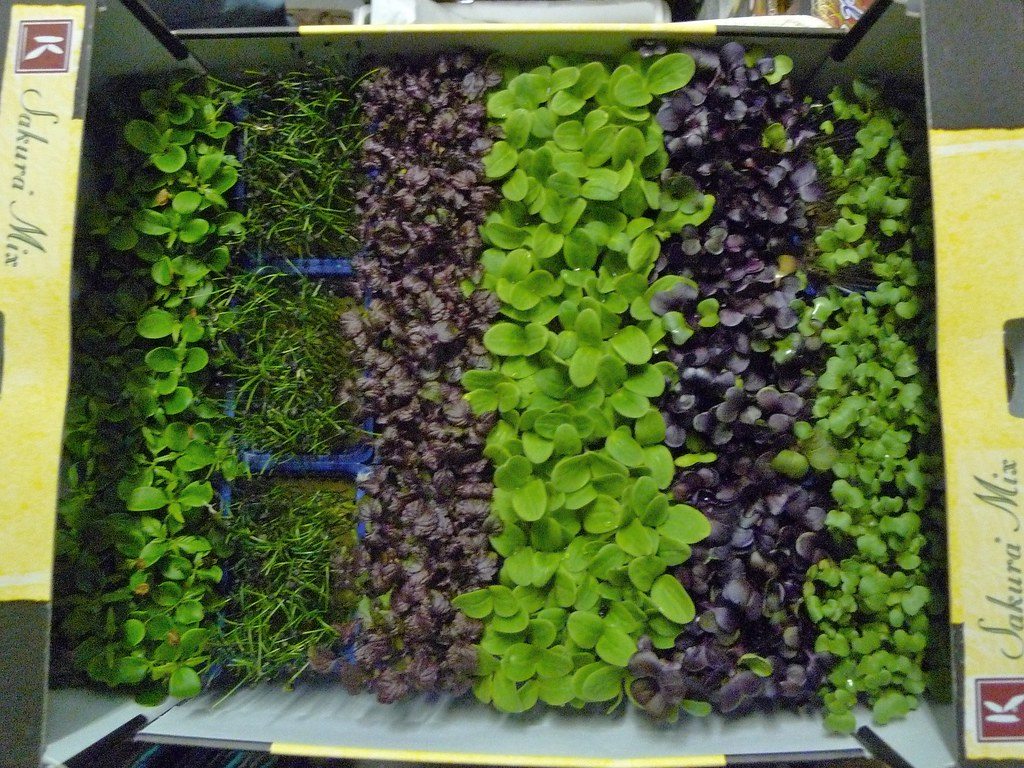
Best Microgreens for Beginners: Radish, Broccoli, Pea, or Sunflower?
Compare radish, broccoli, pea, and sunflower microgreens by seed prep, harvest time, flavor, and beginner-friendliness to choose your first tray.
10 min read
Speckled Pea Seeds for Microgreens: Why Growers Use Them
Learn why growers use speckled pea seeds for pea shoots and microgreens, what to check before buying, and why seed quality matters more than the label alone.
13 min read
Stay in the loop
New guides, when they publish
An occasional email when a new guide goes live. No spam.
Your email is stored privately for future guide updates. No emails are being sent yet. Privacy policy