Food Safety · Storage
How to Tell If Microgreens Have Gone Bad
Discard fresh microgreens if they have visible mold, a slimy or sticky surface, a strong sour, musty, fermented, or rotten odor, or widespread soft, wet, collapsed, or decomposing tissue. These are practical signs of spoilage or quality breakdown in fresh microgreens. Postharvest research on packaged mustard microgreens evaluates indicators such as off-odor, sliminess, wilting, color, and overall quality during storage.
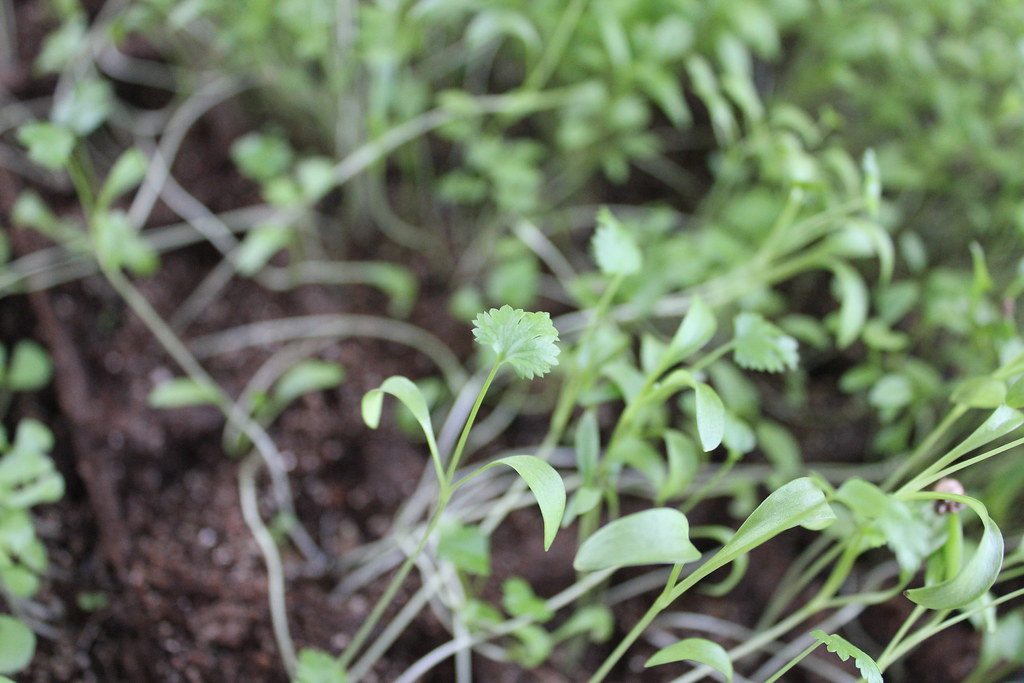
Just as important, microgreens that look and smell normal are not automatically free of harmful bacteria. Sight and smell can reveal obvious spoilage, but they cannot confirm that raw produce is free of foodborne pathogens. Do not taste questionable microgreens to decide whether they are safe. FDA food-safety guidance notes that food can look and smell fresh while still containing harmful bacteria.
Quick Checklist: When to Throw Microgreens Away
| What you notice | What it may indicate | Best action |
|---|---|---|
| Visible fuzzy, powdery, or spreading growth | Mold or uncertain spoilage | Discard the package or batch |
| Slimy, sticky, or slick leaves and stems | Spoilage and tissue breakdown | Discard |
| Sour, musty, fermented, rotten, or distinctly unpleasant smell | Spoilage-related off odor | Discard |
| Widespread soft, wet, translucent, darkened, or collapsed tissue | Decay or decomposition | Discard |
| Minor wilting, dry edges, or limited yellowing only | Quality decline; not a reliable safety test | Use promptly only if the greens are otherwise normal and were stored correctly. When uncertain, discard. |
The Main Signs Microgreens Have Gone Bad
Visible Mold or Spreading Unusual Growth
Visible fuzzy, powdery, or spreading growth on harvested microgreens is a practical reason to discard them. Do not rely on color or a photograph to decide whether suspicious microgreens are safe to eat. For harvested microgreens with visible fuzzy or spreading growth, discard the package or affected batch. USDA FSIS: Molds on Food
For a moist, delicate food such as packaged microgreens, the conservative approach is to discard the whole package or affected batch rather than picking out visibly moldy leaves. USDA guidance explains that mold can extend below a food’s surface and that moldy moist foods may also contain bacteria that are not visible. This is general mold guidance, but it is a sensible precaution for fresh microgreens. USDA FSIS: Molds on Food
Do not trim around mold and assume the remaining greens are safe.
Slimy, Sticky, Wet, or Collapsing Leaves and Stems
A slight loss of crispness is different from slime. Fresh microgreens can wilt or soften as they age, particularly delicate varieties. But leaves or stems that feel slick, sticky, or slimy are stronger signs of spoilage.
Discard microgreens if you notice:
- A slippery or sticky coating
- Wet or water-soaked leaves and stems
- Translucent tissue
- Widespread softening or collapse
- Darkened areas that are wet and visibly breaking down
Research on packaged microgreens treats sliminess, off-odor, wilting, color changes, and overall appearance as separate sensory measures of postharvest quality. At home, you do not need to identify the exact cause: visibly slimy or decomposing greens should be discarded. Xiao et al., Effect of Storage Temperature on Storage Life and Sensory Attributes of Packaged Mustard Microgreens
A Sour, Musty, Fermented, or Rotten Smell
Fresh microgreens may have a mild vegetal, grassy, peppery, or otherwise crop-specific aroma. What matters is whether the smell is clearly unpleasant or noticeably different from how the greens smelled when fresh.
Discard the package if the microgreens smell:
- Sour
- Fermented
- Musty
- Rotten
- Putrid
- Otherwise noticeably “off”
Spoilage organisms can cause unpleasant odors, flavor changes, and texture changes. USDA FSIS food-date guidance explains that spoilage bacteria may produce off odors, flavors, or textures. Do not taste the greens to investigate an unusual smell.
Yellowing, Wilting, and Dark Spots: What They Can—and Cannot—Tell You
Yellowing, dry edges, and mild wilting can develop as microgreens lose quality during storage. These changes may make the greens less appealing, but they are not complete food-safety tests on their own.
For example, slightly wilted microgreens without slime, mold, wet decay, or an off odor may simply be past their best quality. If they have been kept refrigerated and package storage instructions were followed, use them promptly rather than holding them longer—but remember that neither appearance nor storage history can guarantee that raw produce is pathogen-free. FDA food-safety guidance
Yellowing or discoloration is more concerning when it appears along with:
- Sliminess
- Visible mold
- A sour or rotten smell
- Wet, translucent, or collapsing tissue
- Widespread dark, soft decay
Postharvest studies assess yellowing and wilting as quality changes. Yellowing alone is not a reliable food-safety test, so this guide does not use a specific yellowing cutoff to determine whether microgreens are safe. Xiao et al. When in doubt, discard them.
What Smell and Appearance Cannot Tell You About Food Safety
Spoilage signs are good reasons to discard microgreens. However, the absence of spoilage signs is not a guarantee that the greens are free of harmful bacteria.
FDA guidance emphasizes that bacteria in food cannot reliably be seen, smelled, or tasted. FDA: Science and Our Food Supply That does not mean fresh-looking microgreens are necessarily contaminated; it means sensory checks cannot certify that any raw produce is pathogen-free.
> Key takeaway: Use sight and smell to identify obvious spoilage—not to confirm that microgreens are free of harmful bacteria.
If a package has visible mold, slime, wet decay, or a strong off odor, discard it without tasting.
Can You Wash or Pick Around Spoiled Microgreens?
No. Washing is not a rescue method for spoiled microgreens.
Do not try to salvage moldy, slimy, or decomposing microgreens by picking out affected leaves, cutting away a moldy area, or repeatedly rinsing the package. For a moist package of microgreens with visible mold, discard the package rather than trying to eat around the affected area. USDA FSIS mold guidance
For sound microgreens, follow the package instructions. If the package is not labeled pre-washed or ready-to-eat and you choose to rinse the greens, use clean running water, clean hands, and clean utensils. FDA advises against washing produce with soap, detergent, or commercial produce washes. FDA: 7 Tips for Cleaning Fruits and Vegetables
Rinsing is ordinary produce handling—not a way to restore spoiled greens.
How to Slow Quality Loss in Fresh Microgreens
Good storage cannot make spoiled microgreens safe again, but it can help fresh microgreens stay in better condition.
Refrigerate Promptly
Store perishable microgreens promptly in a clean refrigerator at 40°F (4°C) or below. Refrigerate cut or packaged produce, and follow package storage instructions when they are provided. FDA: Selecting and Serving Produce Safely
Avoid leaving fresh microgreens at room temperature longer than necessary after bringing them home or harvesting them.
Keep Them Separate From Raw Meat and Meat Juices
Microgreens are often eaten raw, so preventing cross-contamination matters. Keep them away from raw meat, poultry, seafood, and their juices in the refrigerator. FDA produce-handling guidance
Also:
- Wash hands before handling ready-to-eat greens.
- Use clean knives, cutting boards, bowls, and containers.
- Wash food-contact surfaces, dishes, utensils, and counters with soap and hot water after preparing raw animal foods and before using them for produce.
Use Promptly, but Do Not Rely on One Universal Shelf-Life Number
There is no single refrigerator shelf-life number that applies to every microgreen. Storage life can vary with the crop, packaging, storage temperature, washing, and handling before purchase. Reviews of the research describe postharvest deterioration as a major issue for microgreens, while storage studies show that temperature can substantially affect quality retention. Turner, Luo, and Buchanan review Xiao et al.
Use package dates and storage instructions as useful guidance, but do not treat a date as a complete safety test. USDA FSIS food-date guidance Microgreens with clear spoilage signs should be discarded even if a listed date has not arrived. Likewise, greens that look normal after a date are not automatically confirmed safe by appearance alone.
Microgreens vs. Sprouts: Why the Difference Matters
Microgreens and sprouts are distinct products. Microgreens are generally grown to a later stage and harvested above the growing medium, while sprouts are typically consumed with the seed and root. FDA sprout guidance
Sprout-specific food-safety messaging should not automatically be applied to microgreens. That distinction does not mean microgreens are risk-free, and it does not change the fact that appearance and smell cannot detect all harmful bacteria.
If the Microgreens Are Still Growing in a Tray
This guide is for harvested or purchased microgreens stored in a bag, clamshell, container, or refrigerator.
If the greens are still growing and you are trying to determine whether white fuzz is mold or root hairs, that is a different growing-stage question. Do not use this post-harvest discard guide to decide whether a growing tray can be salvaged.
Research & Further Reading
Government and institutional food-safety sources
- U.S. Food and Drug Administration — Selecting and Serving Produce Safely
- U.S. Food and Drug Administration — 7 Tips for Cleaning Fruits, Vegetables
- U.S. Food and Drug Administration — Fact or Fiction: Food Safety for Moms-to-Be
- U.S. Food and Drug Administration — Science and Our Food Supply: Food Safety A to Z Reference Guide
- U.S. Department of Agriculture, Food Safety and Inspection Service — Food Product Dating
- U.S. Department of Agriculture, Food Safety and Inspection Service — Molds on Food: Are They Dangerous?
- U.S. Food and Drug Administration — Guidance for Industry: Standards for the Growing, Harvesting, Packing, and Holding of Sprouts for Human Consumption
- Purdue Extension FoodLink — Microgreens
Peer-reviewed research and reviews
- Turner, E. R., Luo, Y., & Buchanan, R. L. — Microgreen Nutrition, Food Safety, and Shelf Life: A Review
PubMed record: https://pubmed.ncbi.nlm.nih.gov/32144769/ Publisher full text: https://ift.onlinelibrary.wiley.com/doi/full/10.1111/1750-3841.15049
- Xiao, Z., et al. — Effect of Storage Temperature on Storage Life and Sensory Attributes of Packaged Mustard Microgreens
- Renna, M., et al. — Nutritional Characterization and Shelf-Life of Packaged Microgreens
- Kibar, H., et al. — Postharvest Quality of Arugula Microgreens Determined by Microbiological, Physico-Chemical, and Sensory Parameters
Company/product-category information — not scientific evidence
- Andi’s Way — Fresh Organic Microgreens Collection
Frequently asked questions
Related guides
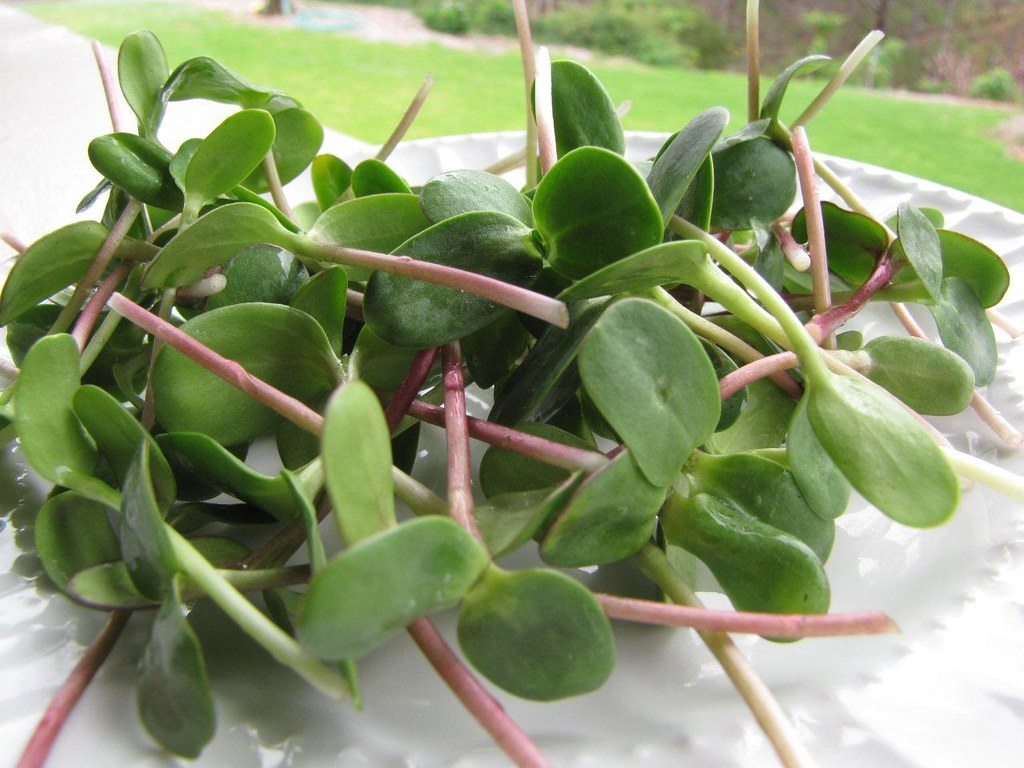
Sunflower Sprouts vs. Sunflower Microgreens: What’s the Difference?
Learn how sunflower sprouts and sunflower microgreens differ in growth stage, harvest method, texture, uses, and raw-food safety considerations.
13 min read
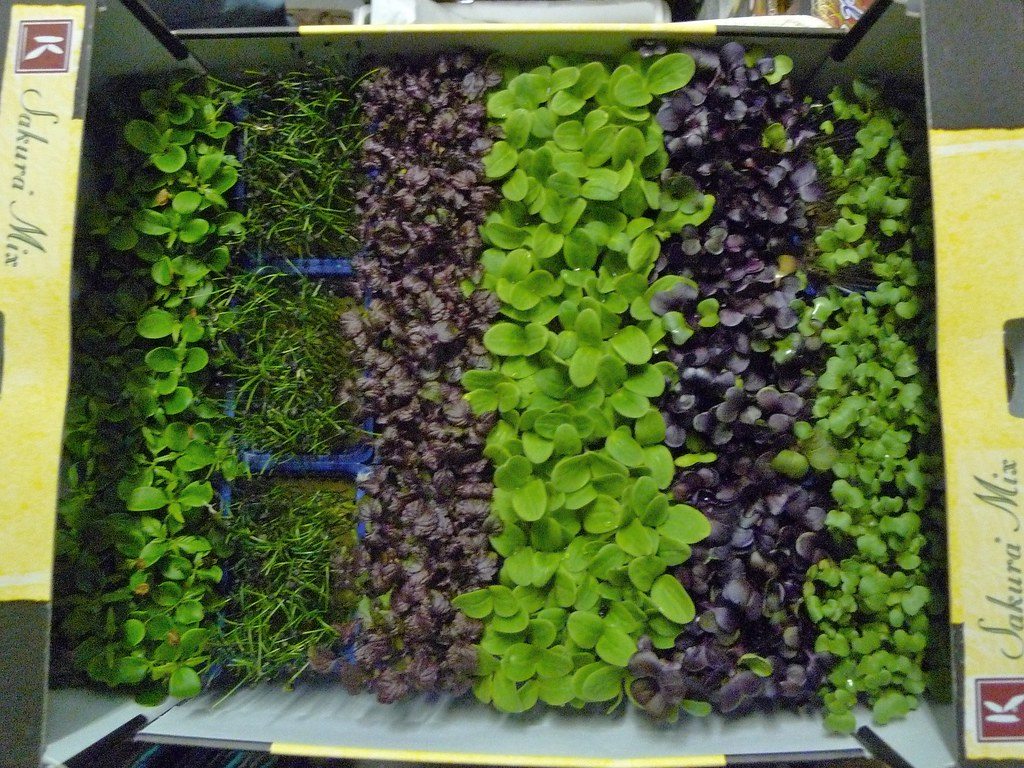
Best Microgreens for Beginners: Radish, Broccoli, Pea, or Sunflower?
Compare radish, broccoli, pea, and sunflower microgreens by seed prep, harvest time, flavor, and beginner-friendliness to choose your first tray.
10 min read
Speckled Pea Seeds for Microgreens: Why Growers Use Them
Learn why growers use speckled pea seeds for pea shoots and microgreens, what to check before buying, and why seed quality matters more than the label alone.
13 min read
Stay in the loop
New guides, when they publish
An occasional email when a new guide goes live. No spam.
Your email is stored privately for future guide updates. No emails are being sent yet. Privacy policy