Buying & Storage · Storage
How to Store Pea Shoots After Harvest
Freshly harvested pea shoots should be cooled promptly and refrigerated. Keep them <strong>cold, humid around the shoots but not wet on the surface, and loosely packed</strong> so the tender stems, leaves, and tendrils are not crushed. For home storage, place shoots with excess surface water removed in a clean, roomy container or bag, check for condensation, and rinse them under running water just before eating.
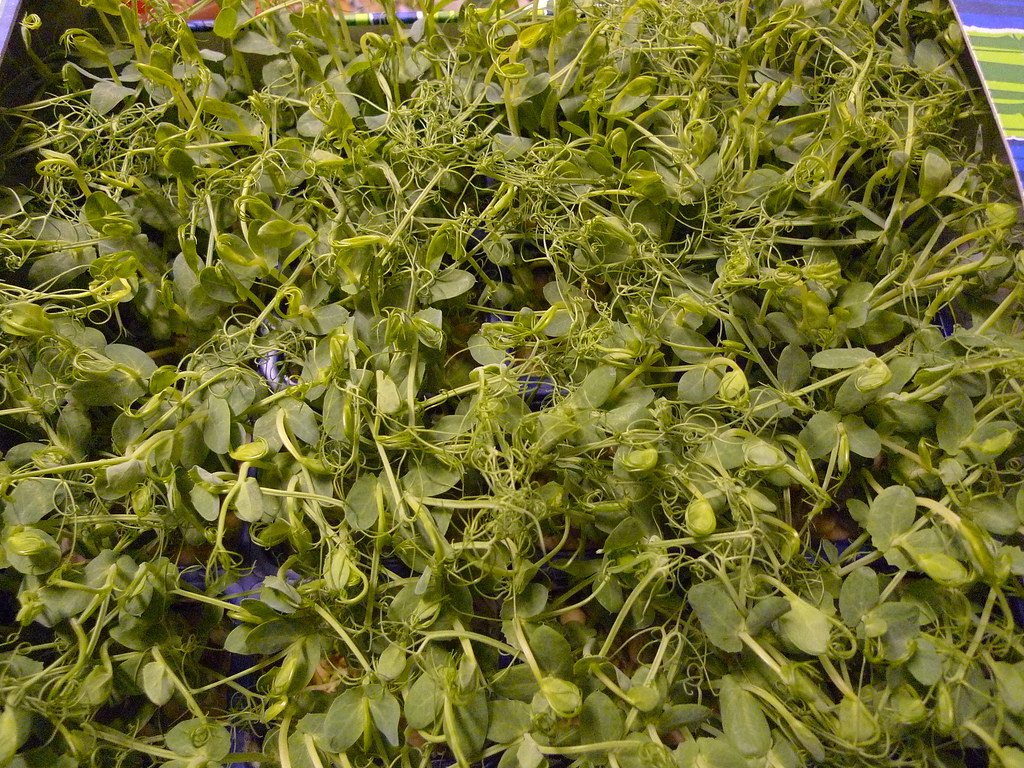
Pea shoots are fragile and highly perishable. Washington State University Extension recommends rapid cooling, storage near 32–34°F (0–1°C), high relative humidity, and avoiding both wet packing and tight packing. At home, keep perishable produce refrigerated at 40°F (4°C) or below, while preventing the shoots from freezing. (Washington State University Extension; FDA)
What This Guide Means by Pea Shoots
This guide covers fresh-cut leafy pea shoots, pea greens, and young pea tendrils intended for prompt eating after harvest or purchase.
It does not cover dry pea seeds, mature peas, snow peas, snap peas, or long-term preservation methods. Pea shoots are young pea vine tips with leaves and immature tendrils. They may sometimes be labeled similarly to pea sprouts, but sprouts are a different product category and should not automatically be assumed to have identical storage or food-safety requirements. (Washington State University Extension; UC Davis Postharvest Research and Extension Center)
Store Pea Shoots After Harvest in 5 Steps
1. Handle the shoots gently after cutting
Start with clean hands and clean harvesting equipment. (Penn State Extension; FDA)
Avoid squeezing the shoots into a dense handful or piling heavy produce on top of them.
Before storing, discard shoots that are clearly rotten, moldy, or badly damaged. Pea shoots bruise and crush easily, which is why they should not be tightly packed. (Washington State University Extension; FDA)
2. Cool them promptly
Move pea shoots into the refrigerator soon after cutting. Avoid leaving a harvested batch on a warm counter while finishing garden work, preparing a meal, or doing errands.
Prompt cooling slows quality loss, but it does not stop deterioration. Pea shoots remain highly perishable even under refrigeration. (Washington State University Extension; FDA)
3. Keep them humid—but do not pack them wet
This is the central storage rule for pea shoots.
Pea shoots can wilt when they lose too much moisture, yet shoots packed with free water can rot. Shake off excess water after harvest or rinsing, and do not allow the shoots to sit in pooled water. The goal is not to dry the shoots out; it is to remove visible surface water while maintaining a cool, humid environment around them. (Washington State University Extension)
Look for these conditions:
- Shoots are not dripping wet.
- There is no standing water in the container.
- Leaves and tendrils are not coated in heavy droplets.
- The container is checked regularly for condensation.
- The shoots are protected from excessive drying and crushing.
High humidity is helpful. Wet packing is not.
4. Use a clean, roomy container or bag
There is no well-established universal best household container for pea shoots. A clean zip-top bag, clamshell, lidded produce container, or similar storage container may work if it protects the shoots without compressing them or leaving them in water.
Choose a container that is:
- A clean container or bag intended for food storage
- Large enough to avoid crushing tender stems and leaves
- Free of standing water
- Easy to open and inspect
- Able to limit excessive drying
A practical home option is to place a clean, dry paper towel in the container if condensation develops. The towel may help absorb excess moisture, but this is a moisture-management technique rather than a proven best storage method for every batch of pea shoots. Replace it if it becomes damp. Temperature changes and resulting condensation can shorten the post-harvest life of microgreens. (Penn State Extension)
5. Refrigerate in a cold, stable place without freezing the shoots
Washington State University Extension identifies 32–34°F (0–1°C) as a commercial storage target for pea shoots. This is a quality-preservation target, not a requirement that every home refrigerator can precisely reproduce. (Washington State University Extension)
At home:
- Keep your refrigerator at 40°F (4°C) or below.
- Choose a cold area that does not freeze delicate greens.
- Avoid storing shoots where they are likely to freeze.
- Limit unnecessary warming and re-chilling.
Freezing can damage pea-shoot leaf tissue, so colder is not always better if the shoots freeze. (Washington State University Extension; FDA)
What Refrigerator Temperature Is Best for Pea Shoots?
Commercial target: 32–34°F (0–1°C)
For best post-harvest quality, WSU Extension recommends storing pea shoots near 32–34°F. The same guidance cautions that freezing can damage the shoots’ leaf tissue. (Washington State University Extension)
Controlled research on packaged baby pea shoots also found that 0°C storage better preserved visual quality and was associated with less decay and off-odor development than 5°C storage. However, the research used specific packaging, temperature, and humidity conditions, so it should not be treated as a guarantee of long home refrigerator shelf life. (Abd El-Rehim et al.)
Practical home target: 40°F (4°C) or below
The FDA advises keeping perishable produce in a clean refrigerator at 40°F or below. A refrigerator thermometer can help confirm the appliance’s actual temperature. (FDA)
For home storage, the practical priorities are prompt chilling, avoiding freezing, and using the shoots soon.
Why stable temperature matters
Repeated temperature changes can lead to condensation in packaging. Penn State Extension notes that condensation associated with temperature shifts can reduce the post-harvest life of microgreens. (Penn State Extension)
If droplets build up inside the storage container, gently dry the container, replace a damp paper towel if using one, and return the shoots to refrigeration promptly. Condensation is a quality concern, but it does not by itself prove that a product is unsafe.
Should You Wash Pea Shoots Before Storing Them?
Best default: wash just before eating
As a practical default, avoid washing pea shoots before storage. Penn State Extension notes that washing microgreens before sale can reduce post-harvest life, especially when moisture remains on the product. (Penn State Extension)
Instead, store shoots with excess surface moisture removed, then rinse the portion you plan to use under running water immediately before preparing or eating it.
If the shoots need a post-harvest rinse
If pea shoots are visibly soiled, a rinse may be necessary. In that case:
- Rinse gently under cool running water.
- Drain thoroughly.
- Remove excess surface moisture as practically as possible.
- Refrigerate promptly in a clean container.
Do not leave rinsed shoots soaking in water.
Do not use soap, detergent, bleach, or produce washes
The FDA advises rinsing produce under running water rather than using soap, detergent, or commercial produce washes. FDA food-safety guidance also advises against using bleach solutions on produce. (FDA; FDA: Fruits, Veggies and Juices—Food Safety for Moms-to-Be)
Rinsing can reduce some surface contamination, but it does not make raw produce sterile or eliminate all bacteria. Use clean hands, clean equipment, clean containers, and refrigeration as part of safe handling. (FDA)
The Best Container for Storing Pea Shoots
The “best” container is less important than the conditions inside it. Pea shoots need protection from crushing and excessive drying, without being trapped in free water.
| Storage feature | Why it matters for pea shoots |
|---|---|
| Clean container or bag intended for food storage | Helps avoid transferring soil, residue, or other contamination to fresh shoots |
| Room around the shoots | Reduces bruising and crushed stems, leaves, and tendrils |
| No standing water | Helps avoid wet packing and rapid deterioration |
| Easy inspection | Makes it easier to notice condensation or obvious spoilage |
| Moisture management | Helps balance wilting risk against excess surface wetness |
A zip-top bag can be suitable if it is clean, roomy, and does not compress the shoots. A clamshell or produce container can also work if you monitor moisture buildup. Available evidence does not establish one universal winner among common household storage options.
How Long Do Pea Shoots Last After Harvest?
Best-quality window: use them promptly
Washington State University Extension advises using pea shoots within roughly 1–2 days of harvest for best quality. This is a best-quality benchmark, not an automatic discard deadline. (Washington State University Extension)
A batch may lose quality sooner if it was roughly harvested, left warm, crushed, packed wet, or stored in a refrigerator with frequent temperature swings. Carefully handled shoots may remain acceptable longer, but their quality should be checked daily.
Why shelf-life estimates vary
Published estimates can differ substantially because the products and storage conditions are not always comparable. Relevant differences include:
- Pea shoots versus pea greens or pea tendrils
- Harvest maturity and cultivar
- Harvest damage
- Packaging type
- Temperature and relative humidity
- Commercial cold storage versus home refrigeration
- The quality standard used by the seller or researcher
For example, the Southeastern U.S. Vegetable Crop Handbook lists an approximate 2–3-week storage life for commercially handled pea tendrils held at 37–39°F (3–5°C) and 90–95% relative humidity. That figure applies to a specific product category and controlled commercial conditions; it is not a promise that home-harvested pea shoots will last for weeks in a household refrigerator. (Southeastern U.S. Vegetable Crop Handbook)
Use shelf-life guidance as a quality reference, not as proof of food safety. Fresh produce can carry microorganisms that cannot be reliably detected by appearance, smell, or texture alone. (FDA)
How to Prevent Slimy or Wilted Pea Shoots
To reduce wilting
- Refrigerate shoots promptly after harvest.
- Keep them in a humid storage environment rather than fully exposed on an open refrigerator shelf.
- Avoid crushing or tightly packing them.
- Prevent freezing injury.
To reduce slime and rot
- Do not pack pea shoots dripping wet.
- Do not leave them sitting in pooled water.
- Check for condensation in the storage container.
- Replace a damp paper towel if you are using one.
- Remove and discard clearly decayed shoots.
- Use clean hands and containers.
Wet packing can contribute to rot, while condensation and temperature fluctuations can reduce post-harvest quality. (Washington State University Extension; Penn State Extension)
How to Tell When Pea Shoots Have Gone Bad
Wilting versus spoilage
Mild wilting generally signals lost freshness and crispness. It is not automatically the same as spoilage.
Discard pea shoots that have clear deterioration signs, including:
- Slimy leaves or stems
- Visible mold
- Rotten or decayed areas
- An unpleasant or off odor
- Extensive breakdown of leaves or stems
FDA guidance advises consumers to discard produce that appears rotten. Visual and smell checks can identify obvious quality problems, but they cannot confirm that raw produce is free of harmful microorganisms. (FDA)
What if Pea Shoots Sat Warm After Harvest or During Transport?
Refrigerate them as soon as possible. Cooling can slow further quality loss, but it cannot reverse wilting, bruising, or deterioration that occurred while the shoots were warm.
When unpacking or storing the shoots, check for:
- Condensation in the package
- Wilted leaves
- Crushed stems
- Sliminess
- Off odors
- Visible decay
The available pea-shoot guidance supports prompt refrigeration but does not establish one universal room-temperature time limit for every harvest, seller, or storage situation. (Washington State University Extension; FDA)
Can You Freeze Pea Shoots?
Freezing is not a good method for preserving the crisp texture of fresh pea shoots. Washington State University Extension notes that freezing damages pea-shoot leaf tissue. (Washington State University Extension)
For fresh salads, garnishes, and similar uses, refrigeration and prompt use are the better approach.
Frequently asked questions
Research & Further Reading
- Washington State University Extension, Pea Shoots
- U.S. Food and Drug Administration, Selecting and Serving Produce Safely
- U.S. Food and Drug Administration, Fruits, Veggies and Juices—Food Safety for Moms-to-Be
https://www.fda.gov/food/people-risk-foodborne-illness/fruits-veggies-and-juices-food-safety-moms-be
- Penn State Extension, Growing Microgreens
- Southeastern U.S. Vegetable Crop Handbook, 2026 storage recommendations
- Abd El-Rehim et al., Quality and Storability of Baby Pea-Shoots as Affected by Passive Modified Atmosphere and Storage Temperatures
- UC Davis Postharvest Research and Extension Center, Sprouts
- Andi’s Way, Fresh Organic Microgreens — company product-category information, not scientific evidence
Related guides
How to Store Sunflower Microgreens After Harvest
Learn how to store sunflower microgreens after harvest, including refrigerator temperature, washing guidance, moisture control, food safety, and realistic shelf-life expectations.
10 min read
How to Store Microgreens and How Long They Last
Learn how to store microgreens: refrigerator temperature, moisture control, containers, washing guidance, food safety, and shelf-life expectations.
11 min read
Sunflower Sprouts vs. Sunflower Microgreens: What’s the Difference?
Learn how sunflower sprouts and sunflower microgreens differ in growth stage, harvest method, texture, uses, and raw-food safety considerations.
13 min read
Stay in the loop
New guides, when they publish
An occasional email when a new guide goes live. No spam.
Your email is stored privately for future guide updates. No emails are being sent yet. Privacy policy