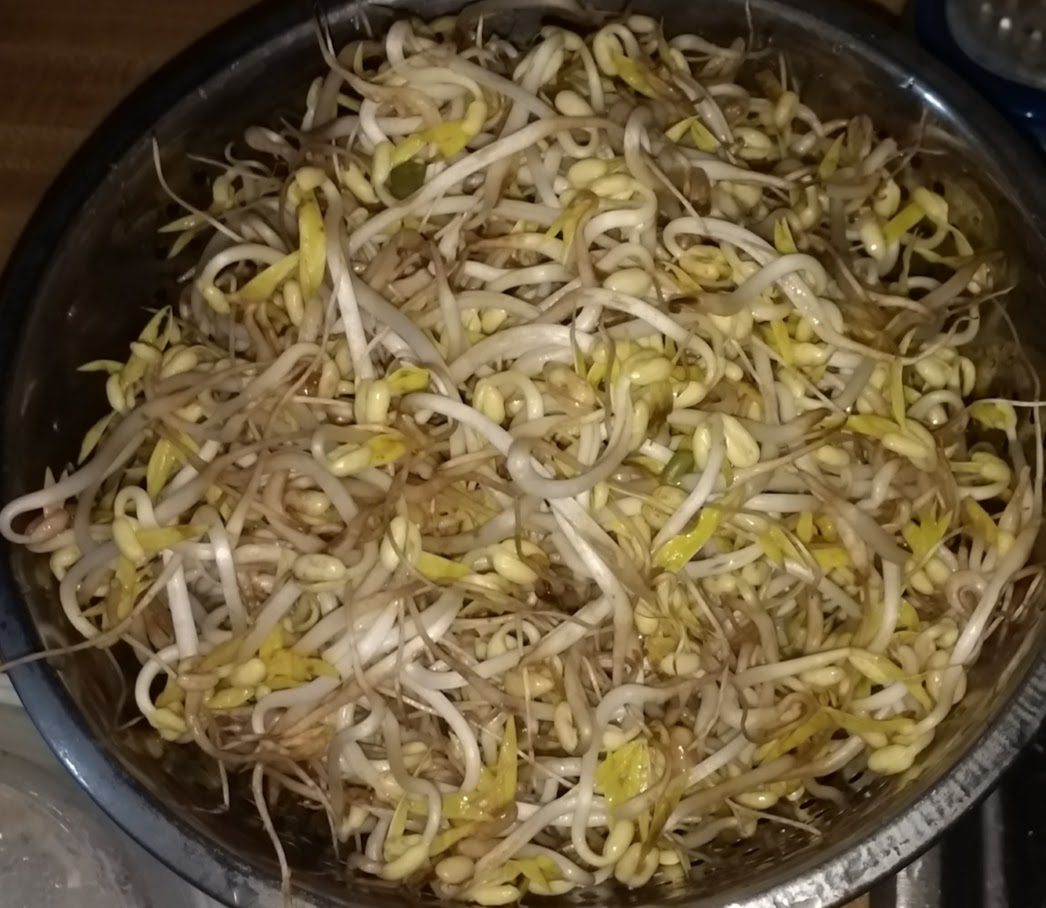
Store mung bean sprouts in the refrigerator as soon as possible, at 40°F (4.4°C) or below. Before storing them, drain thoroughly and gently pat away excess surface moisture. Place the sprouts in a clean, food-safe container or storage bag, avoid leaving them in pooled water, and check for excess condensation. (FDA produce-safety guidance)
For best quality, plan to use mung bean sprouts within a few days. Virginia Cooperative Extension gives a practical refrigerator guideline of approximately 4–6 days, but that range is not a universal shelf-life guarantee. Freshness at purchase or harvest, refrigerator temperature, handling, packaging, and moisture can all affect how long they last. (Virginia Cooperative Extension)
Refrigeration slows deterioration but does not make raw sprouts risk-free. Raw or lightly cooked mung bean sprouts may carry harmful bacteria. People at higher risk of severe foodborne illness—including pregnant people, young children, older adults, and people with weakened immune systems—should avoid raw or lightly cooked sprouts. (FDA; CDC)
The Best Way to Store Mung Bean Sprouts
Use the following process for freshly purchased or harvested mung bean sprouts.
1. Check the sprouts before storing
Inspect the sprouts before placing them in the refrigerator. Discard them if they already show signs such as:
- A slimy or slippery coating
- Mold
- A sour, rotten, or musty odor
- Dark or brown discoloration
- Mushy, collapsed, or severely deteriorated areas
Do not try to preserve visibly spoiled sprouts by rinsing, drying, or freezing them. University of Connecticut Extension identifies abnormal odor, slime, discoloration, and deterioration as reasons to discard sprouts. (University of Connecticut Extension)
2. Drain and gently pat them dry
Drain the sprouts thoroughly, then gently pat them with a clean towel or paper towel to remove visible surface moisture.
The goal is not to dry the sprouts completely. Avoid excessive drying; instead, remove dripping water and avoid storing the sprouts while they are sitting in a puddle.
If you rinse the sprouts before storage, drain and pat them dry afterward. Rinsing may remove some surface debris, but it does not eliminate pathogens from raw sprouts. If packaged sprouts are labeled “pre-washed” or “ready-to-eat,” follow the package instructions rather than washing them again unnecessarily. (FDA produce-safety guidance)
3. Use a clean food-safe container
Place the sprouts in a clean, food-safe container or storage bag. Keep them covered or otherwise protected from contamination, and avoid packing them so tightly that they become crushed.
Available guidance supports clean, covered storage, but it does not establish glass, plastic, sealed bags, or vented containers as universally best for every household. Choose a practical food-safe option and pay attention to moisture buildup. (FDA food-storage guidance)
Keep the container away from raw meat, poultry, and seafood to reduce the risk of cross-contamination.
4. Refrigerate promptly
Refrigerate the sprouts as soon as possible after buying or harvesting them. Keep the refrigerator at 40°F (4.4°C) or below. A refrigerator thermometer can help verify that the appliance is maintaining the recommended temperature. (FDA produce-safety guidance)
Mung bean sprouts are highly perishable. Prompt, stable cooling helps slow quality deterioration, but refrigeration does not kill all harmful bacteria or make raw sprouts safe for everyone.
How Cold Should Mung Bean Sprouts Be?
Keep mung bean sprouts at 40°F (4.4°C) or below. This is the general refrigerator temperature recommended for perishable foods and is also used in extension guidance for finished sprouts. (FDA food-storage guidance; Virginia Cooperative Extension)
A consistently cold refrigerator is preferable to storage that repeatedly warms and cools. Avoid leaving finished sprouts on the counter for extended periods, particularly in a warm kitchen. Refrigerate them promptly after purchase or harvest.
Commercial and postharvest storage conditions may be more precisely controlled than a household refrigerator. Results from controlled storage should not be transferred directly to every home refrigerator because temperature stability, airflow, packaging, and handling can differ.
How to Manage Moisture During Storage
Moisture management is an important part of mung bean sprout storage. Sprouts should not be allowed to dry out excessively, but pooled water and heavy condensation may contribute to faster deterioration.
Postharvest guidance discusses the importance of humidity and temperature for maintaining sprout quality. That information is useful for general context, but it should not be treated as a universal household storage rule or a guaranteed shelf-life prediction. (UC Davis Postharvest Research and Extension Center)
Avoid pooled water and excess condensation
After draining and patting the sprouts dry:
- Place them in a clean container.
- Check the bottom and sides for pooled water.
- Remove excess water if it accumulates.
- Look for heavy condensation when opening the container.
- Discard the sprouts if they develop signs of spoilage.
The objective is to remove excess surface water, not to dry the sprouts until they become limp or brittle. Sprouts require sufficient humidity to limit moisture loss, so complete dehydration is not the goal.
Should you use a paper towel?
A clean paper towel may be used as an optional household technique to help manage visible moisture inside the container. However, evidence is limited on whether paper towels reliably extend storage life.
A paper towel does not prevent mold or bacterial growth and should not be treated as a food-safety control. If you use one, treat it as a practical moisture-management aid rather than a guarantee of freshness or safety.
Should mung bean sprouts be stored in water?
Storing sprouts fully submerged in water should not be treated as the default method. The higher-authority extension guidance reviewed for this article emphasizes draining and drying sprouts before refrigeration.
Water storage appears frequently in informal storage advice, but there is not enough evidence to recommend it as a universally better approach. In particular, storing sprouts underwater does not guarantee freshness or safety.
Should the container be airtight?
Airtight storage has not been established as universally superior for mung bean sprouts. A clean, covered container or food-safe storage bag can protect the sprouts, but any storage setup should be checked for trapped moisture and condensation.
Rather than relying on a particular type of seal, focus on:
- Clean storage equipment
- Prompt refrigeration
- Removal of excess water
- Avoidance of pooled moisture
- Regular inspection for deterioration
How Long Do Mung Bean Sprouts Last in the Refrigerator?
For best quality, use mung bean sprouts within a few days.
Virginia Cooperative Extension gives a practical refrigerator guideline of approximately 4–6 days. Another extension reference from the University of Vermont Extension describes roughly five days for many refrigerated sprouts. These figures are general quality guidelines, not guaranteed expiration dates. (Virginia Cooperative Extension; University of Vermont Extension)
Storage life depends on:
- How fresh the sprouts were when purchased or harvested
- Whether they were kept consistently cold
- How much they were handled
- The cleanliness and type of packaging
- Whether excess moisture or condensation accumulated
- Whether the sprouts were already beginning to deteriorate
Discard the sprouts sooner if they show spoilage signs or were stored improperly. Do not assume that every batch will last six days, seven days, or longer.
Controlled commercial storage can produce different results from an ordinary household refrigerator. A storage range reported under controlled postharvest conditions should not be treated as a promise for home storage.
How to Tell If Mung Bean Sprouts Have Gone Bad
Discard mung bean sprouts if they have any of the following changes:
- Slime or a slippery coating
- Mold
- A sour, rotten, or musty odor
- Dark or brown discoloration
- Mushy texture
- Collapse or other severe deterioration
Do not taste questionable sprouts as a safety test. If they seem spoiled, discard them. (University of Connecticut Extension)
It is also important to distinguish spoilage detection from pathogen detection. A normal appearance or smell does not prove that raw sprouts are free of harmful bacteria. Sensory checks can identify reasons to discard sprouts, but they cannot guarantee that the sprouts are microbiologically safe. (FDA food-storage guidance)
Are Raw Mung Bean Sprouts Safe?
Raw or lightly cooked mung bean sprouts may carry harmful bacteria, including Salmonella, Listeria, and pathogenic E. coli. Their warm, humid growing conditions can support the growth of these organisms. (FDA produce-safety guidance)
Refrigeration slows deterioration, but it does not eliminate the underlying food-safety risk associated with raw sprouts.
People at higher risk of severe foodborne illness—including:
- Pregnant people
- Young children
- Older adults
- People with weakened immune systems
—should avoid raw or lightly cooked sprouts. (FDA food-safety guidance for higher-risk consumers; CDC safer-food guidance)
Thorough cooking reduces the risk associated with raw sprouts. However, cooking is not a way to salvage sprouts that are already moldy, slimy, foul-smelling, or otherwise spoiled. Spoiled sprouts should be discarded. (University of Connecticut Extension)
Can You Freeze Mung Bean Sprouts?
Freezing is not the primary storage recommendation for fresh mung bean sprouts. General food-preservation guidance indicates that freezing can extend the storage life of some foods, but it can also damage plant cell structure and make thawed produce softer. (University of Minnesota Extension)
If you freeze fresh, sound sprouts, expect them to lose some of their crisp texture. They may be more suitable for a later cooked dish than for uses where fresh crunch is important. Specific household evidence for freezing mung bean sprouts is limited.
Do not freeze sprouts that already show spoilage, and do not use freezing as a substitute for refrigeration or safe handling. Freezing does not make questionable sprouts safe.
Frequently Asked Questions
Research & Further Reading
Government and food-safety sources
U.S. Food and Drug Administration — Selecting and Serving Produce Safely https://www.fda.gov/food/buy-store-serve-safe-food/selecting-and-serving-produce-safely
U.S. Food and Drug Administration — Are You Storing Food Safely? https://www.fda.gov/consumers/consumer-updates/are-you-storing-food-safely
U.S. Food and Drug Administration — Fruits, Veggies and Juices: Food Safety for Moms-to-Be https://www.fda.gov/food/people-risk-foodborne-illness/fruits-veggies-and-juices-food-safety-moms-be
Centers for Disease Control and Prevention — Safer Food Choices https://www.cdc.gov/food-safety/foods/safer-food-choices.html
University and extension sources
University of California, Davis Postharvest Research and Extension Center — Sprouts https://postharvest.ucdavis.edu/produce-facts-sheets/sprouts-seed
This older postharvest reference is included for broad context about sprout handling and storage conditions. It should not be treated as current household safety guidance or a universal shelf-life guarantee.
Virginia Cooperative Extension — Sprout Safety https://ext.vt.edu/content/pubs_ext_vt_edu/en/FST/FST-344/FST-344.html
University of Connecticut Extension — Seed and Bean Sprouts https://foodsafety.uconn.edu/seed-and-bean-sprouts/
University of Vermont Extension — Sprouts: The Superfood to Grow at Home https://www.uvm.edu/extension/news/sprouts-superfood-grow-home
University of Minnesota Extension — Freezing Food https://extension.umn.edu/food/preparing/cooking-at-home/food-preservation/freezing
The University of Minnesota source provides general freezing and texture guidance for produce. It is not a mung-bean-sprout-specific storage study.
Company-specific information
Andi’s Way — Organic Mung Beans for Sprouting https://andisway.com/products/organic-mung-beans
This Andi’s Way page is company and product information only. It is not evidence for mung bean sprout storage life, food safety, pathogen control, or health effects.
Related guides
Sunflower Sprouts vs. Sunflower Microgreens: What’s the Difference?
Learn how sunflower sprouts and sunflower microgreens differ in growth stage, harvest method, texture, uses, and raw-food safety considerations.
13 min read
Best Microgreens for Beginners: Radish, Broccoli, Pea, or Sunflower?
Compare radish, broccoli, pea, and sunflower microgreens by seed prep, harvest time, flavor, and beginner-friendliness to choose your first tray.
10 min read
Speckled Pea Seeds for Microgreens: Why Growers Use Them
Learn why growers use speckled pea seeds for pea shoots and microgreens, what to check before buying, and why seed quality matters more than the label alone.
13 min read
Stay in the loop
New guides, when they publish
An occasional email when a new guide goes live. No spam.
Your email is stored privately for future guide updates. No emails are being sent yet. Privacy policy