Growing & Seeds · Pea Shoots
Do Pea Shoots Regrow After Cutting?
Yes—pea shoots can regrow after cutting <strong>if at least one healthy leaf node remains below the cut</strong>. New side shoots may develop from those remaining nodes. A second harvest is generally more realistic with taller pea shoots than with very young pea microgreens cut close to the growing medium. <a href="https://wpcdn.web.wsu.edu/extension/uploads/sites/25/PNW567.pdf" target="_blank" rel="noopener noreferrer">Washington State University Extension</a>
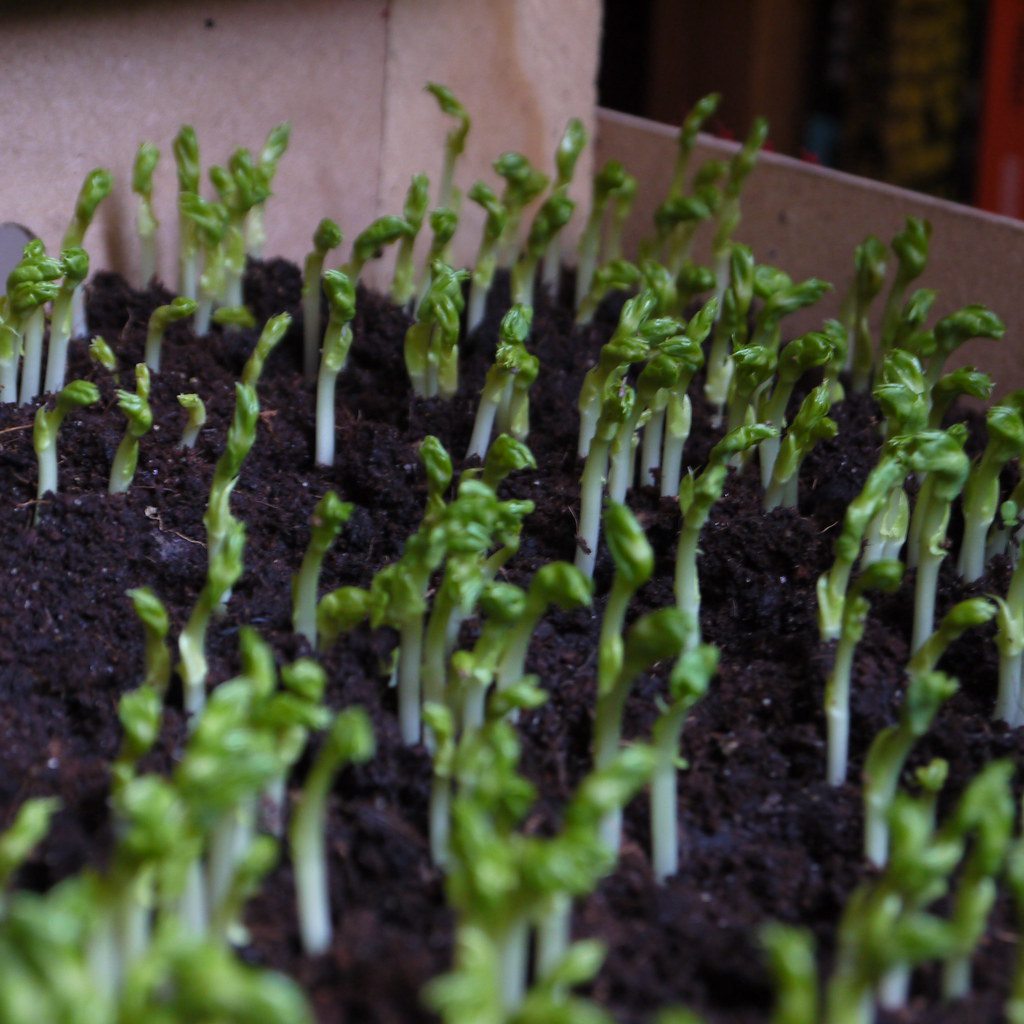
Regrowth is possible, not guaranteed. The first cutting is usually the best quality, and a later harvest may differ in size, timing, tenderness, and flavor depending on the plants and the way they were cut.
Do Pea Shoots Regrow After You Cut Them?
Pea shoots can produce new growth after a first harvest when the cut leaves a usable leaf node on the remaining stem. Washington State University Extension advises retaining a node when clipping pea shoots because new vines can develop from remaining leaf nodes. Source: Washington State University Extension — Pea Shoots
The key question is not simply whether the roots are still alive in the tray. It is whether the plant still has a healthy point above the growing medium where new growth can form.
If you harvest pea shoots very low—leaving only short stubble at the growing-medium line—regrowth is less likely because the cut may have removed the nodes needed for branching. This is why a dense tray harvested as very young microgreens is often best treated as a one-cut crop.
Why Pea Shoots Can Regrow
New Growth Comes From Remaining Leaf Nodes
A leaf node is the point on a stem where leaves attach. It can also be a branching point: when the main shoot is clipped, a new side shoot may develop from a remaining node.
For a possible second harvest, the goal is not merely to leave roots and bare stem. Leave at least one healthy node below the cut.
In practical terms:
- Look near the lower part of a shoot for a pair of leaves or a small branching junction.
- Identify the lowest healthy node you want to keep.
- Cut just above that node with clean, sharp scissors.
Washington State University Extension describes new vine growth emerging from leaf nodes left after clipping. Source: Washington State University Extension — Pea Shoots
Why Intact Roots Are Not Enough
Roots may remain alive after harvest, but roots alone do not ensure another useful crop of shoots. For home trays, regrowth is more likely when viable nodes and growing tissue remain above the growing medium.
This is an evidence-informed practical interpretation of pea-shoot production guidance, rather than a guaranteed rule for every indoor tray. A tray with healthy roots but no visible usable nodes may produce little or no tender new growth worth harvesting.
Pea Shoots vs. Pea Microgreens: Why Harvest Stage Matters
The terms pea shoots and pea microgreens overlap in everyday use, but harvest stage matters when the goal is a second cutting.
| Crop stage | Typical harvest approach | Second-harvest potential |
|---|---|---|
| Very young pea microgreens | Often cut low, near the growing medium | Less likely if no usable node remains |
| Taller pea shoots | Harvested with more developed stems and leaves | More realistic when lower nodes are preserved |
| Mature pea vines | Grown much longer for shoots, vines, or pods | Can branch after cutting, but texture and use differ from tray-grown shoots |
Microgreens are young plants harvested around the cotyledon stage or after early true leaves develop, usually by cutting just above the growing medium. Pea shoots are often allowed to grow taller than many other microgreens and may be harvested with two or more sets of true leaves. That additional stem and leaf development can make it easier to retain a lower node after cutting. Source: Purdue Extension — Grow Microgreens at Home Source: Penn State Extension — The ABCs of Microgreens
For regrowth, focus less on the label and more on what remains after harvest:
- Are there visible leaf nodes below the planned cut?
- Are the remaining stems green and intact?
- Were the shoots grown tall enough to leave useful plant structure behind?
This guidance concerns tray-grown pea shoots and pea microgreens, not sprouted peas. Sprouts are harvested at an earlier stage and are not interchangeable with microgreens or shoots. Source: University of New Hampshire Extension — Sprouts or Microgreens: Where Does Your Farm Fall Under FSMA?
Where to Cut Pea Shoots for a Second Harvest
Leave at Least One Healthy Leaf Node
The most useful rule is simple: cut above a healthy, visible node.
Avoid relying on one universal measurement. Pea-shoot height, node placement, and plant density can vary considerably between trays. A cut that preserves a node in one tray may remove it in another.
Look for:
- A pair of leaves attached to the stem
- A small junction where a leaf meets the stem
- A developing side bud or branch
- Green, firm lower stem tissue
Then cut above that point.
Use Cut Height as a Reference, Not a Guarantee
For pea shoots roughly 3 to 7 inches tall, Washington State University Extension advises clipping about 0.5 inch above the ground while retaining a node. That is a useful production reference, but it should not be treated as a universal indoor-tray rule or a guarantee of a second harvest. Source: Washington State University Extension — Pea Shoots
Your plants’ actual node placement matters more than mechanically following a measurement.
If the lowest healthy node sits higher than that, cut higher. If you cannot see or retain a healthy node, it may be more practical to harvest the tray once and start a new one.
What If You Already Cut at the Growing-Medium Line?
If the tray now has only short stubble and no visible usable nodes, regrowth is less likely. You can leave the tray in place briefly to see whether new growth appears, but starting a fresh tray is usually the more predictable way to get another full crop.
That does not mean every low-cut tray is incapable of producing any new growth. It means the plant structures most associated with branching may have been removed, so expectations should be modest.
What to Expect From a Second Pea-Shoot Harvest
A second cut is best viewed as a possible bonus rather than a guaranteed repeat of the first crop.
| Reader question | Evidence-informed answer |
|---|---|
| Will every pea shoot regrow? | No. Regrowth depends especially on whether healthy nodes remain after cutting. |
| Will the second harvest be as large as the first? | Do not assume so. The Extension and university sources reviewed for this article do not establish a fixed second-harvest yield for dense indoor pea-shoot trays. |
| Will it be equally tender? | Not necessarily. Longer, older lower portions of pea vines may become tougher or more fibrous. |
| Can I harvest more than twice? | Additional cuttings may be possible when plants retain healthy nodes and continue growing well, but quality and practicality should determine when to stop. |
| How long will regrowth take? | Avoid a standard indoor timeline. The available production evidence does not establish one for dense home trays. |
> Source note: The strongest repeat-harvest evidence comes from pea-shoot and pea-vine production in beds or field settings. Dense indoor trays may respond differently.
Washington State University Extension notes that the first pea-shoot cutting is usually the best quality, although later cuttings can still be worthwhile in suitable growing conditions. Source: Washington State University Extension — Pea Shoots
A Washington State University pea-vine variety trial also documented regrowth after cutting. The researchers found that the node producing new growth could vary among plants, including plants of the same variety. That trial involved longer vines and retained far more plant material than a typical indoor microgreen tray, so it should not be read as a yield prediction for home growers. Source: Washington State University Vegetable Research & Extension Center — Pea Vine Variety Trial
More Growth Does Not Always Mean Better Eating
A tray that regrows is not automatically a better crop than a newly seeded tray.
As pea vines grow longer, lower stem portions can become tougher or more fibrous. For the best texture, harvest tender new tips rather than trying to use every older stem. If later growth becomes bitter, coarse, or simply less appealing to eat, it is reasonable to stop harvesting and reseed. Source: Washington State University Extension — Pea Shoots Source: Washington State University Vegetable Research & Extension Center — Pea Vine Variety Trial
Washington State University Extension mentions another harvest in roughly three to four weeks for taller pea plants in a field-production context. That observation should not be used as a promised timeline for a densely sown indoor pea microgreen tray. Source: Washington State University Extension — Pea Shoots
Is a Second Harvest Worth Trying?
Trying for regrowth can make sense when you are growing pea shoots for home use and are comfortable with variable results.
Try for Regrowth If …
- Your shoots were grown beyond the earliest microgreen stage.
- One or more healthy lower leaf nodes remain after harvest.
- The remaining shoots look green, upright, and intact.
- You would be happy with a possible extra serving rather than predictable output.
- You are willing to assess the later crop for tenderness and flavor.
Start a New Tray If …
- You cut the first harvest at or nearly at the growing-medium line.
- Few or no visible nodes remain.
- The remaining stems appear damaged or are declining.
- You want the most predictable route to a full, tender crop.
- The first crop was harvested very young as low-cut microgreens.
> Quick decision rule: > A visible healthy node remains: A second harvest may be worth trying. > Only low stubble remains: Starting a new tray is usually more predictable.
These are practical home-growing decisions based on pea-shoot regrowth principles, not yield guarantees.
Common Pea-Shoot Regrowth Problems
Nothing Regrows
A common explanation is that the first cut removed the usable nodes. This is especially likely when shoots were harvested very low or while still at an early microgreen stage.
Other factors may include ordinary differences between plants and variation in the nodes from which regrowth can emerge. In the Washington State University variety trial, new growth did not come from exactly the same node on every plant. Source: Washington State University Vegetable Research & Extension Center — Pea Vine Variety Trial
Regrowth Is Sparse or Uneven
Sparse or uneven regrowth can occur when different shoots were cut at different heights or retained different amounts of healthy plant structure. Some stems may have kept a usable node, while others may have been cut below theirs.
For future trays, inspect a small section before harvesting the entire crop. If a second harvest is your goal, make sure the cut line leaves visible lower nodes on as many shoots as possible.
Regrowth Is Tough or Less Pleasant to Eat
Later growth may not have the same tender texture as the first cutting. As shoots and vines become longer, lower portions can become more fibrous. Source: Washington State University Vegetable Research & Extension Center — Pea Vine Variety Trial
Harvest the tenderest new tips first. If the texture or flavor is no longer appealing, compost the tray and start again rather than trying to extend the crop indefinitely.
Frequently asked questions
Research & Further Reading
- Washington State University Extension — Pea Shoots (PNW 567)
- Washington State University Vegetable Research & Extension Center — Pea Vine Variety Trial
- Purdue Extension — Grow Microgreens at Home
- Penn State Extension — The ABCs of Microgreens
- University of New Hampshire Extension — Sprouts or Microgreens: Where Does Your Farm Fall Under FSMA?
- Andi’s Way — Organic Pea Seeds for Microgreens & Pea Shoots (company product information; not horticultural evidence)
- Andi’s Way — Growing Trays With or Without Drain Holes (company product information; not horticultural evidence)
Related guides
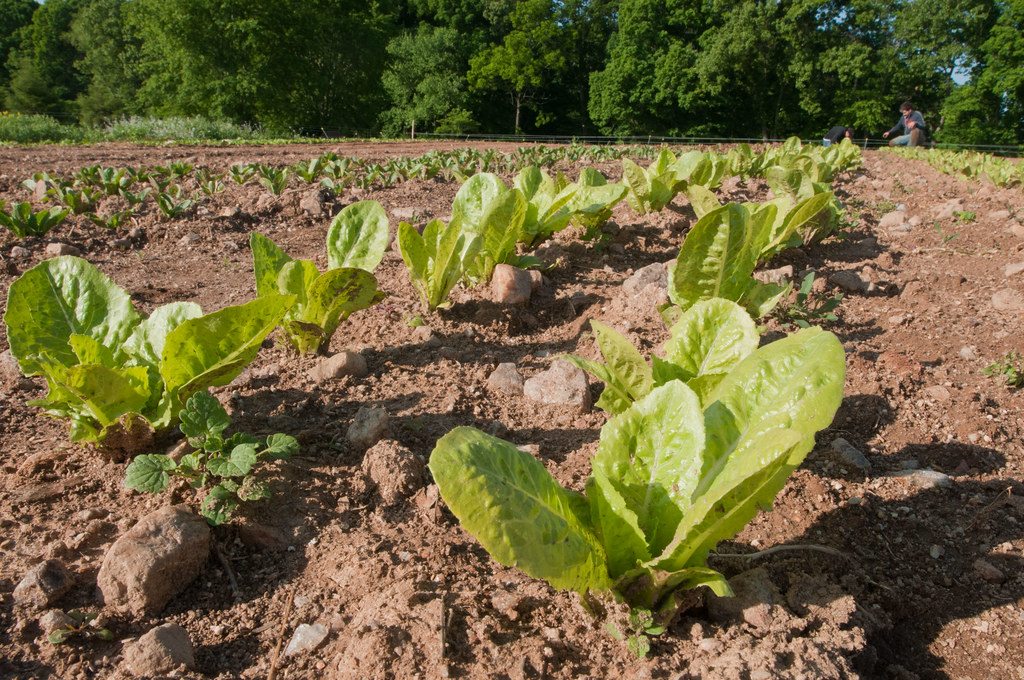
Speckled Pea Seeds for Microgreens: Why Growers Use Them
Learn why growers use speckled pea seeds for pea shoots and microgreens, what to check before buying, and why seed quality matters more than the label alone.
13 min read
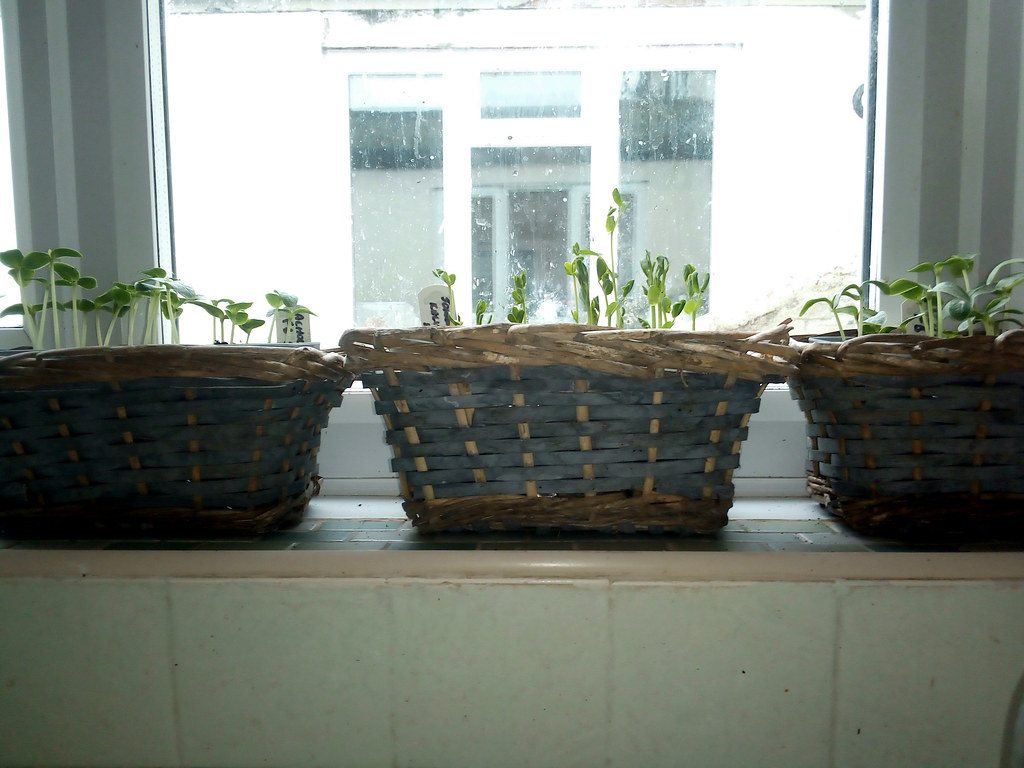
How to Grow Pea Shoots and Pea Microgreens at Home
Learn how to grow pea shoots and pea microgreens at home, from soaking and sowing density to bottom watering, light, troubleshooting, and first harvest.
13 min read
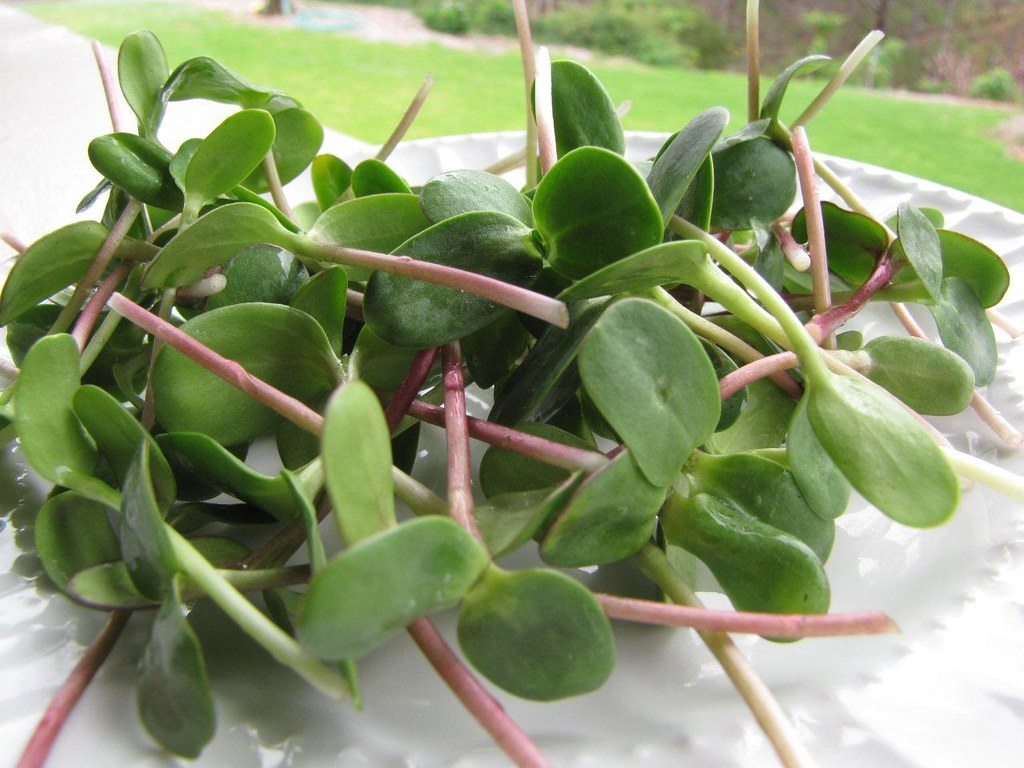
Sunflower Sprouts vs. Sunflower Microgreens: What’s the Difference?
Learn how sunflower sprouts and sunflower microgreens differ in growth stage, harvest method, texture, uses, and raw-food safety considerations.
13 min read
Stay in the loop
New guides, when they publish
An occasional email when a new guide goes live. No spam.
Your email is stored privately for future guide updates. No emails are being sent yet. Privacy policy