Food Safety · Broccoli Microgreens
Can You Eat Broccoli Microgreens Raw? Food-Safety Considerations
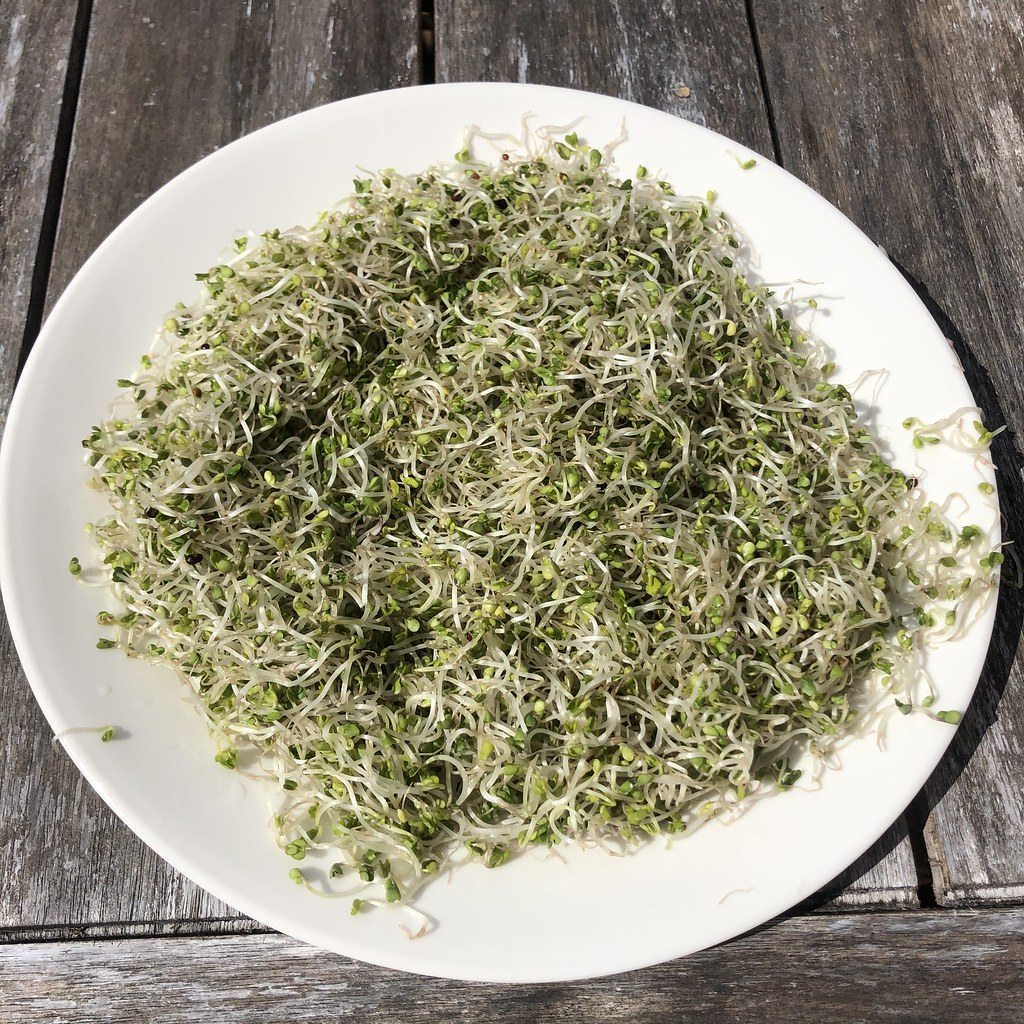
Yes. Broccoli microgreens can be eaten raw and are commonly served as a topping for salads, sandwiches, bowls, and other dishes. (University of Connecticut Extension) Handle them as perishable raw produce: refrigerate them promptly, use clean hands and utensils, keep them away from raw meat and its juices, and rinse unwashed greens under cool running water just before eating. Washing can reduce bacteria on the surface, but it cannot reliably remove all contamination. (FDA: Selecting and Serving Produce Safely)
One important distinction: broccoli microgreens are not the same food as broccoli sprouts. They are grown and harvested differently, so sprout-specific food-safety advice should not automatically be applied to microgreens.
Broccoli Microgreens Can Be Eaten Raw
Raw use is normal for broccoli microgreens. Their tender stems and young leaves are usually eaten without cooking, often as a finishing green rather than as a cooked vegetable. University Extension guidance describes microgreens as foods that may be eaten raw. (University of Connecticut Extension)
But “commonly eaten raw” does not mean risk-free. Like other fresh fruits and vegetables, microgreens can be exposed to contamination during growing, harvesting, packing, transportation, storage, or preparation. Good food-handling practices can reduce risk, but they cannot eliminate it completely.
Broccoli Microgreens vs. Broccoli Sprouts: Why the Difference Matters for Safety
Broccoli microgreens and broccoli sprouts are distinct products, even though both are young edible plants.
What makes a microgreen different?
FDA guidance distinguishes microgreens from sprouts by their growth and harvest stage. Microgreens are typically grown longer than sprouts, often until true leaves have started to emerge. They are generally grown in soil or another substrate, then harvested by cutting the plant above the growing medium. (FDA: Standards for Growing, Harvesting, Packing, and Holding Sprouts)
Microgreens should not simply be described as “older sprouts.” Their production and harvest methods differ in meaningful ways.
Why sprouts receive special food-safety attention
Sprouts receive specific food-safety attention because the warm, moist conditions used for sprouting can also support the growth of harmful bacteria if pathogens are present. FDA has sprout-specific requirements for producers for this reason. (FDA: Standards for Growing, Harvesting, Packing, and Holding Sprouts)
That does not mean broccoli microgreens are free from food-safety risk. It also does not establish that microgreens are always safer than sprouts. The practical takeaway is simpler: they are different foods, and they should not be treated as interchangeable when reading food-safety advice or recall notices.
Food-Safety Risks With Raw Broccoli Microgreens
Like other raw produce, broccoli microgreens can encounter contamination at more than one point before they reach your plate.
Where contamination can occur
Possible contamination routes include:
- Seeds
- Water used during growing
- Growing media or substrate
- Trays, tools, and harvesting equipment
- Worker handling
- Packing and transportation
- Storage containers and kitchen surfaces
- Contact with raw meat, poultry, seafood, or their juices
These are potential routes of exposure—not evidence that broccoli microgreens are routinely contaminated. Reviews of the research note that microgreen-specific food-safety research is still comparatively limited. (Riggio et al., 2019)
What research does—and does not—show
A 2025 controlled study found that Salmonella enterica, E. coli O157:H7, and Listeria monocytogenes could transfer to broccoli and other microgreens when researchers irrigated them with intentionally contaminated water. (Rao, Pradhan, and Patel, 2025)
That finding matters because it shows why clean water and sanitary growing practices are important. However, it does not show how often broccoli microgreens are contaminated in stores, restaurants, or home kitchens.
| What controlled research can show | What it cannot show |
|---|---|
| Pathogens can transfer to microgreens under intentionally contaminated growing conditions. | How often retail or home-grown broccoli microgreens are contaminated. |
| Water quality and sanitation matter before harvest. | Whether a specific farm, brand, package, or home-grown crop is contaminated. |
| Food-safety controls are relevant throughout production. | That raw microgreens should never be eaten. |
Should You Wash Broccoli Microgreens?
Whether broccoli microgreens should be washed depends on how they are sold and labeled.
If the greens are loose or not labeled “pre-washed” or “ready-to-eat”
For loose, home-grown, or otherwise unwashed broccoli microgreens:
- Wash your hands with soap and water before handling them.
- Use a clean colander, bowl, or other food-contact surface.
- Gently rinse the greens under cool running water just before eating.
- Drain them thoroughly.
- If needed, pat them dry gently with a clean towel or paper towel.
- Refrigerate any unused greens promptly.
FDA recommends washing produce under running water before eating, cutting, or cooking it. USDA guidance similarly recommends washing fresh produce under cold running tap water. (FDA produce guidance; USDA FSIS guidance)
If the package says “pre-washed” or “ready-to-eat”
If the package specifically says “pre-washed” or “ready-to-eat,” FDA says it can be used without further washing. Use clean hands, utensils, serving dishes, and preparation surfaces after opening the package to avoid recontaminating the greens. (FDA: Selecting and Serving Produce Safely)
What washing cannot do
Rinsing can reduce bacteria on the surface of raw produce, but it cannot reliably remove all contamination. Do not assume washing makes broccoli microgreens completely safe to eat. (FDA: Selecting and Serving Produce Safely)
Do not use soap, bleach, or disinfectants
Do not wash broccoli microgreens with:
- Dish soap or detergent
- Bleach
- Household disinfectants
- Alcohol-based cleaners
- Other non-food-safe chemicals
Federal food-safety guidance advises consumers not to use soap, detergent, bleach, sanitizers, or other chemicals on fresh produce. Cool running water is the appropriate consumer method for unwashed greens. (FDA: Selecting and Serving Produce Safely; USDA FSIS guidance)
How to Store Broccoli Microgreens Safely
Broccoli microgreens are perishable. Refrigerate them promptly and prevent cross-contamination during storage and preparation.
| Do | Avoid |
|---|---|
| Refrigerate promptly at 40°F (4°C) or below. | Leaving perishable microgreens at room temperature longer than necessary. |
| Keep them separate from raw meat, poultry, seafood, and their drips. | Storing them where raw-animal-food juices could leak onto them. |
| Follow package dates and handling instructions when provided. | Assuming every package has the same storage life. |
| Use clean storage containers and utensils. | Returning greens to their container after they touched unclean surfaces. |
| Discard greens that are visibly moldy, rotten, or clearly deteriorated. | Trying to salvage visibly deteriorated greens. |
FDA recommends refrigerating perishable fresh produce at 40°F or below and keeping produce separate from raw animal foods. It also advises discarding produce that appears rotten. (FDA: Selecting and Serving Produce Safely)
There is no universal refrigerator shelf-life number for every package of broccoli microgreens or every home-growing setup. Storage life varies with freshness, packaging, refrigerator temperature, handling, and any seller-provided date label. Follow package instructions when available, and discard greens that are visibly moldy, rotten, or clearly deteriorated.
Are Raw Broccoli Microgreens Appropriate for Everyone?
Some people are more likely to become seriously ill from foodborne infections, including:
- Pregnant people
- Children younger than 5
- Adults 65 and older
- People with weakened immune systems
FDA specifically advises these higher-risk groups to avoid raw or lightly cooked sprouts of any kind. (FDA: People at Risk of Foodborne Illness; FDA produce guidance)
That advice is specifically about sprouts. Broccoli microgreens are different from sprouts, and the cited FDA consumer guidance does not provide the same blanket instruction to avoid all raw microgreens.
Still, raw broccoli microgreens are raw produce, not sterile food. People with clinician-directed food restrictions—particularly those with substantial immune suppression or ongoing medical treatment—should follow the guidance of their clinician or treatment team.
Higher-risk groups should distinguish sprouts from microgreens, while using extra care with all raw produce. Raw broccoli microgreens should not be described as risk-free for any consumer.
Home-Grown Broccoli Microgreens: Extra Safety Basics
Growing broccoli microgreens at home does not automatically eliminate food-safety risks. Safe seed, water, equipment, and handling still matter.
To reduce avoidable risks:
- Use seed intended for edible microgreen or sprout production rather than pesticide-treated seed.
- Use clean trays and clean harvesting tools.
- Use potable water.
- Keep pets, animal waste, and dirty tools away from the growing area.
- Wash hands before harvesting or handling the greens.
- Refrigerate harvested microgreens promptly.
Penn State Extension advises against using pesticide-treated seed for edible microgreens and emphasizes sanitation, water quality, equipment cleanliness, and preventing contamination from animals and unclean handling. (Penn State Extension: Growing Microgreens; Penn State Extension: Ensuring Food Safety in Microgreens Production)
These practices reduce risk, but they do not guarantee pathogen-free microgreens.
What to Do if Broccoli Microgreens Are Recalled
If you hear about a recall, check an official FDA recall notice rather than assuming every broccoli-related product is affected. (FDA: Recalls, Market Withdrawals, & Safety Alerts)
Compare the notice with the product you have, including:
- Product name
- Brand
- Package size
- Lot code
- Best-by, use-by, or expiration date
- Purchase location, if listed
If your product matches the recall notice, do not eat it. Follow the disposal, return, or refund instructions in the official announcement.
Also check whether the notice applies to broccoli sprouts or broccoli microgreens. They are different products, and a recall for one does not automatically apply to the other. Always follow the exact product details in the official recall notice.
Bottom Line
Yes, broccoli microgreens can be eaten raw. Treat them as refrigerated raw produce: use clean hands and tools, rinse loose or unwashed greens under cool running water, avoid soap and chemical cleaners, prevent cross-contamination, and discard greens that are visibly moldy, rotten, or clearly deteriorated.
Broccoli microgreens are different from broccoli sprouts. FDA’s specific advice for higher-risk groups to avoid raw sprouts should not be presented as a blanket prohibition on raw microgreens. But raw microgreens are not risk-free, and anyone with individualized medical food-safety restrictions should follow their clinician’s guidance.
FAQ
Research & Further Reading
Federal food-safety guidance
- U.S. Food and Drug Administration — Selecting and Serving Produce Safely
- U.S. Food and Drug Administration — Guidance for Industry: Standards for the Growing, Harvesting, Packing, and Holding of Sprouts for Human Consumption
- U.S. Food and Drug Administration — People at Risk of Foodborne Illness
- U.S. Food and Drug Administration — Recalls, Market Withdrawals, & Safety Alerts
- U.S. Department of Agriculture Food Safety and Inspection Service — How should fresh produce be washed before eating?
Peer-reviewed research
- Riggio GM, Wang Q, Kniel KE, Gibson KE. Microgreens—A Review of Food Safety Considerations Along the Farm to Fork Continuum.
- Turner ER, Luo Y, Buchanan RL. Microgreen Nutrition, Food Safety, and Shelf Life: A Review.
- Rao AP, Pradhan AK, Patel J. Persistence of Foodborne Bacterial Pathogens on Microgreens and Soil Irrigated With Contaminated Water.
University Extension guidance
- University of Connecticut Extension — The Amazing Power of Microgreens
- University of Maryland Extension — Growing Microgreens and Baby Greens Indoors
- Penn State Extension — Ensuring Food Safety in Microgreens Production
- Penn State Extension — Growing Microgreens
Company and product information — not food-safety evidence
- Andi’s Way — Microgreens Collection
Andi’s Way is included as a company product reference, not scientific, medical, nutrition, or food-safety evidence.
Related guides
Sunflower Sprouts vs. Sunflower Microgreens: What’s the Difference?
Learn how sunflower sprouts and sunflower microgreens differ in growth stage, harvest method, texture, uses, and raw-food safety considerations.
13 min read
Best Microgreens for Beginners: Radish, Broccoli, Pea, or Sunflower?
Compare radish, broccoli, pea, and sunflower microgreens by seed prep, harvest time, flavor, and beginner-friendliness to choose your first tray.
10 min read
Speckled Pea Seeds for Microgreens: Why Growers Use Them
Learn why growers use speckled pea seeds for pea shoots and microgreens, what to check before buying, and why seed quality matters more than the label alone.
13 min read
Stay in the loop
New guides, when they publish
An occasional email when a new guide goes live. No spam.
Your email is stored privately for future guide updates. No emails are being sent yet. Privacy policy