Wheatgrass · Buying & Sourcing
Organic vs. Conventional Wheatgrass: What Actually Changes When You Buy?
Certified organic wheatgrass is produced under USDA organic standards that require documented practices and oversight by a USDA-accredited certifier. “Conventional” wheatgrass is not a single regulated production category, so practices can differ widely by grower. The most useful comparison is therefore documentation, certification scope, labeling, and transparency—not assumptions about nutrition, pesticide residues, or food safety.
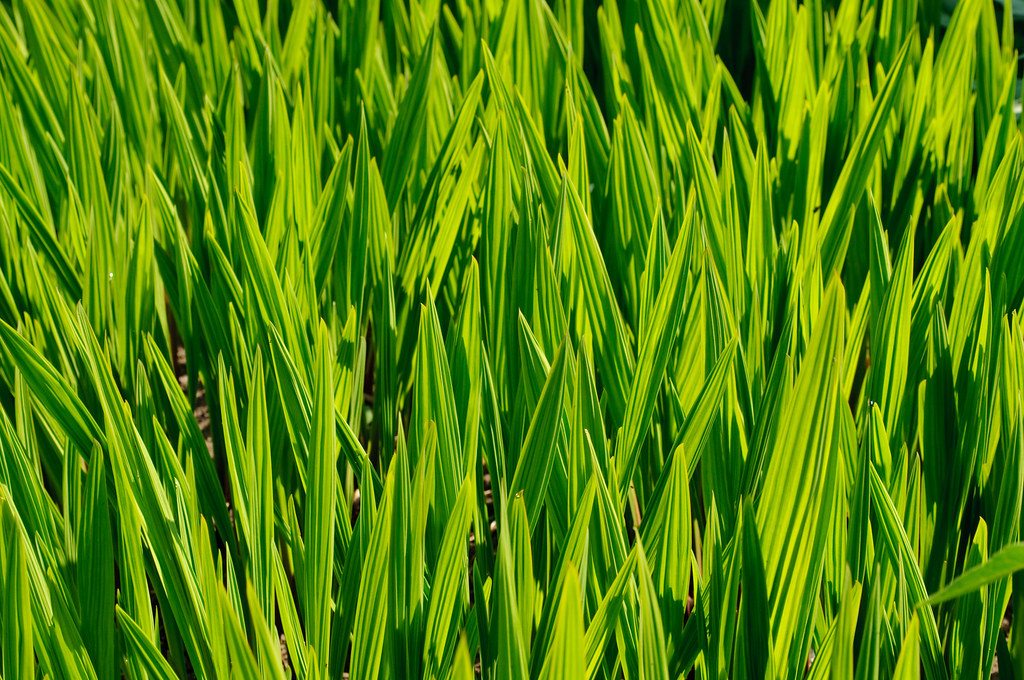
Organic vs. Conventional Wheatgrass at a Glance
| Comparison point | Certified organic wheatgrass | Conventional wheatgrass or wheatgrass without a verified certified-organic claim | What buyers can check |
|---|---|---|---|
| Meaning of the claim | A regulated USDA production and labeling claim when certification is required and in place | Not a standardized certification category | Exact package claim, seller information, and supporting records |
| Land history | Land must meet a three-year prohibited-substance requirement before harvest | Varies by operation | Grower-specific information about the growing site |
| Seed sourcing | Organic seed is generally required, with documented exceptions in limited circumstances | Varies by grower | Seed source and whether seed is treated |
| Fertility practices | Uses practices and inputs permitted under organic standards | Varies by grower | Growing medium and fertility-input details |
| Pest, weed, and disease management | Prevention-focused; certain allowed materials may be used when needed | Varies by grower | Specific management practices and inputs |
| Documentation | Organic System Plan, input records, inspections, and certifier oversight | Retail-facing documentation varies | Named certifier, current status, and traceability details |
| Package labeling | Qualifying packaged products may use the USDA Organic seal; specified label categories generally identify the certifying agent | Cannot use a certified-organic claim unless the operation and product qualify | Organic wording, ingredient list, and certifier information |
| Food safety | Organic status does not replace sanitation, refrigeration, or juice-processing controls | The same principle applies | Pasteurization or other treatment, storage, and handling information |
What “Organic Wheatgrass” Means in the United States
Organic is a production and labeling standard
In the United States, “organic” is not simply another way of saying natural, local, soil-grown, non-GMO, or high quality. It is a regulated production and labeling claim under the USDA National Organic Program.
For certified wheatgrass operations, organic status is tied to a documented production system, approved practices and materials, recordkeeping, and review by a USDA-accredited certifier. Handling and processing standards may also apply when wheatgrass is juiced, frozen, bottled, packaged, stored, or otherwise handled by a certified operation.
This is important because organic certification is designed to verify production and handling practices—not to prove that one wheatgrass product is more nutritious, more effective for health purposes, or safer than another.
The three-year land requirement
For a crop to be sold as organic, prohibited substances cannot have been applied to the relevant land during the three years immediately before harvest. Organic operations must also use practices such as distinct boundaries or buffer zones to help prevent unintended contact with prohibited substances from adjacent land.
This requirement describes the land-management history required for organic production. It should not be interpreted as proof that a finished wheatgrass product has no detectable residues or environmental contaminants.
Fertility, pest, weed, and disease management
Organic crop standards emphasize preventive and management-based methods. Depending on the production system, these may include crop rotations, cover crops, cultivation, sanitation, biological controls, and other cultural practices.
However, organic does not mean that no fertilizers or pest-management materials are used. USDA standards restrict the materials that may be used, and the National List permits certain substances—including some synthetic substances—for specific uses under the rules.
In practical terms:
- Organic does not mean “chemical-free.”
- Organic does not mean “pesticide-free.”
- Organic does not mean no fertility inputs are used.
- Organic does mean that permitted inputs and production practices are governed by a defined standard and documented for certification.
USDA organic standards also prohibit genetic engineering, sewage sludge, and ionizing radiation. That is a distinction in the organic standard; it does not establish that a nonorganic wheatgrass producer uses any of those practices.
USDA Agricultural Marketing Service — Organic Standards
USDA Agricultural Marketing Service — National List of Allowed and Prohibited Substances
Organic seed requirements and exceptions
Certified organic crop operations generally must use organic seed. USDA policy allows limited exceptions when an equivalent organic variety is not commercially available, and operations must document applicable sourcing decisions.
For shoppers, organic wheatgrass seed is meaningful sourcing information. But seed is only one part of the production system. The organic status of harvested wheatgrass also depends on the growing site, production practices, inputs, handling, and certification status of the operation.
Organic System Plans, records, and oversight
Organic certification is documentation-based. A certified operation maintains an Organic System Plan that describes how it will comply with applicable standards. Depending on the operation, this can include:
- Seed and planting-material sourcing
- Growing locations and production methods
- Fertility and soil-management practices
- Pest, weed, and disease-management methods
- Materials and inputs used
- Monitoring and recordkeeping procedures
- Measures to prevent commingling with nonorganic products
- Measures to prevent contact with prohibited substances
USDA-accredited certifiers review the operation’s plan and records and conduct regular inspections. USDA also describes additional oversight tools, including unannounced inspections and testing.
Certification is meaningful oversight, but it is not a guarantee that every package has been tested for every possible residue, pathogen, or quality characteristic.
Electronic Code of Federal Regulations — 7 CFR § 205.201, Organic Production and Handling System Plan
USDA Agricultural Marketing Service — USDA Certified Organic: Understanding the Basics
What “Conventional Wheatgrass” Does—and Does Not—Tell You
Conventional is not one standardized production system
“Conventional” is commonly used as a practical comparison term for wheatgrass that is not being presented with a verified certified-organic claim. It is not a parallel certification program with one universal set of production rules.
That distinction matters. Some growers may operate without organic certification and use varying methods, while certain smaller operations may qualify for a limited exemption from certification even when following applicable organic requirements. A missing certification listing is therefore a reason to investigate further—not automatic proof that a seller’s practices are unacceptable or that an organic claim is false.
One nonorganic wheatgrass operation may grow in soil, another may grow indoors in trays, and another may use a different production medium. Seed treatment, fertility practices, pest management, sanitation, harvesting, and storage can also differ substantially.
Avoid assumptions about pesticides and fertilizers
The term “conventional” does not establish which inputs, if any, were used on a particular crop. It does not prove that wheatgrass was treated with pesticides, grown with synthetic fertilizer, started from treated seed, or contains pesticide residues.
If an EPA-regulated pesticide is used, it must be used consistently with its EPA-approved label. But that legal requirement does not reveal whether a specific grower used a pesticide on a particular wheatgrass crop.
Likewise, organic certification does not establish that a finished product is residue-free. A product test can only support a narrower finding—for example, that specified analytes were not detected in a particular sample using a stated method and reporting limit.
Questions a transparent grower should be able to answer
A seller without a certified-organic claim may still provide useful information about its operation. Consider asking:
- What wheatgrass seed is used, and is it treated or untreated?
- What growing medium is used?
- What fertility inputs are used?
- How are pests, weeds, and plant diseases managed?
- Is the wheatgrass grown indoors, outdoors, in soil, or in another medium?
- What sanitation procedures are used during harvest and packaging?
- How are batches identified or traced?
- Is product-specific testing available, and what does it test for?
- What laboratory performed the testing, and what were the detection or reporting limits?
Clear answers do not replace certified-organic documentation. They can still help buyers make a more informed comparison.
Documentation to Look for Before Buying Wheatgrass
Read beyond the word “organic”
Start with the exact wording on the package, product page, or seller materials. There is a meaningful difference between:
- A product labeled “100% organic”
- A product labeled “organic”
- A product that identifies one or more organic ingredients
- A product described as natural, non-GMO, local, soil-grown, or “chemical-free”
These descriptions may matter to your preferences, but they are not interchangeable.
For example, USDA organic standards prohibit genetic engineering, but a non-GMO claim alone does not verify the full production system, the inputs used, the handling process, or USDA organic certification.
Check for certifier information
The USDA Organic seal is optional for qualifying products, so not seeing the seal does not automatically mean a product is not certified organic.
For qualifying packaged products labeled “100% organic” or “organic,” USDA labeling rules generally require identification of the certifying agent for the finished-product handler. Look for a statement such as “Certified organic by” followed by the certifier’s name.
The certifier statement is useful because it gives buyers a practical starting point for verification. If a seller makes a certified-organic claim but does not provide clear certifier information, ask for current documentation.
Search the USDA Organic INTEGRITY Database
The USDA Organic INTEGRITY Database is a useful starting point for checking an operation’s certification status.
A practical review process is:
- Search by the farm’s legal name, business name, location, or certified products.
- Review the listing for the operation’s status and listed activities.
- Compare the listing with the farm, brand, handler, or processor connected to the product.
- Consider whether the scope appears relevant to the wheatgrass or juice being sold.
A database listing is not a complete product-level supply-chain audit. Likewise, a missing result may reflect a different legal business name, a certification exemption, or another issue that requires clarification.
Match certification scope to the product
Fresh-cut wheatgrass
For fresh wheatgrass, focus on the operation that grew and harvested the crop. Look for documentation that connects the certified crop-production operation to the product and seller.
Bottled or frozen wheatgrass juice
Packaged wheatgrass juice can involve more than one business. The crop may be grown by one operation and juiced, frozen, packaged, stored, or distributed by another.
For packaged juice, it is reasonable to ask whether the organic documentation appears relevant to both:
- The wheatgrass source, and
- The entity handling or packaging the finished juice.
This is a due-diligence question, not a legal conclusion about a particular company. A crop-production certificate alone may not answer every question about a finished packaged juice.
If the company does not appear in the database
Before drawing conclusions, try searching by:
- Legal business name
- Farm name
- Parent-company name
- Location
- Named certifier
- Product category
You can also ask the seller for current certification details or contact the named certifier for clarification.
Organic Seed vs. Organic Wheatgrass
Organic wheatgrass seed can be a useful sourcing preference for home growers. But certified-organic seed alone does not make a home-grown tray or harvest “USDA certified organic.”
Certification applies to the production system and the operation, not only to the seed. If you want your home-growing approach to align with organic practices, consider the full system:
- Seed source and treatment status
- Growing medium
- Fertility inputs
- Pest-management materials
- Water source
- Tray cleaning and sanitation
- Harvest and storage practices
You can use organic seed and choose inputs that align with organic principles. That is different from representing a home-grown harvest as certified organic.
Buying Considerations Beyond Organic Status
Fresh wheatgrass, frozen juice, and seed are different purchases
Fresh wheatgrass, frozen juice, and wheatgrass seed meet different practical needs.
Fresh wheatgrass may suit people who want to juice at home. Frozen juice may be convenient for people who prefer a ready-to-use format. Seed is for people who want to grow wheatgrass themselves.
Compare formats based on preparation time, storage space, shipping or pickup logistics, product quantity, and total cost—not on assumed health superiority.
Evaluate ingredients and processing details
For wheatgrass juice, review the package or product page carefully. Useful details include:
- Whether it is a single-ingredient wheatgrass product
- Whether it is pasteurized, otherwise treated, or unpasteurized
- Storage instructions before and after opening or thawing
- Package size and usable amount
- Lot, harvest, or fulfillment information when available
- Added ingredients, flavors, sweeteners, or preservatives
A transparent ingredient list and clear processing information can be as important to a purchase decision as an organic claim.
Compare transparency, convenience, and delivered cost
When comparing products, focus on factors you can verify and that fit your routine:
- Organic certification documentation
- Clear ingredient information
- Harvest, storage, and handling details
- Packaging format
- Shipping or local-pickup practicality
- Total delivered cost
- Preparation time
- Refrigerator or freezer space
- Seller responsiveness to specific sourcing questions
These factors provide a more useful comparison than broad claims that one format or growing category is automatically healthier than another.
Does Organic Mean Pesticide-Free or Safer?
Does organic mean pesticide-free?
No. Organic standards restrict inputs and emphasize prevention, but they do not mean no pest-control materials are ever used. Some materials are permitted under USDA organic rules.
Organic certification is also not a zero-residue guarantee. Without product-specific testing, buyers should not assume that a particular product does—or does not—contain residues. Even a laboratory report should be read carefully: it applies to the tested sample and the analytes included in that test.
USDA Agricultural Marketing Service — Organic Standards
USDA Agricultural Marketing Service — National List of Allowed and Prohibited Substances
Does conventional mean pesticides were used?
No. The term “conventional” does not identify the inputs used on a specific wheatgrass crop.
Do not assume conventional wheatgrass contains pesticide residues, and do not assume an organic product is residue-free. If this question matters to you, ask for crop-specific growing information or relevant product testing rather than relying on category-level assumptions.
Does organic settle raw-juice food-safety questions?
No. Organic certification and food safety are separate issues.
Raw or unpasteurized fruit and vegetable juices can contain harmful bacteria if produce or juice becomes contaminated. Choosing an organic juice does not eliminate the need to consider sanitation, pathogen-reduction treatment, refrigeration, storage instructions, and handling.
If you are considering raw or unpasteurized wheatgrass juice:
- Check whether the juice is pasteurized, otherwise treated, or untreated.
- Follow refrigeration or frozen-storage instructions carefully.
- Pay attention to use-by directions after thawing or opening.
- Ask the seller about handling and storage practices if the details are unclear.
- Check for an unpasteurized-juice warning statement on packaged products when applicable.
U.S. Food and Drug Administration — What You Need to Know About Juice Safety
U.S. Food and Drug Administration — People at Risk of Foodborne Illness
Practical Buyer Checklist
Frequently asked questions
Sources & further reading
- U.S. Department of Agriculture Agricultural Marketing Service — Organic Standardsgovernment
- Electronic Code of Federal Regulations — 7 CFR § 205.202, Land Requirementsgovernment
- Electronic Code of Federal Regulations — 7 CFR § 205.201, Organic Production and Handling System Plangovernment
- U.S. Department of Agriculture Agricultural Marketing Service — The National List of Allowed and Prohibited Substancesgovernment
- U.S. Department of Agriculture Agricultural Marketing Service — USDA Certified Organic: Understanding the Basicsgovernment
- U.S. Department of Agriculture Agricultural Marketing Service — Do I Need to Be Certified Organic?government
- U.S. Department of Agriculture — USDA Organic INTEGRITY Databasegovernment
- U.S. Department of Agriculture Agricultural Marketing Service — Organic Integrity FAQgovernment
- U.S. Department of Agriculture Agricultural Marketing Service — Labeling Requirements for the U.S. Organic Marketgovernment
- U.S. Department of Agriculture Agricultural Marketing Service — Seeds, Annual Seedlings, and Planting Stock in Organic Crop Productiongovernment
- U.S. Environmental Protection Agency — Introduction to Pesticide Labelsgovernment
- U.S. Food and Drug Administration — What You Need to Know About Juice Safetygovernment
- U.S. Food and Drug Administration — People at Risk of Foodborne Illnessgovernment
- Andi's Way — Our Process. Company information describing its stated farming and production practices.other
- Andi's Way — Fresh wheatgrass product listing. Company product information; confirm current availability, fulfillment details, and product claims before ordering.other
- Andi's Way — Wheatgrass juice product listing. Company product information; confirm current ingredients, processing, storage, and product claims before ordering.other
- Andi's Way — Wheatgrass seed product listing. Company product information; confirm current seed description and certification wording before ordering.other
Related guides
Can Wheatgrass Juice Help Ulcerative Colitis? Benefits, Evidence, and How to Use It Safely
What the limited clinical evidence says about wheatgrass juice and ulcerative colitis, how it fits beside prescribed treatment, and how to choose a product safely.
9 min read
Wheatgrass and Amino Acids: What You Should Know About Its Nutrition
Wheatgrass contains a range of amino acids, including all nine essential ones in some analyses — but containing amino acids is not the same as being a protein source. Here's what the research actually shows.
8 min read

Fresh vs Frozen vs Powder Wheatgrass: Which Format Is Right for You?
Compare fresh, frozen, and powdered wheatgrass by preparation, storage, ingredients, portability, and food-safety considerations to choose the format that fits your routine.
11 min read
Stay in the loop
New guides, when they publish
An occasional email when a new guide goes live. No spam.
Your email is stored privately for future guide updates. No emails are being sent yet. Privacy policy